








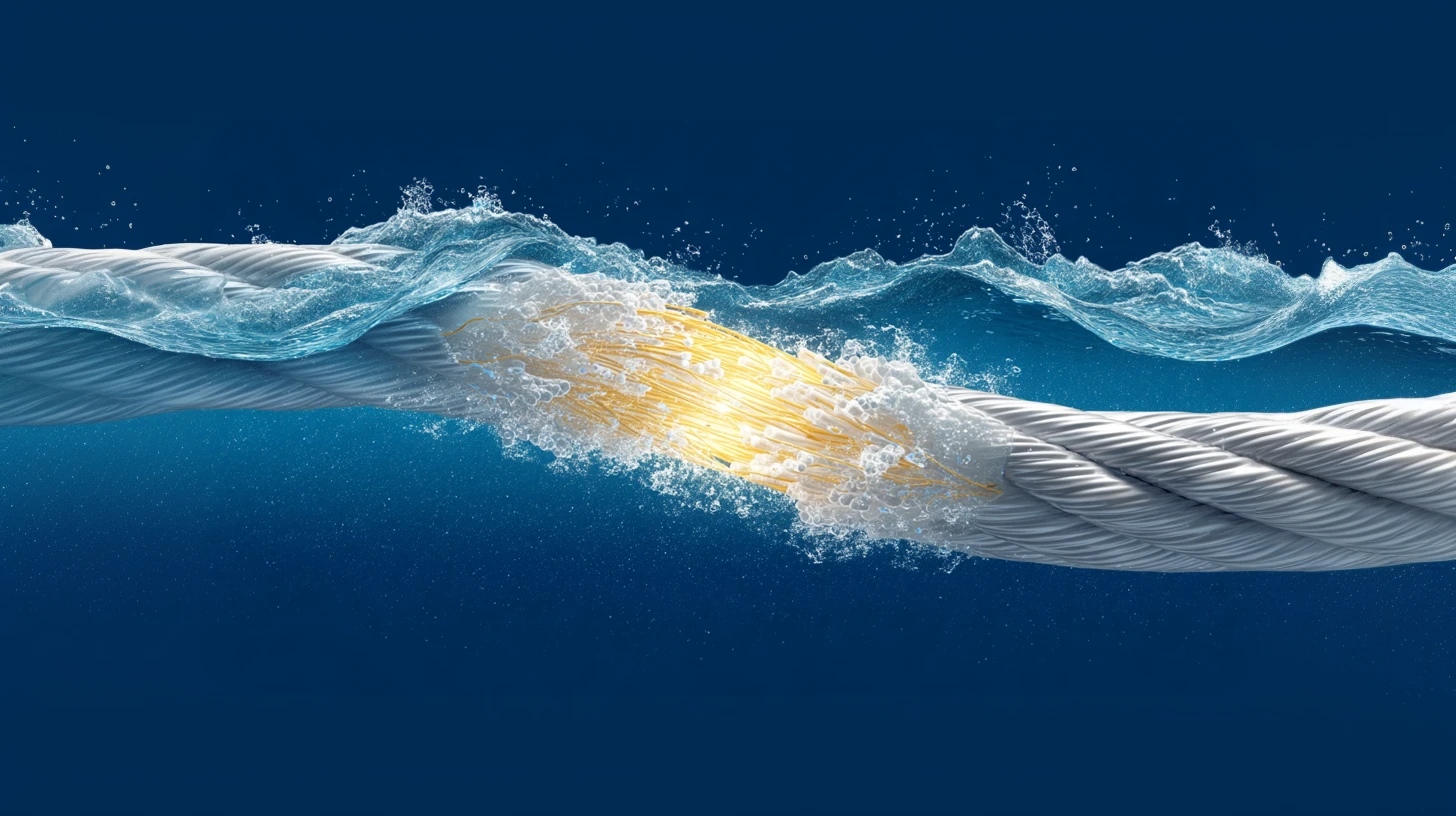
In a decisive move to fortify its critical national infrastructure against an era of heightened geopolitical volatility, the British government has unveiled a comprehensive legislative White Paper aimed at protecting the vast web of subsea cables and pipelines that sustain the United Kingdom. Under the proposed measures, individuals found guilty of intentionally damaging this seabed infrastructure could face up to 14 years in prison, while vessel operators face the prospect of unlimited fines for negligence.
This legislative overhaul represents the most significant update to subsea protection laws in over 140 years. By replacing antiquated statutes with a modern regulatory framework, the government aims to address the vulnerabilities of a network that facilitates 99% of the UK’s international data traffic and provides the essential energy pathways upon which the modern British economy relies.
The Architecture of National Dependence
To understand the urgency of these reforms, one must first recognize the sheer scale of the UK’s reliance on the seafloor. The British Isles are tethered to the global economy via a complex, fragile lattice of fiber-optic cables and energy conduits.
The Digital Backbone
The UK’s subsea telecoms network is the silent engine of daily life. It supports everything from the high-frequency trading of the City of London to the domestic reliability of online banking, video conferencing, and emergency services. Without the seamless flow of data through these cables, the UK would be effectively severed from the global internet, leading to catastrophic economic and social paralysis.
The Energy Conduit
Beyond data, the seabed acts as the primary artery for the nation’s energy supply. According to government data, 74% of the UK’s gas supply is delivered via undersea pipelines. Furthermore, as the nation pivots toward renewable energy, the reliance on undersea electricity cables—which channel power from offshore wind farms and interconnectors linking the UK to European energy grids—has become a critical component of national energy security.
A Chronology of Escalating Threats
The move to modernize these laws is not a sudden administrative whim; it is a direct response to a changing international security landscape. The history of subsea infrastructure protection has shifted from preventing accidental damage by fishing trawlers to countering state-sponsored sabotage.
- 19th Century Origins: The current legislative framework was largely established in the Victorian era, designed for a time when subsea telegraph cables were a burgeoning technology. These laws are woefully ill-equipped for the modern era of high-capacity fiber optics and high-pressure gas pipelines.
- The 2022 Wake-up Call: The sabotage of the Nord Stream pipelines in the Baltic Sea acted as a global catalyst, forcing nations to recognize that subsea infrastructure had become a primary target in "gray zone" warfare.
- April 2025 – Covert Escalation: The British Armed Forces reported a significant uptick in suspicious activity, including a covert Russian submarine operation detected in proximity to key undersea infrastructure. This event served as the tipping point for the current government, highlighting that the threat is not merely theoretical but ongoing and sophisticated.
- September 2025 – The White Paper: The Department for Digital, Culture, Media and Sport (DCMS) publishes its White Paper, marking the official commencement of a 12-week consultation period and the beginning of the legislative transition.
Supporting Data: Why Resilience Matters
The resilience of the UK’s subsea network is a matter of profound national interest. The government’s own assessment acknowledges that while most cable faults are the result of mundane accidents—such as dragged anchors or fishing nets—the potential for intentional disruption is growing.
Threat Profiles
- Accidental Damage: Historically, the greatest threat to cables has been maritime traffic. Modern legislation aims to mandate stricter reporting and navigation protocols to minimize these "human error" incidents.
- Sabotage and Espionage: The shift in geopolitical tensions has turned infrastructure into a pawn. State actors may seek to disable cables to cause economic chaos or to intercept data, necessitating advanced monitoring and enforcement capabilities.
- Technological Vulnerability: The advent of fiber-optic sensing technology—which allows cables to act as giant microphones capable of detecting movement in the water—has created a dual-use dilemma. While valuable for monitoring, if this data is intercepted or manipulated, it could provide adversaries with a tactical map of naval movements.
Official Responses and Strategic Intent
The government has mobilized multiple ministries to ensure the proposed laws are robust, enforceable, and deterrent-focused.
Telecoms Minister Ian Murray
Telecoms Minister Ian Murray has been a primary advocate for the modernization, emphasizing that the current laws are relics of the past. "We intend to modernize those laws with tougher penalties, stronger requirements on industry and new powers to protect our national security," Murray stated. His rhetoric underscores the view that these cables are no longer just "utility wires" but are fundamental pillars of the UK’s sovereignty.

Security Minister Dan Jarvis
Security Minister Dan Jarvis highlighted the existential nature of the project: "Undersea cables carry the energy and data our country relies on every day. Protecting them is vital to our national security. We’re toughening the law to stay ahead of those who seek to do us harm." This highlights the government’s shift from a passive regulatory posture to a proactive security stance.
Energy Minister Michael Shanks
Focusing on the energy sector, Energy Minister Michael Shanks noted that the legislation is designed to create a "deterrence" effect. By introducing the threat of unlimited fines and long-term imprisonment, the government aims to force maritime operators to act with extreme caution when working near restricted subsea zones.
Implications for Industry and National Security
The proposed legislation introduces several structural changes that will ripple through the maritime and telecommunications industries.
The "National Security Direction" Power
Perhaps the most significant change is the expansion of the Secretary of State’s powers. Under the new regime, the government can issue direct instructions to subsea telecoms operators and repair firms to ensure their infrastructure is protected from sabotage or espionage. This is a profound shift toward state intervention in private industry, justified by the overriding need for national stability.
Fiber-Optic Sensing Regulation
The government is also proposing a bespoke regulatory regime for fiber-optic sensing. Because these cables can effectively map the seabed and monitor maritime activity, they are now viewed as sensitive intelligence assets. The government will implement strict controls on who can access the data derived from these sensors, preventing potential adversaries from exploiting the very systems meant to protect the infrastructure.
New Obligations for Operators
Companies running subsea cables will no longer be allowed to operate in a "set-and-forget" environment. They will be mandated to meet rigorous resilience and security duties. This includes:
- Advanced risk assessment protocols.
- Continuous monitoring of infrastructure health.
- Mandatory reporting of suspicious activity to the Ministry of Defence.
The Path Forward: Public Consultation
The publication of the White Paper is merely the first step. The government has opened a 12-week consultation period, inviting industry experts, telecommunications providers, maritime lawyers, and the public to contribute their insights.
The goal is to refine the proposals to ensure they do not stifle commercial activity while maintaining the highest possible security standards. As the UK navigates an increasingly complex international landscape, the message from the government is clear: the era of leaving the nation’s digital and energy lifelines unprotected is over. The coming months will determine how these policies are implemented, but the trajectory is set—a stronger, more resilient, and more secure future for the cables that bind the United Kingdom to the world.