





After a three-year hiatus from the competitive Indian smartphone landscape, Alcatel is officially staging a comeback. The brand, now operating under the umbrella of TCL Communication, has set its sights on reclaiming market share with the imminent launch of the Alcatel V3 Ultra. This device is not merely a smartphone; it represents a calculated strategic pivot designed to marry TCL’s display expertise with the growing demand for productivity-focused mobile hardware in one of the world’s most dynamic technology markets.
The V3 Ultra: Unveiling the Design Language
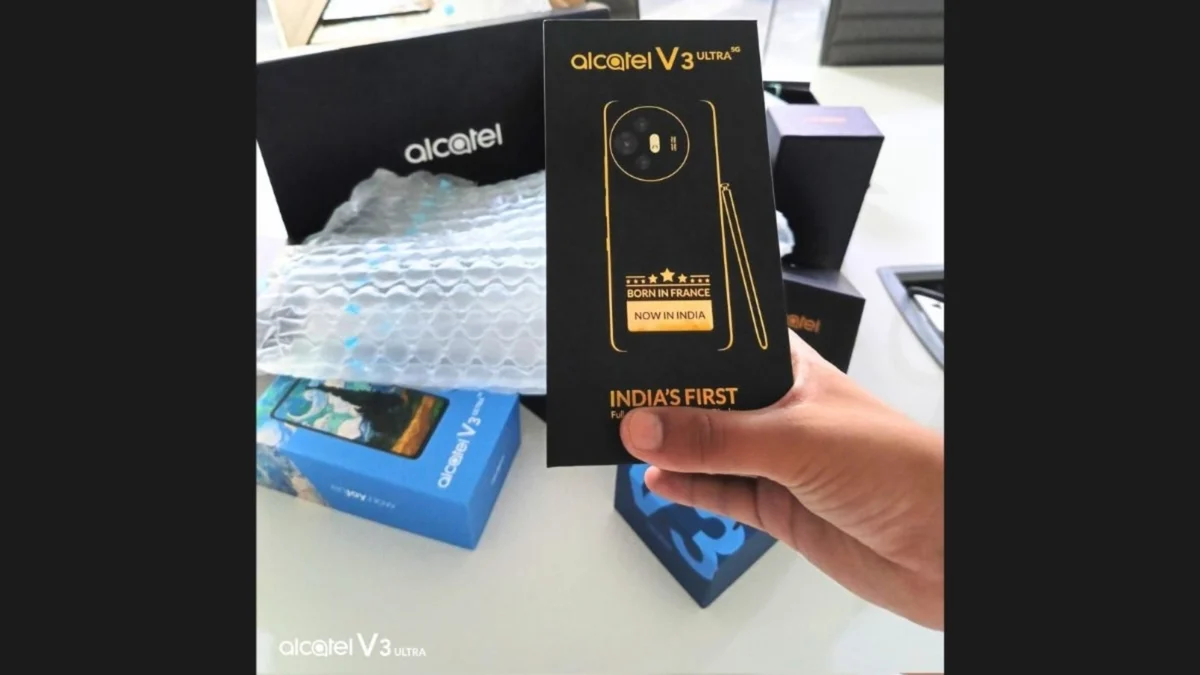
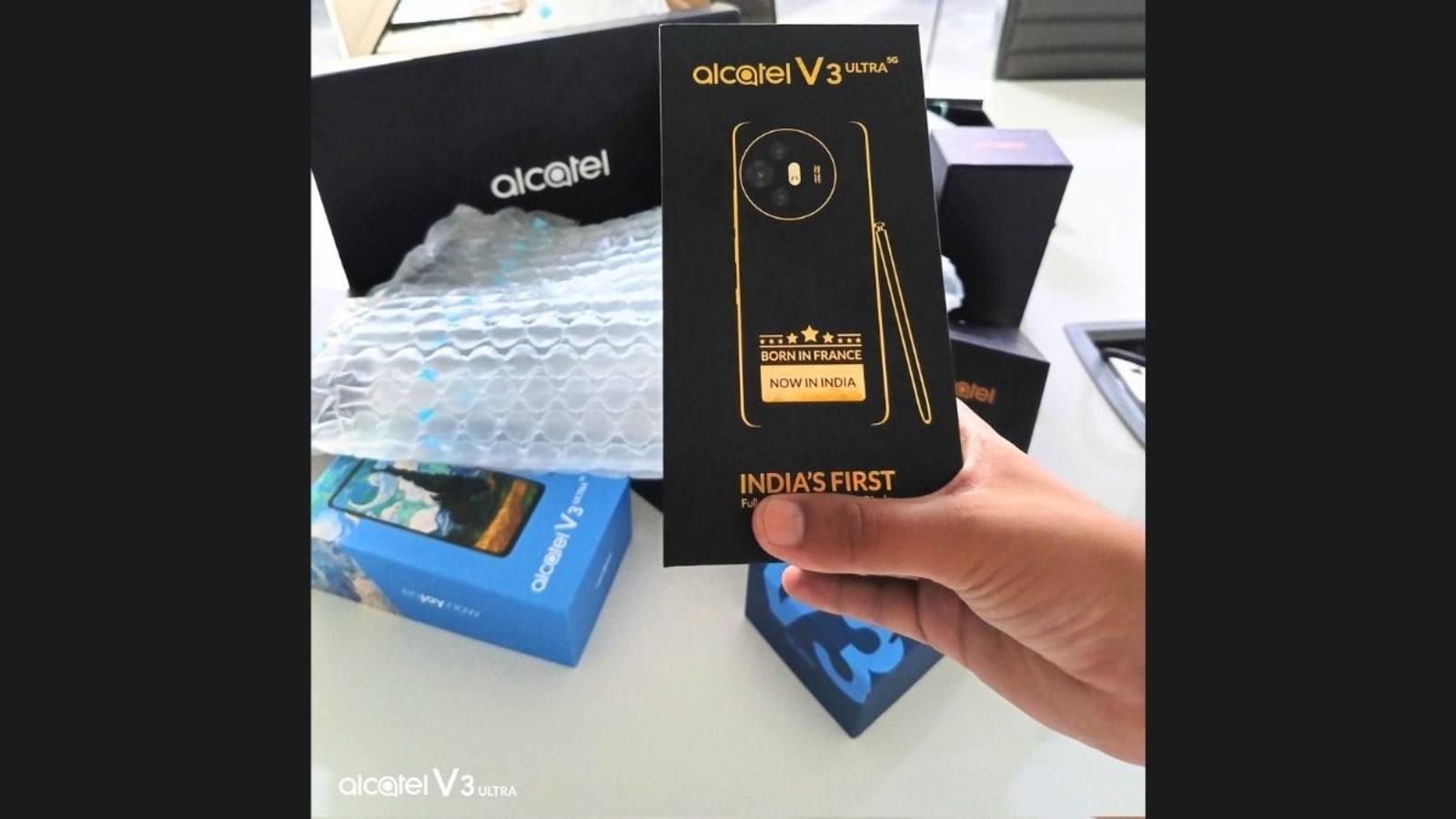
The confirmation of the Alcatel V3 Ultra came via a social media tease by Madhav Sheth, a pivotal figure in the brand’s Indian operations. The leaked retail packaging provides a vivid glimpse into the device’s design philosophy. The box, finished in a striking black with bold yellow branding, prominently displays a stylus icon, signaling that Alcatel is aiming to capture the power-user segment—a market niche often overlooked by mid-range competitors.
The aesthetic direction appears to be one of minimalist sophistication. Visible design cues from the packaging indicate a circular rear camera housing that accommodates a triple-sensor array paired with a dedicated LED flash. Furthermore, the inclusion of a blue-variant packaging design suggests a diverse color palette for the launch. The front of the device is expected to feature a flat display panel with a centered hole-punch cutout, adhering to current industry trends that prioritize an immersive, bezel-minimal viewing experience.
Chronology of the Return: From Absence to Re-entry
The journey back to the Indian market has been a methodical process for Alcatel. Following their departure from the retail landscape in 2022, the brand spent the interim period restructuring its supply chain and localizing its operations to align with the Indian government’s "Make in India" initiative.
- Early 2022: Alcatel pivots its operational focus away from India to consolidate global resources under the TCL Communication banner.
- Early April 2024: The brand formally announces its intent to return to India, signaling a shift toward premium device tiers rather than their historical focus on entry-level budget hardware.
- Mid-May 2024: A dedicated landing page goes live on Flipkart, confirming the distribution strategy and the first official product teasers.
- Current Status: With the V3 Ultra’s packaging confirmed and marketing assets circulating, the brand is currently in the final "hype-building" phase, with an official release date expected to be announced imminently.
Technological Differentiation: The NXTPAPER Edge
One of the most significant pillars of Alcatel’s return is the integration of TCL’s proprietary NXTPAPER display technology. This technology is designed to mimic the texture and visual comfort of paper, significantly reducing eye strain caused by harmful blue light while maintaining high contrast and vibrant color reproduction.
In a market saturated with standard OLED and LCD panels, the V3 Ultra’s display is expected to be its primary differentiator. For a consumer base that is increasingly conscious of "digital wellness," the ability to read, edit documents with a stylus, and consume media on a display that feels more natural than traditional glass is a powerful value proposition. By leveraging the synergies between TCL’s display manufacturing dominance and Alcatel’s mobile branding, the V3 Ultra is positioning itself as a productivity-first device.
Local Manufacturing and the "Make in India" Commitment
Alcatel has been vocal about its commitment to the Indian manufacturing ecosystem. The company has confirmed that its new generation of smartphones will be manufactured domestically. This is a critical strategic move for several reasons:
- Cost Efficiency: By avoiding high import duties on fully assembled mobile units, Alcatel can offer more competitive pricing for the V3 Ultra.
- Regulatory Alignment: Manufacturing locally ensures compliance with the Indian government’s vision for self-reliance, which often comes with favorable tax incentives and preferential market access.
- Supply Chain Agility: Local production allows for a faster response to regional demand shifts and simplifies the logistics involved in replenishment for e-commerce partners like Flipkart.
To support this local rollout, Alcatel is also investing in a robust service and repair network. The brand understands that in the Indian market, after-sales support is as critical as the hardware itself. By establishing regional service centers, they aim to mitigate the primary hesitation consumers often feel when buying from a brand that has been absent for several years.
Market Implications: The Battle for the Mid-Range
The segment in which the Alcatel V3 Ultra will operate is perhaps the most fiercely contested in the Indian mobile industry. With a projected price point likely hovering around the ₹20,000 to ₹25,000 range, the device will be stepping directly into the path of established players like Motorola, iQOO, and Realme.
The inclusion of a stylus suggests that Alcatel is targeting the "prosumer"—users who utilize their phones for light content creation, note-taking, and efficient multitasking. This pits the V3 Ultra against devices like the Motorola Edge 60 Stylus. However, while competitors often rely on raw processing power as their primary marketing lever, Alcatel is betting on the user experience—the combination of the NXTPAPER display and the stylus—to justify its price tag.

The partnership with Flipkart, including the "Flipkart Minutes" quick-delivery service, indicates that Alcatel is targeting the urban, tech-savvy demographic that prioritizes convenience and speed. This distribution strategy is designed to bypass the traditional brick-and-mortar limitations that often hinder new or returning brands.
Challenges Ahead
Despite the strategic preparation, Alcatel faces an uphill battle. The Indian smartphone consumer is notoriously brand-loyal and highly sensitive to price-to-performance ratios.
- Brand Recall: While the Alcatel name is historically significant, the younger demographic in India may not share the same nostalgia for the brand. Bridging this awareness gap will require a massive marketing spend.
- Competitive Saturation: Competitors like iQOO are currently dominating the mid-range segment by offering top-tier chipsets (such as the Snapdragon 8s Gen 4) and massive batteries (7,000mAh). If the V3 Ultra lacks the raw performance specifications to match its peers, the stylus and display technology may not be enough to sway buyers who prioritize gaming and heavy multitasking.
- Software Ecosystem: The "smoothness" of the UI and the consistency of software updates will be a make-or-break factor. Alcatel must ensure that their Android implementation is clean, bloatware-free, and supported by a multi-year update roadmap.
Final Thoughts: A High-Stakes Re-entry
The Alcatel V3 Ultra is more than just a new smartphone; it is a test of whether a legacy brand can pivot successfully to meet the sophisticated demands of the modern Indian market. By focusing on niche features like the NXTPAPER display and stylus integration, Alcatel is attempting to carve out a "blue ocean" within a sea of generic "spec-bump" phones.
If the V3 Ultra succeeds, it could set a template for other legacy manufacturers looking to re-enter emerging markets. If it fails, it may serve as a cautionary tale about the difficulty of regaining lost trust in a market that moves at breakneck speed. As the launch date approaches, all eyes will be on the retail price and the specific chipset powering the device. For now, the industry watches with cautious optimism, waiting to see if Alcatel’s paper-like display can truly write a new chapter in its Indian history.