






By Editorial Staff
October 24, 2026
In a significant stride toward strengthening India’s blue economy, the ICAR-Central Marine Fisheries Research Institute (CMFRI) has successfully ramped up its support for coastal aquaculture in Maharashtra. The institute recently distributed an additional five lakh hatchery-produced green mussel (Perna viridis) seeds to local fisher-folk and tribal communities, marking a cumulative milestone of one million seeds supplied over the past six months. This initiative, backed by the Union Department of Fisheries under the Pradhan Mantri Matsya Sampada Yojana (PMMSY), represents a strategic shift toward science-led, sustainable livelihood models in one of India’s most vital maritime states.
The Strategic Push for Bivalve Aquaculture
The expansion of bivalve farming is not merely an agricultural intervention but a socio-economic imperative. By providing high-quality, hatchery-produced seeds, CMFRI is mitigating the risks associated with wild-caught spat, which is often unreliable and ecologically damaging.
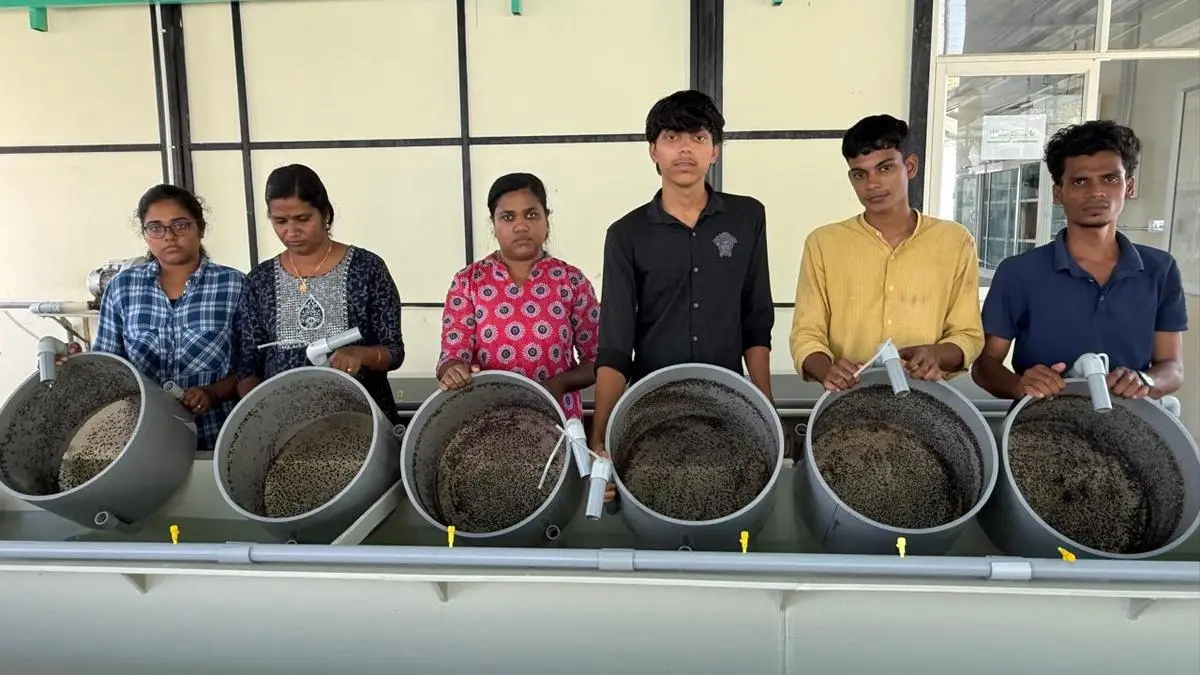
The green mussel seeds, currently measuring between 2–4 mm, were meticulously cultivated at CMFRI’s state-of-the-art bivalve hatchery at its Vizhinjam Regional Centre in Kerala. Recognizing the potential for diversification, the institute also supplied one lakh oyster seeds, sourced from its Madras Regional Station, to pilot oyster farming operations alongside mussel cultivation. This dual approach is designed to provide coastal communities with a diversified income stream, reducing their reliance on volatile capture fisheries.
Chronology of the Initiative: Building Capacity
The journey toward this milestone began with a vision to decentralize high-tech aquaculture research, bringing it directly to the end-users.
- Early 2026: CMFRI initiated consultations with the Maharashtra State Government to identify potential farming sites in coastal and mangrove-rich regions.
- May 2026: The first phase of seed distribution commenced, setting a baseline for survival rates and growth monitoring.
- August 2026: A specialized scientific team, led by Principal Scientist M.K. Anil, conducted intensive training workshops for 30 government officials from Maharashtra’s Mangrove Cell. These officials were trained in sophisticated nursery rearing, spat handling, and long-line farming techniques.
- October 2026: The milestone of one million total seeds distributed was achieved, accompanied by the rollout of a comprehensive monitoring framework for the farmers involved.
The project is currently facilitated by the Mangrove and Marine Biodiversity Conservation Foundation, which acts as the crucial bridge between laboratory research and field implementation. By linking scientific supply chains with grassroots farming activities, the foundation ensures that the technical guidance provided by CMFRI is translated into actionable agricultural practices.
The Economic and Environmental Rationale
CMFRI Director Grinson George emphasized that bivalve farming stands out as a "low-investment, low-operational-cost" technology. Unlike intensive finfish farming, which often requires significant feed and energy inputs, mussel and oyster farming rely on the natural productivity of the marine environment.
Economic Viability
For small-scale fishers and tribal communities, the entry barrier is significantly lower. The cost of materials—such as ropes, rafts, and cages—is minimal compared to the potential market returns of high-value bivalves. Because these organisms are filter feeders, they require no external feed, effectively turning natural phytoplankton into high-protein human food.
Environmental Stewardship
Beyond the economic benefits, bivalve farming is inherently regenerative. Mussels and oysters act as natural biofilters, stripping excess nutrients from the water column and improving overall water quality. This makes them ideal candidates for cultivation in mangrove-adjacent zones, where maintaining ecological balance is paramount. When managed correctly, these farms function as "living infrastructure," enhancing the biodiversity of the surrounding areas rather than depleting it.
Expert Perspectives: A Sustainable Future
During a press briefing on the project’s impact, Director Grinson George outlined the necessity of rigorous site selection. "While the technology is accessible, the success of bivalve farming is intrinsically linked to the health of the coastal ecosystem," George noted.

He underscored that the institute’s involvement extends beyond the initial supply of seeds. The scientific team is working closely with local communities to monitor environmental variables, such as salinity, temperature, and food availability. This data-driven approach ensures that as these farmers scale their operations, they do so in a way that remains sustainable for the long term.
"The ultimate goal," George added, "is to transition these communities from being mere harvesters of the sea to stewards of the marine environment. By providing them with the tools and training to manage their own bivalve beds, we are fostering a model of self-reliance that aligns with national food security goals."
Implications for Maharashtra’s Coastal Economy
The collaboration between CMFRI, the Union Department of Fisheries, and the Maharashtra Mangrove Cell serves as a blueprint for other maritime states. As climate change continues to alter migratory patterns of pelagic fish, traditional fishing communities are facing unprecedented uncertainty. Diversifying into bivalve culture offers a climate-resilient alternative.
Empowering Tribal Communities
A notable aspect of this project is its focus on tribal communities in coastal areas. These groups, who have deep ancestral knowledge of the sea, are now being integrated into a formal, scientific aquaculture framework. This not only preserves their connection to the coast but also empowers them with modern technical skills that increase the marketability of their produce.
Market Potential
The demand for high-quality bivalves in urban markets—such as Mumbai and Pune—remains robust. By producing consistent, high-quality yields through hatchery-reared seeds, these communities are poised to enter premium supply chains, bypassing middlemen and capturing more value at the farm gate.
Challenges and Future Roadmap
Despite the initial success, the project faces ongoing challenges. Proper site selection remains the most critical factor; the suitability of water quality must be maintained against the pressures of industrial runoff and urban development. Furthermore, the institutionalization of post-harvest processing—such as depuration facilities to ensure food safety—will be the next logical step for the project.
Looking ahead, the collaboration aims to establish regional nurseries in Maharashtra. Currently, the reliance on seeds transported from Kerala poses logistical challenges. By establishing local nursery hubs, the project hopes to reduce mortality rates during transport and further lower costs for local farmers.
Conclusion: A Model for Scalable Growth
The success of the five-lakh seed distribution is a testament to the power of inter-agency cooperation. By aligning federal funding, regional government support, and central research expertise, India is demonstrating that the blue economy is a viable pathway for inclusive growth.
As the project moves into its next phase, the focus will shift toward monitoring harvest cycles and analyzing the economic returns for the participants. If the current trajectory continues, Maharashtra could soon become a leading hub for bivalve aquaculture in India, providing a scalable, sustainable, and profitable model for coastal development. The "green" in green mussel farming is, in every sense, a signal of the growth to come.