






NEW DELHI — In an operation that has sent ripples through the South Asian broadcasting sector, law enforcement authorities in Haryana have dismantled an illicit cable operation, arresting a local operator for unauthorized television broadcasts. The raid, executed in the Gohana region of Sonipat district, has laid bare what industry insiders and regulatory analysts describe as a rapidly expanding, highly sophisticated underground market for unencrypted television signals plaguing northern India.
The arrest not only highlights the persistent vulnerabilities within traditional cable distribution networks but also underscores a multi-million-dollar economic drain on content creators, legitimate multi-system operators (MSOs), and the exchequer. As the Ministry of Information and Broadcasting ramps up nationwide anti-piracy initiatives, the Haryana case serves as a textbook example of the technological blind spots, regulatory hurdles, and enforcement challenges that continue to plague the modern media landscape.
Main Facts of the Case
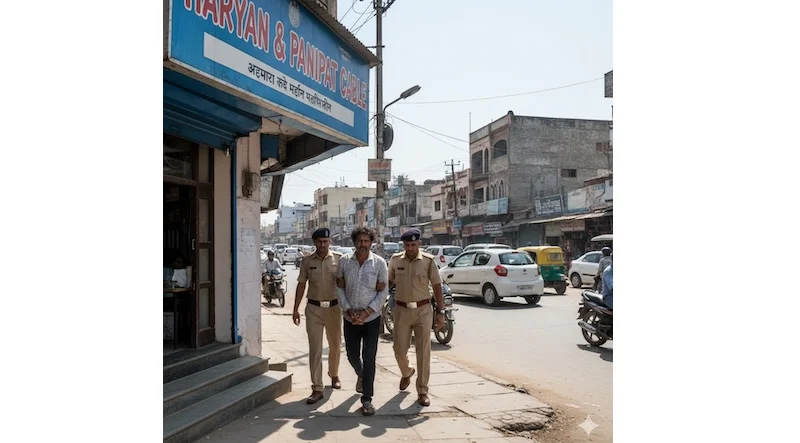
The focal point of the recent police action is Anurag Narwal, a local cable operator widely known by his alias "Nura." Operating within the Gohana jurisdiction of Sonipat district, Narwal was apprehended by local law enforcement following a targeted raid that exposed an illegal retransmission setup.
According to police reports, Narwal was engaged in the unauthorized distribution and retransmission of premium JioStar channels to local subscribers without holding the requisite commercial licenses or distribution agreements. The operation bypassed standard subscription verification channels, allowing the operator to commercialize copyrighted programming illegally at the expense of legitimate broadcasters.
The Raid and Seized Equipment
Acting on actionable intelligence regarding unauthorized signal distribution, local authorities executed a search warrant at a commercial building located in the Kathmandi area of Gohana. During the sweep of the property’s upper levels, investigators recovered key pieces of hardware utilized in the piracy enterprise:
- Two optical transmitters
- Two optical receivers
Law enforcement officials believe this specialized hardware was deployed to ingest incoming feeds, convert them, and pump pirated television signals across local distribution lines directly to households, completely bypassing legitimate decoding infrastructure.
Legal Ramifications
Following the seizure of the equipment and preliminary questioning, a First Information Report (FIR) was formally registered against Narwal. The charges invoked stringent provisions under the Copyright Act, 1957, specifically addressing criminal copyright infringement, commercial exploitation of intellectual property without authorization, and the physical possession of equipment designed or used for unlawful signal distribution.
Gohana police station inspector Arun Kumar confirmed the details of the detention, noting that while the suspect was initially taken into custody, he was subsequently released on statutory bail as the investigation broadens.
Chronology of the Investigation and Supply Chain
The arrest of Anurag Narwal was not an isolated incident; rather, it was the culmination of a broader intelligence-gathering operation tracking signal theft across multiple districts in Haryana.
Phase 1: Localized Monitoring and Intelligence Gathering
In the weeks leading up to the raid, major entertainment networks and anti-piracy cells noticed abnormal subscriber metrics and unauthorized signal bleeding in the Sonipat region. Intelligence suggested that localized cable operators were offering comprehensive channel bouquets at steep discounts—rates economically unfeasible under standard commercial wholesale pricing models set by content providers. Investigators mapped these anomalies to localized fiber networks operating outside the oversight of authorized local cable operators (LCOs) and multi-system operators (MSOs).
Phase 2: The Kathmandi Raid
Armed with specific coordinates, enforcement teams, accompanied by local law enforcement, raided the commercial property in Kathmandi, Gohana. The recovery of optical transmitters and receivers provided the physical evidence required to substantiate claims of illicit retransmission. The hardware served as the immediate basis for the FIR filed under the Copyright Act.
Phase 3: Tracing the Upstream Source
Following Narwal’s arrest, the investigation swiftly moved up the supply chain. Interrogations and technical analysis of the distribution lines allowed cybercrime and local police units to trace the origin of the unauthorized broadcasts. Investigators discovered that the illicit feeds did not materialize locally; instead, they were sourced from a Panipat-based multi-system operator.
Phase 4: Expanding Regional Probe
With the Panipat MSO identified as a critical node in the distribution chain, police authorities have widened the scope of the inquiry. Investigators are currently examining whether other cable operators across neighboring districts are tied to the same upstream supply chain. This discovery has raised serious concerns among law enforcement agencies that a coordinated, regional syndicate may be operating under the guise of legitimate local cable businesses, systematically stripping encryption and redistributing unencrypted television signals across a vast swath of northern India.
Supporting Data and the Technology Gap
To understand how operations like the one in Gohana succeed, industry analysts point to systemic technical vulnerabilities embedded within legacy television distribution infrastructure—specifically, the reliance on unencrypted fiber feeds and the absence of robust forensic watermarking.
The Vulnerability of Unencrypted Fiber Distribution
While direct-to-home (DTH) platforms and digital streaming (OTT) services utilize end-to-end digital rights management (DRM) and dynamic encryption protocols, traditional cable networks often rely on hybrid fiber-coaxial (HFC) architectures. Within these setups, signals must frequently be decrypted at various stages of transit to be converted for local distribution loops.
When these feeds travel across intermediate distribution nodes without continuous encryption, opportunistic operators can tap into the lines. They extract clean, unencrypted video and audio feeds and pump them directly into their own local networks.
The Watermarking Blind Spot
A primary hurdle plaguing modern anti-piracy investigations is the lack of universal forensic watermarking.
- Encrypted ecosystems routinely embed invisible, unique identifiers into video streams. If a feed is illicitly recorded and rebroadcast, forensic software can analyze the pirated stream, read the hidden identifier, and pinpoint the exact subscriber account or distribution node responsible for the leak.
- Unencrypted fiber-distributed signals, however, often lack these granular identifiers. Without a persistent digital fingerprint, once a feed is siphoned off a primary line, it can be copied, compressed, and retransmitted infinitely without leaving a verifiable trail back to its source.
A senior executive from a leading entertainment broadcaster, speaking on condition of anonymity due to the ongoing nature of cross-state investigations, detailed the severity of this loophole:
"The biggest loophole today is unencrypted distribution. When feeds are shared without watermarking, it becomes nearly impossible to trace who extracted it, who retransmitted it, and where the leak originated. It’s a blind spot that pirates have learned to exploit very effectively."
Broadcasters emphasize that millions of dollars are funneled annually into sophisticated anti-piracy systems, automated web-scraping monitoring tools, and cyber-patrol units. However, these substantial corporate investments are systematically undermined whenever content traverses distribution handoffs that operate outside secure, end-to-end encrypted frameworks.
"We keep closing the gaps at our end, but unencrypted feeds undo everything," noted a second prominent broadcasting executive, capturing the collective frustration of an industry fighting a technological rearguard action.
Official Responses and Regulatory Landscapes
The crackdown in Haryana occurs against the backdrop of heightened regulatory scrutiny at the national level. India’s media and entertainment sector has long lobbied for stricter legislative frameworks to protect intellectual property, prompting government bodies to re-evaluate existing statutes.
Ministry of Information and Broadcasting (MIB) Initiatives
Demonstrating a proactive stance against rampant intellectual property theft, the Ministry of Information and Broadcasting issued a comprehensive consultation notice on November 7, 2025. The notice formally announced a sweeping review of current enforcement mechanisms, monitoring frameworks, and statutory penalties associated with content piracy.
The MIB’s review specifically targets unauthorized distribution networks affecting three critical pillars of the Indian entertainment economy:
- Feature Films: Combating theatrical camcording and immediate online distribution of copyrighted movies.
- Television Channels: Addressing unauthorized retransmission, cable signal theft, and unauthorized commercial exploitation in hospitality and residential sectors.
- OTT Platforms: Formulating modern frameworks to combat digital piracy, domain-hopping pirate streaming sites, and Internet Protocol Television (IPTV) black-market operations.
Industry Demands: Mandatory Watermarking
For industry stakeholders, legal experts, and MSO compliance officers, the Haryana incident validates a long-standing core demand: the implementation of mandatory forensic watermarking across all broadcast feeds.
Broadcasters argue that regulatory compliance must evolve past mere licensing agreements to mandate technological accountability. Without statutory requirements for traceable identifiers embedded in every signal—from the master control room down to the final LCO drop—law enforcement agencies and anti-piracy cells will remain trapped in a reactive posture.
Legal advocates specializing in intellectual property rights point out that existing legislation, such as the Copyright Act of 1957 (even with subsequent amendments), requires modernization to effectively penalize digital-age signal theft, where physical hardware seizures like those in Gohana represent only the tip of the iceberg.
Economic and Strategic Implications
The underground cable market is far more than a localized nuisance; it represents a systemic threat to the economic viability of India’s media ecosystem.
Financial Drain on Broadcasters and Legitimate Operators
Piracy directly depresses subscription revenues, advertising yields, and content valuation. When underground operators like the network uncovered in Sonipat provide unmonitored access to premium programming, legitimate consumers migrate to cheaper, unauthorized services. This starves legitimate MSOs and DTH providers of subscription fees, while broadcasters face diminished returns on multi-billion-dollar content acquisitions, sports rights bids, and original production budgets.
Furthermore, legitimate cable operators—who invest heavily in statutory carriage fees, Goods and Services Tax (GST) compliance, and infrastructure upgrades—find themselves at an unfair competitive disadvantage against rogue operators who incur zero content acquisition costs.
The Cat-and-Mouse Dynamic
Industry representatives issue a stark warning: unless federal and state regulatory bodies introduce stringent structural safeguards, illegal redistribution networks will continue to proliferate unchecked.
Without systemic reforms—such as mandatory encryption standards, stringent Know-Your-Customer (KYC) norms for commercial cable installations, and universal forensic watermarking—enforcement will remain a costly, repetitive game of cat-and-mouse. Raids resulting in bail releases and minor equipment seizures, while necessary, do little to dismantle the underlying infrastructure of well-funded piracy syndicates capable of shifting operations overnight.
As the investigation in Haryana deepens, tracing connections from Gohana back to Panipat and potentially beyond, it serves as a critical wake-up call for policymakers and media executives alike. Protecting India’s booming entertainment sector requires a unified front: combining aggressive local policing with uncompromising technological mandates to permanently seal the unencrypted loopholes exploited by modern digital pirates.