





In the high-stakes environment of professional networking, the rise of Generative AI has created a paradox for marketers. While tools like ChatGPT offer unprecedented speed in content production, LinkedIn has simultaneously launched a silent, high-tech offensive against “AI slop.” For the modern marketer, the challenge is no longer about whether to use AI, but how to integrate it without triggering the platform’s detection systems—or worse, alienating a discerning audience.
As LinkedIn refines its algorithms to prioritize human expertise over automated filler, creators must adapt or risk being buried. This guide explores the strategic integration of AI, the evolving landscape of platform engagement, and the tactical nuances of maintaining human credibility in an automated world.
The State of the AI Crackdown: Why Authenticity is Now a Metric
LinkedIn’s posture toward AI has shifted from passive tolerance to active mitigation. Over the past several months, the platform has successfully blocked billions of automated posting attempts and hundreds of thousands of daily bot-driven comments.
The platform’s stance is clear: AI should serve as a co-pilot, not an autopilot. This is evidenced by the decommissioning of the platform’s native "Enhance Your Post" feature, which frequently stripped content of its unique voice, in favor of a proofreading-only tool designed to maintain the author’s original intent.
According to industry expert AJ Wilcox, LinkedIn’s detection mechanisms are dual-layered. While algorithmic filtering identifies patterns of automation, the platform is also leveraging user-reported data. When members flag content as "AI slop," that data is currently being used to train LinkedIn’s detection models. While these flags may not yet result in immediate account penalties, they serve as a precursor to future suppression. Currently, the penalty for AI-generated content is organic: audiences simply ignore it. AI-driven posts and comments that fail to resonate receive minimal engagement, effectively pushing them to the bottom of the feed through standard algorithmic sorting.
The Ideation-Expertise-Polish Model
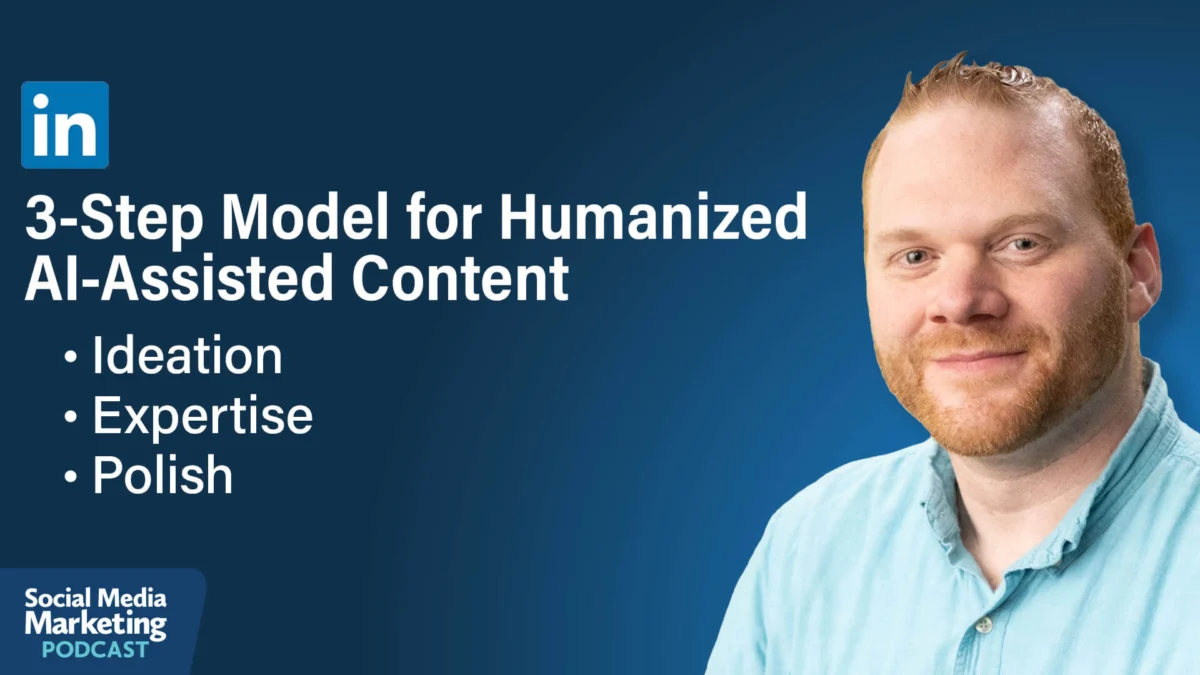
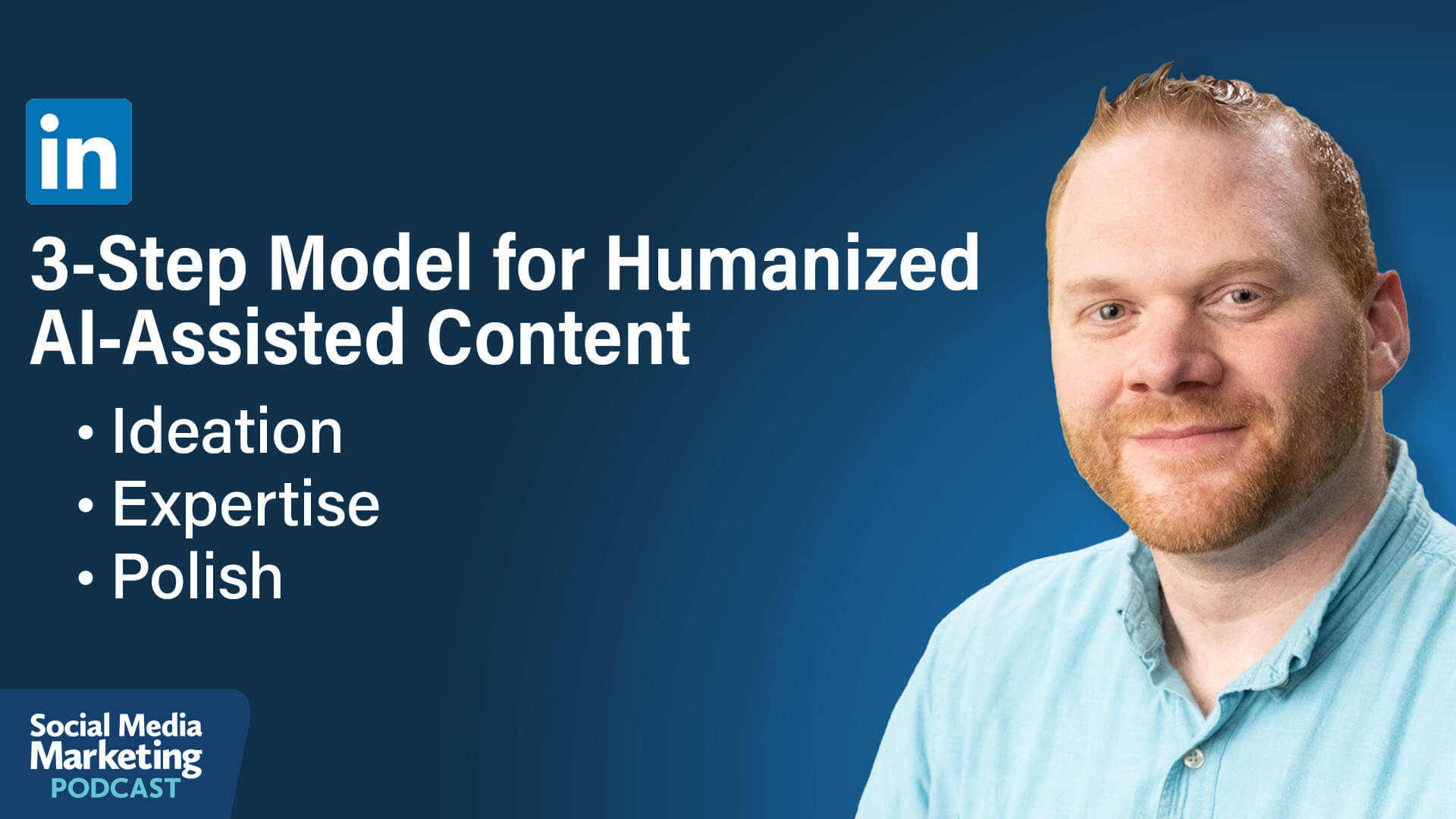
To navigate this landscape, creators must adopt a structured workflow that ensures human authority remains at the core of their content. Wilcox advocates for a "sandwich" approach to content creation:
1. Ideation: Leveraging AI for Volume
The beginning of the process is where AI shines. Use LLMs to brainstorm angles, identify supporting frameworks, or generate a list of counter-arguments for a specific topic. At this stage, the goal is quantity and variety. AI can help you overcome the "blank page" syndrome by offering multiple perspectives on a theme, but the final choice of direction must be human-led.
2. Human Expertise: The Non-Negotiable Core
This is the "meat" of the sandwich. AI is inherently incapable of reproducing your specific professional experiences, industry-specific anecdotes, or the nuanced "war stories" that define your brand authority. If you skip this step, your content will inevitably read as generic. Authenticity is found in the synthesis of real-world application; if your post lacks these personal markers, it is destined to fail.
3. Polish: Refinement, Not Creation
Once your draft is complete, AI can be employed to tighten prose, improve flow, or adjust formatting for readability. The key distinction here is that you are asking the AI to edit your words, not generate its words. By keeping the creative control in human hands, you ensure that the final output retains your voice.
Avoiding the "AI Tells"
As detection technology advances, audiences have become increasingly sophisticated at identifying "AI tells." Certain markers immediately trigger skepticism among professionals:
- The Em Dash Overuse: AI models exhibit a stylistic preference for em dashes that deviates significantly from natural human writing patterns.
- Formulaic Phrases: Phrases like "guard your mental faculties" or "this is silently killing your productivity" have become hallmarks of AI-generated hype. These tropes are easily flagged by experienced readers.
- The Emoji Trap: Inserting emojis into comments in a way that feels uncharacteristic of the author is an instant red flag.
- The "Intentional Typo" Fallacy: Some creators attempt to "humanize" AI text by intentionally including errors. This is a flawed strategy, as AI models are perfectly capable of mimicking human typos upon request.
The most effective "AI-proof" is, ultimately, substance. If a post delivers high-value, actionable insights, it is unlikely to be dismissed as slop, regardless of how clean the formatting is. The audience reacts to emptiness, not polish.
Chronology of Engagement: Optimizing Posting and Interaction
Success on LinkedIn requires a disciplined approach to timing and frequency. The platform’s algorithm is sensitive to content saturation.
Posting Frequency and Timing
For those publishing twice weekly, Tuesday and Thursday remain the gold standard for reach. If you are limited to a single weekly post, Wednesday typically provides the strongest engagement. Monday should be avoided, as the "return-to-work" surge creates a noisy environment where content is easily overlooked. Similarly, Friday is a "dead zone" as professionals mentally transition into the weekend.
The Golden Rule: Never post twice in one day. Doing so triggers "cannibalization," where your two posts compete for the same audience’s attention, effectively reducing the reach of both. Furthermore, allow your posts "breathing room." Do not publish a new piece of content while the previous one is still gaining momentum.

The Rise of Commenting as a Growth Engine
LinkedIn has shifted its architecture to prioritize comments, making them a primary growth lever. With "comment impressions" now visible to creators, users can treat the comment section as a testing ground for their authority.
- Comment Density: LinkedIn’s algorithm prioritizes the depth of a thread over the number of interactions. Shallow comments like "Great post!" or "Thanks for sharing!" provide zero value. Instead, aim to build threads that engage with the core ideas of the post.
- The "Curiosity" Framework: To drive meaningful discussion, use prompts that invite others to contribute. Phrases like "What am I missing?" or "Am I looking at this the wrong way?" are highly effective at attracting diverse viewpoints.
- The Ted Lasso Principle: When disagreeing, be curious, not judgmental. Open with a compliment, present a "slightly different take," and close by inviting the author to share their thoughts. This keeps the discourse professional and productive.
Implications for Live Streaming and Advertising
LinkedIn’s AI integration extends beyond the feed into live streaming and paid media, with significant implications for how brands approach production.
Live Stream Discoverability
One of the most persistent hurdles for LinkedIn Live has been the lack of discoverability once a broadcast ends. LinkedIn’s new AI-powered tools now automatically generate "standout moments" and timestamps for replays. This turns a long-form, one-time event into a library of modular, searchable content. This is a boon for executives who lack the bandwidth for high-production video, as it allows for an "unscripted" interview style that the AI then cleans up for post-event consumption.
Ad Campaign Strategy
In the realm of LinkedIn Ads, creators often fall into the trap of applying Meta’s "volume-first" strategies. LinkedIn’s platform operates differently. LinkedIn recommends five or more ad variations per campaign, but doing so can inadvertently break the system’s frequency caps, driving up costs without providing a commensurate increase in performance.
A more effective strategy is to limit campaigns to two to four creatives. This provides enough data for the algorithm to optimize while ensuring you don’t exhaust your audience’s attention span. The takeaway is simple: test your best-performing creative from other channels on LinkedIn, but respect the platform’s unique auction mechanics by keeping your variables lean and controlled.
Conclusion: The Human Edge
As AI tools become more ubiquitous, the value of the human voice will continue to rise. LinkedIn is not trying to eliminate AI from the ecosystem; it is trying to eliminate the noise that prevents valuable, human-centric conversations from surfacing. By using AI for the mechanical "bookends" of the creative process—ideation and polish—while keeping the core of the message anchored in personal expertise, creators can build a sustainable, high-authority presence on the platform. In the race between automation and authenticity, the human element remains the ultimate competitive advantage.