








The landscape of web development is shifting at an unprecedented velocity. As JavaScript continues to dominate the browser and server-side environments, the focus has moved from merely adding features to refining the developer experience, optimizing performance, and mitigating the risks associated with AI-driven automation. This report synthesizes the latest industry developments, ranging from the emergence of specialized runtimes to the critical challenge of AI oversight.
1. The AI Integration Dilemma: Grading the Graders
Artificial Intelligence has become an indispensable pair-programmer for many, but its rapid adoption has created a secondary crisis: quality control. As AI agents gain the ability to write and ship code with minimal human intervention, the industry faces a pivotal question: Can we trust these systems to audit their own output?
Industry leaders like Dropbox, Notion, and ElevenLabs are adopting a cautious stance. Rather than relying on AI to "grade its own homework," these firms are shifting toward automated, exhaustive verification systems. Meticulous, a leading solution in this space, is positioning itself as the safeguard for the automated future. By implementing rigorous verification protocols that require zero developer intervention, Meticulous ensures that AI-generated code changes are audited against functional specifications rather than relying on the generative model’s self-assessment. This move underscores a broader trend: as AI becomes more autonomous, the infrastructure surrounding it must become more deterministic.
2. Optimizing the Stack: TanStack’s Bold Moves
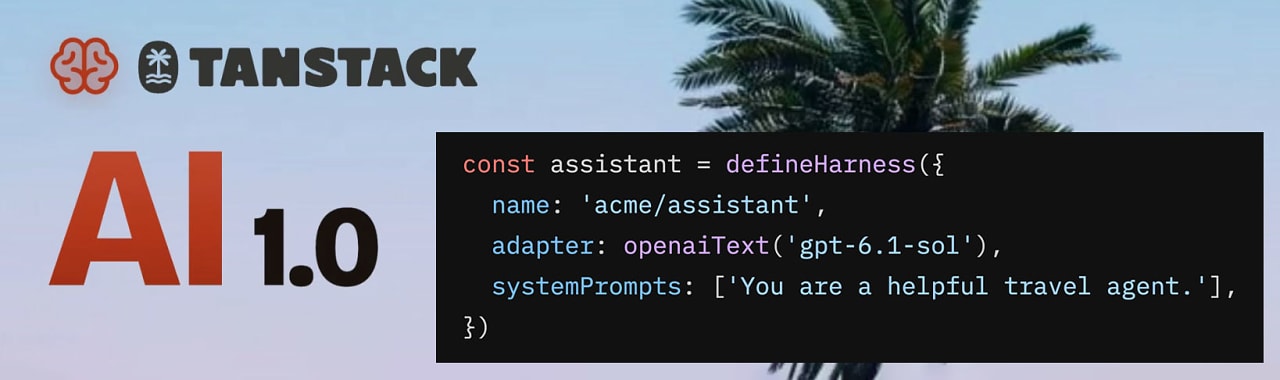
The TanStack ecosystem remains at the forefront of high-performance web development. Recent announcements have signaled a significant shift in how developers approach React runtimes.
TanStack Redact: Trimming the Fat
Tanner Linsley and the TanStack team recently introduced TanStack Redact, a project designed to address the bloat often associated with large-scale React applications. Redact acts as a build-time plugin that replaces the standard React and React DOM libraries with a leaner, more efficient implementation.

The implications are significant: early testing indicates bundle size reductions between 20% and 70%. However, this comes with a critical constraint—rendering is strictly synchronous. This limitation forces developers to make trade-offs regarding interactivity and data fetching, but for performance-critical applications, the shift toward a smaller runtime is a compelling evolution in the "less is more" philosophy.
3. The Quest for Performance: Biome and Sentry
The pursuit of a faster developer experience (DX) has led to the rise of Rust-powered toolchains that aim to replace legacy JavaScript tooling.
Biome v2.6: Expanding the Horizon
The Biome project, which provides a high-performance alternative to ESLint and Prettier, has reached a new milestone with v2.6. By expanding its formatting capabilities to include Markdown, YAML, and SCSS, Biome is positioning itself as an "all-in-one" solution. Most notably, the inclusion of a developer preview for JavaScript-based custom lint rules marks a major step forward in accessibility, allowing teams to enforce complex internal standards without the performance penalty traditionally associated with complex ESLint configs.
The War on Dead Code
Dominik Dorfmeister of Sentry recently shared a compelling case study on the hidden costs of code rot. His work highlights how "dead code" is not just a nuisance but a financial and operational burden. By utilizing the tool Knip, Sentry was able to systematically identify and prune 28,000 lines of unused code. This initiative serves as a blueprint for engineering teams aiming to reduce technical debt, improve build times, and lower the cognitive load on developers.
4. Security and Sandboxing: The AI-Generated HTML Risk
As AI tools generate increasingly complex front-end components, the risk of cross-site scripting (XSS) and other injection vulnerabilities has reached new heights. Keshav Malik, a prominent security engineer, recently provided a comprehensive analysis on the dangers of naive AI-generated HTML previewing.
The standard approach—rendering model-written HTML in a srcdoc iframe—often inadvertently grants the AI code access to the host application’s origin. Malik argues for a more robust approach: leveraging the sandbox attribute combined with a strict Content Security Policy (CSP). By isolating AI-generated previews, developers can enjoy the convenience of rapid iteration without compromising the integrity of their production environment.
5. Technical Foundations: Parser Combinators and Retro-Engineering
Innovation often requires looking backward. The industry has seen a resurgence in interest regarding the foundational concepts of language processing.
Building Parsers from Scratch
Florian Schindler’s recent walkthrough on "Parser Combinators in TypeScript" provides a masterclass in building domain-specific languages. By moving beyond regex—which is often brittle and difficult to maintain—and avoiding the overhead of heavy tools like tree-sitter, developers can build custom, typed object parsers. This is particularly relevant for those dealing with legacy systems or specialized CLI tools where structured data is not readily available.
Atari ST Physics and Modern JavaScript
In a fascinating intersection of nostalgia and modern engineering, developer Pat Kerr has ported the vehicle physics logic from his 1996 Atari ST project into modern JavaScript. This serves as a reminder that the core principles of game mechanics remain timeless, even as the execution environment has transitioned from custom silicon to the high-performance V8 and SpiderMonkey engines.
6. Historical Context: The Legacy of CoffeeScript
It is impossible to discuss the current state of JavaScript without acknowledging the contributions of CoffeeScript. While the language has largely faded from active development, its impact is embedded in the DNA of modern ECMAScript. Brendan Eich, the creator of JavaScript, has previously noted that CoffeeScript’s early implementation of arrow functions and simplified class structures served as a primary influence for the massive ES6 update in 2015. Today’s developers, who enjoy the ergonomic benefits of modern JS, owe a debt to these early experiments in language design.

7. Implications for the Future
The trends observed in the current ecosystem point toward three major pillars for the coming year:
- Mandatory Verification: As AI agents become the primary authors of code, the "Reviewer" role will become as important as the "Creator" role. Tools like Meticulous and Wallaby will likely become industry standards, ensuring that AI-generated logic is tested against real-world constraints rather than theoretical outcomes.
- Runtime Minimalism: With the introduction of projects like TanStack Redact, the industry is signaling that it has reached a ceiling for "heaviness." The next generation of frameworks will likely prioritize minimal footprints and build-time optimization over runtime feature sets.
- Security by Design: The integration of AI into the build pipeline necessitates a "Zero Trust" approach to front-end rendering. Sandboxing and CSPs will evolve from "best practices" into essential requirements for any platform that allows AI-generated code to be previewed or executed.
Conclusion
The JavaScript ecosystem is currently experiencing a "maturation phase." The chaotic growth of the past decade is being replaced by a focus on reliability, security, and performance. By trimming the excess (Sentry), optimizing the delivery (TanStack), and securing the generation (Meticulous), the community is building a more resilient foundation for the next generation of web applications.
As we look toward the future, the developers who thrive will be those who balance the speed of AI-driven development with the discipline of rigorous, manual-grade verification. The tools are ready; the question remains whether the industry is prepared to adopt the level of scrutiny that these powerful technologies demand.