







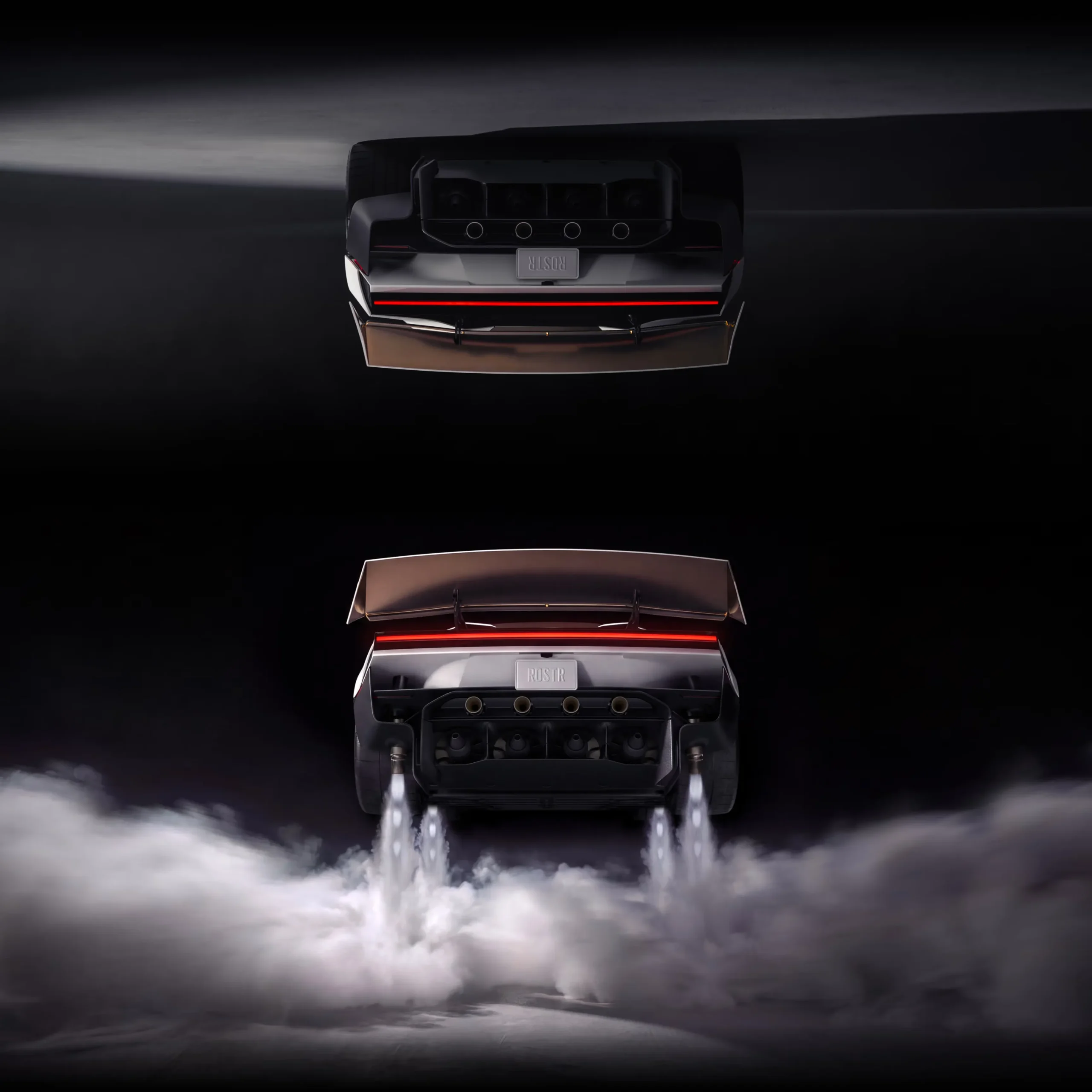
WACO, TEXAS — In an exhibition that has sent shockwaves through the automotive and aerospace industries alike, Tesla’s long-awaited, heavily delayed next-generation Roadster has returned to the spotlight with a jaw-dropping physics-defying stunt. At a heavily publicized, livestreamed event outside Waco, Texas, the redesigned electric sports car executed a sequence of maneuvers previously confined to the realms of science fiction and military aviation: driving upside down via active suction technology and performing a controlled mid-air flip powered entirely by compressed-gas thrusters.
The demonstration has reignited global curiosity—and skepticism—surrounding a vehicle that was first unveiled as a prototype nearly a decade ago. As Tesla CEO Elon Musk proclaimed on social media platform X shortly after the event, "Turns out the future does have flying cars," the industry is left grappling with the implications of an EV that blurs the line between traditional automotive engineering and rocket science.
Main Facts: Breaking Down the Waco Demonstration
The centerpiece of the Texas event was a meticulously choreographed sequence designed to showcase the Roadster’s bleeding-edge, SpaceX-inspired performance architecture.
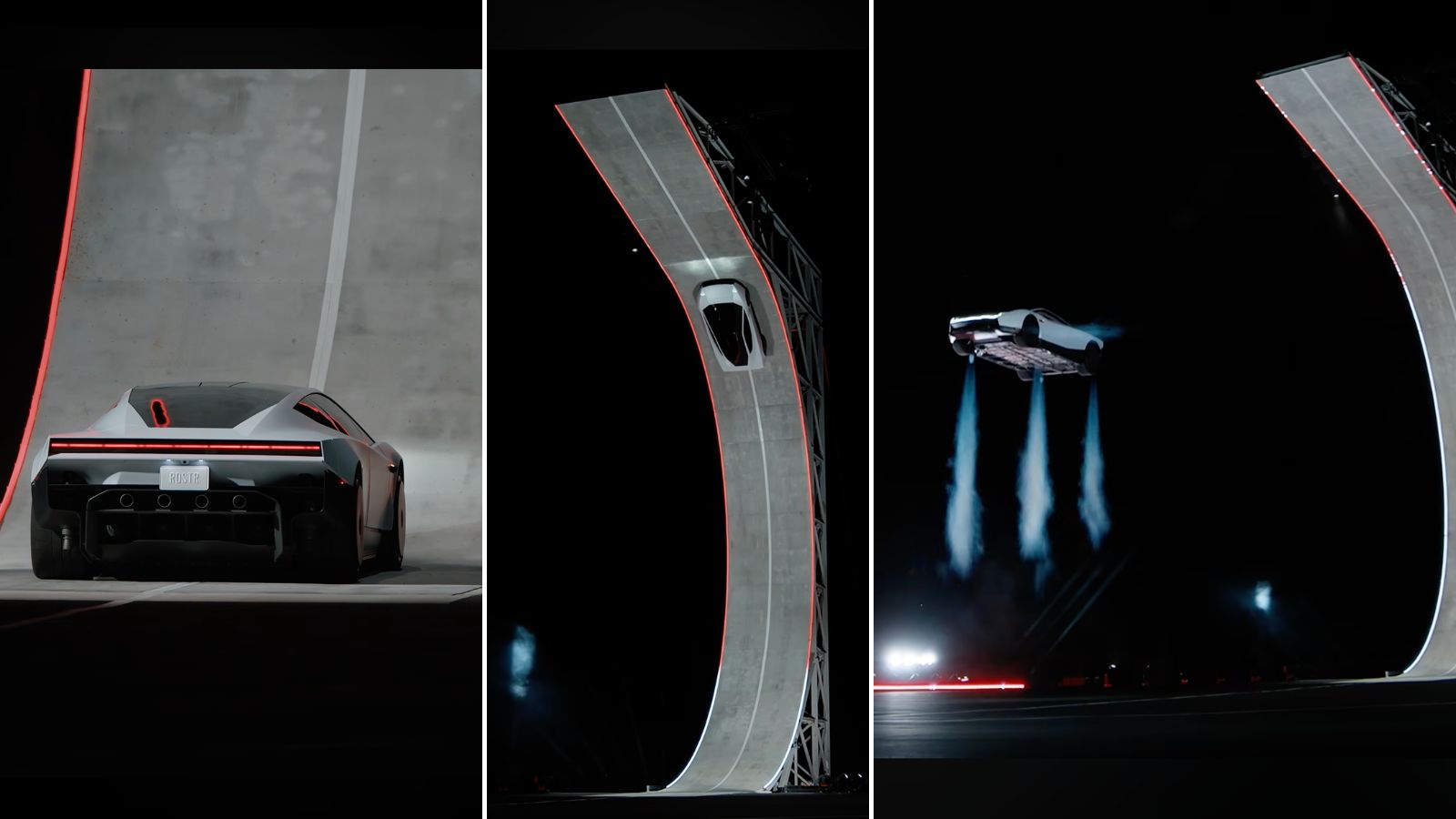
During the primary demonstration, the vehicle was driven up a towering, specialized curved ramp. Upon reaching the apex, rather than simply descending, the Roadster proceeded to drive completely upside down, defying gravity before launching off the structure. In mid-air, the car executed a dramatic, calculated aerial flip before safely touching back down on the tarmac.
The feat was made possible by two primary technological systems:
- The Fan-Based Suction System: Mounted underneath the vehicle, this system actively draws air out from beneath the chassis, creating an immense low-pressure zone that forces the car against the driving surface. Unlike conventional supercars that rely passively on aerodynamic downforce and tire friction, Tesla’s suction mechanism allowed the Roadster to maintain adhesive contact while inverted on a curved track.
- The Cold-Gas Thruster System: Developed in tandem with aerospace engineers from SpaceX, this system utilizes high-pressure compressed air stored in onboard tanks. Released through a network of 10 directional nozzles, the escaping air generates immediate reactive thrust based on Newton’s third law of motion. According to Tesla Vice President of Engineering Lars Moravy, the tanks hold approximately 600 liters of compressed air and can be refilled, bypassing the need for hazardous liquid rocket fuels.
In addition to its aerial acrobatics, the Roadster demonstrated blistering straight-line acceleration, hurtling from 0 to 60 mph in less than a second. In perhaps the most theatrical moment of the evening, the vehicle utilized its thrusters to execute a brief hop, clearing a lineup of five iconic Tesla models parked in succession: a Cybercab, a Cybertruck, a Tesla Semi, a Model Y, and a Model 3.
Chronology: A Decade-Long Road to the Roadster
To understand the weight of the Waco demonstration, one must examine the protracted and turbulent timeline of the Roadster project.
- July 2006: Tesla introduces the original Roadster prototype, aiming to prove that electric vehicles could be stylish, desirable, and capable of high performance.
- March 2008: Regular production of the first-generation Roadster officially begins. Built upon a modified Lotus Elise chassis, it becomes Tesla’s debut production car.
- January 2012: Tesla officially discontinues production of the first-generation Roadster after manufacturing roughly 2,450 units, shifting its capital and engineering focus toward the Model S sedan.
- November 2017: Elon Musk stuns the automotive world by unveiling the second-generation Roadster prototype at an event in Hawthorne, California. Musk boasts staggering specifications: 0–60 mph in 1.9 seconds, a top speed exceeding 250 miles per hour, and a 620-mile range. A "SpaceX package" featuring cold-gas thrusters is casually teased.
- 2018–2025 (The Delay Years): Originally promised for a 2020 release, the Roadster’s production timeline is repeatedly pushed back. Tesla prioritizes scaling production of the Model 3, Model Y, the Cybertruck, and global factory expansions, leaving the sports car in a perpetual state of engineering refinement.
- October 2026: Tesla stages the high-octane Waco demonstration, revealing a newly redesigned iteration of the Roadster and establishing a fresh target production window of 2028. Alongside the reveal, Tesla opens reservation deposits: $50,000 for the standard Performance variant and $250,000 for the elite Thrust variant.
Supporting Data: Specifications, Variants, and Financials
While the spectacle in Texas captured headlines, automotive analysts and engineers are closely scrutinizing the sparse hard data released by Tesla regarding the vehicle’s production viability.
Trim Levels and Architecture
Tesla has structured the next-gen Roadster lineup into distinct tiers, catering to varying levels of performance obsession:
- Performance Variant: The baseline high-performance electric sports car, focusing on blistering acceleration and dynamic handling. Requires a $50,000 deposit.
- Thrust Variant: Incorporates the cold-gas thruster system for enhanced agility and localized braking/turning boosts. Requires a $250,000 reservation deposit.
- Rocket Variant (Single-Seat): The extreme expression of the engineering collaboration with SpaceX, integrating the full suite of 10 cold-gas thrusters and the heavy-duty compressed air infrastructure.
Engineering Metrics
- Thruster Capacity: 10 strategically placed cold-gas nozzles connected to 600 liters of high-pressure air storage tanks.
- Acceleration Claim: 0 to 60 mph in under 1.0 second (for equipped variants).
- Production Target: 2028 (subject to further regulatory and engineering milestones).
It is crucial to note that none of the extreme aerial capabilities or sub-one-second acceleration metrics demonstrated in Waco have thus far been independently verified on a commercially available production vehicle. The cars showcased in the livestream remain advanced engineering prototypes.
Official Responses: Musk, Moravy, and Industry Reactions
The automotive community’s response to the Waco exhibition has been a mixture of awe, skepticism, and regulatory anxiety.
Elon Musk, true to form, leaned heavily into the theatricality of the moment. Following the livestream, Musk posted the footage to X with the caption: "Turns out the future does have flying cars." Throughout the event, Musk framed the Roadster not merely as an automobile, but as a convergence of terrestrial and aerospace technology, suggesting that the engineering lessons learned from SpaceX’s Falcon and Starship programs could successfully trickle down into personal transport.
Lars Moravy, Tesla’s Vice President of Engineering, provided technical context during the post-demo breakdown, emphasizing that the cold-gas thrusters are primarily engineered to enhance dynamic capabilities—such as extreme cornering grip, ultra-short stopping distances, and controlled agility—rather than transforming the vehicle into a long-range commuting aircraft.
Industry experts, however, have urged caution. Traditional automotive journalists and safety analysts pointed out that while the physics of cold-gas thrusters and suction fans are sound in controlled, closed-course environments, translating them into road-legal consumer vehicles presents monumental hurdles. Questions regarding pedestrian safety, noise pollution, air tank maintenance, and the sheer kinetic energy of a sports car capable of lifting off the ground remain unanswered.
Implications: What the Roadster Means for the Future of Mobility
The 2026 Waco demonstration raises profound questions about the direction of modern transportation, pushing past the traditional paradigms of electrification and autonomous driving into realms previously reserved for science fiction.
1. The Redefinition of Performance
For over a century, automotive performance has been governed by a relatively fixed set of variables: tire traction, internal combustion horsepower (or electric motor torque), aerodynamic drag, and vehicle weight. By introducing active suction surfaces and compressed-gas thrusters, Tesla is effectively rewriting the physics handbook for hypercars. If these technologies successfully transition to production, the benchmark for what constitutes a "high-performance vehicle" will shift drastically.
2. Regulatory and Infrastructure Nightmares
The most immediate roadblock facing the next-gen Roadster is not engineering—it is the law. Global regulatory bodies, including the National Highway Traffic Safety Administration (NHTSA) in the United States and equivalent international agencies, have strict frameworks governing vehicle safety, lighting, bumper heights, and structural integrity. A car equipped with high-pressure air tanks capable of lifting a multi-thousand-pound vehicle off the ground introduces an entirely new class of liability and safety hazards. It remains entirely unclear how regulators will classify a vehicle that can legally drive on public highways one minute and perform controlled aerial flips the next.
3. Marketing Marvel or Tangible Milestone?
Tesla has a well-documented history of using ambitious, highly theatrical product unveilings to maintain cultural relevance, capture media mindshare, and secure early capital through reservation deposits (reminiscent of the original 2017 Roadster reveal and the protracted rollout of the Cybertruck). With production slated for 2028, skeptics argue the Waco stunt is a brilliant masterclass in distraction and marketing—a way to keep investors dazzled while the company navigates the day-to-day realities of mainstream EV manufacturing, battery supply chains, and autonomous software development.
Conclusion
Whether the next-generation Tesla Roadster ultimately launches in 2028 as a revolutionary, rocket-boosted marvel or remains an audacious engineering exercise, the Waco demonstration has undeniably altered the conversation around personal mobility. For one evening in Texas, the boundary between the highway and the sky blurred into non-existence, leaving the world to wonder whether Elon Musk’s vision of a flying car future is a pipe dream or an inevitability waiting for assembly line translation.