Introduction: The Shift from Erasure to Authorship
For decades, the portrayal of transgender individuals within the Indian media landscape was characterized by a stark binary: total erasure or reductive caricature. Mainstream cinema and television routinely relegated trans characters to the margins, squeezing multifaceted human lives into predictable tropes—comic relief, one-dimensional antagonists, or tragic figures designed to elicit pity rather than understanding. These tropes left virtually no room for narratives rooted in authentic, lived realities.
While recent years have introduced more layered portrayals and a gradual expansion of visibility, representation remains uneven. Significant strides have been made, yet unresolved questions persist regarding authenticity, emotional complexity, and, crucially, who holds the institutional authority to tell these stories.
In parallel with traditional media’s slow reckoning, the rise of the digital creator economy has fundamentally re-engineered the rules of representation. For many queer and trans individuals, platforms like YouTube and Instagram served as the first viable stages where self-determination felt possible. Long before legacy media was willing to listen, digital creators bypassed traditional gatekeepers, shifting narrative control from monolithic institutions to individuals.
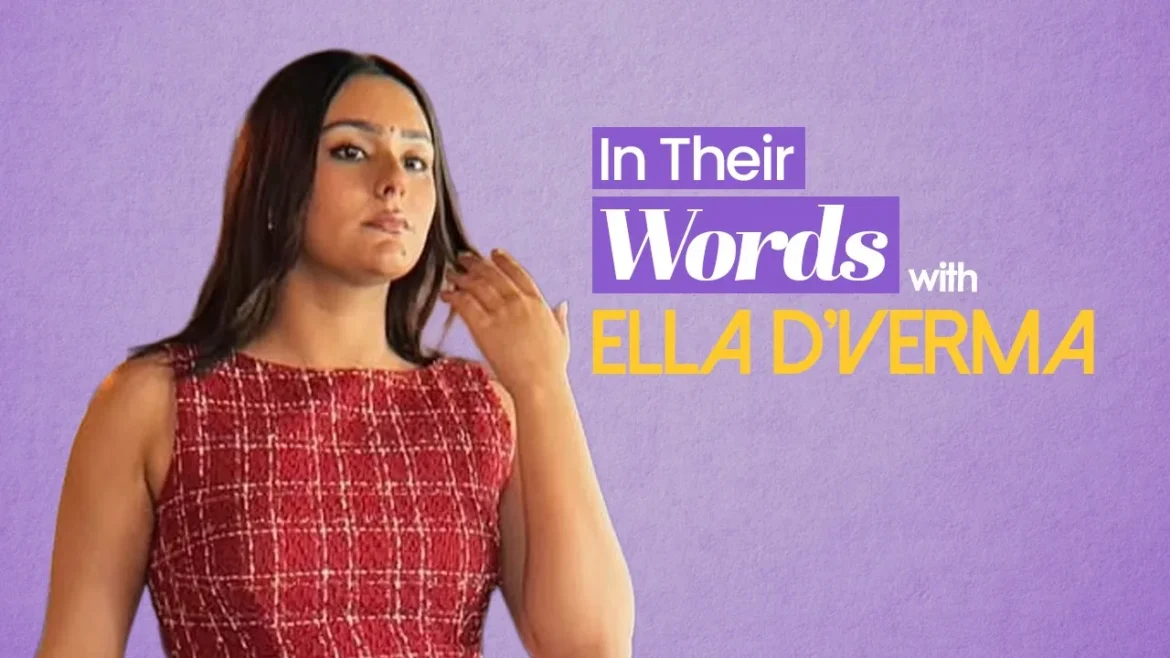
At the epicenter of this cultural transformation stands Ella D’Verma. A multifaceted model, actor, and digital creator, D’Verma initially established her online presence by speaking candidly about her personal transition—offering the transparency and visibility she desperately sought during her own formative years. Over time, her digital footprint expanded far beyond gender identity into fashion, beauty, relationships, culture, and contemporary social commentary. Today, she represents a vanguard of creators who are not only redefining how transgender individuals are perceived in the public eye, but also challenging who gets to dictate those representations.
In a candid interview for the series In Their Words, D’Verma reflects on growing up in a vacuum of representation, navigating an industry that frequently prioritizes identity over artistic craft, the evolving definition of family, and why visibility alone remains fundamentally insufficient.
Chronology of Change: From Digital Pioneers to Mainstream Integration
To understand the current state of transgender representation in India, it is necessary to examine the historical trajectory that brought the community from the shadows into the digital spotlight.
- The Pre-Digital Era (Late 20th Century to Early 2000s): Transgender visibility in mainstream Indian media was almost exclusively confined to regressive tropes. Hijra communities were frequently depicted as objects of mockery or fear, completely divorced from individual human agency. There were virtually no mainstream public figures or role models to provide context or reassurance to queer youth.
- The Rise of Web 2.0 (Early 2010s): As internet penetration surged across India, platforms such as YouTube and Instagram emerged as democratic spaces. Independent creators began documenting their lives, building grassroots communities without requiring approval from film studios or television networks.
- The Intersection of Identity and Content Creation (Mid-to-Late 2010s): Figures like Ella D’Verma emerged during this period, leveraging digital platforms to bridge the gap between personal narrative and lifestyle content. Transitioning from niche community-building to broader cultural commentary, these creators proved that queer voices could command audiences across diverse genres, including fashion, beauty, and lifestyle.
- The Contemporary Commercial Era (2020s to Present): Mainstream brands and media houses began actively engaging with queer and trans creators, primarily around cultural milestones like Pride Month. However, this commercial embrace has introduced new tensions regarding tokenism, commercial packaging of identity, and the commodification of lived experiences.
Supporting Data and Industry Insights: The Economics of Identity
The shift from underground visibility to mainstream commercial integration has brought structural inequities within the creator economy into sharp focus. Industry analysts and cultural studies point to several key dynamics defining how queer creators operate within modern digital markets:
- The Niche Trap: Data suggests that while marginalized creators experience initial boosts in visibility when aligning with their identity, they frequently face professional pigeonholing. Brands and casting directors often lock trans creators into roles or campaigns where their identity serves as the primary hook, overshadowing their broader skill sets in acting, writing, or design.
- The Commodification of Authenticity: Market research indicates that digital platforms financially and algorithmically reward "packaged" authenticity—narratives that are easily digestible and emotionally reassuring to mainstream audiences. Conversely, complex, messy, or confrontational realities often struggle for algorithmic distribution.
- Corporate Engagement vs. Genuine Investment: A growing divide exists between seasonal, campaign-driven engagement (often peaking in June) and long-term structural partnerships. Creators report that true equity requires brands to invest in creative trust and continuous storytelling rather than temporary token gestures.
In Their Words: Ella D’Verma on the Realities of Visibility
On Self-Awareness and the Absence of References
Reflecting on her childhood, D’Verma discusses the psychological impact of growing up without visible role models, and how that absence shaped her internal world.
"When you grow up without representation, confusion doesn’t linger for long. You’re constantly observing, decoding, and piecing yourself together without a reference point. That inevitably builds a kind of early self-awareness—sometimes even an intense hyper-awareness—because you’re trying to name something the world hasn’t yet named for you."
She notes that while contemporary youth benefit from the context and reassurance that modern media provides, representation must evolve beyond simple visibility. "It needs to hold nuance, contradiction, and the full spectrum of experience—not just simplified versions that are easy to consume."
Gender as Social Currency
Transitioning fundamentally altered how D’Verma interacts with the world, offering stark insights into the mechanics of social power and gender expectations.
"Before my transition, people projected ideas of strength, authority, and emotional range onto me based on how they read my gender. Afterward, those assumptions shifted—toward softness, vulnerability, and at times even diminished capability."
This lived duality revealed a profound truth about societal structures: "What it really revealed to me is that gender functions like a social currency. It influences how seriously you’re taken, how safe you feel, and how much space you’re allowed to occupy."
Re-imagining Family: Biological and Chosen Bonds
Addressing common misconceptions about queer family dynamics, D’Verma challenges the simplistic narrative of absolute rejection followed by cinematic redemption.
"People often imagine family as a straight line—conflict followed by resolution, rejection followed by acceptance. But real family journeys are far more layered. Love, confusion, learning, and unlearning often coexist in the same moments."
For D’Verma, chosen family did not serve as a replacement for her biological relatives, but rather as an expansion of her support systems. Over time, both entities have matured, allowing her biological family to grow in ways she deeply values, while her chosen family remains a constant anchor.
Navigating Professional Pigeonholing and the Creator Economy
The transition from independent creator to commercially sought-after talent brought unforeseen professional boundaries. D’Verma addresses the tension of having her identity foregrounded over her artistic craft.
"There have been times when my identity was centred far more than my craft, and that can feel limiting… In the early days, yes—my identity often felt like the headline, while my work was treated as secondary. I understood the context, but it still felt reductive."
This commercial dynamic extends to the broader creator economy, where D’Verma argues that platforms and brands frequently incentivize palatable versions of identity over raw reality. "Authenticity is celebrated, but usually within boundaries that feel safe and structured for brands. There’s a clear preference for identities that can be easily understood and neatly packaged. Real authenticity, however, is often messy and complex—and not every platform or brand is prepared for that."
When distinguishing between transactional corporate engagement and genuine partnership, she emphasizes the necessity of institutional intent: "Genuine investment means going further—beyond token gestures or seasonal campaigns. It involves creative trust, long-term commitment, and storytelling that isn’t limited to Pride cycles. It’s the difference between participation and partnership."
Challenging Aesthetic Standards and the Comfort of Queer Pain
Discussing modern beauty standards and the pressure placed upon trans women, D’Verma highlights the narrow parameters of "acceptable" femininity.
"There’s often an expectation to fit into a version of femininity that feels more comfortable for external audiences. But I’ve learned that authenticity ultimately carries more depth. For me now, beauty is about alignment—not approval."
Furthermore, she critiques media consumers’ appetite for narratives dominated by suffering rather than triumph. "Queer pain fits a familiar narrative structure—struggle, survival, resilience. It’s something audiences can consume with emotional distance. Queer joy and success disrupt that comfort. They demand presence, equality, and full recognition."
Implications: The Roadmap to Structural Inclusion
The trajectory charted by creators like Ella D’Verma signals a crucial transitional phase in Indian media and culture. Moving forward, the implications for the entertainment industry, corporate advertisers, and digital platforms are profound.
- Moving Beyond Tokenism in Advertising: Brands must transition from cyclical, performative allyship to sustained, equitable partnerships. This requires handing creative control over to queer and trans creators rather than utilizing them merely as visual props for diversity metrics.
- Achieving Narrative Complexity in Entertainment: The next frontier for film, television, and digital storytelling is not merely the inclusion of trans characters, but the normalization of their presence in stories where gender identity is not the primary plot device. True progress requires trans protagonists who can occupy any role—from heroes and professionals to complex anti-heroes.
- Dismantling Restrictive Beauty and Behavioral Norms: Cultural institutions must unpack the rigid expectations placed on trans femininity and identity performance, allowing for a wider, unpoliced spectrum of human expression.
- Institutional Normalization: Looking toward the next decade, the ultimate goal of inclusion is its complete integration into the fabric of society. As D’Verma aptly summarizes, real progress means that trans inclusion is no longer treated as a special category or a headline-grabbing conversation.
In a fully realized inclusive future, safety, dignity, and opportunity will no longer depend on context or corporate benevolence. What is currently championed as progressive milestones will simply become the baseline standard of society.