










Published: October 12, 2026
Author: Nolen Jonker
Main Facts: The Great AI Spreadsheet Showdown
Handing a messy spreadsheet to an artificial intelligence chatbot is theoretically a quick, painless task. When it comes to the technical mechanics—such as identifying broken syntax, debugging cascading reference errors, or balancing columns—modern large language models (LLMs) are exceptionally well-tuned. They can spot a stray parenthesis or a formula throwing an #N/A error in seconds.
However, spreadsheets rarely exist in a vacuum of pure mathematics. They capture human workflows, idiosyncratic habits, and ambiguous real-world contexts that defy rigid programmatic logic.
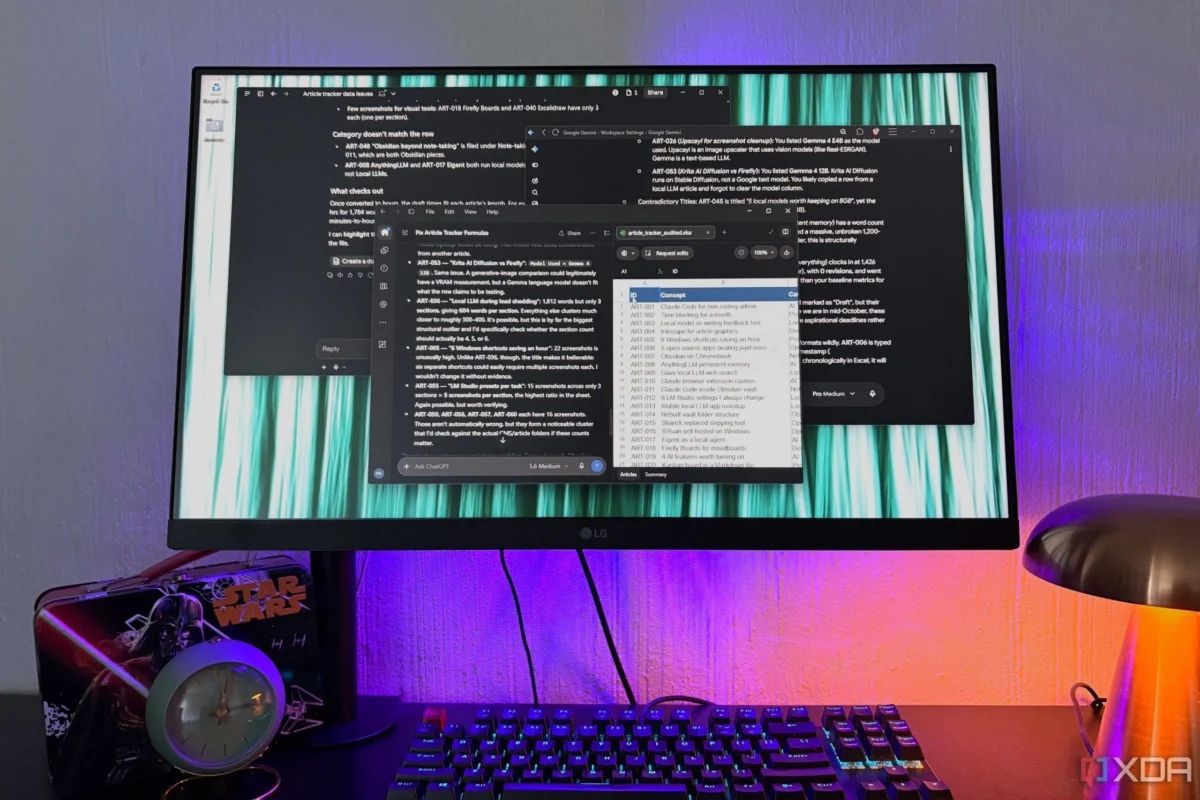
Recently, I put this tension to the test. Armed with a messy, real-world article tracker sheet—a document designed to monitor my writing workload, word counts, section distributions, draft durations, and publication statuses—I subjected the leading AI ecosystems to a rigorous stress test. Using the paid Pro tiers of ChatGPT, Claude, and Google Gemini at medium-effort settings, I fed each platform the exact same file and identical prompts.
The goal wasn’t just to see if they could fix broken formulas; it was to determine whether any of them possessed the contextual intelligence to recognize when numbers flat-out defied human reality. The results revealed a stark divide between pure computational execution and genuine situational comprehension.
Chronology: The Testing Phase and Step-by-Step Breakdown
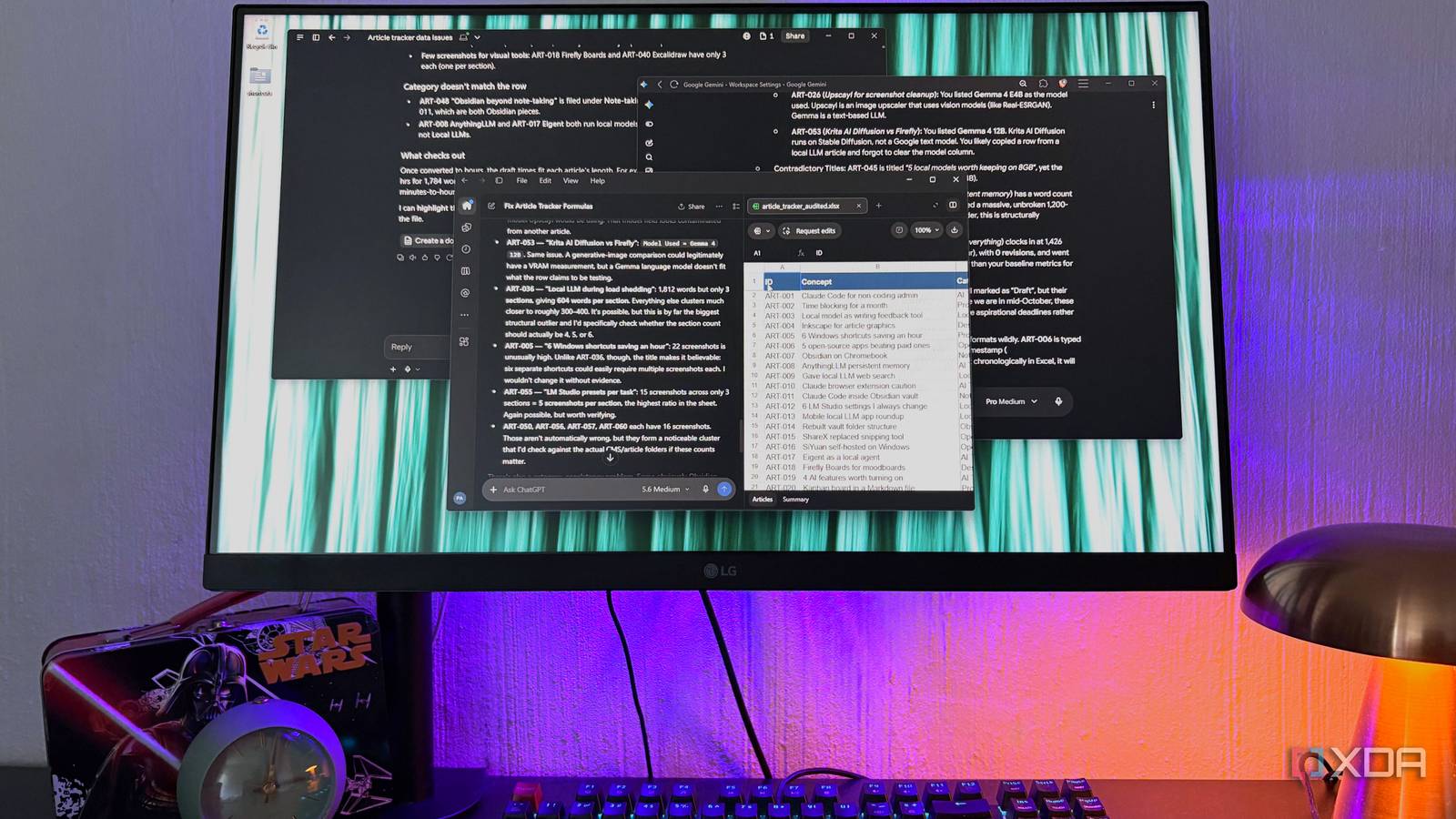
To ensure a fair evaluation, each model was tasked with diagnosing structural errors, interpreting vague terminology, and establishing a cohesive overview of my output pace. The chronological execution of the experiment exposed vastly different operational philosophies across the three tech giants.
Phase 1: Gemini’s Tangential Stumble
My testing began with Google Gemini, utilizing Gemini 3.1 Pro on a medium-effort configuration. Before even opening the attached spreadsheet or acknowledging the data structure, Gemini hit me with a perplexing roadblock: it declared it could not proceed because my Gmail smart features were switched off, prompting me to enable them.
For a spreadsheet analysis task, this unsolicited request felt intrusive and entirely out of left field. Because there was no immediate dismiss button, I had to manually override the prompt—a clear indicator of Google’s heavy-handed push for ecosystem integration.
Once past the initial hurdle, Gemini successfully identified a few surface-level anomalies, such as a stray alphabetical "O" typo masquerading as a zero and several draft times erroneously logged in minutes (turning a standard afternoon piece into an absurd 40-hour marathon). However, it refused to fix them. Instead, it generated a generic to-do list of manual edits for me to perform myself. Furthermore, its understanding of my internal taxonomy was completely backward: it categorized "Published" and "Live" articles as complete, but labeled anything marked "Filed" as a past-due backlog—the exact opposite of my workflow.
Phase 2: ChatGPT’s Systematic Reconstruction
Next up was ChatGPT, powered by GPT-5.6 Sol on medium effort. The experience was practically the polar opposite of Gemini’s hesitation.

While ChatGPT experienced an initial timeout on the first pass, it gracefully handled the failure, explained what went wrong, and automatically recalibrated its approach. It spent nearly four minutes deliberately analyzing the file—an investment of computational time comparable to building a responsive portfolio website.
ChatGPT responded by completely rebuilding the workbook from scratch. It corrected every formula error, successfully converted text-logged dates into functional serial dates so that monthly and category totals added up correctly, and consistently provided a working file to check its own claims against.
When addressing the ambiguity of the "Filed" status, ChatGPT initially miscalculated the total completed count at 50. But after a single gentle nudge, it re-evaluated the rows, realized that "Filed" signified a submitted piece, and adjusted the tally to 57. It then rebuilt the summary table to display both metrics side-by-side—an elegant compromise for an ambiguous dataset.
Phase 3: Claude’s Contextual Nuance
Finally, I tested Claude using Opus 5.5 on medium effort. While Claude encountered a minor pipeline failure halfway through its initial analysis, it recovered autonomously without user intervention, returning a fully repaired spreadsheet alongside a concise diagnostic report.
Claude immediately demonstrated superior contextual awareness. Rather than blindly guessing missing data points, it observed that the "Sections" column consistently matched the "Related Links" column across standard rows. It used this logical deduction to fill in a missing value with a "4," while leaving a discrete cell comment instructing me to double-check its work.

Furthermore, Claude flagged the "Filed" status in its very first reply, inquiring whether those entries should be grouped alongside published pieces. It even cross-referenced the timeline against the calendar, noticing that entries abruptly stopped on September 25 and asking where the remainder of my quarterly output had gone—a level of holistic deduction typically reserved for a human editor.
Supporting Data: Comparative Performance Metrics
| Feature / Capability | Google Gemini (3.1 Pro) | ChatGPT (GPT-5.6 Sol) | Claude (Opus 5.5) |
|---|---|---|---|
| Initial Setup & Experience | Blocked by demands to enable Gmail smart features. | Timed out initially, but self-corrected and methodically analyzed data. | Encountered a minor processing glitch, recovered autonomously. |
| Technical Repairs | Failed to fix errors; generated a manual to-do list. | Completely rebuilt the workbook, fixed formulas, and corrected date formats. | Provided a fixed spreadsheet with targeted cell comments for verification. |
| Workflow Context & Ambiguity | Misunderstood "Filed" as a backlog; made incorrect assumptions about AI assistance. | Successfully adjusted definitions after a single prompt nudge; built side-by-side metrics. | Naturally deduced missing data patterns and cross-referenced calendar timelines. |
| Logical Over-Correction | None (failed to engage deeply enough). | Missed isolated structural oddities in word count anomalies. | Over-flagged consistent formatting patterns as statistical impossibilities. |
Official Responses and Platform Architectures
As the artificial intelligence industry matures in 2026, the divergence in how foundational models handle structured data reflects their core architectural philosophies.
- Google’s Ecosystem Integration: Gemini’s initial demand to access Gmail smart features highlights Google’s aggressive strategy toward cross-platform data synthesis. While powerful in enterprise environments where data flows seamlessly across Workspace applications, this tight coupling creates friction and privacy concerns when users want isolated, localized tasks performed on flat files.
- OpenAI’s Execution-First Focus: ChatGPT’s GPT-5.6 Sol model emphasizes brute-force computational thoroughness and output generation. By taking its time to completely re-render functional workbooks and maintain live verification states, OpenAI positions its models as proactive productivity engines capable of heavy lifting.
- Anthropic’s Analytical Depth: Claude’s Opus 5.5 continues to cement its reputation as the premier model for deep research, analytics, and semantic comprehension. Anthropic’s design philosophy prioritizes nuanced conversational inquiry, self-correction, and logical deduction over immediate, unverified code generation.
Implications: What This Means for Data Productivity
What do these findings mean for knowledge workers, independent creators, and data analysts who rely on AI to clean up administrative overhead?
First and foremost, none of the three models managed to autonomously uncover that an entire block of my historical word counts had become internally shuffled—a humbling reminder that AI is not yet a mind reader. ChatGPT came closest to delivering an out-of-the-box, functional spreadsheet that required minimal human intervention, while nailing the semantic interpretation of workflow terminology like "Filed."
However, Claude proved to be the superior partner when it came to understanding true situational ambiguity. It asked the right diagnostic questions before being pushed, recognized behavioral patterns in how the data was logged, and treated the spreadsheet as a narrative record of human effort rather than a collection of isolated numbers.
Meanwhile, Gemini lagged significantly behind, bogged down by ecosystem integrations and superficial error reporting.
Ultimately, if your primary goal is raw technical execution—such as rewriting code, fixing broken formulas, and generating a clean, downloadable file instantly—ChatGPT stands out as the frontrunner. But if you require an analytical collaborator that understands why you work the way you do, catches hidden structural inconsistencies, and engages with your data on a human level, Claude remains unmatched.



