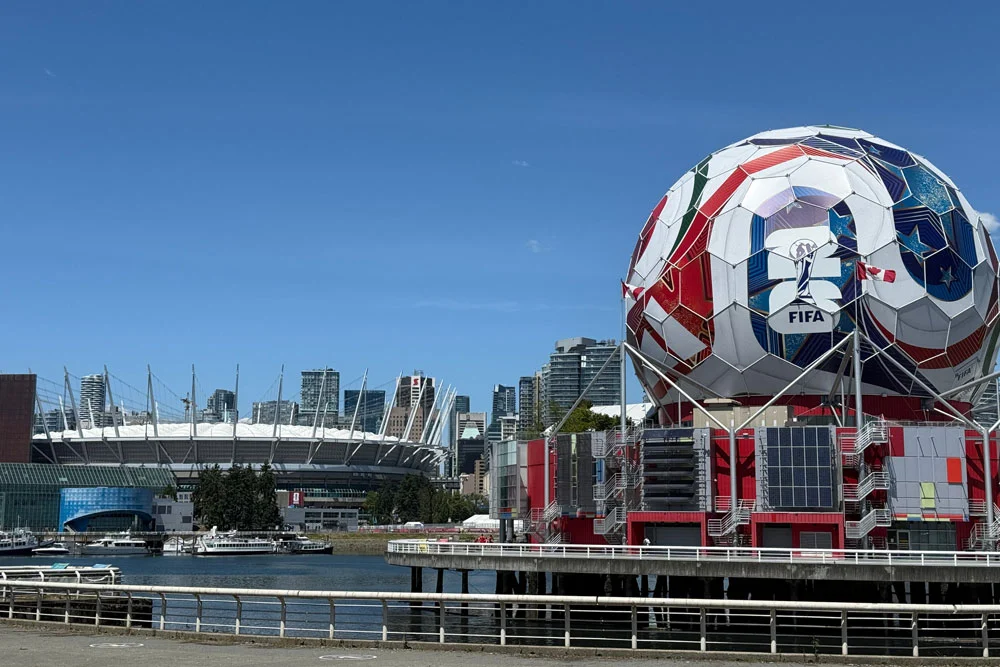
As the global sporting world fixes its collective gaze on the sprawling, high-drama spectacles of the FIFA World Cup 2026, cities across North America pulse with the energy of millions of traveling fans. From flights packed to the brim with passionate supporters—like the legendary Tartan Army crossing the Atlantic—to the deafening roars echoing through stadiums in the United States, Canada, and Mexico, the tournament is a masterclass in human performance, strategy, and unpredictability.
Yet, when the final whistle blows and the championship trophy is lifted, the cultural and economic ripples of the World Cup will subside, leaving behind lessons that extend far beyond the green pitch. For those paying close attention, the tournament serves as an uncanny mirror for the modern digital economy—specifically, the fast-paced, cutthroat landscape of affiliate marketing.
Drawing parallels between world-class soccer and performance-based marketing reveals fundamental truths about competition, resilience, and strategic growth. Here are the three critical lessons the FIFA World Cup 2026 teaches industry professionals.
1. Success Requires Teamwork: The Myth of the Lone Wolf
The Pitch-Side Reality
Individual brilliance can dazzle audiences, but it rarely wins championships on its own. Throughout the early stages of the FIFA World Cup 2026, we witnessed the limitations of relying solely on superstar talent.
Consider the fate of Croatia: despite the generational genius and unmatched vision of Luka Modrić, the squad could not single-handedly carry the team past a fiercely disciplined Portugal side. Similarly, the legendary Cristiano Ronaldo—arguably one of the greatest to ever play the game—found himself neutralized when Portugal clashed with Spain in a tense Round of 16 showdown. In modern soccer, spatial awareness, tactical cohesion, and synchronized team movement always triumph over isolated individual skill.
The Affiliate Marketing Parallel
The exact same dynamic governs the digital marketing ecosystem. Having run an affiliate management agency for well over twenty-five years, I have learned a foundational truth: an agency is only as strong as the collective talent of its team members.
More importantly, this principle applies directly to the structuring of affiliate programs. If a brand relies on just a single "super-affiliate" or focuses exclusively on one promotional channel (such as coupon sites or loyalty apps), it leaves its entire revenue stream dangerously exposed.
To build a resilient, high-performing affiliate program, managers must diversify their affiliate bases across multiple marketing channels and publisher types:
- Content Publishers & Review Sites: Build long-term SEO authority and consumer trust.
- Influencers & Creators: Drive top-of-funnel brand awareness and cultural relevance.
- Email & Loyalty Partners: Capture high-intent, mid-to-bottom-funnel conversions.
- Technology Partners: Implement cart-abandonment and retargeting solutions.
Just as a soccer manager fields a balanced lineup of defenders, midfielders, and forwards, an affiliate manager must curate a diverse ecosystem of partners to protect revenue quality and ensure sustainable, long-term growth.
2. Never Underestimate the Underdog: The Rise of the Newcomers
Historical Wisdom Meets Modern Upsets
Rewind some twenty-five centuries, and you will find a timeless strategic warning attributed variously to Laozi and Sun Tzu: "There is no greater danger than underestimating your opponent."
The FIFA World Cup 2026 has provided a masterclass in this exact phenomenon. Time and time again, tournament debutants and historical underdogs stepped onto the pitch and played the world’s elite to a standstill. During the Group Stage, the debutant nation of Curaçao stunned the footballing world by grinding out a hard-fought, defensive masterclass resulting in a 0-0 draw against Ecuador. Later, in the knockout rounds, Egypt shocked defending World Cup champions Argentina, surging to a stunning 2-0 lead for the majority of the match before the giants mounted a desperate comeback.
These moments remind us that pedigree and historical dominance mean little when the underdog enters the arena fully prepared, highly motivated, and strategically agile.
Case Study: How Nectar Sleep Conquered the Giants
The exact same principle applies to the fiercely competitive world of e-commerce and affiliate marketing.
When AM Navigator was tapped in early 2017 to launch and manage the affiliate program for Nectar Sleep, we knew the odds were stacked steeply against us. The "mattress-in-a-box" concept was no longer a novelty; the market was already saturated with deeply entrenched, well-established affiliate programs run by heavyweights like Casper, Saatva, and Purple.
Many traditional industry observers wrote off the new entrant as a minor player destined to fight for scraps in the shadow of multi-million-dollar brands. Yet, fueled by a relentless execution strategy, aggressive partner recruitment, and optimized commission structures, the results defied expectations.
Just one year and five days after its official launch, the Nectar Sleep affiliate program shattered industry benchmarks to become the #1 ranked program on its primary affiliate network. In doing so, it zoomed past established household and enterprise brands, including Wayfair, Deluxe, Reebok, Gymboree, the NFL, Viator, and over 5,000 competing programs.
The takeaway for digital marketers is clear: underdogs do win. Being a smaller player or a late entrant to a niche does not destine a brand to perpetual mediocrity. Conversely, established market leaders can never afford to rest on their laurels or ignore agile, hungry competitors nipping at their heels.
3. Never Rest on Your Laurels: The Dynamic Nature of the Landscape
The Fall of the Titans
Nothing illustrates the perilous nature of complacency quite like the casualty list of the FIFA World Cup 2026.
Italy, a proud four-time World Cup champion, failed to even qualify for the tournament, watching from home as younger, hungrier nations took their place. The Netherlands saw their championship dreams abruptly extinguished by Morocco in the Round of 32, while Brazil—the spiritual heartland of international soccer—was knocked out of the competition in the Round of 16 by Norway.
Norway’s trajectory in this tournament serves as the ultimate embodiment of both the underdog story and the danger of resting on past glories. Prior to the current tournament, Norway had not appeared in a FIFA World Cup in nearly 30 years. Yet, through disciplined development, tactical evolution, and sheer hunger, they fought their way into the Quarterfinals, establishing themselves as legitimate contenders to lift the trophy.
The Imperative of Continuous Education
In the digital marketing sphere, the environment is similarly unforgiving. The nature of affiliate marketing is best described as dynamic. It evolves continuously in response to technological disruptions, shifting consumer privacy regulations, algorithmic updates, and the emergence of new media channels.
Strategies that generated massive revenue streams last year may no longer yield results today. Tactics that secured high margins a decade ago can render a modern brand entirely obsolete. Because the digital landscape shifts beneath our feet with relentless speed, ongoing education and professional improvement are absolute prerequisites for survival.
Whether it is mastering the nuances of AI-driven attribution models, adapting to tightening privacy laws, or discovering new pockets of publisher liquidity, digital marketers must treat their craft as an ongoing journey rather than a fixed destination.
Conclusion and Industry Outlook
As the global spotlight on the FIFA World Cup 2026 eventually fades, the fundamental truths of competition remain immutable. Whether orchestrating a multi-million-dollar affiliate campaign or battling for supremacy on the world’s grandest soccer pitch, success is never accidental.
It requires:
- Unbreakable Teamwork: Diversifying your partner ecosystem and valuing collective synergy over isolated individual efforts.
- Respect for the Underdog: Maintaining vigilance, fostering innovation, and refusing to let brand size dictate strategic complacency.
- Relentless Adaptability: Recognizing that past victories guarantee nothing in a dynamic, ever-shifting digital landscape.
As we look ahead to the remainder of the tournament and the upcoming conference season—including the anticipated gatherings at the Affiliate Summit in New York and other major industry events—it is worth taking a moment to audit your own marketing strategies.
Are you building a resilient team? Are you keeping a wary eye on the rising underdogs? And, most importantly, are you continuing to educate yourself and evolve?
If you plan on attending any upcoming industry conferences this season, reach out and connect. The best strategies, much like the best soccer matches, are born from collaboration, shared insights, and a relentless drive to win.