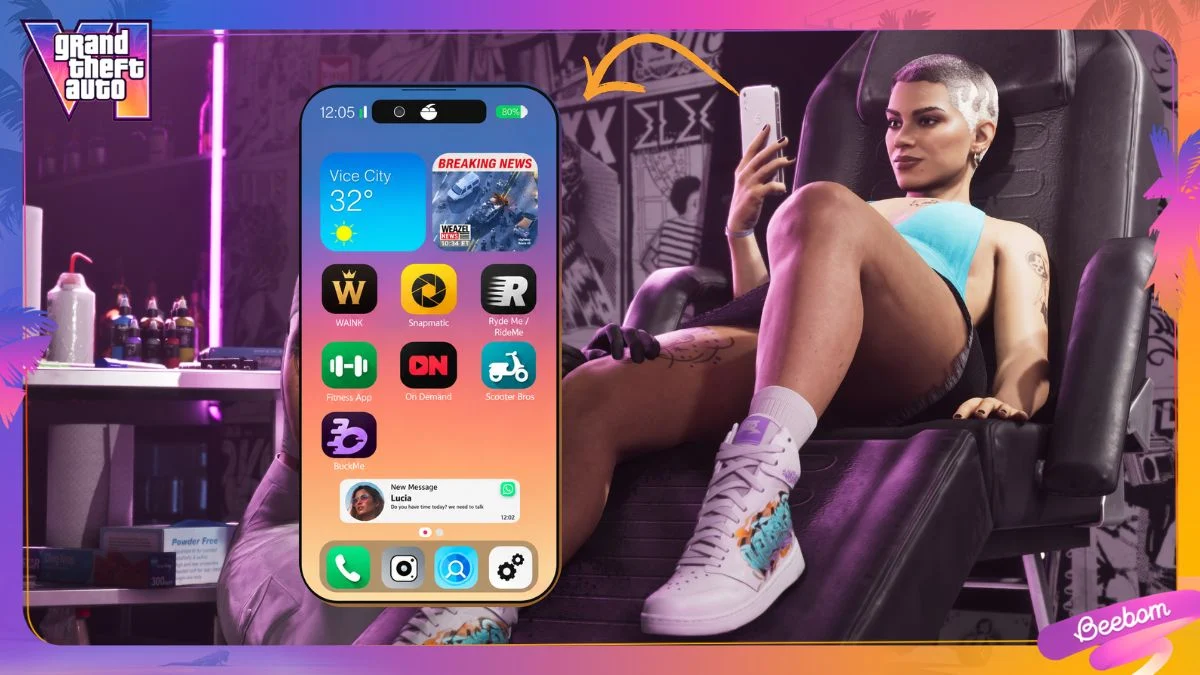
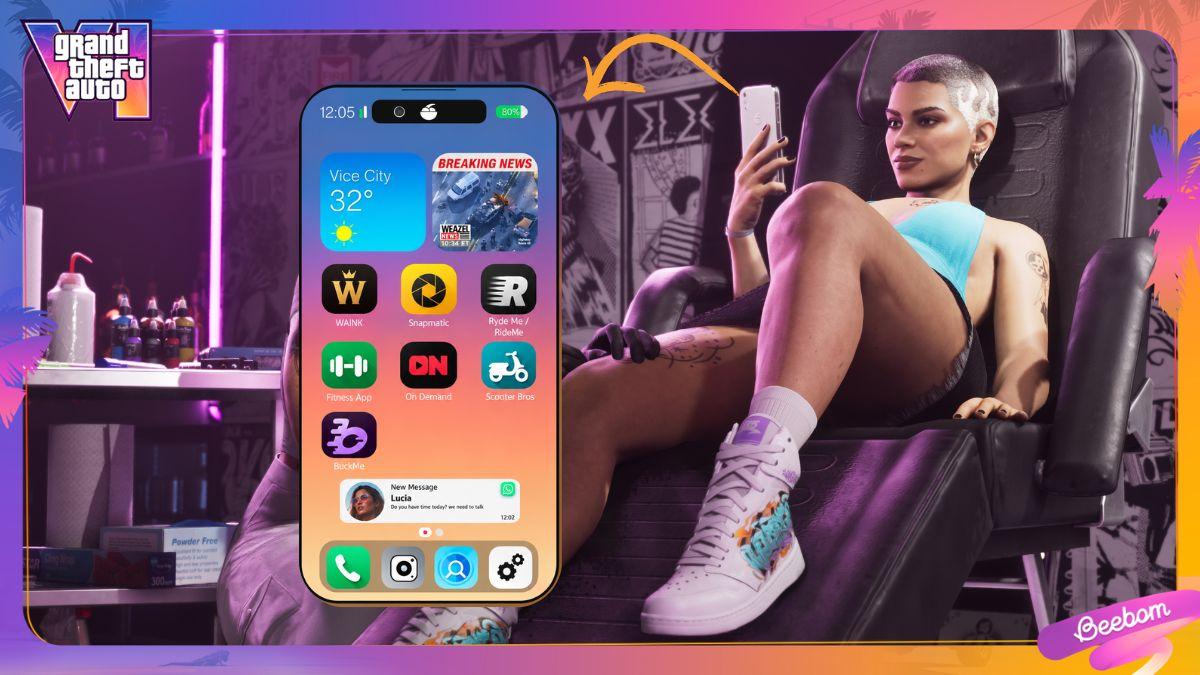
The days of the generic, menu-based smartphone in open-world video games are officially numbered. When Rockstar Games returns players to the neon-drenched, sun-bleached fictional state of Leonida in Grand Theft Auto 6, the in-game mobile phone is undergoing a radical, evolutionary shift. Gone is the floating, magical HUD element used exclusively for taking missions or calling emergency services. Instead, GTA 6 introduces a fully realized, physical device that protagonists Jason and Lucia pull straight from their pockets, handling it with tactile precision in real-time.
Recent media previews, extended trailers, and developer leaks have blown the lid off what this digital companion can do. Far more than a simple narrative device, the GTA 6 smartphone is an intricate ecosystem of applications that mirrors real-world modern life while deeply integrating into core gameplay loops. From advanced vehicle-theft mechanics and lifestyle tracking to digital banking and social media espionage, this guide details every confirmed and rumored app set to grace the screens of Jason and Lucia’s handsets.
Main Facts: A Physical Device with Deep Gameplay Integration
The paradigm shift of the GTA 6 phone centers on immersion and utility. Rockstar Games has designed the handset to feel like a genuine piece of hardware. When players interact with the phone, the camera angle shifts, forcing them to balance environmental awareness with screen time—a mechanic that heavily leans into modern societal habits.
According to preview events and developer disclosures, the phone acts as the central hub for nearly all systemic interactions in the game. It dictates how players secure fast travel, manage their finances, evaluate potential crimes, and even monitor the physical well-being of the protagonists. Rather than acting as a passive menu, the phone is an active participant in survival, crime, and social interaction across Leonida.
Chronology: The Evolution of Rockstar’s In-Game Tech
To understand the magnitude of the GTA 6 phone, it helps to look backward at how Rockstar has evolved its in-game technology over the past decade:
- The GTA IV Era (2008): Rockstar introduced the cellular phone as a revolutionary narrative tool. Niko Bellic’s bulky brick phone allowed for basic calls, text messages, mission restarts, and setting up dates, marking a major step away from fixed wall-units or pagers.
- The GTA V Era (2013): The "iFruit" phone standardized smartphones in Los Santos. It served as a functional camera (Snapmatic), a mission trigger, a web browser, and a way to access web-based car-shopping and stock-market apps. However, it largely remained an overlay menu.
- The Red Dead Redemption 2 Intermission (2018): Eschewing phones entirely for an 1899 setting, Rockstar focused heavily on physical inventory, item inspection, and tactile interactions—philosophies that clearly bled back into the design of GTA 6.
- The GTA 6 Revelations (2025–2026): Through successive trailers, extended looks, and deep-dive creator previews, Rockstar confirmed that the phone is now a physical, pocket-pulled device loaded with deep, systemic apps ranging from vehicle scanners to fitness trackers.
Supporting Data: The Full GTA 6 Phone Apps Directory
Through a combination of official media drops, developer interviews (including statements from Rockstar’s Rob Nelson to industry outlets in late August 2026), and creator previews, a comprehensive list of applications has emerged.
| App Name | Function / Use | Status |
|---|---|---|
| WAINK | Scans parked cars to reveal locks, alarms, trackers, value, and theft data. | Confirmed (August 2026) |
| Snapmatic | Browse social feeds and follow accounts; no public photo uploads allowed. | Confirmed (August 2026) |
| Ryde Me / RideMe | Book fast-travel rides and interact dynamically with drivers and passengers. | Confirmed (August 2026) |
| Fitness App | Tracks sleep cycles, fatigue, and physical stamina for Jason and Lucia. | Confirmed (September 2026) |
| On Demand | In-game podcasts, shows, and creator-safe streaming media. | Confirmed |
| Scooter Bros | On-demand delivery service for the player’s personal vehicles. | Confirmed |
| BuckMe | Digital banking application for secure monetary management. | Confirmed |
| WhatUp | Direct messaging interface for character communication. | Unconfirmed |
| LifeInvader | Returning social networking platform from GTA V. | Unconfirmed |
| Bleeter | The franchise’s signature Twitter/X-style microblogging platform. | Unconfirmed |
| Fruit Pay | Apple Pay-style contactless mobile payment service. | Unconfirmed |
| Unknown Video App | Short-form video streaming (TikTok/Reels/Shorts equivalent). | Confirmed Existence |
| LeonidaGov | State government services portal (leonidagov.org). |
Unconfirmed |
| BrianAndBradley | Web service portal (brianandbradley.com). |
Unconfirmed |
| HookersGalore | Adult services portal (hookers-galore.com). |
Unconfirmed |
| WipeoutCornSkin | Specialty consumer web app (wipeoutcornskin.com). |
Unconfirmed |
| MyBoyHasACreepyCorndog | Novelty entertainment/store portal. | Unconfirmed |
| Bunko Jack’s App | Storefront app tied to in-game liquor retail locations. | Unconfirmed |
Deep Dive: Breaking Down the Confirmed Apps
1. WAINK: The Professional Car Thief’s Best Friend
Stealing cars has been the bedrock of the Grand Theft Auto franchise since its inception, but GTA 6 introduces calculated risk to the formula. The WAINK app is a specialized vehicle-scanning tool. When Jason or Lucia approach a parked car on the streets of Leonida, they can pull out their phone and run a WAINK scan.
The app instantly feeds critical intelligence to the player: Is the car locked? Does it feature an alarm or a hidden police tracker? What is its market resale value, and what are the associated registration costs? This transforms grand theft auto from a reckless, spontaneous grab into a strategic heist preparation, forcing players to weigh the risk-versus-reward profile of every vehicle they eye on the boulevard.
2. Snapmatic and the Digital Footprint
Snapmatic returns from GTA V, but its core mechanics have been completely overhauled to reflect Jason and Lucia’s precarious lives as fugitives. Players can browse social feeds, track local trends, and follow accounts to stay tuned into Leonida’s pulsing cultural underbelly.
However, there is a major narrative catch: Jason and Lucia cannot publicly upload photos. Rockstar Games has confirmed that because the couple is actively running from federal and local authorities, posting geotagged or public photos would create a fatal digital trail. Instead, the characters are restricted to sending images privately to one another—a mechanic that subtly reinforces their tight-knit, Bonnie-and-Clyde dynamic and requires players to actively invest in their romantic and cooperative relationship.
3. Ryde Me / RideMe: Dynamic Fast Travel
Fast travel systems in open-world games can often feel like sterile loading screens, but Rockstar is injecting character and chaos into the process. The Ryde Me app functions as Leonida’s premier ride-hailing and taxi service.
When players book a ride, they aren’t simply teleported across the map. They watch the vehicle arrive, climb into the back, and can actively converse with the driver throughout the journey. Furthermore, shared rides can introduce random NPCs—including unpredictable strangers—into the vehicle, creating emergent conversational encounters and unexpected roadside interruptions.

4. Fitness and Sleep Tracking
GTA 6 is taking physical maintenance to unprecedented heights. Building upon the weight, muscle, and body fat mechanics seen in past titles, the phone features a dedicated Fitness App.
This application ties directly into a newly implemented fatigue system. By tracking how well Jason and Lucia sleep and how much physical exertion they undergo at the gym or on the run, the app influences character attributes. High fatigue can actively impair attribute regeneration, making sleep and physical upkeep essential tactical considerations rather than superficial roleplay choices.
5. On Demand and Scooter Bros
Entertainment and logistics round out the core utility apps. On Demand taps into a vast library of in-game podcasts, serialized shows, and creator-safe music, giving players custom audio entertainment while navigating the massive map. Meanwhile, Scooter Bros acts as a reliable logistics app, allowing players to order their personal vehicles directly to their current GPS coordinates, saving them from tedious walks across sprawling neighborhoods.
6. BuckMe: Financial Security in a Dangerous World
Managing money in GTA 6 is split between physical cash—which players keep on their person and risk dropping, stealing, or losing upon death—and digital funds. The BuckMe app serves as the game’s mobile banking platform. Depositing ill-gotten gains into BuckMe ensures financial security, allowing players to safely store their wealth and access it digitally whenever needed.
Official Responses and Developer Philosophy
Rockstar Games has remained intensely protective of GTA 6‘s broader narrative beats, but production leads have been vocal about the technical philosophy driving the game’s systemic depth. Speaking on the integration of everyday tech into open-world crime sandboxes, studio representatives have emphasized that immersion cannot simply be skin-deep.
By turning the smartphone into a physical prop that occupies screen space and demands player attention, Rockstar aims to ground the criminal exploits of Jason and Lucia in a chillingly modern reality. The addition of background mechanics like the WAINK vehicle scanner and the Fitness app underscores a design ethos where modern technology acts both as a weapon for survival and a shackle that tracks the characters’ vulnerabilities in a hyper-connected surveillance state.

Implications: What This Means for Open-World Design
The meticulous design of the GTA 6 smartphone carries massive implications for the future of open-world game design. For years, video game interfaces have prioritized instant gratification—menus that snap open at the press of a single button, stripping away the friction of reality.
By forcing players to physically pull out a phone, manage separate banking apps, scan cars like an underground chop-shop broker, and worry about a digital footprint, Rockstar is intentionally reintroducing friction. This friction slows the player down, demanding deliberate planning and situational awareness.
When GTA 6 launches, the phone will not just be a tool used to trigger the next story beat; it will feel like a lifeline, a tracking device, and a window into a living, breathing virtual ecosystem. As players step onto the streets of Leonida, the burning question won’t just be how fast they can run, but what apps they have open when the law finally catches up.