







In a strategic move designed to consolidate its position as a dominant force in the Indian digital entertainment landscape, Bharti Airtel has officially announced a high-profile partnership with YouTube. This collaboration introduces YouTube Premium subscriptions as a bundled offering within select Airtel prepaid plans, marking a significant evolution in how telecommunications providers cater to the rapidly changing consumption habits of the modern digital consumer.
As data usage trends shift heavily toward high-bandwidth video streaming, music consumption, and creator-led content, Airtel’s integration of YouTube’s ad-free tier serves as a direct response to the demands of a mobile-first population. By folding this premium service into its existing infrastructure, Airtel is not merely providing data; it is curating an end-to-end entertainment experience.
The Evolution of the Digital Bundle: Main Facts and Strategy
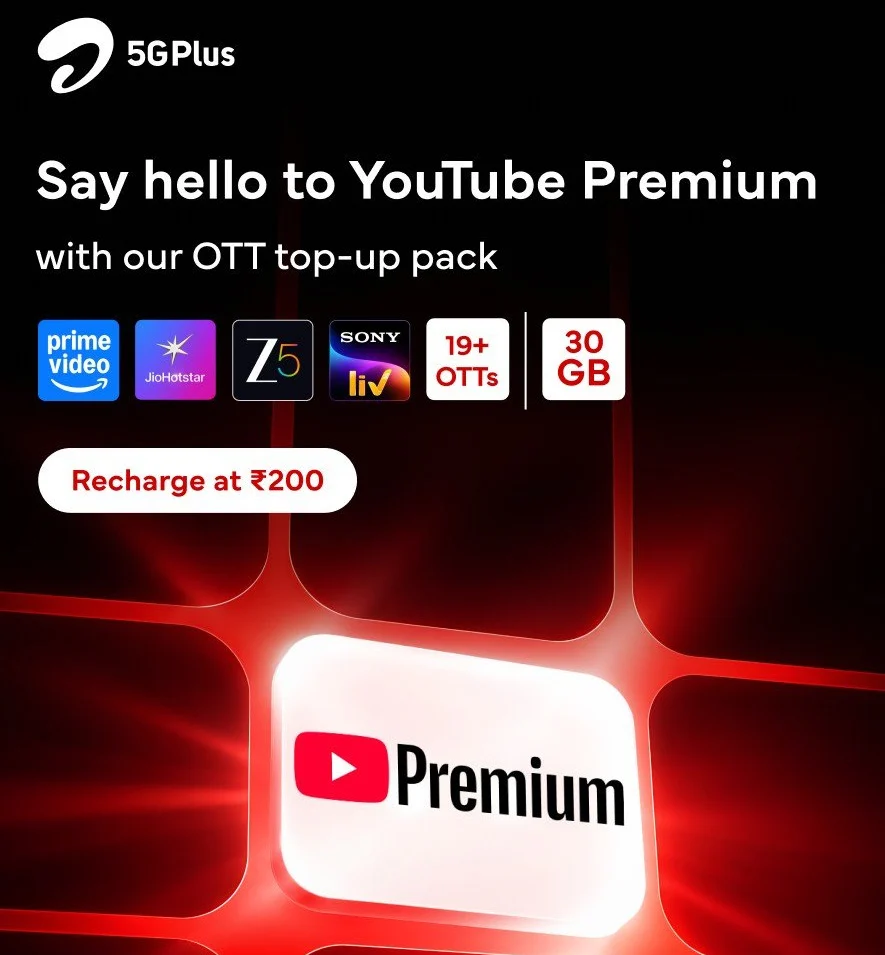
The partnership centers on the integration of YouTube Premium into Airtel’s comprehensive suite of digital entertainment services. For years, Airtel has leveraged its "Xstream" ecosystem to provide users with access to a plethora of platforms, including Prime Video, Disney+ Hotstar, ZEE5, and SonyLIV. The addition of YouTube Premium—arguably the most sought-after subscription service for video enthusiasts—represents a massive upgrade to this portfolio.
The flagship offering is a ₹200 entertainment top-up. This package is meticulously designed to solve two pain points simultaneously: the need for data and the desire for premium, ad-free content. By offering 30GB of high-speed data alongside a 28-day YouTube Premium subscription, Airtel is positioning itself as the "one-stop-shop" for digital lifestyles.
This move is fundamentally different from previous partnerships. While earlier bundles often focused on streaming apps that require individual logins and specific regional content, YouTube Premium is a ubiquitous service. It removes advertisements from millions of videos, enables background play (essential for music lovers), and allows for offline downloads, making it a "utility" service rather than just an entertainment app.
A Chronological Perspective: How We Arrived Here
To understand the weight of this announcement, one must look at the timeline of India’s digital transformation.
2016–2019: The Data Explosion
Following the entry of aggressive market players, data prices in India plummeted. Airtel’s strategy during this period focused on network expansion and base plan affordability. The goal was simple: get the consumer connected.
2020–2022: The OTT Pivot
The pandemic accelerated the adoption of OTT (Over-The-Top) platforms. Airtel pivoted rapidly, introducing the "Airtel Thanks" program and bundling popular streaming services with postpaid plans. During this phase, the focus shifted from "connectivity" to "content consumption."
2023–2024: Premiumization and Value-Added Services (VAS)
As the market reached saturation, the focus moved toward Average Revenue Per User (ARPU). Airtel began moving away from pure price-wars, instead opting for value-added bundles that encourage users to spend more on higher-tier plans in exchange for premium content.
October 2026: The YouTube Integration
The announcement of the YouTube Premium partnership marks the culmination of this evolution. By integrating the world’s most popular video platform, Airtel has effectively "completed" its entertainment suite, covering everything from live sports and movies to long-form creator content and music.
Supporting Data: Why YouTube Premium Matters
The decision to bundle YouTube Premium is backed by robust data regarding Indian consumer behavior. Recent reports indicate that the average Indian smartphone user spends over three hours daily on video streaming platforms. Among these, YouTube remains the undisputed leader in terms of daily active users and time spent per session.
- Ad-Free Growth: Research suggests that over 60% of premium OTT subscribers cite "ad-free experience" as the primary reason for their subscription.
- The Creator Economy: With India boasting one of the largest creator ecosystems globally, YouTube has become the primary search engine for the younger demographic (Gen Z and Millennials).
- Data Consumption: A standard 30GB top-up provides approximately 10–12 hours of high-definition streaming. By coupling this with an ad-free service, Airtel ensures that users are not wasting their data on advertisement loads, thereby increasing the "perceived value" of the 30GB allocation.
The ₹200 price point for this bundle is a calculated psychological threshold. For the cost of a standard data voucher, the user gains a premium service that would otherwise cost nearly the same amount if purchased independently. This creates a "no-brainer" value proposition for the consumer, effectively driving adoption.
Official Stance and Industry Implications
While specific corporate quotes are often curated, the sentiment from the Airtel leadership team is clear: the company aims to move from being a "dumb pipe" provider to an "integrated lifestyle partner."
"Our goal is to ensure that our customers get the best of the digital world without the friction of multiple subscriptions and disconnected billing cycles," an Airtel spokesperson noted. "By bringing YouTube Premium into our prepaid ecosystem, we are simplifying the digital life of our users while offering unparalleled value."
Industry analysts suggest that this move will place significant pressure on competitors. While other telcos have experimented with bundling, the integration of YouTube—which is often considered a "must-have" app—sets a new benchmark. It forces competitors to either secure similar high-profile partnerships or face a migration of users who prioritize the convenience of bundled billing.
Furthermore, this partnership signals a maturing of the Indian telco-OTT relationship. Previously, these were often promotional offers for a limited period (e.g., 3 months free). This current arrangement is a recurring, top-up-based model, suggesting a more permanent and sustainable business relationship between Airtel and Google (the parent company of YouTube).
The User Journey: How to Claim and Maintain
Airtel has streamlined the process to ensure that the friction of activation does not deter the end-user. The claim process is handled entirely within the Airtel Thanks app:
- Recharge: The user must first purchase the ₹200 entertainment top-up via the app or any retail partner.
- Activation: Once the recharge is active, the user navigates to the "Discover" or "Services" tab within the Airtel Thanks app.
- The Link: A banner for "YouTube Premium" will appear. Upon clicking, the user is prompted to link their existing Google account.
- Verification: The system validates the eligibility and activates the premium features instantly.
The 28-day validity cycle is a standard in the Indian telecom industry, aligning with monthly billing cycles. The critical note for users is the renewal process; because this is a top-up rather than a base plan, users must ensure they renew the pack before the 28 days expire to avoid a lapse in their premium ad-free status.
Strategic Implications: A New Era of Connectivity
The partnership between Airtel and YouTube is more than just a business deal; it is a signal of the future of telecommunications. As 5G penetration grows, the volume of high-quality video content consumed on mobile devices will only increase. By securing a partnership with YouTube, Airtel is positioning itself to be the primary gateway for this content.
1. Customer Retention (Churn Reduction): By providing a high-value service that users use daily, Airtel makes it significantly harder for customers to switch carriers. A user who enjoys an ad-free YouTube experience through Airtel is less likely to port their number to a competitor that does not offer the same perk.
2. Increasing ARPU: By incentivizing users to move toward entertainment-heavy top-ups, Airtel successfully increases the revenue generated per user without necessarily increasing the base tariff for connectivity alone.
3. Ecosystem Lock-in: The "Airtel Thanks" app becomes the central hub for the user’s digital life. When a user checks their data balance, they see their streaming subscriptions, their banking services, and their loyalty points. This "Super App" approach is the holy grail for modern digital service providers.
4. Future-Proofing for Creators: As the creator economy continues to explode in India, the demand for YouTube Premium—which supports creators through a share of the subscription revenue—aligns the brand with the values of the next generation of consumers.
Conclusion
The collaboration between Bharti Airtel and YouTube is a masterclass in modern value-added services. By addressing the specific intersection of data consumption and ad-free content, Airtel has created a compelling offer that resonates with the modern Indian consumer.
As the digital divide continues to shrink, the battle for the consumer is no longer just about who has the best signal strength or the lowest price per GB. It is about who can provide the most seamless, high-value, and entertaining experience. With this partnership, Airtel has clearly signaled that it intends to lead that charge, cementing its role as not just a telecommunications provider, but as an essential facilitator of the modern digital lifestyle. For the average prepaid user, this is a clear win—more data, more entertainment, and a significant improvement in the quality of their daily digital interactions.