







For years, the promise of Artificial Intelligence has been simple: feed it data, and it will provide the answers needed to scale a business. For website owners, digital marketers, and e-commerce entrepreneurs, this has been the "holy grail." Yet, the reality has often been a frustrating experience of "hallucinations," opaque calculations, and generic advice that lacks the context of a specific business.
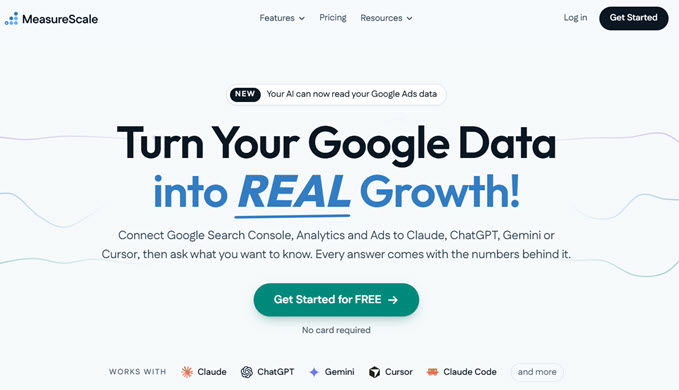
Today, that paradigm shifts with the launch of MeasureScale, a pioneering tool designed to act as a bridge between the vast ecosystem of Google’s data platforms and the sophisticated AI assistants users rely on daily. Developed by the team behind the industry-standard MonsterInsights plugin, MeasureScale promises to turn the static numbers of Google Search Console, Analytics, and Ads into a dynamic, reliable, and actionable roadmap for growth.
Main Facts: What is MeasureScale?
At its core, MeasureScale is an MCP (Model Context Protocol) server. For those unfamiliar with the terminology, MCP is an open-standard protocol that allows AI assistants—such as Claude, ChatGPT, Gemini, and development environments like Cursor—to securely "talk" to external data sources.
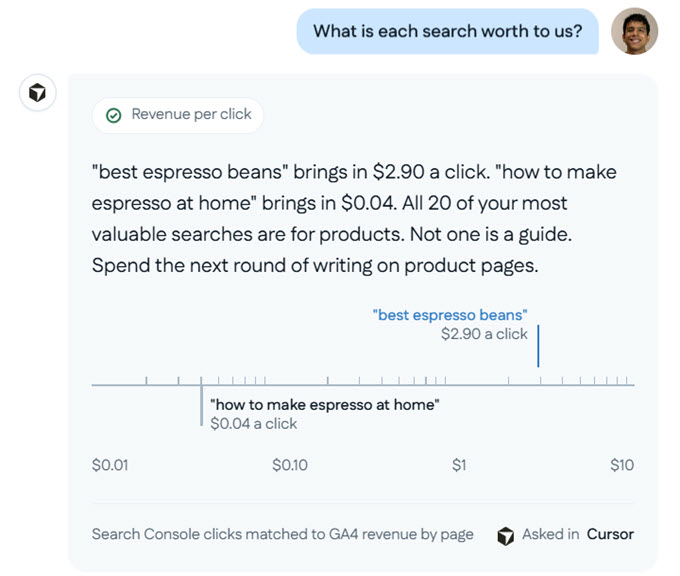
Unlike previous generations of data-to-AI connectors that blindly push raw, unstructured data into an AI model (which often leads to poor reasoning or invented "insights"), MeasureScale takes a contextual approach. It interprets the user’s query, identifies the relevant analysis required, performs that computation on live data, and then delivers a synthesized, factual answer.
Key Capabilities:
- Deep Integration: Connects directly with Google Search Console, Google Analytics (GA4), and Google Ads.
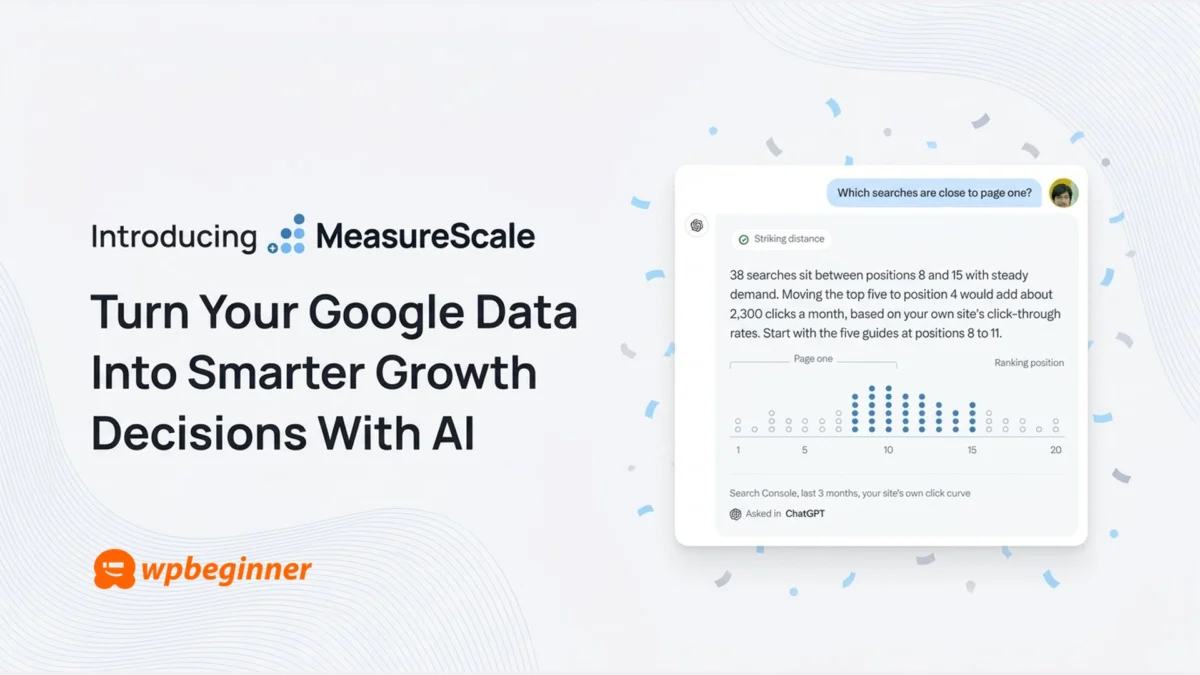
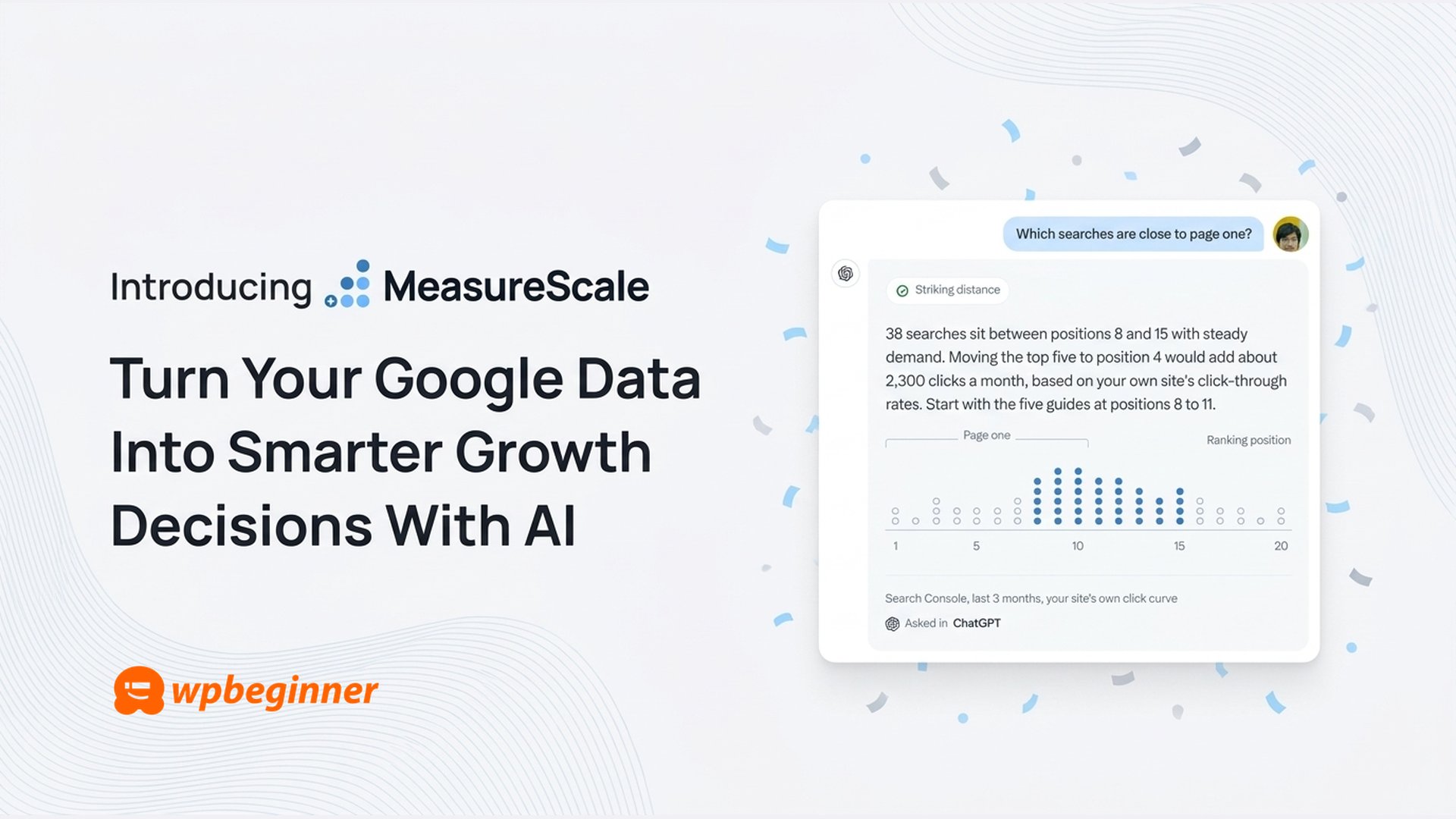
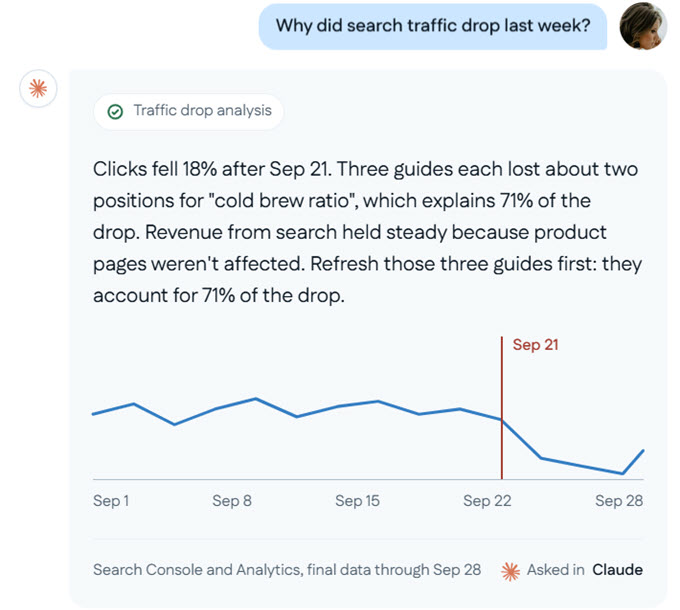
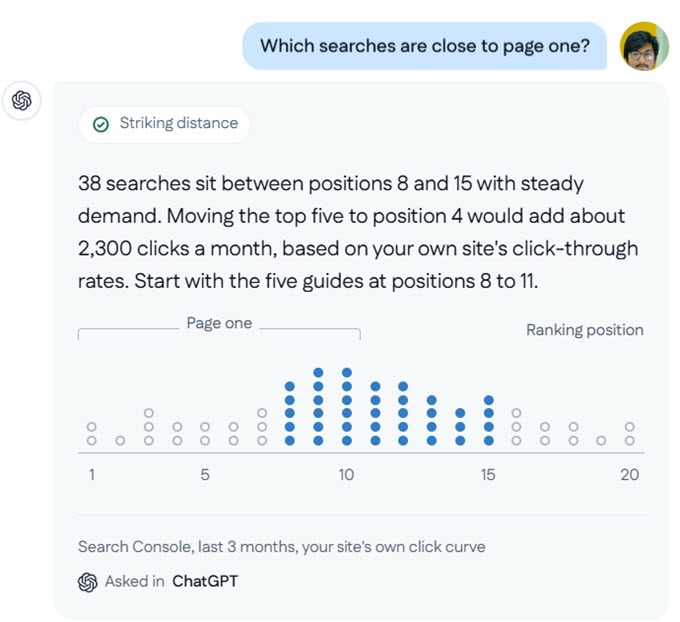
- Context-Aware Analysis: Rather than just showing a dashboard, it answers specific questions like, "Which keywords are close to ranking on page one?" or "What caused the recent dip in conversions?"
- Universal Compatibility: It is platform-agnostic, meaning it works for any website verified in Google Search Console, regardless of whether it is built on WordPress, Shopify, Webflow, or a custom stack.
- Transparency First: Every insight is accompanied by source attribution, date ranges, and warnings regarding data sampling or limitations.
Chronology of Development: Solving the Trust Gap
The development of MeasureScale was born out of a specific pain point identified by the team at Awesome Motive. With over 3 million users relying on the MonsterInsights plugin, the founders noticed a recurring theme: while users had easy access to data, they struggled to translate that data into growth.
The Problem of "AI Hallucination"
In early 2024, as LLM-based assistants became more mainstream, many users attempted to copy-paste their analytics reports into chatbots. They quickly discovered that AI is prone to "hallucinating" patterns that don’t exist, misinterpreting sampled data as absolute fact, and failing to account for seasonality or external market shifts.
The Shift to MCP
By late 2024, the emergence of the Model Context Protocol provided a standardized way to solve this. Instead of a "chat-over-files" approach, which is slow and error-prone, the MeasureScale team pivoted to building a dedicated server that performs the heavy lifting of data analysis before the AI ever sees it.
The development cycle prioritized security and interpretability. By mid-2025, beta testers—including digital agencies and e-commerce managers—reported that for the first time, they felt comfortable using AI to guide their SEO strategies because they could verify the "math" behind the recommendations.
Supporting Data: Why "Striking Distance" Matters
One of the most powerful features of MeasureScale is its ability to identify "striking distance" keywords. Traditional SEO tools often provide massive lists of keywords, leaving the user to guess which ones are worth the effort.
The Economics of Incremental Growth
MeasureScale changes this by utilizing the site’s own historical Click-Through Rate (CTR) data. If a page ranks in position 11 through 20 on Google, it is technically "on the second page." MeasureScale analyzes the volume of these queries and calculates the projected traffic increase if that page were moved into the top three.
- Example Case: A site with 1,000 monthly impressions on a keyword at position 12.
- The AI Insight: By analyzing the site’s historical performance, MeasureScale calculates that moving this to position 3 could net an additional 150 clicks per month, based on real-world user behavior on that specific domain, rather than generic industry averages.
This data-driven approach removes the guesswork from content marketing, allowing teams to prioritize content refreshes based on potential ROI rather than intuition.
Official Response and Philosophy
Syed Balkhi, founder of WPBeginner and the driving force behind MeasureScale, emphasizes that the tool is not intended to replace the human marketer, but to "level the playing field."
"Website owners have been telling us for a long time that they don’t trust the answers AI gives them about their data," Balkhi stated in the launch announcement. "They end up double-checking every single number by hand. We built MeasureScale to stop the double-checking and start the doing. When you have an assistant that actually understands the source of the data and knows whether that data is finalized or sampled, you stop guessing and start making decisions."
The philosophy behind the project is one of Radical Transparency. Every answer provided by the AI includes a breakdown of its logic. If the data is sampled—a common issue in Google Analytics—the AI explicitly warns the user, ensuring they never mistake an estimate for a hard fact.
Implications for the Industry
The launch of MeasureScale has significant implications for how businesses will handle data analysis in the coming years.
1. The Death of the "Dashboard Fatigue"
For years, the industry has suffered from "dashboard fatigue," where users spend hours staring at complex graphs without knowing what to do next. By shifting from data visualization (charts) to data conversation (answers), MeasureScale suggests that the future of analytics isn’t a better chart, but a better conversation.
2. Empowering Small Agencies
Agencies are often tasked with reporting results to clients. Providing a clear, verified explanation of why traffic fluctuated—and documenting that change in a way that is easily exportable—reduces the administrative burden on agency staff, allowing them to focus on high-level strategy.
3. Data Privacy and Security
In an era of heightened privacy concerns, the "read-only" architecture of MeasureScale is a major selling point. Because it does not require administrative passwords and utilizes encrypted connections, it offers a secure pathway for enterprises to connect their Google assets to AI assistants without fear of data leakage or unauthorized configuration changes.
Looking Ahead: The Future of MeasureScale
As of late 2026, MeasureScale is already integrating with the major AI directories for Claude, ChatGPT, and Gemini. The roadmap for the platform includes:
- Predictive Modeling: Using historical trends to forecast future traffic and revenue.
- Competitive Intelligence: Comparing site performance against industry-specific benchmarks.
- Expanded Ecosystems: Beyond Google, future updates are expected to include social media analytics and CRM integrations.
The barrier to entry for high-level data analysis has effectively collapsed. Whether you are a small business owner trying to increase sales on a niche blog or an agency managing dozens of client properties, the tools to act on your data are no longer gated by a high degree of technical expertise.
By integrating the intelligence of AI with the ground truth of Google’s data, MeasureScale has provided a blueprint for how businesses will navigate the complex, data-heavy digital landscape of the future. The era of guessing is over; the era of informed, AI-assisted decision-making has begun.
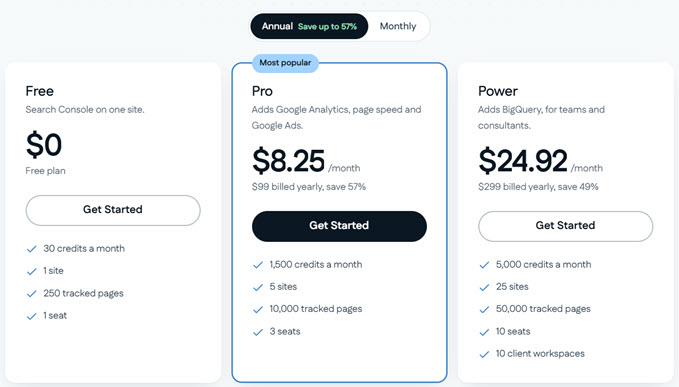
For more information or to start your 14-day free trial of the Pro features, visit MeasureScale.com.