





LONDON — In the modern digital marketplace, corporate marketing budgets are perpetually caught in a high-stakes turf war. Decision-makers are routinely pressured to pick a side in an artificial binary: Should we invest in Search Engine Optimization (SEO) or Pay-Per-Click (PPC)?
For years, digital marketing agencies and internal departments have operated these two critical acquisition channels in absolute isolation. They are managed by separate teams, measured by disparate key performance indicators (KPIs), and reported in disconnected silos.
However, industry experts argue that this siloed approach fundamentally misunderstands how modern consumers interact with search engines. Every single day, billions of potential customers take to Google to articulate their problems, compare products, evaluate solutions, and seek out trusted businesses. When examined collectively, these digital footprints reveal something far more valuable than simple keyword rankings: the deep, underlying intent of the modern consumer.
The most successful marketing strategies do not ask whether to prioritize organic or paid channels. Instead, they ask a foundational commercial question: What is search already telling us about our customers?
Main Facts: The Convergence of Organic and Paid Search
At its core, the traditional divide between SEO and PPC is a structural illusion. Both channels ultimately serve the exact same master and strive to achieve the identical corporate objective: connecting the right brand with the right customer, delivering the right message, at precisely the right psychological moment.
- The Consumer Intent Engine: Google processes over five trillion searches annually. Roughly 15% of the queries Google encounters every single day are entirely brand new, reflecting a constantly shifting landscape of consumer language, needs, and priorities.
- The Shared Intelligence Deficit: While organic search steadily builds a rich, organic repository of audience intelligence over months and years—capturing how users naturally describe their pain points—this data rarely flows downstream to inform paid search ad copy, bidding strategies, or landing page optimization.
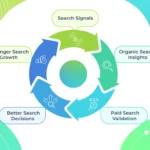
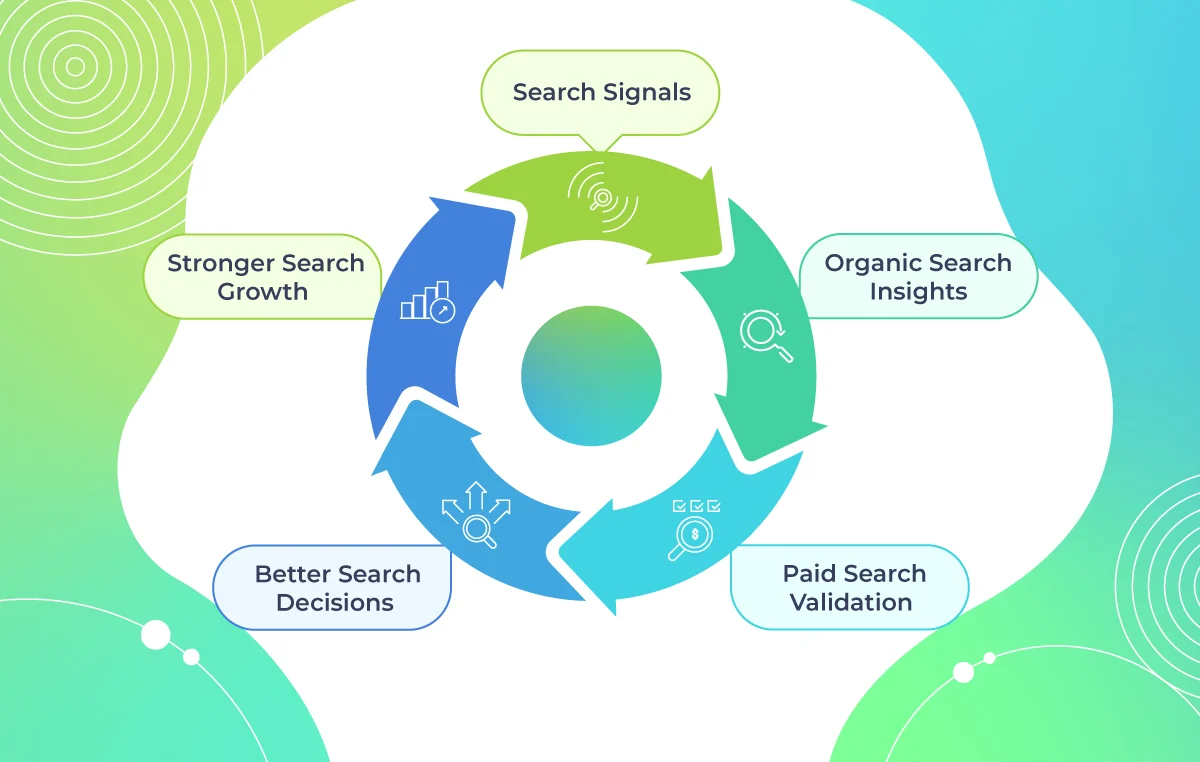
- The Paradigm Shift: Forward-thinking organizations are dismantling departmental walls to adopt the Search Growth Loop. This cyclical framework utilizes insights gathered from organic search to validate demand and guide paid search, while leveraging PPC to test messaging, evaluate commercial intent, and rapidly surface new market opportunities.
Chronology: The Evolution of Search Strategy
To understand how modern search marketing reached this crossroads, it is helpful to trace its historical trajectory:
Phase 1: The Wild West of Independent Channels (Early 2000s – 2010s)
In the early days of search engine marketing, SEO and PPC were treated as entirely distinct disciplines. SEO was viewed as a technical, long-term game involving keyword stuffing, link building, and site architecture. PPC was seen as an immediate, direct-response tactical tool focused on bidding for high-intent commercial keywords. Companies routinely hired completely separate agencies for each channel, fostering an environment of competition rather than collaboration.
Phase 2: The Rise of Data Silos and Budget Polarization (2010s – 2020s)
As digital budgets expanded, executive leadership began demanding granular accountability. Marketing departments divided into specialized pods. Performance marketers focused exclusively on return on ad spend (ROAS) via paid channels, while content and organic search teams measured success via traffic growth and brand visibility. The two camps rarely spoke, resulting in duplicated efforts, conflicting messaging, and wasted capital.
Phase 3: The Birth of Unified Search Strategy and the "Search Growth Loop" (Present Day)
With rising customer acquisition costs, algorithmic shifts driven by artificial intelligence, and increasingly complex customer journeys, the limitations of siloed marketing have become unsustainable. Industry leaders are pivoting toward unified search ecosystems. By utilizing organic search performance as a foundational market-research engine, brands can deploy paid budgets with surgical precision, eliminating guesswork and maximizing commercial returns.

Supporting Data: Validating Demand and Commercial Intent
Transitioning from siloed campaigns to an integrated search strategy relies heavily on hard data. Rather than relying on corporate assumptions, internal jargon, or intuition, integrated search leverages empirical evidence drawn from actual user behavior.
1. Validating Search Demand Before Committing Capital
When a piece of web content achieves high organic visibility, it functions as a definitive market signal. It proves that a genuine audience actively searches for that topic, product, or service, and that search engines recognize the brand as a credible authority on the subject.
Integrating this data ensures that paid search budgets are not allocated based on executive hunches or competitor imitation. Instead, PPC dollars are directed toward topics where customer demand has already been mathematically proven through organic performance.
2. Decoding Real Customer Language
Corporate marketing teams suffer from an inherent curse of knowledge: they describe products and services using sophisticated internal nomenclature, industry acronyms, and corporate jargon. Customers, however, use plain, descriptive, and often shifting language to describe their problems.
Because organic search captures the exact phrasing, questions, and colloquialisms used by consumers, it acts as a real-time focus group. Feeding these organically discovered linguistic patterns directly into PPC ad copy dramatically improves click-through rates (CTR) and ad relevance scores.
3. Mapping Commercial Intent Across the Funnel
Not all searches carry equal commercial weight. A broad query like "What is enterprise cybersecurity?" signals early-stage informational research, whereas "Enterprise cybersecurity compliance vendor" clearly indicates bottom-of-funnel purchasing intent.
By analyzing how a brand appears across diverse organic search queries, marketers can map the precise contours of the customer journey. This insight allows paid search to move beyond its traditional role as a bottom-of-funnel direct-response tool, opening up opportunities to capture high-value prospects earlier in their decision-making process.
Official Responses and Industry Case Studies: The Bridewell Transformation
The practical power of this unified approach is best demonstrated through real-world implementation. A prominent cybersecurity firm, Bridewell, offers a textbook case study in the transformative impact of the Search Growth Loop.
For several years, Bridewell maintained robust investments in both organic and paid search. However, like many enterprises, these channels were managed by completely separate external partners. While the brand accumulated a wealth of invaluable customer insight through its organic search performance, virtually none of that data was utilized to shape its paid search strategy. Paid campaigns relied on isolated keyword lists and disconnected assumptions.

When Bridewell restructured its approach under a unified search framework, the initial intervention did not focus on tweaking ad bids or rewriting meta descriptions. Instead, the entire decision-making architecture was overhauled.
- Leveraging Organic Insight: Organic search performance was deployed to strictly map out where verified market demand existed.
- Informing Paid Campaigns: The PPC team used these organic insights to test messaging variations, explore nuanced commercial intents, and target high-value keyword opportunities that were previously overlooked.
- Closing the Feedback Loop: Insights gleaned from rapid-fire paid search tests were fed back upstream to refine the organic content strategy, creating a self-sustaining cycle of optimization.
The Results
The commercial impact of tearing down the wall between SEO and PPC was immediate and profound. Bridewell successfully achieved its ambitious annual business targets within the first six months of adopting the unified approach.
As the strategy matured, the brand noted that new market opportunities were identified exponentially faster, ad messaging evolved in lockstep with shifting consumer behavior, and every subsequent marketing update contributed to smarter, more profitable commercial decisions.
Implications: What This Means for Modern Marketing Leaders
The evolution toward unified search strategy carries profound implications for Chief Marketing Officers (CMOs), digital directors, and enterprise business leaders.
1. The Death of the "SEO vs. PPC" Budget Debate
Organizations must stop treating digital marketing budgets as a zero-sum game where every dollar spent on organic search is a dollar stolen from paid search (and vice versa). When structured correctly, SEO and PPC act as force multipliers for one another. Organic search provides the intelligence, validity, and long-term foundation; paid search provides the agility, testing ground, and immediate market acceleration.
2. Organizational Restructuring
True integration requires more than conceptual agreement; it demands structural alignment. Marketing departments must break down internal silos, forcing SEO specialists, PPC managers, and content creators to sit at the same table, share unified dashboards, and report against shared commercial outcomes rather than vanity metrics.
3. Sustainable Competitive Advantage
In an era dominated by rapid technological disruption and AI-driven search environments, the brands that win will not be those with the biggest budgets, but those that learn the fastest. The Search Growth Loop ensures that every single user interaction, every campaign tweak, and every organic ranking shift compounds over time.
By allowing search data to inform broader commercial decisions, businesses can transcend tactical marketing and unlock sustainable, long-term growth.