By Editorial Staff
September 17, 2026
In a landmark recognition of the evolving digital landscape, the United States Senate has officially entered the era of the creator economy. This week, Senators Cory Booker (D-NJ) and John Kennedy (R-LA) announced the formation of the bipartisan Senate Creators Caucus—a dedicated legislative forum designed to bridge the gap between digital entrepreneurs and the halls of federal power. This initiative marks a significant maturation of the creator economy, elevating digital content production from a niche pastime to a recognized pillar of American small business, job creation, and cultural innovation.
The launch of the Senate Creators Caucus follows the successful debut of the Congressional Creators Caucus in the House of Representatives last year, signaling a unified, bicameral effort to modernize federal policy frameworks to better suit the realities of the 21st-century media landscape.
The Evolution of a Digital Economy
The rise of the "creator economy" has been nothing short of meteoric. Over the past decade, platforms like YouTube have transitioned from simple video-hosting sites into robust economic ecosystems. Millions of Americans now earn their livelihoods through content creation, managing complex business models that involve production teams, intellectual property licensing, global marketing, and community management.
However, as these digital enterprises have grown, the legislative environment has struggled to keep pace. Creators have frequently found themselves operating in a "regulatory gray area," where traditional business laws—designed for brick-and-mortar retailers or legacy media conglomerates—do not always apply effectively to digital-native entrepreneurs. The formation of the Senate Creators Caucus is intended to rectify this, providing a direct channel for creators to educate lawmakers on the day-to-day operational challenges they face, from taxation and labor regulations to the emerging threats posed by generative artificial intelligence.
Chronology: Building the Bridge to Congress
The path to this week’s announcement began with the persistent advocacy of creators and industry stakeholders who argued that the economic scale of the sector could no longer be ignored.
- 2025: The initial U.S. YouTube Impact Report underscored the massive ripple effect the creator economy has on the national GDP, prompting increased interest from economic committees in Congress.
- Late 2025: The House of Representatives launched the Congressional Creators Caucus, co-chaired by Representatives Beth Van Duyne (R-TX) and Yvette Clarke (D-NY), establishing the first formal legislative bridge for the community.
- Early 2026: Informal roundtables were held between creators and Senate staff to discuss the impact of AI on intellectual property rights.
- September 2026: Senators Booker and Kennedy officially introduced the Senate Creators Caucus, cementing the bipartisan commitment to formalize this dialogue at the highest level of the U.S. government.
The Kick-Off: A Dialogue with Industry Leaders
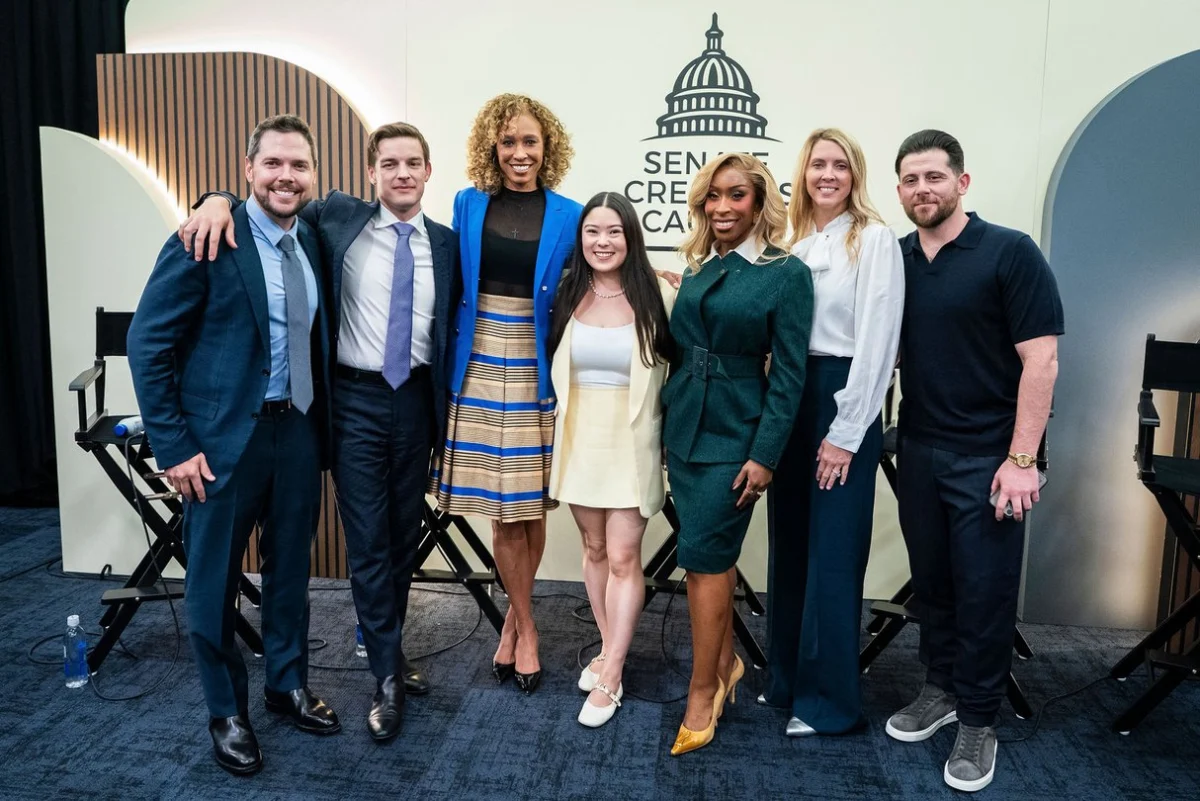
To mark the launch, the Senate hosted a high-profile panel discussion moderated by The Washington Post’s Dylan Wells. The event provided an unfiltered look at the business of creation. The lineup of participants represented the sheer diversity of the modern creator economy, ranging from educational powerhouses to entertainment networks and specialized entrepreneurs.

The panel featured industry stalwarts, including:
- Jackie Aina: A pioneer in the beauty and lifestyle space.
- Matthew Patrick (Game Theory): An expert in digital analysis and audience engagement.
- Ian Schwartzman (Joe Budden Network): Representing the growth of audio-visual podcasting networks.
- Avery Smith (Louisiana Crawfish Company): Highlighting the integration of traditional agriculture with digital marketing.
- Mark Vins (Brave Wilderness): Discussing the scaling of production enterprises.
These creators were joined by a cohort of influential voices—including Dr. Javoris Hollingsworth of Gracie’s Corner, Kati Morton, and Dr. Judith Joseph—who discussed the unique responsibilities creators hold regarding mental health, education, and digital literacy.
Supporting Data: The Economic Weight of Creators
The motivation behind the caucus is grounded in hard data. Modern creators are not merely "influencers"; they are employers. As Mark Vins, CEO and Co-Founder of Brave Wilderness, noted during the launch, his operation now sustains 16 full-time employees and a vast network of contractors.
"We started from zero subscribers," Vins explained. "But we have now created thousands of videos with over six billion views because of the growth potential that exists on YouTube. We’re here to help shape policies that will protect and grow the next generation of creator businesses."
The economic impact is nationwide. Creators contribute to local economies by hiring editors, camera operators, legal counsel, and accountants. They utilize regional logistics and retail partners, effectively decentralizing the media industry away from traditional hubs like Hollywood and New York and into every congressional district in the country.
Official Responses and Strategic Vision
The leadership of the caucus has been clear: the objective is not to impose new, stifling regulations, but to create a supportive environment for innovation.
Senator Cory Booker, serving as a co-chair, emphasized the entrepreneurial nature of the community. "Content creators are more than our favorite teachers, cooks, music critics, and voices online," Booker stated. "They are entrepreneurs who create jobs and drive economic growth. The Senate Creators Caucus seeks to educate lawmakers and advocate for policies that recognize creators as legitimate small businesses."
Senator John Kennedy, the Republican co-chair, highlighted the influence and the accompanying responsibility of the sector. "Creators and social media have tremendous influence over how Americans communicate and get information. That influence comes with a responsibility to be honest and tell the truth. We started this caucus to hear directly from creators and make sure they have a voice in Congress."
Leslie Miller, Vice President of Government Affairs and Public Policy at YouTube, echoed this sentiment, stating, "YouTube creators are online storytellers, entrepreneurs, and employers in every state. We are grateful to Senators Booker and Kennedy for ensuring these digital creators have a strong voice in Washington."
Implications: Addressing AI and the Future of IP
The caucus is not a symbolic gesture; it has already begun to address pressing legislative priorities. A primary focus for the group is the NO FAKES Act, a bipartisan bill currently moving through the legislative process.
The NO FAKES Act is designed to protect individuals from the unauthorized use of their voice and visual likeness by AI-generated digital replicas. For creators, whose primary asset is often their personal brand and identity, this legislation is existential. During their time on Capitol Hill this week, creators held meetings with various congressional offices to advocate for the bill, arguing that a robust framework for intellectual property is essential for the continued health of the creator economy.
Looking Ahead
The launch of the Senate Creators Caucus signifies a fundamental shift in how the U.S. government views the digital landscape. By establishing a direct line of communication, the Senate is acknowledging that the future of American media, education, and commerce is being written by independent creators.
Over the coming months, the caucus is expected to hold a series of hearings and briefings aimed at deepening lawmakers’ understanding of digital entrepreneurship. As the NO FAKES Act moves toward a vote, the insights provided by these creators will likely prove decisive.
For the millions of Americans who consume, create, and build businesses on digital platforms, the arrival of this caucus marks the end of being a "fringe" economy. They are now part of the central conversation, and as the sector continues to grow, their influence on the policy and culture of the United States is poised to reach unprecedented heights.