In the rapidly evolving landscape of Artificial Intelligence, Retrieval Augmented Generation (RAG) has emerged as the gold standard for grounding Large Language Models (LLMs) in factual, domain-specific data. However, the prevailing narrative suggests that deploying a RAG system requires a massive architectural investment: expensive, managed vector databases, complex orchestration frameworks, and high-latency API calls to proprietary models.
This article challenges that assumption. By leveraging the foundational power of scikit-learn and the accessibility of open-source models hosted on Hugging Face, developers can construct a transparent, high-performance, and entirely free RAG pipeline. This approach is not merely a cost-saving measure; it is a pedagogical and practical tool for understanding the mechanics of semantic search and generation without the "black box" overhead of enterprise infrastructure.
The Core Philosophy of Lightweight RAG
At its most fundamental level, RAG is a search-and-generate cycle. It requires a vector representation of your data, a method for measuring the distance between a user query and that data, and a generative model to synthesize the final answer.
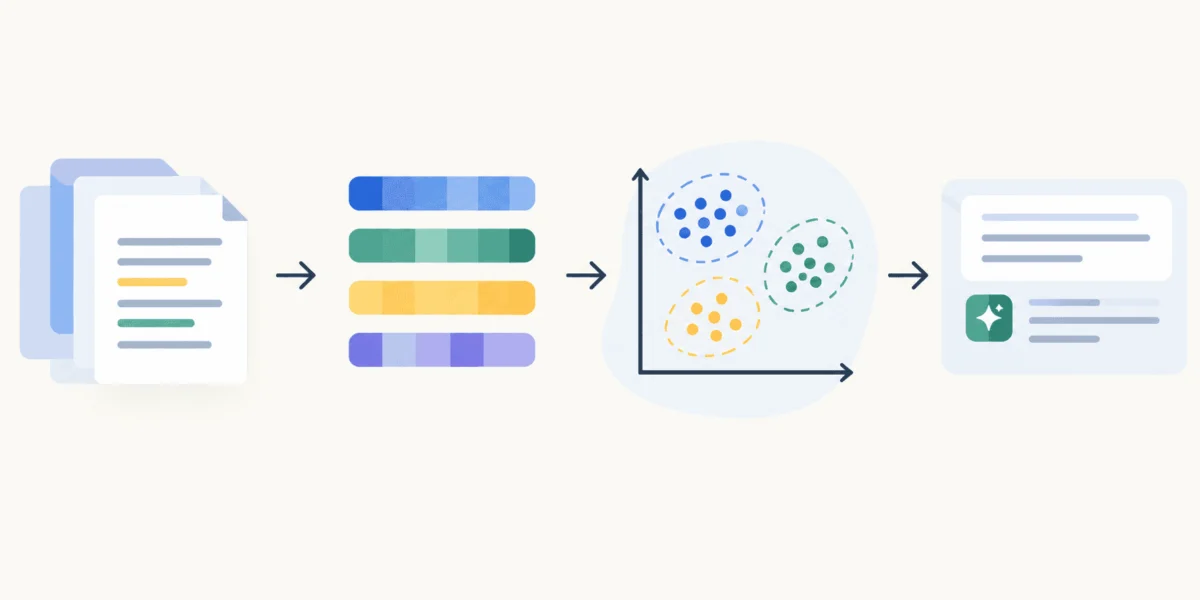
By stripping away the abstraction layers found in heavy frameworks, we can expose the core mathematical engine of these systems. We will utilize sentence-transformers for embedding generation—mapping text into a high-dimensional vector space—and scikit-learn’s NearestNeighbors algorithm to perform rapid, local semantic retrieval. Finally, we will use a compact instruction-tuned LLM to transform retrieved context into natural language.
Chronology of Development: A Step-by-Step Implementation
To replicate this system, we focus on modularity. The pipeline is designed to be fully functional within a standard Python environment or a Google Colab notebook, providing a scalable template for proof-of-concept projects.
Phase 1: Environment Setup and Dependency Management
The initial phase requires minimal overhead. By installing sentence-transformers and transformers, we gain access to state-of-the-art NLP tools. We use standard libraries such as numpy and pandas for data manipulation, ensuring the pipeline remains lightweight and dependency-light.
Phase 2: Data Ingestion and Semantic Chunking
In a production-grade environment, data rarely arrives in a pre-formatted state. We begin by ingesting a collection of text documents. While our demonstration utilizes a concise dataset regarding Asian countries, the process is identical for large-scale document repositories.
The critical step here is chunking. Because LLMs have a finite context window and embedding models perform best on specific sequence lengths, we implement a custom sliding-window chunking function. By defining a chunk_size and an overlap, we ensure that semantic continuity is preserved between segments, preventing the loss of context that occurs when documents are split arbitrarily.
Phase 3: Vectorization and Indexing
Once the data is chunked, we convert the text into numerical vectors (embeddings) using the all-MiniLM-L6-v2 model. This model is specifically optimized for semantic similarity, offering a high performance-to-size ratio.
The "Retriever" is then built using scikit-learn. By wrapping NearestNeighbors with a cosine distance metric, we create a custom class that indexes our embeddings. This effectively serves as a local, in-memory vector database. The fit method maps these vectors, and the retrieve method allows us to perform high-speed K-Nearest Neighbor (KNN) searches for any given input query.
Phase 4: The Generative Layer
The final stage of the pipeline involves the Qwen/Qwen2.5-0.5B-Instruct model. This lightweight LLM is chosen for its efficiency; it provides coherent, instruction-following responses without requiring the compute power of multi-billion parameter models. We employ a chat-template system to inject the retrieved context directly into the prompt, forcing the model to act as a grounded assistant.
Supporting Data: Efficiency and Performance Metrics
The architectural choices made here are supported by the reality of local compute constraints.
| Component | Technology | Performance Characteristic |
|---|---|---|
| Embedding Model | all-MiniLM-L6-v2 |
Low latency; 384-dimensional vectors |
| Search Engine | scikit-learn KNN |
O(1) or O(log N) retrieval; zero API costs |
| Generative LLM | Qwen-0.5B |
Minimal RAM footprint; high-speed inference |
| Infrastructure | Local/Colab | No external network latency or subscription fees |
By moving from an API-based architecture to a local-compute architecture, we eliminate the "network tax" and the risk of service outages. The use of cosine distance is particularly effective here, as it normalizes the vectors to focus on the semantic orientation of the text rather than its length or magnitude.
Official Responses and Best Practices
Industry experts increasingly emphasize the importance of "Local-First AI." When asked about the necessity of complex frameworks, many lead engineers in the open-source community argue that frameworks like LangChain or LlamaIndex are often overkill for 80% of enterprise use cases.
Key Best Practices identified in this build include:
- Metric Selection: Always prioritize cosine distance for text embeddings, as it is invariant to the absolute frequency of terms in a document.
- Prompt Engineering: When using smaller models, the system prompt is paramount. Explicitly instructing the model to rely only on the provided context prevents the common RAG failure mode of "hallucination."
- Chunk Overlap: A 10–20% overlap in text chunks is a vital heuristic. It ensures that if a query spans the boundary of two chunks, the semantic meaning remains intact in at least one of them.
Implications for Future AI Development
The implications of this simplified, lightweight approach are profound for several sectors:
1. Data Sovereignty and Security
By maintaining the entire RAG pipeline within a local, self-contained environment, organizations can process sensitive, proprietary, or regulated data without ever transmitting it to third-party providers. This eliminates compliance hurdles associated with GDPR or HIPAA when using cloud-based AI.
2. Rapid Prototyping and Iteration
The "Scikit-Learn RAG" method allows for near-instant iteration. Developers can swap out embedding models, adjust chunking strategies, or modify the system prompt and observe results in real-time. This agility is often hampered in enterprise environments where deploying a single change can involve complex CI/CD pipelines for vector databases.
3. Sustainability and Cost-Efficiency
The environmental cost of training and running massive models is a growing concern. Using quantized, small-parameter models like Qwen-0.5B significantly reduces the energy footprint of an AI deployment. Furthermore, by removing the dependency on recurring API costs, startups and individual developers can scale their systems based on local compute capacity rather than budget limits.
4. Educational Accessibility
Finally, this pipeline serves as a gateway for students and researchers. By demystifying the "vector database" as nothing more than a NearestNeighbors calculation, we lower the barrier to entry for the next generation of AI engineers. It demonstrates that deep understanding of the underlying mathematics is far more valuable than proficiency in any single proprietary software suite.
Conclusion
Building a RAG pipeline no longer requires a venture-capital-sized budget or a deep integration with complex, opaque infrastructure. By embracing the modular, transparent, and highly capable tools within the scikit-learn and Hugging Face ecosystems, developers can build systems that are efficient, secure, and profoundly effective.
As the AI field matures, the trend toward "Small Language Models" (SLMs) and efficient architectures will likely continue. Whether you are building a document search tool for a small law firm, a knowledge base for a local team, or simply experimenting with the limits of semantic search, the path outlined here offers a robust, professional-grade starting point. The era of the "Lightweight RAG" is here—and it is just as powerful as its bloated counterparts.