










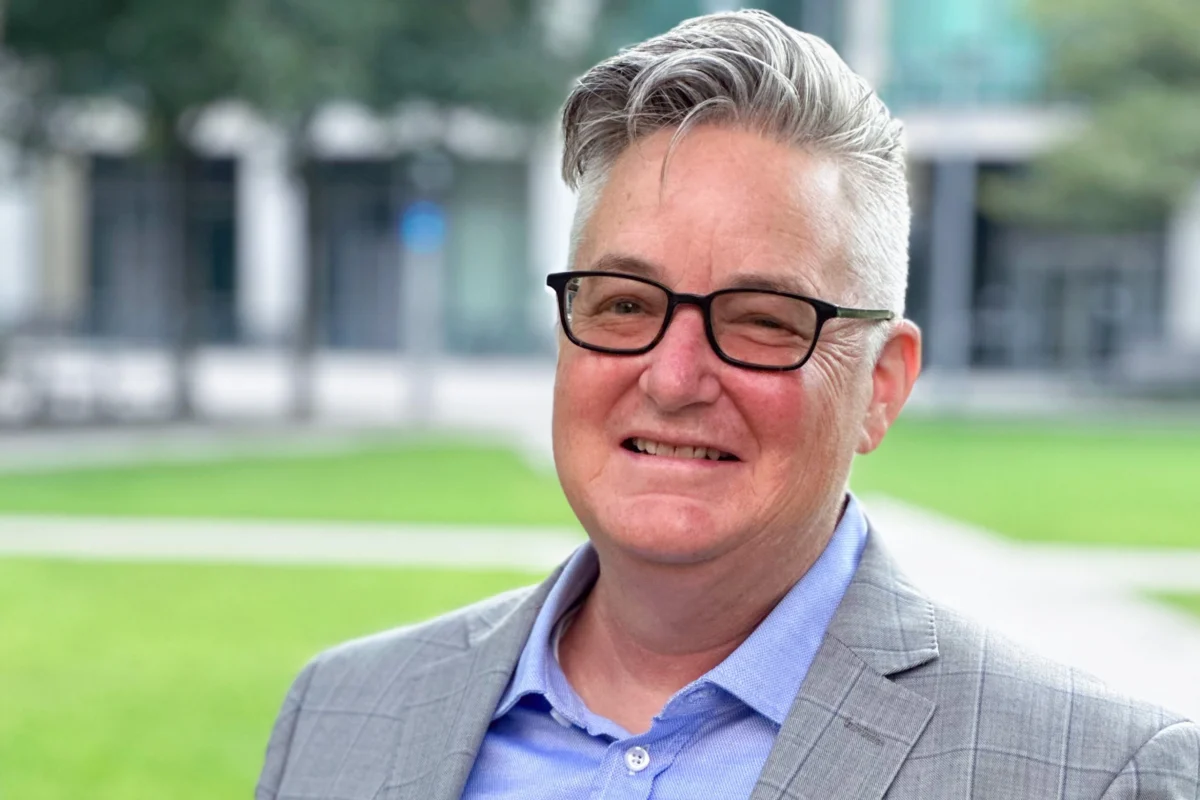
In a significant move that underscores the evolving mandate of academic information management in the digital era, MIT Provost Anantha Chandrakasan has announced the appointment of Chris Bourg as the new vice provost and Barbara K. Ostrom (1978) Director of the Libraries. Bourg, who has helmed the MIT Libraries since 2015, now assumes a title that elevates the library’s leadership to a high-level administrative position within the Institute’s executive hierarchy.
This appointment is bolstered by a historic endowment from Barbara K. Ostrom ’78, SM ’78, which ensures the perpetuity of the director’s role. For Bourg, the appointment represents more than a change in nomenclature; it is a formal recognition of the central role the library plays in navigating the complexities of artificial intelligence, open scholarship, and the future of human knowledge.
The Strategic Vision: Elevating the Library in the Digital Age
The decision to bestow the title of "vice provost" upon the director of the libraries is not merely symbolic. As Provost Chandrakasan noted, the move "signals the enduring importance of the MIT Libraries in the digital age." In an era where information is ubiquitous but often fragmented, biased, or gated behind paywalls, the mission of the library—to protect and curate access to verifiable knowledge—is more critical than ever.
Bourg’s elevation reflects a broader institutional strategy at MIT to integrate the library deeply into the research and pedagogical mission of the university. By positioning the director as a vice provost, the Institute ensures that library leadership has a seat at the table when defining the future of digital scholarship, data ethics, and the integration of generative AI into the academic workflow.
A Legacy of Service: The Barbara K. Ostrom Endowment
The newly endowed position bears the name of Barbara K. Ostrom, a distinguished alumna whose support has provided a foundation for the library’s long-term sustainability. The relationship between the donor and the director is marked by a unique professional kinship: both women served in the Reserve Officers’ Training Corps (ROTC) during their undergraduate years—Ostrom at MIT and Bourg at Duke University—before embarking on careers of military and public service.
"Barbara’s gift is an incredible acknowledgment of the progress the entire MIT Libraries staff has made toward our vision," Bourg remarked. Beyond this endowment, Ostrom has been a dedicated patron of specific library initiatives, including a project to highlight the contributions of MIT’s women faculty by archiving and preserving their personal papers, ensuring that the history of scientific discovery at the Institute is representative and inclusive.
Chronology: A Decade of Transformation
Chris Bourg’s tenure at MIT has been characterized by a series of bold, structural, and cultural shifts. Her leadership journey at the Institute can be categorized into three distinct phases of institutional evolution.
2015–2017: Establishing the Foundation
Upon her arrival from Stanford University in 2015, Bourg was immediately tasked with envisioning the library of the future. She co-chaired the 2016 Ad Hoc Task Force on the Future of Libraries, a process that engaged the entire MIT community. This period saw the beginning of a cultural shift, moving the libraries away from a traditional role as a repository of books toward an active hub for research, empathy, and community building.
2018–2020: The Push for Open Scholarship
The middle years of Bourg’s tenure were defined by a relentless drive for open access. In 2018, she launched the Center for Research on Equitable and Open Scholarship (CREOS), cementing MIT’s role as a leader in the global movement to democratize research. This era culminated in the 2020 decision to cancel a major journals contract with Elsevier—a landmark event in the academic world. Guided by the MIT Framework for Publisher Contracts, the library chose to prioritize its principles of open scholarship over traditional, restrictive subscription models, saving the Institute millions in the process.
2021–Present: AI and the Future of Research
Most recently, Bourg has steered the library through the rapid emergence of generative AI. Recognizing that AI models are trained on scholarly data, she took on leadership roles in the Working Group on Scholarly Content and Generative AI and the Ad Hoc Committee on AI Use in Teaching, Learning, and Research Training. These efforts have focused on the legal, ethical, and technical challenges of integrating AI into the academic ecosystem without compromising the integrity of the scientific record.
Supporting Data: The Impact of Modernization
Under Bourg’s guidance, the physical and digital footprints of the library have expanded significantly. The renovation of the Hayden Library and the Building 14 Courtyard served as a physical manifestation of her philosophy: that libraries must be social spaces designed for collaboration as much as they are places for quiet study.
Furthermore, the launch of MIT Reads demonstrates a commitment to the "human" element of the library. By fostering discussions across the Institute, the program has helped bridge the gap between technical departments, creating a sense of shared belonging.
Beyond the campus, Bourg’s influence is felt globally. Her involvement with the Center for Open Science and her service on the National Academies of Science, Engineering, and Medicine’s Corrections and Retractions Committee positions her at the forefront of efforts to upgrade the scientific record. Her expertise is frequently sought by institutions looking to replicate MIT’s successful balance of high-tech data services and traditional archival preservation.
Official Perspectives: The Institutional Rationale
The Provost’s office has been clear about the reasoning behind this shift. By granting the director vice-provost status, MIT is explicitly acknowledging that the challenges facing the library—such as data sovereignty, the ethics of AI training, and the sustainability of scholarly publishing—are core academic issues that require high-level oversight.
Bourg herself views the promotion as a validation of the library staff’s resilience and ingenuity. "Her generosity advances the libraries’ ability to support teaching, learning, and community-building at MIT well into the future," Bourg said of Ostrom’s gift, emphasizing that the endowment allows the library to focus on long-term sustainability rather than immediate budgetary pressures.
Implications for the Future of Academia
What does this appointment mean for the future of university libraries? It suggests a model where the library is no longer a peripheral support service but a central pillar of the research university. As universities grapple with the "AI transformation," the expertise of library staff—who are trained in data management, copyright law, and information ethics—becomes essential.
Bourg’s trajectory—from a 10-year career as a U.S. Army officer to the helm of a world-class academic library—brings a unique perspective to institutional management. Her background in sociology and her extensive experience at both Stanford and MIT have allowed her to implement change management strategies that are both intellectually rigorous and human-centric.
As she steps into her new role, the challenges remain daunting:
- The AI Frontier: Ensuring that generative AI serves the academic community rather than undermining the value of scholarly work.
- Open Data: Continuing to push for a landscape where data is not just accessible, but reproducible and transparent.
- Institutional Equity: Ensuring that the library remains a space that fosters empathy and inclusion, even as it becomes increasingly digitized.
With this new appointment, MIT has signaled that it is ready to meet these challenges head-on. By elevating Chris Bourg, the Institute is ensuring that the library remains a vibrant, evolving institution—one that protects the past while actively shaping the future of global knowledge. As Bourg continues her work, the academic community will undoubtedly look to MIT for guidance on how to navigate the complex intersection of technology, access, and discovery.



