










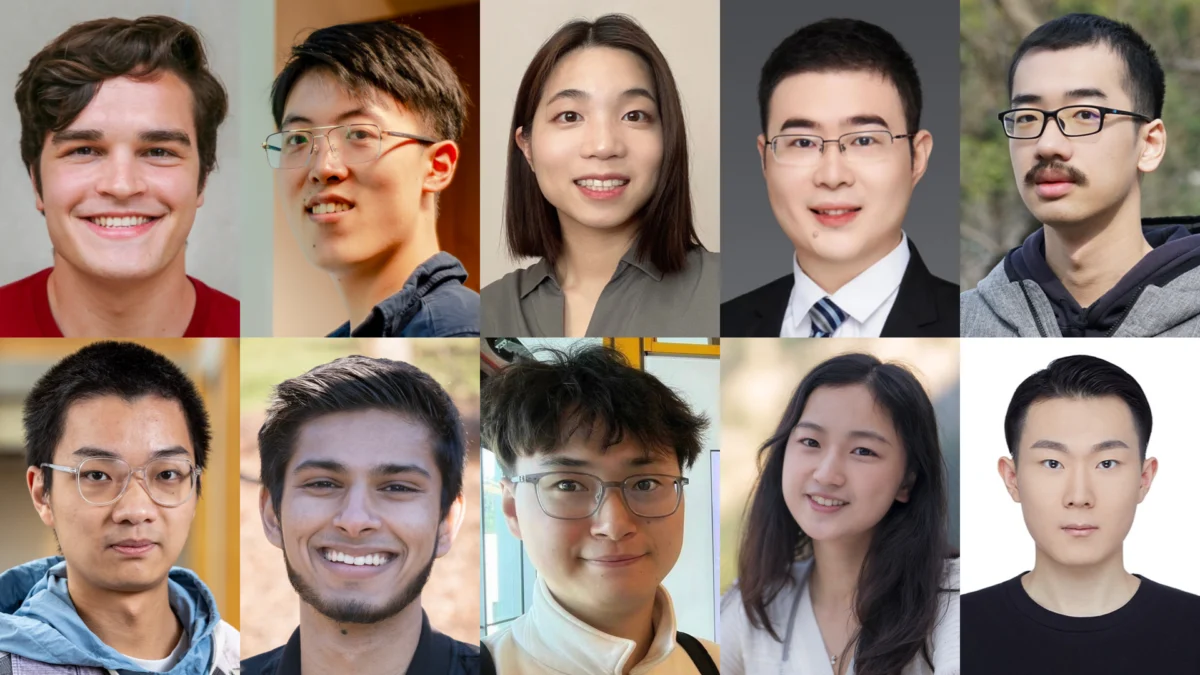
SANTA CLARA, Calif. — In an era defined by rapid technological transformation, the convergence of exceptional human intellect and advanced accelerated computing continues to serve as the bedrock for humanity’s most ambitious scientific breakthroughs. From decoding complex molecular structures in healthcare to engineering autonomous navigation systems capable of safely traversing dynamic urban landscapes, the challenges of tomorrow demand visionary solutions today.
To catalyze this wave of innovation, technology leader NVIDIA has officially opened the global application cycle for the 26th installment of its prestigious NVIDIA Graduate Fellowship Program. Now entering its twenty-sixth year, the initiative is designed to identify, support, and collaborate with extraordinary doctoral students whose pioneering academic research aligns with the frontier of NVIDIA technologies.
The program offers a comprehensive package of financial, technical, and professional resources, including direct grant funding of up to $60,000 per student, invaluable mentorship from leading industry scientists, and unfettered access to cutting-edge technical infrastructure. As universities and research laboratories worldwide race to unlock the potential of artificial intelligence and high-performance computing (HPC), this multi-decade fellowship continues to stand out as a premier bridge between visionary academic scholarship and industry-shaping development.
Main Facts
The NVIDIA Graduate Fellowship Program is structured to support Ph.D. candidates who are already well underway in their advanced academic journeys and are producing exceptional, high-impact research.
- Global Scope: The application window is open worldwide, inviting eligible doctoral researchers from universities across the globe to apply.
- Core Disciplines: The fellowship specifically targets students conducting groundbreaking research in Artificial Intelligence (AI), Machine Learning (ML), Autonomous Vehicles, Computer Graphics, Robotics, Healthcare and Biomedicine, High-Performance Computing (HPC), and other closely related technical domains.
- Financial Award: Successful candidates receive vital funding of up to $60,000 per student to support their academic endeavors and research overhead.
- Comprehensive Support: Beyond financial backing, fellows gain access to NVIDIA’s world-class hardware, technical resources, and one-on-one mentorship from seasoned researchers within the company.
- Mandatory Internship: A core component of the program is an in-person summer internship at one of NVIDIA’s premier research offices. Candidates applying for the 2027–2028 academic year must be available to complete this mandatory internship during the summer of 2027, immediately preceding their fellowship year.
- Eligibility Criteria: Applicants must have completed at least their first year of Ph.D.-level studies at the time of application submission.
- Key Deadline: The official application deadline for the 2027–2028 academic year is October 30, 2026.
Eligible doctoral candidates seeking detailed guidelines, submission portals, and documentation requirements can visit the official NVIDIA Graduate Fellowship Program website.
Chronology and Historical Evolution
To fully appreciate the significance of the 26th iteration of the NVIDIA Graduate Fellowship Program, it is necessary to examine its evolution over the past two decades. What began in 2002 as a modest initiative to support emerging academic talent has systematically expanded into a globally recognized hallmark of doctoral excellence.
Phase 1: Inception and Early Foundation (2002–2010)
At the turn of the millennium, graphics processing units (GPUs) were primarily recognized for rendering video games and professional visualization tasks. However, forward-thinking engineers recognized their immense potential for parallel computing. In 2002, NVIDIA established the Graduate Fellowship Program to cultivate academic interest in GPU-accelerated computing. During these formative years, the program supported a select cohort of computer science and electrical engineering students who were pioneering the foundational algorithms that would eventually transform GPUs from specialized rendering chips into general-purpose parallel processors.
Phase 2: The Deep Learning Revolution (2011–2020)
As the deep learning revolution took shape in the early 2010s, the focus of the fellowship shifted dramatically. The emergence of convolutional neural networks and massive datasets required unprecedented computational muscle—a demand that NVIDIA’s hardware and CUDA programming model uniquely satisfied. The Graduate Fellowship Program became a vital pipeline for nurturing researchers who were training the earliest AI models. During this decade, fellowship recipients contributed significantly to computer vision, natural language processing, and the theoretical frameworks underpinning modern machine learning.
Phase 3: Global Expansion and Multidisciplinary Diversification (2021–Present)
Entering its mid-20s, the program has broadened its scope to encompass a sprawling ecosystem of advanced technologies. No longer restricted strictly to core computer science, today’s fellowship actively solicits candidates working at the intersection of AI and physical sciences, robotics, drug discovery, quantum computing simulation, and autonomous mobility. Over the past 26 years, the initiative has adapted dynamically to the shifting contours of the technological landscape, mirroring NVIDIA’s own transition from a hardware manufacturer to an AI infrastructure titan.
Supporting Data and Metrics
The scale, longevity, and impact of the NVIDIA Graduate Fellowship Program are best illustrated through quantitative analysis. Since its inception, the program has maintained a rigorous selection process, ensuring that only the most dedicated and innovative minds receive its backing.
- Cumulative Investment: Over its 24+ year history, the program has distributed over $8 million in direct grants to promising doctoral researchers.
- Total Recipients: More than 220 grants have been awarded to exceptional Ph.D. students worldwide, creating an elite alumni network that spans academia and top-tier industrial research laboratories.
- Financial Scale: Individual grants scaling up to $60,000 provide substantial financial relief, allowing doctoral candidates to focus intensely on their dissertation research rather than teaching loads or external funding pursuits.
- Timeframe: The current application cycle marks the 26th year of continuous operation, positioning the program as one of the longest-running industry-sponsored doctoral fellowships in the technology sector.
- Temporal Horizon: The upcoming application cycle targets the 2027–2028 academic year, with the mandatory preparatory internship locked in for summer 2027.
These metrics underscore a sustained institutional commitment to fostering foundational research that transcends quarterly business cycles, aiming instead at decade-long horizons of technological progress.
Official Perspectives and Industry Responses
While specific quotes from the current steering committee members reflect a continuous dedication to open science and academic partnership, the broader industry reaction to the fellowship program highlights its unique value proposition.
Academic leaders and university department heads frequently praise the program for its holistic approach. Unlike traditional grants that merely dispense funds and detach, NVIDIA’s model emphasizes collaborative dialogue. By embedding fellows into corporate research environments through the mandatory summer internship, the program bridges the cultural divide between academic theory and commercial application.
Industry analysts note that programs like NVIDIA’s serve a dual purpose in the modern technology ecosystem. On one hand, they act as a philanthropic and educational catalyst, ensuring that universities have the resources required to push the boundaries of computationally intensive fields. On the other hand, they function as a premier talent pipeline. Many past fellowship recipients have gone on to lead research divisions at major technology companies, found successful AI startups, or secure prestigious tenure-track professorships at top-tier global universities.
Furthermore, the emphasis on fields such as healthcare and autonomous systems aligns corporate citizenship with pressing societal needs. By supporting doctoral students who are applying machine learning to drug discovery or computational biology, NVIDIA extends its technological footprint into domains where accelerated computing can directly alleviate human suffering and extend life expectancy.
Implications for the Future of Research and Technology
The opening of applications for the 2027–2028 academic year carries profound implications for the global research community. As technological paradigms shift toward generative AI, digital twins, and autonomous agents, the demand for sophisticated, domain-specific expertise has never been higher.
1. Accelerating Interdisciplinary Science
The explicit inclusion of fields like healthcare, robotics, and high-performance computing alongside traditional AI and machine learning signals a maturation of accelerated computing. The most compelling scientific breakthroughs of the next decade will not occur in isolated silos; they will emerge at the intersection of disciplines. By funding doctoral candidates who think across boundaries—such as computational chemists utilizing deep learning or roboticists employing advanced computer graphics—NVIDIA is actively shaping a more integrated scientific ecosystem.
2. Strengthening the Industry-Academia Bridge
In an era where private sector research laboratories frequently boast computational resources that surpass those of traditional universities, the risk of a "brain drain" from academia is a persistent concern. Fellowship programs that respect and preserve academic independence while offering access to industrial-grade hardware help maintain a symbiotic relationship between universities and corporations. Students retained within these networks can pursue blue-sky academic research while remaining cognizant of practical engineering constraints.
3. Cultivating the Next Generation of Thought Leaders
Ultimately, the true legacy of the NVIDIA Graduate Fellowship Program lies in its people. The doctoral candidates who apply before the October 30, 2026 deadline will form the backbone of tomorrow’s technical leadership. Whether they choose to pioneer new neural network architectures, design safer autonomous transit systems, or engineer breakthroughs in medical diagnostics, the support they receive today will echo through the technological achievements of the 2030s and beyond.
As the scientific community looks toward the challenges of the next quarter-century, initiatives like the NVIDIA Graduate Fellowship Program remain indispensable instruments for turning theoretical ambition into tangible reality. Eligible Ph.D. students worldwide are encouraged to review the criteria and submit their applications ahead of the autumn 2026 deadline to secure their place in the next chapter of accelerated computing history.



