
SAN LUIS OBISPO, Calif. — In the landscape of modern entrepreneurship, success stories are frequently dominated by venture-backed tech startups, software-as-a-service platforms, and rapid digital scaling. Yet, some of the most resilient and enduring business empires are forged through traditional sweat, exceptional operational execution, and an uncompromising commitment to customer service.
Such is the trajectory of Meathead Movers. Founded as a modest high school side hustle by a 17-year-old high school wrestler, the company has blossomed into an eight-figure powerhouse. Spanning nine locations and managing two mini-storage facilities across California, the enterprise stands as a masterclass in organic growth, crisis management, and brand differentiation.
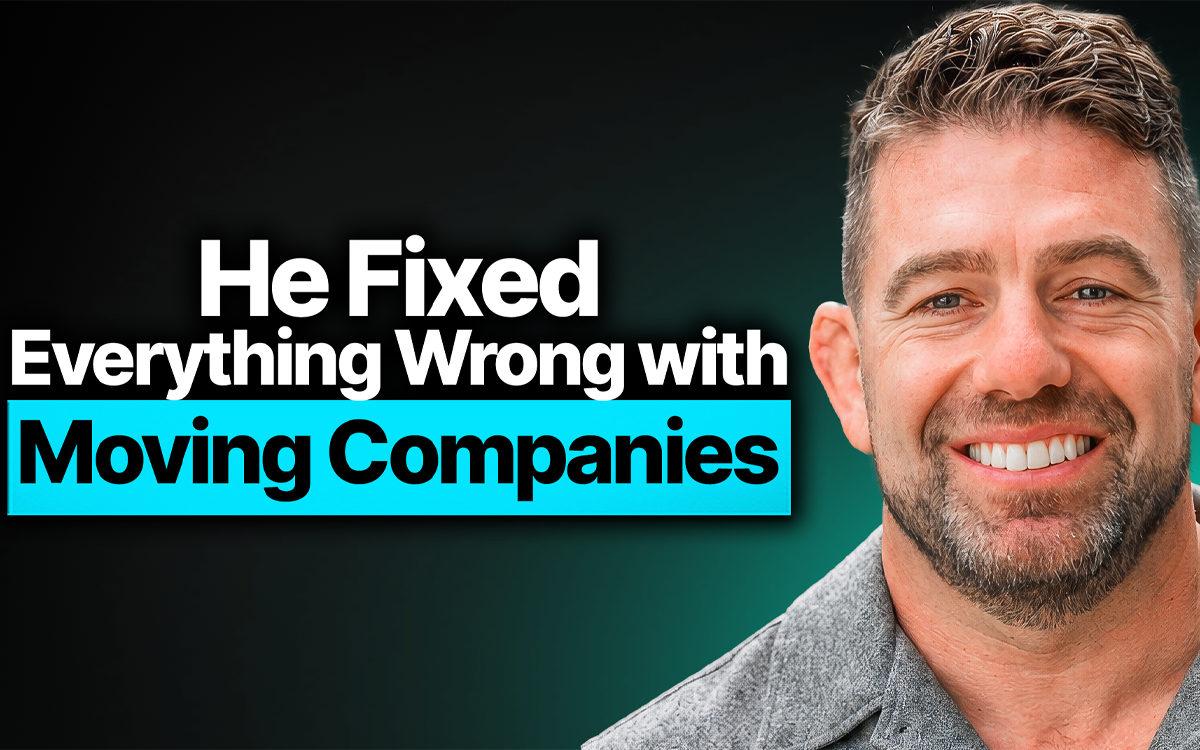
In a recent appearance on the Niche Pursuits podcast, co-founder Aaron Steed detailed the 29-year evolution of the brand. His narrative offers a blueprint for overcoming severe regulatory roadblocks, marketing betrayals, and economic headwinds while transforming a simple athletic endeavor into a dominant regional force.
Main Facts: The Anatomy of an Eight-Figure Moving Operation
At its core, Meathead Movers is defined by several key operational and financial pillars:
- Foundational Origins: Started in San Luis Obispo, California, by Aaron Steed at age 17 to accommodate his high school wrestling schedule.
- Current Scale: Operates nine branch locations and two mini-storage facilities, generating eight figures in annual revenue.
- Unique Value Proposition (UVP): Employs student-athletes who jog on the job, a tactic that increases operational speed, reduces billable hours for clients, and leverages athletic discipline.
- Corporate Social Responsibility: Provides ongoing pro-bono moving services for victims of domestic violence, partnering with local women’s shelters to ensure safe relocations.
- Innovative Leadership Model: Implements a profit-sharing and equity-acquisition program that allows branch general managers to earn up to a 40% ownership stake in their respective locations.
Chronology: Navigating Decades of Setbacks and Expansion
The journey from a teenager asking neighbors for odd jobs to an executive managing a multi-location enterprise was fraught with existential threats. Aaron Steed’s timeline illustrates a masterclass in resilience.
Phase 1: The Wrestling Mat to the Moving Truck (Late 1990s)
Growing up in San Luis Obispo—a community of roughly 50,000 to 60,000 residents complemented by approximately 30,000 students from Cal Poly—Aaron Steed needed a flexible income stream that could accommodate his athletic commitments. As captain of his high school wrestling team, he began offering labor services to friends’ parents.
Within his first ten moves, customers praised his crew as the best they had ever experienced. They contrasted Steed’s reliability with industry norms: movers who failed to show up, damaged property, or engaged in predatory pricing after loading trucks. Recognizing that his peers on the wrestling and football teams possessed the discipline and physical endurance required for heavy lifting, Steed recruited fellow student-athletes. Thus, the foundation of Meathead Movers was established.
Phase 2: The 2000 Crisis – Disconnected Lines and Regulatory Hurdles
As the business gained traction, established local competitors took notice. Traditional moving companies challenged whether Meathead Movers could operate without a professional moving license, given that the startup initially functioned primarily as a labor service while clients rented and drove the trucks themselves. Regulators ultimately ruled against the young company.
In the summer of 2000, tragedy struck the business infrastructure: its phone lines were disconnected. In an era predating modern digital search, local service businesses relied heavily on phone directories. Potential customers calling Meathead Movers were met with a disconnected signal.
For Steed, this was a watershed moment. Rather than folding, he chose to prioritize the business over his college wrestling career. He needed $25,000 to secure proper licensing, insurance, and accounting systems. To survive, he approached a local weekly publication, New Times, to advertise, cycling through various temporary business names and phone numbers as regulators pursued each iteration. After several cycles, he saved the requisite capital, passed the licensing examinations, and transitioned Meathead Movers into a fully licensed professional carrier capable of maintaining its own fleet.
Phase 3: Fleet Acquisition and the Mid-State Bank Breakthrough
Approximately a year after securing licensing, Steed identified a massive operational inefficiency: the company was spending $8,000 to $9,000 monthly on truck rentals. Calculating that financing a proprietary fleet would save the company roughly $2,000 per month, he approached Mid-State Bank & Trust.
Despite having limited credit history and no co-signer, Steed secured the financing to purchase five new trucks. This capital expenditure cemented Meathead Movers as a legitimate competitor, eventually outlasting several of the legacy companies that had previously attempted to litigate them out of the market.
Phase 4: The 2007 Camarillo Expansion and the Yellow Pages Betrayal
Expansion came methodically. After opening a satellite office in Santa Maria in 2005—just 30 miles from its home base—the company targeted Ventura County and northern Los Angeles County in 2007, opening a 7,000-square-foot facility in Camarillo.
To secure market share, Steed negotiated a comprehensive advertising agreement with AT&T Yellow Pages for full-page spreads across the region. However, roughly a month before the directories went to print, AT&T reneged on the agreement. The books were published without Meathead Movers, depriving the brand of its primary customer acquisition channel in a new, highly competitive market.
Undeterred, Steed pivoted. He redirected tens of thousands of dollars earmarked for the Yellow Pages directory directly into digital marketing and website infrastructure. Furthermore, he temporarily relocated to Ventura County for a year to spearhead aggressive, boots-on-the-ground local promotions. Despite facing community resistance—including detractors throwing Slurpees at promotional teams—the grassroots campaign, combined with digital optimization, propelled the Camarillo branch to profitability.
Supporting Data: Operational Efficiency and Customer Retention
Meathead Movers’ market endurance is supported by rigorous internal metrics and calculated operational strategies.
- The Jogging Advantage: By enforcing a strict policy where movers jog when not carrying heavy items, the company completes jobs in three to four hours that traditional movers take five to seven hours to finish. Given the hourly billing model of the moving industry, this efficiency generates substantial direct financial savings for consumers.
- Speed to Lead Conversion: Analyzing current operational data, Steed notes that the company closes approximately 50% of prospects it reaches immediately. Conversely, the close rate for leads where initial contact is missed plummets into the low 20s—a stark 30-percentage-point differential.
- The "Double Tap" Protocol: To combat modern consumer impatience and call screening, Meathead Movers implemented a multi-touch outreach strategy. If a prospective client misses the initial phone call from an unrecognized number, an immediate text message identifies the caller as Meathead Movers, dramatically increasing the likelihood of a successful return call.
- Accountability Metrics: Moving industry standards traditionally value damaged goods at a paltry $0.60 per pound (rendering a destroyed 50-pound television worth a mere $30 in compensation). Meathead Movers subverts this standard through comprehensive damage replacement guarantees and a fair-refund policy that allows clients to dock employee pay if service standards fall short.
Official Responses and Industry Implications
The broader moving and logistics industry has taken notice of Meathead Movers’ unconventional trajectory. While legacy operators historically viewed the firm’s collegiate, athletic workforce as a gimmick, the company’s 29-year longevity proves otherwise.
Industry analysts point to Meathead Movers as an early pioneer in experiential service design. By treating the moving process not merely as a logistical chore, but as a high-touch hospitality experience, the company commands strong pricing power and robust customer retention.
Furthermore, the company’s corporate social responsibility initiative—providing complimentary relocations for victims of domestic violence—has established a benchmark for purpose-driven enterprise in blue-collar industries. By coordinating with local women’s shelters, Meathead Movers has insulated its brand from ordinary commoditization, instilling a deep sense of shared mission among its workforce.
Implications: The Path Forward and Employee Ownership
As Meathead Movers looks toward the future, its strategic focus centers on decentralized growth and empowering internal talent.
The company currently maintains nine locations and two mini-storage facilities, with ambitions to expand storage capacity and open two new offices annually across the West Coast. Crucially, this expansion will be fueled by an innovative equity model. Branch general managers receive profit-sharing during their initial tenure, with structural pathways enabling them to convert accumulated earnings into a permanent ownership stake of up to 40% in their specific branch.
This ownership-transition model addresses one of the most persistent challenges in labor-intensive industries: employee retention and upward mobility. By offering workers from non-affluent backgrounds a verifiable route to business ownership, Aaron Steed is institutionalizing the same entrepreneurial spirit that saved his company from a disconnected phone line nearly three decades ago.
In an economic climate that frequently rewards short-term financial engineering, the evolution of Meathead Movers serves as a resounding endorsement of long-term vision, operational rigor, and treating every single move as an audition for the next decade of growth.