In the rapidly evolving landscape of digital marketing and product management, Artificial Intelligence has moved beyond the "hype" phase. For years, optimization teams have relied on AI to act as a digital divining rod—spotting patterns in visitor behavior, surfacing friction points, and suggesting potential avenues for growth. However, a persistent "implementation gap" has plagued the industry: the distance between a brilliant insight sitting in a dashboard and the actual, measurable improvement of a user experience.
Wingify, the parent company of the industry-standard VWO platform, is attempting to bridge this divide with the launch of Wingz, an "Agentic Experience Optimization Platform." By moving away from the "AI-as-a-feature" model and toward an "AI-native" workflow, Wingify aims to automate the entire loop of experimentation, turning stagnant insights into active, iterative growth.
The Optimization Loop: Why Current Models Fail
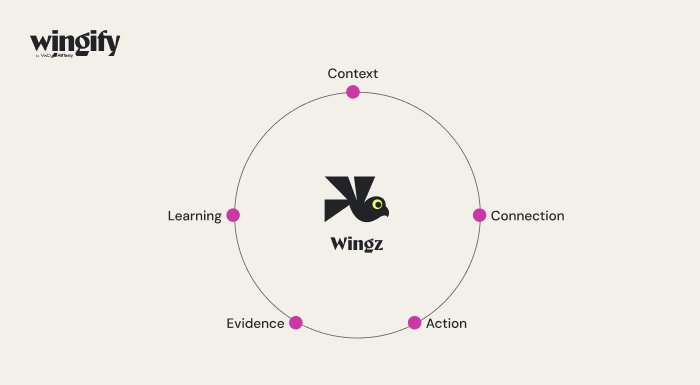
Optimization is not a linear event; it is a complex, circular process. It requires understanding user behavior, making a strategic decision, taking action, measuring the result, learning from the data, and then starting the process over with deeper context.
The problem, according to industry experts, is that most existing platforms treat these stages as isolated silos. When an AI tool acts merely as an assistant, it creates a "hand-off" problem. A marketer might receive a recommendation from an AI, but they must then manually interpret that data, craft a hypothesis, design a test, code the variation, and set up the analytics. At every hand-off, context is lost, and the potential for human error increases.
"Most AI in marketing software is an assistant sitting on top of a product," explains Ankit Jain, Co-founder and Chief Product & Technology Officer at Wingify. "It can tell you things, but it cannot do much, and it certainly cannot tell you whether it was right. It never touches the work, so it has no way of knowing what its advice produced."
The Chronology of the Shift: From Analysis to Agency
The evolution of optimization software can be viewed through three distinct phases:
- The Manual Era: Optimization teams manually tracked metrics, hypothesized changes, and implemented code changes one by one. The feedback loop was slow, taking weeks to gather significant data.
- The Dashboard Era: Tools like heatmaps and analytics suites arrived. AI began to "spot" issues (e.g., "users are dropping off at the checkout page"), but the burden of execution remained entirely on the human team.
- The Agentic Era: The current shift, pioneered by platforms like Wingz, introduces "Agents." These are autonomous or semi-autonomous modules that don’t just report data; they perform tasks—designing variations, configuring audiences, and monitoring results—within predefined guardrails.
The Pillars of AI-Native Optimization
What differentiates an "AI-native" platform from one that simply bolts on a chatbot? According to Wingify, the distinction lies in four core capabilities:
1. Contextual Continuity
In an AI-native system, the AI does not just see a snapshot of data; it understands the "why" behind the work. It has access to the full history of customer behavior, previous experiment results, audience segments, and long-term outcomes. By retaining this context, the AI can propose actions that align with the brand’s strategic goals rather than just suggesting random A/B tests.
2. Connected Workflows
The most significant efficiency gains occur when the AI connects the stages of the loop. If an AI identifies that a specific headline is causing friction, an AI-native platform can immediately draft a new variation, suggest an audience segment, and prepare the experiment for deployment. This eliminates the "rebuilding" phase where teams have to manually re-enter data across different tools.
3. Execution-Ready Actions
Intelligence becomes exponentially more valuable when it can move from thought to action. Wingz allows teams to describe a desired change in plain language or simply provide a design asset—such as a Figma link or a PDF—and the system translates that intent into a functional website variation. This turns the AI into a "doer" rather than just a "thinker."

4. Evidence-Based Learning
In a disconnected model, an experiment ends when the test concludes. In an AI-native model, the result of the experiment becomes the foundation for the next iteration. The system records the outcome as "evidence," refining its future recommendations based on what actually drove conversions, thereby closing the loop.
Official Perspectives: Closing the Gap
The leadership at Wingify emphasizes that the goal of this technology is not to replace the strategist, but to augment their capabilities by removing the "grunt work" of optimization.
"Disconnected tools create hidden costs for teams," says Alix de Sagazan, Co-founder and CRO at Wingify. "An insight from one tool has to be manually rebuilt somewhere else, and every handoff invites delay and errors. Wingify closes those gaps, so insight turns into action, and action turns into a better experience."
The company’s approach is underpinned by a "Responsible AI" policy. Recognizing that businesses are hesitant to give AI full control over their revenue-generating funnels, Wingify has implemented a tiered control system. Teams can choose how much autonomy they want the agents to have, ranging from "propose only" (where human approval is required for every change) to "autopilot" (where the AI operates within strict, pre-set guardrails).
Implications for the Future of Digital Teams
The shift toward agentic optimization has profound implications for the structure and focus of digital teams.

1. A Shift in Talent Focus
When the mechanical aspects of optimization—coding variations, setting up tracking, and basic data analysis—are handled by agents, the role of the digital marketer shifts toward "Strategic Orchestration." Teams will spend less time in spreadsheets and more time crafting long-term hypotheses and defining the brand’s creative direction.
2. Increased Velocity
Companies that successfully integrate AI-native workflows will likely see a dramatic increase in "experimentation velocity." The ability to launch, measure, and iterate in near-real-time means that businesses can respond to market shifts or competitor actions in days rather than months.
3. The Guardrail Economy
As automation becomes more prevalent, the value of "guardrails" will increase. Organizations will distinguish themselves by how effectively they can define the boundaries of their AI agents. Security, compliance, and brand integrity will be managed through sophisticated, automated "kill switches" and approval gates, ensuring that speed never comes at the cost of brand safety.
Conclusion: Curiosity That Converts
The promise of Wingz is ultimately about fostering a culture of "curiosity that converts." By lowering the barrier to entry for testing and execution, the platform encourages teams to move faster and think bigger.
As AI continues to mature, the defining metric for success will not be the quantity of AI features in a software suite, but the effectiveness of the intelligence layer in carrying work from an idea to a result. In a competitive digital environment, those who can iterate the fastest—and with the most context—will be the ones who define the future of the customer experience.
For organizations ready to explore this new paradigm, the path forward is clear: move from passive dashboards to active, agent-driven workflows that prioritize outcomes over mere observations.