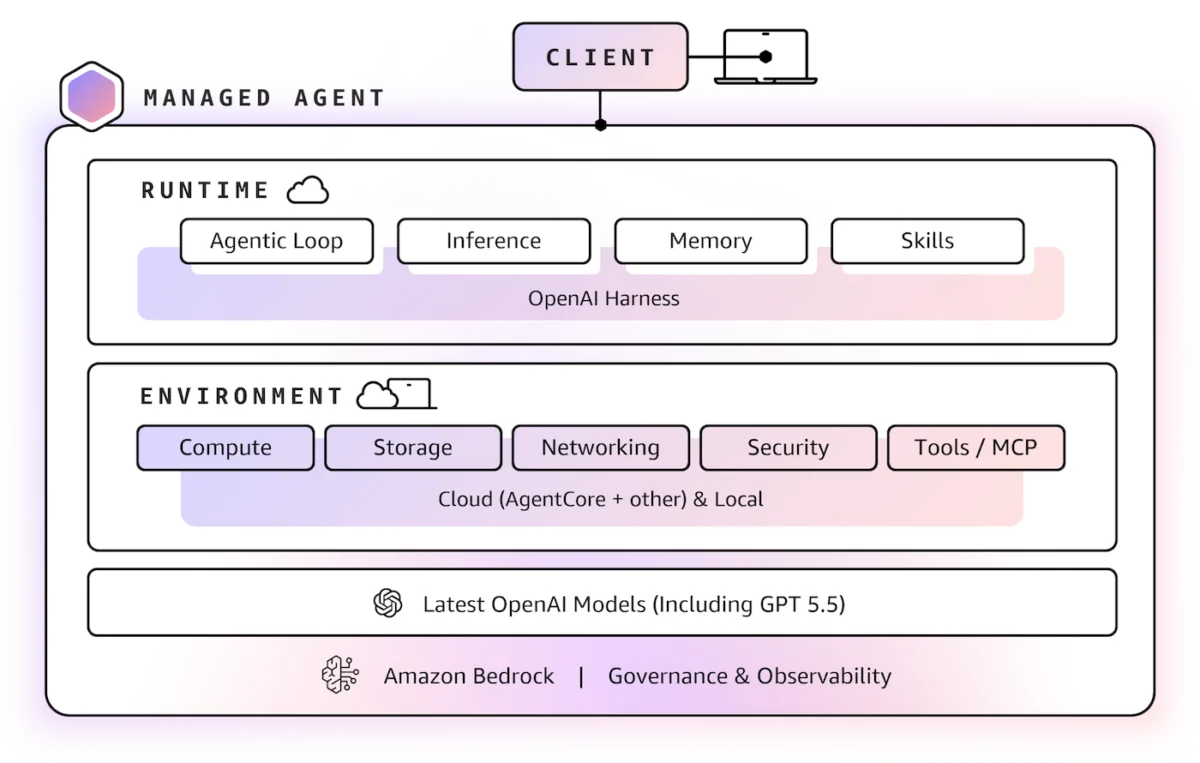
SEATTLE — Amazon Web Services (AWS) has officially launched the public preview of Amazon Bedrock Managed Agents powered by OpenAI, marking a significant milestone in generative AI deployment architectures. Unveiled as part of the latest weekly roundup by AWS developer advocate Channy, this new capability bridges OpenAI’s state-of-the-art agent technology directly with AWS-native security, identity, and governance frameworks.
Alongside the Bedrock update, AWS announced expanding frontier model integrations, detailed structural updates to its service lifecycle policies, and highlighted upcoming community and developer events leading into the annual re:Invent conference season.
Main Facts
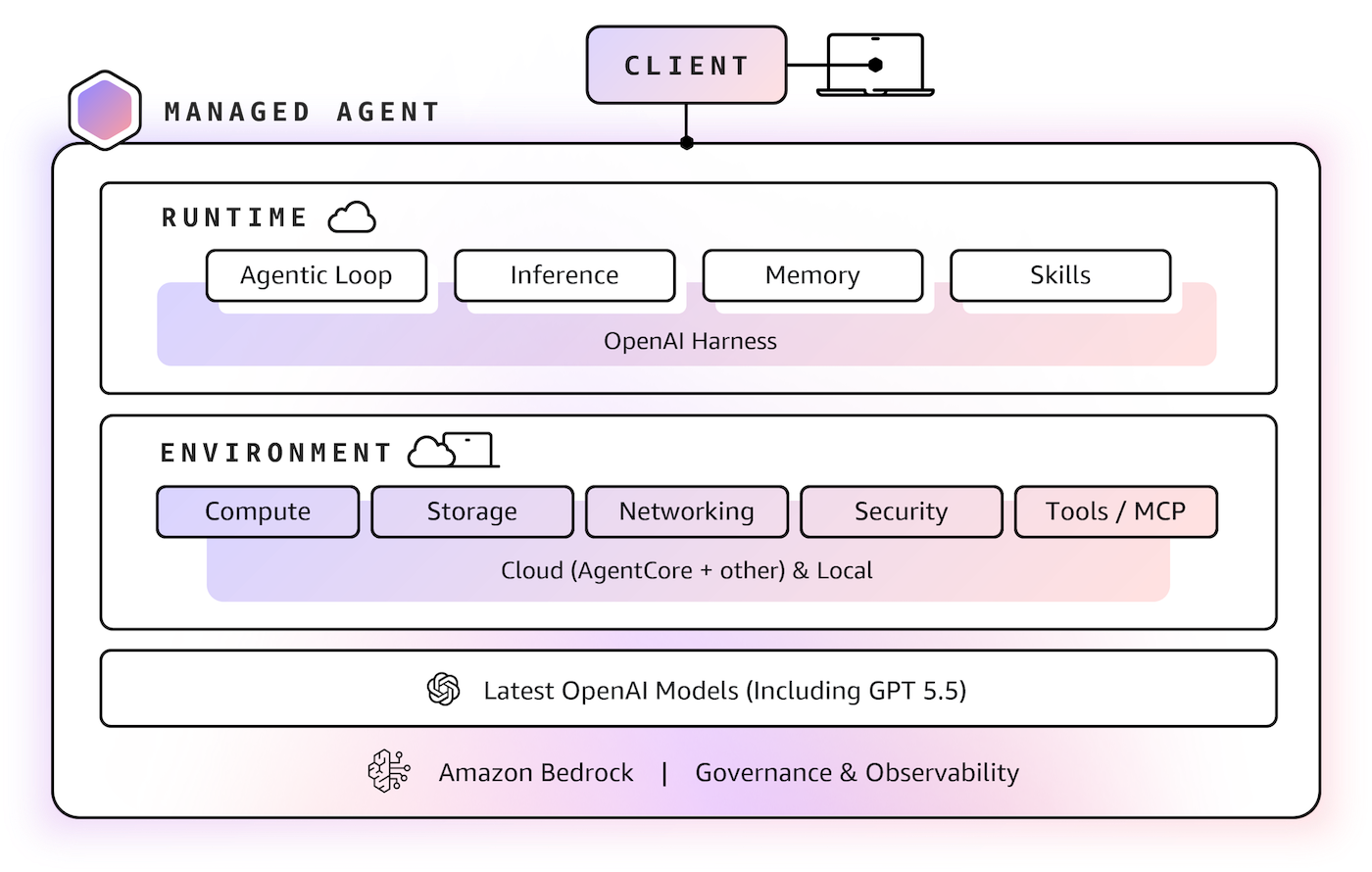
The core announcement centers on enterprise-grade artificial intelligence orchestration. The newly released Amazon Bedrock Managed Agents powered by OpenAI is built on a customized version of OpenAI’s Agents API, engineered specifically to operate natively within the AWS ecosystem.
Key technical and operational pillars of this release include:
- Native Integration: Developers can now build, test, and deploy AI agents optimized for OpenAI models that run entirely inside their AWS accounts.
- Unified Security & Governance: Agents inherit existing AWS enterprise controls, including IAM (Identity and Access Management) policies, AWS CloudTrail logging, and fine-grained resource permissions.
- Flexible Execution Environments: Customers can select between two distinct deployment models:
- Self-Hosted Compute: Utilizing existing local development machines, custom containers, or preferred infrastructure compute environments.
- Amazon Bedrock AgentCore Runtime: A fully managed runtime service providing session management and configurable storage directly inside the user’s AWS account.
- Model Expansion: AWS continues to broad-base its generative AI offerings by integrating new frontier models into the Amazon Bedrock ecosystem, giving enterprise architects greater choice and flexibility in selecting models tailored to specific use cases.
Chronology of Recent Updates
To understand how this rollout fits into the broader AWS ecosystem, it is helpful to look at the timeline of operational updates announced during the final week of September 2026:
- September 29, 2026 (Service Lifecycle Updates): AWS issued its standard monthly product lifecycle adjustments, detailing upcoming transitions for specific legacy services moving into Maintenance, Sunset, and End-of-Support statuses.
- Late September 2026 (Bedrock Expansion): The public preview of Amazon Bedrock Managed Agents powered by OpenAI was officially rolled out to developers via the AWS What’s New channel and technical documentation portals.
- October 4, 2026 (Documentation and Architecture Release): AWS published comprehensive architectural guides and execution environment setup documentation (accessible via the Amazon Bedrock User Guide) detailing agent configurations using the Bedrock AgentCore Runtime.
- Ongoing (Event Registration): Registration accelerated for upcoming developer-focused gatherings, including AWS Community Days and the flagship AWS re:Invent conference.
Supporting Data and Architecture
The integration of OpenAI’s agentic frameworks into AWS required deep architectural adjustments to ensure seamless interoperability between external model APIs and internal cloud infrastructure.
+-----------------------------------------------------------------+
|                    AWS Enterprise Account                       |
|                                                                 |
|  +---------------------------+     +-------------------------+  |
|  |     IAM & Governance      |     |  Bedrock AgentCore      |  |
|  |   (Permissions, Logging)  |     |        Runtime          |  |
|  +-------------+-------------+     +------------+------------+  |
|                |                                |               |
|                +----------------+---------------+               |
|                                 |                               |
|                                 v                               |
|                 +-------------------------------+               |
|                 |  Amazon Bedrock Managed       |               |
|                 |  Agents (OpenAI-Powered)      |               |
|                 +---------------+---------------+               |
|                                 |                               |
|                                 v                               |
|                 +-------------------------------+               |
|                 |   Customized OpenAI Agents    |               |
|                 |             API               |               |
|                 +-------------------------------+               |
+-----------------------------------------------------------------+
Execution Environments and Resource Allocation
Enterprise customers often face strict compliance and data sovereignty mandates that prevent them from routing sensitive workflows through third-party multi-tenant endpoints without rigid controls. By introducing the Amazon Bedrock AgentCore Runtime, AWS allows organizations to manage session states and orchestrate multi-step autonomous agent workflows within isolated parameters.
Alternatively, teams with existing CI/CD pipelines and localized container orchestration clusters can opt for self-hosted compute environments. This flexibility ensures that developers do not have to refactor their entire infrastructure stack to take advantage of advanced agentic reasoning loops.
Product Lifecycle and Maintenance Schedule
AWS maintains a rigorous product lifecycle schedule to deprecate older features and introduce modernized alternatives safely. In the updates published on September 29, 2026, AWS outlined critical dates for administrators to review:
- Maintenance Phase: Services entering this tier will become completely inaccessible to new customers starting October 29, 2026. Existing users are advised to transition workloads to recommended cloud-native alternatives.
- Sunset & End-of-Support Phases: Services reaching these milestones have official migration paths and documentation available via the AWS Product Lifecycle Changes portal to prevent operational downtime.
Official Responses and Developer Guidance
AWS leadership and developer advocates have emphasized that these updates are designed to alleviate friction for enterprises navigating multi-model AI strategies.

"Our goal is to give builders the absolute best toolset without forcing compromises on security, governance, or architecture," notes Channy, AWS developer advocate, in this week’s community briefing. "By bringing customized OpenAI agent architectures directly into Amazon Bedrock, organizations can combine state-of-the-art model reasoning with the enterprise-grade trust and compliance of AWS."
For teams impacted by the recent service availability adjustments, AWS support channels and product documentation teams have issued clear remediation steps:
- Consult Documentation: Review the specific service migration guides available in the AWS Product Lifecycle Changes documentation.
- Engage Support: Reach out directly through AWS Support enterprise channels for customized migration assistance.
- Explore Alternative Services: Leverage newer AWS-native primitives designed to replace sunsetting features with higher performance and lower operational overhead.
Implications for Enterprises and Developers
The convergence of OpenAI agent APIs with AWS-native infrastructure has profound implications for the enterprise software landscape:
1. Accelerated Autonomous Workflow Deployment
Previously, integrating external foundational models with internal AWS databases, Lambda functions, and S3 buckets required building custom middleware, API wrappers, and complex authentication bridges. With Bedrock Managed Agents, the heavy lifting of state management, tool calling, and execution safety is handled natively, drastically shortening time-to-market for complex enterprise automation tools.
2. Simplified Compliance and Auditing
Chief Information Security Officers (CISOs) frequently struggle with shadow AI—employees utilizing external AI tools without corporate oversight. Because these managed agents operate strictly within the bounds of existing AWS IAM policies and CloudTrail audit logs, security teams retain complete visibility over data access, prompt payloads, and agent actions.
3. Community Engagement and Continuous Learning
As AWS prepares for its upcoming conference slate—including AWS re:Invent and regional AWS Community Days—developers are encouraged to plug into the broader ecosystem. Joining the AWS Builder Center provides practitioners with shared architectural patterns, peer code reviews, and direct access to AWS engineering teams.
For ongoing updates, detailed architectural blueprints, and step-by-step tutorials on configuring Amazon Bedrock Managed Agents, visit the official AWS News Blog and keep a close watch on the What’s New with AWS portal.