










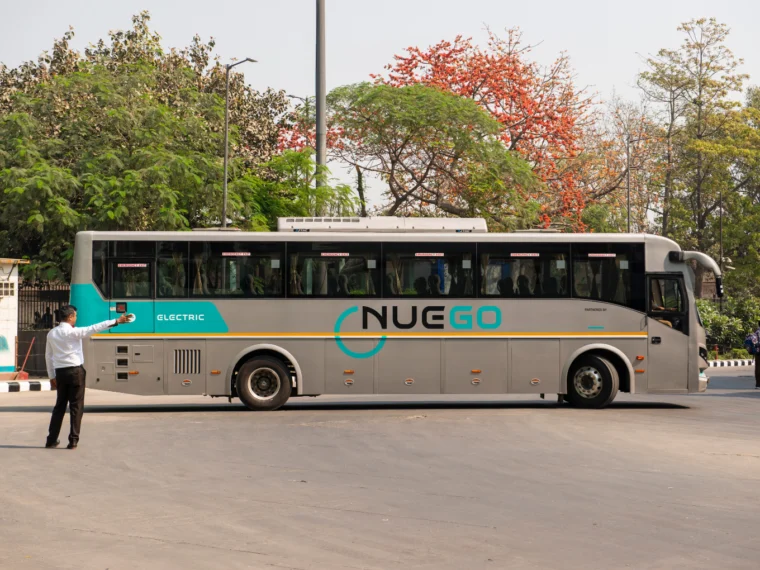
Mumbai, India – In a significant boost to India’s green transition, GreenCell Mobility, a pioneering electric mobility-as-a-service (eMaaS) platform, has successfully raised ₹330 crore ($34.6 million) in an equity funding round. Led by the Impact Fund Denmark, this latest infusion of capital marks a pivotal moment for the Everstone Capital-backed startup, providing the necessary financial runway to accelerate the deployment of its massive order book of 4,500 electric buses.
As India aggressively pushes to decarbonize its public transport infrastructure, GreenCell Mobility has positioned itself at the nexus of technology, asset management, and sustainable mobility. The funding not only validates the startup’s operational model but also signals a broader shift in investor sentiment—moving from pure-play asset financing toward backing comprehensive, tech-enabled operating platforms in the electric vehicle (EV) sector.
The Strategic Vision: Scaling a Greener Horizon
GreenCell Mobility’s ambition is nothing short of transformative. The Mumbai-based company is currently executing a roadmap to expand its fleet to over 5,000 electric buses, spanning 105 cities across the Indian subcontinent. This scale of operation is designed to serve as the backbone of both intercity and intracity transit, significantly reducing the carbon footprint of millions of daily commuters.
The startup operates on a sophisticated "e-bus-as-a-service" model. Rather than focusing solely on manufacturing, GreenCell acquires electric buses through strategic contract manufacturing arrangements with established vendors. It then assumes the responsibility of deploying, operating, and maintaining these assets. This model allows the company to focus on its core strengths: operational efficiency, route optimization, and superior customer experience.
Official Response: Scaling with Rigor
Devndra Chawla, Managing Director and Chief Executive Officer of GreenCell Mobility, emphasized that the fresh capital is a strategic enabler for the company’s next phase of growth.
"Our focus is on executing our order book with rigour, strengthening service delivery, and ensuring that the organisation keeps pace with the size and complexity of our operations," Chawla stated. "This equity investment gives us greater headroom to accelerate our plans while maintaining the standards of reliability, efficiency, and customer experience that are fundamental to our business."
Chronology and Evolution: From Inception to Market Leader
Founded in 2019, GreenCell Mobility was born out of a vision to provide sustainable, safe, and reliable public transportation. Backed by Eversource Capital—a joint venture between Everstone Capital and Lightsource bp—the company was designed to leverage institutional expertise to tackle the capital-intensive nature of electric public transport.
The Growth Timeline:
- 2019: GreenCell Mobility is established with the objective of decarbonizing Indian public transit.
- Initial Capital Infusion: The company secured early backing from industry titans, including the World Bank’s International Finance Corporation (IFC), which provided $37 million in funding. Additional support from British International Investment (BII) and Tata Capital bolstered its balance sheet.
- Brand Launch: The company introduced "NueGo," its flagship brand for premium, inter-city electric travel, which has since set a benchmark for customer comfort and punctuality in the electric segment.
- Infrastructure Expansion: Recognizing that fleet deployment is only half the battle, the startup invested heavily in the "charging ecosystem," establishing over 270 charging stations to support its growing fleet.
- 2024: The company secures ₹330 crore from Impact Fund Denmark, signaling international confidence in the long-term viability of the Indian e-mobility market.
Operational Footprint and Data Insights
GreenCell’s current operational data highlights a company that has moved well beyond the pilot phase. As of the latest reports, the company manages a fleet of over 1,200 electric buses, categorized by service type:
- Intra-city Routes: 900 buses dedicated to urban commute solutions.
- Inter-city (NueGo): 300 premium electric buses providing inter-city connectivity.
- Specialized Projects: 50 buses deployed for the Maharashtra State Road Transport Corporation (MSRTC).
Supporting this fleet is a robust network of 270+ charging stations. This infrastructure is critical; by controlling the charging layer, GreenCell ensures maximum uptime for its vehicles and mitigates the "range anxiety" that has historically plagued EV adoption in public transport.
Industry Implications: A Paradigm Shift in Funding
The funding round for GreenCell Mobility provides deep insights into the evolving landscape of Indian infrastructure investment. Historically, development finance institutions (DFIs) and lenders have supported the EV sector primarily through asset-backed financing—essentially treating the buses as collateral. However, the move by Impact Fund Denmark to provide equity capital suggests that investors are increasingly viewing the "operating platform" as the primary value driver.
The Platform Economy vs. Asset Financing
In the context of electric buses, the software and the operational logistics are as important as the battery chemistry. Managing schedules, predictive maintenance, driver management, and energy consumption requires a sophisticated tech stack. GreenCell’s success in raising equity indicates that investors are betting on the company’s ability to build an "operating system" for electric public transport.
Market Comparables
The sector is heating up rapidly. In March 2024, PMI Electro Mobility—a key player in the manufacturing and platform space—secured an investment commitment of up to $310 million from the global private equity giant KKR. PMI’s subsequent move to file for an IPO via the confidential route underscores the appetite for liquidity and scaling capital in the e-bus space.
These developments signify that the Indian market is transitioning from "experimental pilots" to "industrial-scale deployment." Government subsidies, such as the FAME (Faster Adoption and Manufacturing of Hybrid and Electric Vehicles) scheme, have provided the initial spark, but institutional private capital is now the engine driving the long-term growth.
Challenges and Future Outlook
While the momentum is strong, GreenCell Mobility and its peers face significant challenges in the path toward the 5,000-bus target.
- Grid Integration: As the fleet grows, the demand on the power grid increases. Coordinating with local discoms (distribution companies) to ensure reliable electricity supply for charging hubs is a massive logistical challenge.
- Technological Obsolescence: EV battery technology is evolving rapidly. Managing a fleet where older buses may become less efficient compared to newer models requires a disciplined asset lifecycle strategy.
- Operational Complexity: Managing thousands of drivers, servicing vehicles across diverse geographies, and maintaining high safety standards across 105 cities requires an immense human capital and management bandwidth.
Despite these hurdles, the tailwinds are undeniable. India’s commitment to achieving net-zero emissions by 2070, coupled with the rising cost of fossil fuels and the declining total cost of ownership (TCO) for electric buses, creates a compelling economic case for operators like GreenCell.
Conclusion
GreenCell Mobility’s recent ₹330 crore funding is more than just a capital injection; it is a vote of confidence in the scalability of India’s green public transport vision. By bridging the gap between sophisticated financial engineering and ground-level operational excellence, the company is demonstrating that the future of mobility in India is not just electric—it is managed, reliable, and fundamentally connected to the growth of its cities.
As the company works toward its goal of deploying over 5,000 buses, it is not merely building a business; it is laying the tracks for a cleaner, quieter, and more efficient urban future for millions of Indians. The eyes of the global ESG (Environmental, Social, and Governance) investor community will remain firmly fixed on GreenCell’s progress in the coming 24 months, as it attempts to set the gold standard for eMaaS in emerging markets.



