










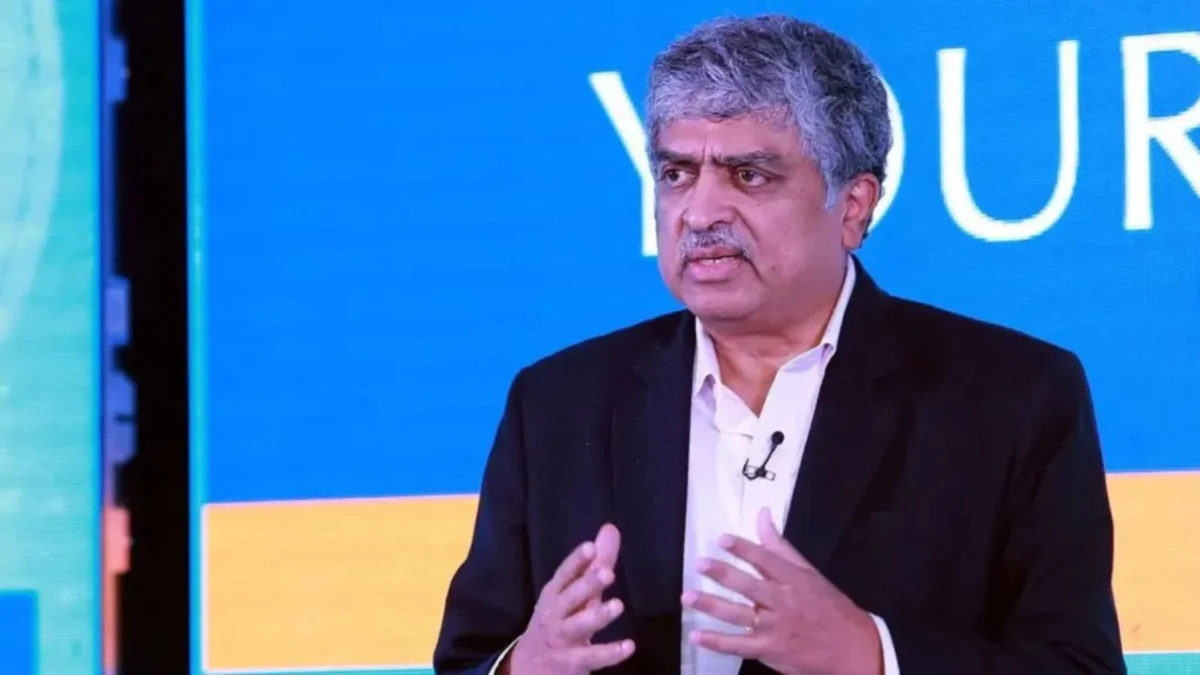
NEW DELHI — India is uniquely positioned to emerge as the global leader in diffusing Artificial Intelligence (AI) technology and deploying it at unprecedented scale to impact everyday lives, according to Nandan Nilekani, Chairman and Co-founder of Infosys.
Speaking at the prestigious Bloomberg New Economy Forum 2026 in New Delhi, Nilekani offered an optimistic, pragmatic view of the technological landscape. Rejecting catastrophic narratives surrounding automation, the veteran technocrat emphasized that India’s vibrant small-business ecosystem, coupled with its proven mastery of population-scale digital public infrastructure, will serve as the primary engine for future job creation.
Main Facts
- Core Premise: India will lead the world in making AI accessible, functional, and impactful at a mass scale, leveraging open networks and unique socioeconomic structures.
- Job Creation Engine: Future employment growth will be anchored by millions of micro and small enterprises (MSMEs)—employing teams of three to five people—whose multifaceted, dynamic daily workflows are inherently "AI-proof."
- Changing Nature of Tech Work: While coding will see massive productivity gains, high-value human roles will shift toward client requirement analysis, cross-functional collaboration, governance, change management, and safety guardrails.
- The "General Purpose" Nature of AI: Nilekani dismissed concerns over geopolitical chokepoints or monopolies (such as a US-China tech supremacy battle) governing AI, comparing the technology to fire, electricity, or the printing press—utilities that cannot be bottled up or monopolized.
- Social Impact: AI holds transformative potential for India’s foundational sectors, particularly education, literacy, numeracy, and agriculture, heavily amplified by voice-enabled computing agents.
Chronology and Context: The Bloomberg New Economy Forum 2026
The dialogue unfolded on a Tuesday morning in the national capital during a high-profile panel session at the Bloomberg New Economy Forum 2026. Nilekani was engaged in a wide-ranging conversation with John Fraher, Co-head of APAC News at Bloomberg.
The discussion occurred against a global backdrop of intense geopolitical maneuvering, where major superpowers—particularly the United States and China—are aggressively vying for technological supremacy, semiconductor dominance, and foundational AI model ownership. Amidst global anxieties regarding widespread job displacement caused by generative AI models, Nilekani’s remarks injected a refreshing perspective grounded in the realities of the Global South, specifically highlighting how developing economies can harness foundational technologies differently than Western markets.
Supporting Data and Economic Mechanics: The "AI-Proof" Small Business Economy
Addressing the pervasive fear that AI will render human labor obsolete, Nilekani provided a granular breakdown of why India’s economic fabric behaves differently.
India’s economy features a massive, highly resilient informal and semi-formal small business sector. Nilekani argued that enterprises consisting of three to five individuals perform tasks that defy straightforward automation.
"A small company of 3-5 people, you cannot really automate those jobs because they do very complex things in the morning, they will pick up things in the afternoon and stack the shelf in the evening and deliver. These are actually AI-proof jobs," Nilekani explained.
When India successfully unleashes and formalizes its small business economy through open networks, access to capital, and frictionless digital frameworks, millions of micro-enterprises will hire incrementally. This distributed model of employment will generate millions of new jobs—a paradigm shift that traditional macroeconomic forecasting models have yet to fully visualize.
Evolution of Tech Roles
Far from eliminating the technology sector, AI is redefining the developer’s desk. Nilekani noted that while coding will become exponentially more productive, the human value proposition will pivot from syntax writing to system architecture and human-centric problem solving.
- The 30/70 Rule: Technology accounts for only 30% of business transformation.
- The Critical 70%: The remaining 70% relies heavily on governance, regulatory compliance, change management, establishing ethical guardrails, preventing AI "hallucinations," and ensuring autonomous agents do not "go rogue."
- Emerging Specializations: Future careers will center around deep client requirement understanding, multidisciplinary collaboration, and cross-team orchestration.
Global Geopolitics: Rejecting the Monopoly Myth
A major theme of the 2026 forum centered on the technological cold war between the United States and China, and whether emerging economies like India risk being caught in a strategic chokepoint.
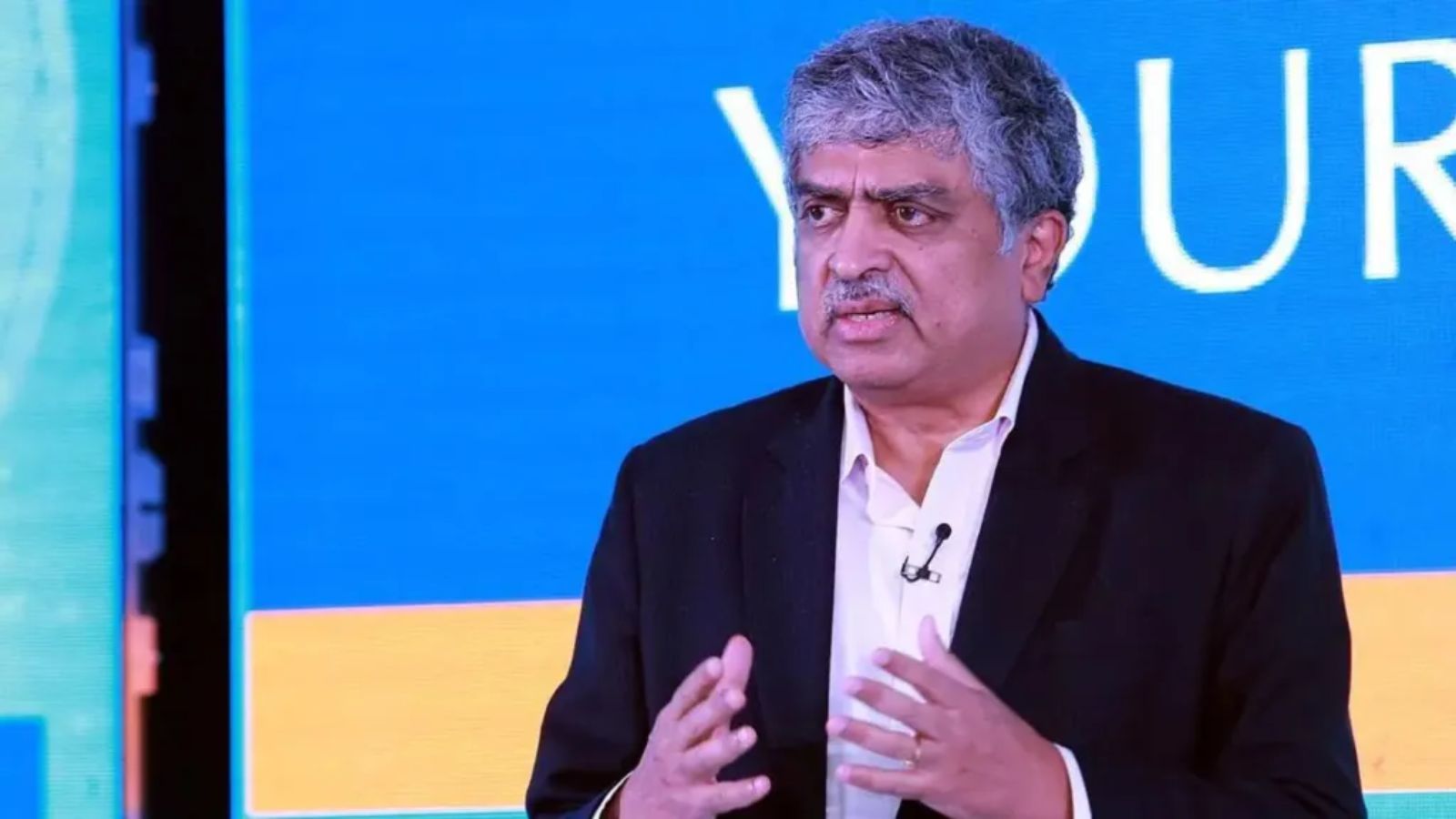
Nilekani firmly rejected the notion that AI can be monopolized by a single state or corporate entity. Drawing historical parallels, he classified AI as a "general-purpose technology"—comparable to the discovery of fire, the invention of the printing press, or the advent of electricity.
"Nobody can own or control it. You don’t think the whole world’s electricity is being supplied by one company, you don’t think the world’s books are printed by one printer and so on," Nilekani said.
Pointing to the relentless cadence of global open-source and proprietary model releases—where new iterations emerge almost weekly—he emphasized that AI is rapidly evolving into a pervasive environmental layer rather than a restricted commodity.
Given this decentralized reality, India’s strategic advantage does not lie in building the foundational large language models (LLMs) from scratch, but in diffusion and execution at scale. Backed by decades of building population-scale digital infrastructure (such as Aadhaar, UPI, and the Open Network for Digital Commerce – ONDC), India possesses unmatched institutional muscle memory in deploying complex technologies to billions of citizens.
Implications for Education, Agriculture, and Social Equity
Beyond corporate boardrooms and software services, Nilekani voiced profound optimism regarding AI’s capacity to solve long-standing developmental challenges in India.
Tackling Literacy and Numeracy
India’s vast demographic dividend can only be fully optimized if foundational education barriers are cleared. Nilekani noted that AI tools can democratize learning, making a significant dent in basic literacy and numeracy metrics for millions of citizens who have historically been left behind.
Voice-First Revolutions
The next technological revolution in India will not require a keyboard or advanced English proficiency. With the rapid advancement of localized voice-recognition and generative AI agents, ordinary citizens will interact with computers natively through spoken regional languages.
- Empowering Farmers: Agricultural workers can access real-time weather alerts, crop disease diagnostics, and mandi (market) prices simply by speaking to a device.
- Simplifying Compliance: Small business owners can leverage conversational AI agents to handle complex administrative burdens, taxation, and logistics, enabling them to focus entirely on core business growth.
Conclusion: A New Paradigm for the Global South
Nandan Nilekani’s insights at the Bloomberg New Economy Forum 2026 paint a portrait of an India that is stepping past the anxieties of Western tech discourse and carving out an indigenous roadmap. By treating AI as an accessible utility rather than an exclusive corporate asset, and by anchoring job creation in the resilience of small businesses rather than mega-corporations, India is preparing to demonstrate how emerging economies can leapfrog traditional industrial phases.
As the ecosystem matures, the nation’s success will likely validate Nilekani’s core thesis: that true technological leadership belongs not just to those who write the code, but to those who successfully diffuse it to empower the masses.



