Introduction: A New Era for Default WordPress Themes
When the WordPress core team released Twenty Twenty-Four, it was met with high expectations from designers, developers, and casual bloggers alike. As the default theme accompanying WordPress 6.4 and subsequent releases, Twenty Twenty-Four was tasked with an ambitious goal: to be a flexible, versatile, and high-performance foundation capable of powering virtually any type of website imaginable.
Surpassing 500,000+ active installations in a remarkably short timeframe, this flagship block theme has quickly solidified its place as one of the most widely adopted site-building frameworks in the world. Engineered specifically to harness the cutting-edge capabilities of the WordPress Site Editor, Twenty Twenty-Four represents a major milestone in the evolution of content management systems. Moving far beyond the static layouts of traditional blogging themes, it delivers a deeply integrated, highly customizable design ecosystem.
In this comprehensive report, we will explore the core features, architectural milestones, and community impact of Twenty Twenty-Four, examining how it has transformed the way millions of creators build for the web.
Main Facts: What Defines Twenty Twenty-Four?
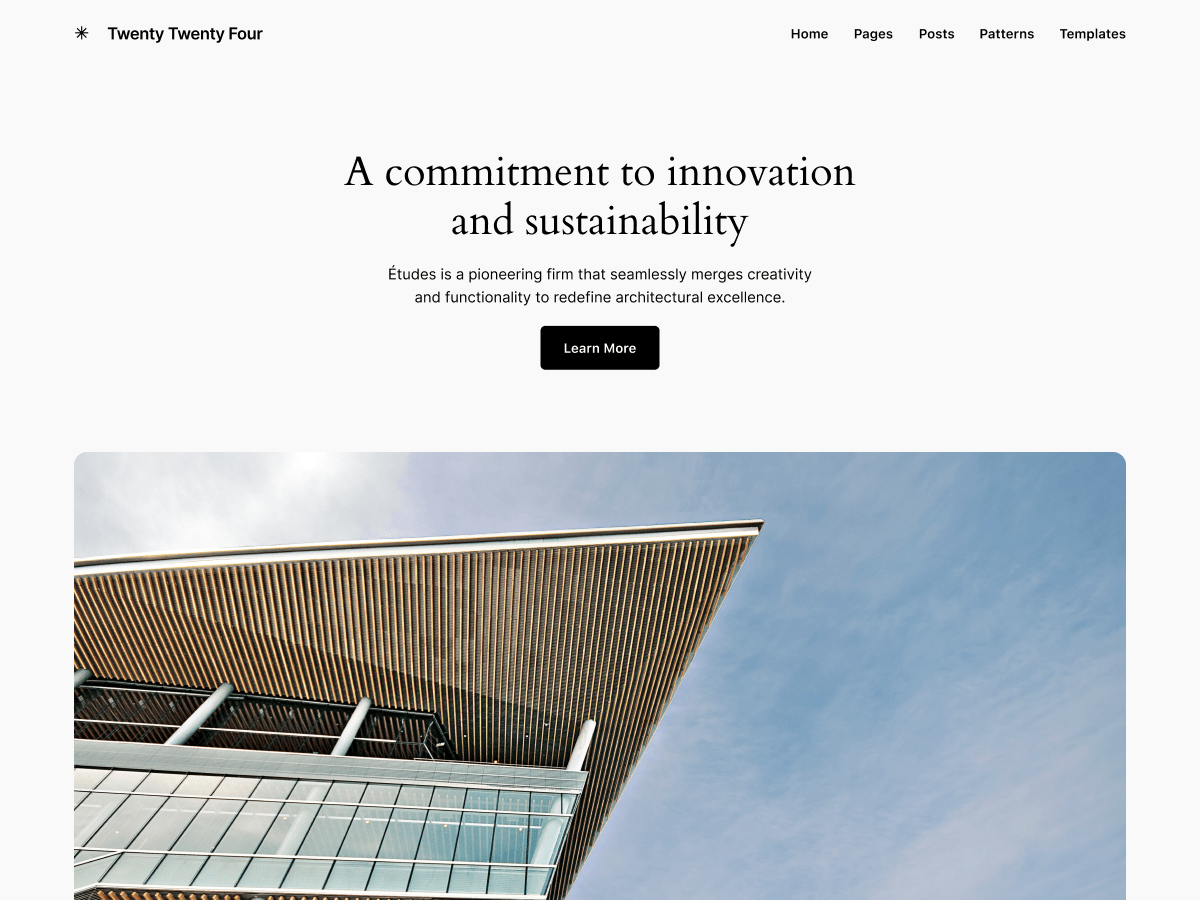
At its core, Twenty Twenty-Four is a modern block theme built from the ground up for Full Site Editing (FSE). Rather than relying on rigid sidebars, predefined widget areas, and legacy PHP templates, the theme leverages the modular power of WordPress blocks, giving users absolute control over every pixel of their digital presence.
Key Characteristics and Architectural Highlights
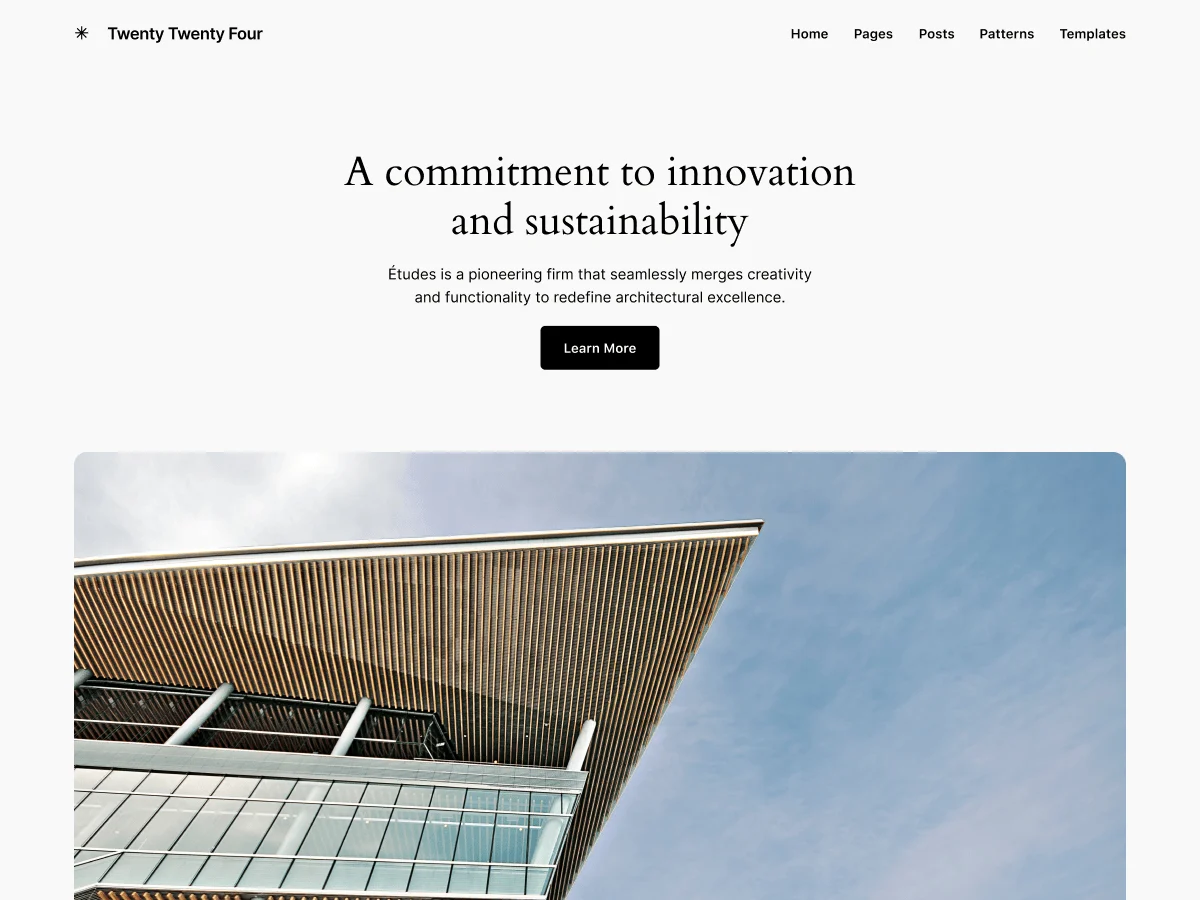
- Universal Versatility: The theme’s diverse collection of templates and patterns has been carefully crafted to cater to three primary use cases: presenting a business or professional service, managing a blog or editorial publication, and showcasing a creative portfolio.
- Full Compatibility with the Site Editor: Designed to take full advantage of WordPress 6.4 design tools, Twenty Twenty-Four allows users to edit headers, footers, templates, and template parts seamlessly within a unified interface.
- Eight Distinct Style Variations: To help users rapidly alter the aesthetic mood of their site, the theme ships with eight unique style variations. These variations alter color palettes and typography pairings instantly, demonstrating how a handful of strategic adjustments can yield entirely different brand identities.
- Expansive Feature Set: Built-in support for block editor patterns, custom colors, wide blocks, sticky posts, and accessibility-ready standards ensures that developers do not need to bloat their installations with third-party plugins to achieve a professional finish.
Chronology: The Journey to Twenty Twenty-Four
The creation of a default WordPress theme is a collaborative, months-long undertaking led by the WordPress core team, volunteer contributors, and core theme leads. Understanding the timeline of Twenty Twenty-Four’s development sheds light on the meticulous planning required to launch a product used by half a million active sites.
Phase 1: Conceptualization and Community Ideation (Early 2023)
Following the success of Twenty Twenty-Three—which focused heavily on typography and minimalist design—the theme development squad, led by designated release leads, opened public discussions within the WordPress Make Themes community. The overarching mandate was clear: the next default theme needed to be more ambitious, moving away from hyper-minimalism toward a comprehensive, multi-purpose business and portfolio solution.
Phase 2: Prototyping and Pattern Integration (Mid 2023)
Throughout the spring and summer of 2023, contributors focused on curating a rich repository of block patterns. Recognizing that modern users prefer assembling pages from pre-designed sections rather than starting from a blank canvas, the team built out extensive template libraries for services, pricing tables, about pages, contact forms, and case studies.
Phase 3: Alignment with WordPress 6.4 (Late 2023)
As development converged with the release schedule of WordPress 6.4, Twenty Twenty-Four was optimized to utilize new core features. These included advanced background image handling in group blocks, vertical text orientation, improved lightbox capabilities for images, and refined command palette integrations.
Phase 4: Official Launch and Rapid Adoption (Late 2023 – Present)
Upon its official rollout, Twenty Twenty-Four was instantly baked into new WordPress installations. Within months, active installations skyrocketed past the 500,000 milestone, cementing its status as a staple of the modern WordPress ecosystem. Continuous updates, translations into dozens of languages, and ongoing community support have kept the theme robust, secure, and fully aligned with subsequent core WordPress releases.
Supporting Data: Usage Statistics and Global Reach
Quantitative metrics provide a clear window into how Twenty Twenty-Four is perceived and deployed across the global web. While active installations represent a critical baseline, the theme’s linguistic diversity and support infrastructure highlight its international scope.
Installation and Adoption Metrics
- Active Installations: 500,000+ websites actively rely on Twenty Twenty-Four for their daily operations.
- Style Variations: 8 distinct out-of-the-box aesthetic configurations.
- Core Design Integration: Fully synchronized with WordPress 6.4 and subsequent core releases, guaranteeing long-term stability and forward compatibility.
Global Localization and Translation Data
One of the most remarkable achievements of the Twenty Twenty-Four project is its extraordinary level of internationalization. Open-source contributors have translated the theme into dozens of languages and regional variants, ensuring that creators from every corner of the globe can build sites in their native tongue.
Supported languages span a vast linguistic map, including:
- European Languages: German (
de,de-at), French (fr), Spanish (es,es-ar,es-cl,es-cr,es-mx), Italian (it), Portuguese (pt,pt-br), Dutch (nl,nl-be), Swedish (sv), Danish/Norwegian (nb), Czech (cs), Polish, Romanian, Greek, and Albanian. - Asian and Middle Eastern Languages: Arabic (
ar), Persian (fa), Turkish (tr), Hebrew, Chinese Simplified (zh-cn), Chinese Traditional (zh-tw), Japanese (ja), Korean (ko), Hindi (mr,gu), Vietnamese (vi), Thai (lo), and Assamese. - Regional and Indigenous Dialects: Welsh (
cy), Galician (gl), Catalan (ca,ca-valencia), Kurdish (ckb), and Uyghur (ug).
This extensive localization effort underscores the core WordPress mission: democratizing publishing through global accessibility.
Official Responses and Community Feedback
The reception of Twenty Twenty-Four within the WordPress community has been overwhelmingly positive, accompanied by constructive dialogue across support forums, developer blogs, and Make WordPress channels.
Praise for Versatility and Performance
Agency owners and freelance developers have lauded Twenty Twenty-Four for drastically reducing project turnaround times. By providing sophisticated page designs and pre-built patterns right out of the box, developers can hand fully functional, visually striking websites over to clients with minimal custom coding.
In official community discussions, core contributors emphasized that Twenty Twenty-Four was built to bridge the gap between amateur bloggers and professional enterprise agencies. As one core contributor noted:
"Twenty Twenty-Four proves that a default theme does not have to be a blank slate. By anticipating the needs of small businesses, freelancers, and writers, we have created a tool that empowers users to build sophisticated digital experiences within minutes, without sacrificing performance or design integrity."
Support Channels and Issue Reporting
To maintain high standards of reliability, the WordPress community maintains dedicated infrastructure for Twenty Twenty-Four users:
- The Support Forum: A vibrant community-driven help desk where users can ask questions, troubleshoot layout issues, and share customization tips.
- The Theme Reporting Channel: Managed by the Make WordPress Themes team, this dedicated reporting system allows users and developers to flag major bugs, accessibility hurdles, or compatibility conflicts, ensuring rapid patches and updates.
- Translation Portals: Hosted on translate.wordpress.org, ongoing localization projects allow bilingual contributors to continuously update translation strings as new minor releases roll out.
Implications: What Twenty Twenty-Four Means for the Future of Web Design
The success and architecture of Twenty Twenty-Four carry profound implications for the broader web development and content management industries.
1. The Maturation of Full Site Editing (FSE)
For years, critics argued that WordPress was lagging behind proprietary website builders like Wix, Squarespace, and Webflow in terms of visual editing. Twenty Twenty-Four demonstrates that native WordPress FSE has matured into a formidable, highly capable alternative. By eliminating the traditional barrier between theme code and content creation, it normalizes visual site building for millions of everyday users.
2. A Shift Toward Pattern-Driven Development
The heavy reliance on block patterns in Twenty Twenty-Four signals a permanent shift in how web assets are distributed. Rather than installing monolithic themes that dictate every structural detail, modern WordPress users expect modular design systems. Themes are no longer just "skins"—they are comprehensive toolkits containing layouts, typography scales, and color schemes that users can mix and match at will.
3. Democratizing Professional Web Design
With 500,000+ active sites utilizing professional-grade layouts without purchasing premium commercial themes, Twenty Twenty-Four raises the baseline quality of the entire web. Small business owners, non-profit organizations, and independent journalists gain access to enterprise-level design aesthetics entirely free of charge, furthering the core open-source mission of WordPress.
Conclusion
Twenty Twenty-Four is far more than just another default WordPress theme. It is a technological showcase, a multilingual global project, and a versatile design system trusted by over half a million website owners worldwide. By merging deep customization tools, robust accessibility standards, and a professional aesthetic tailored for businesses, bloggers, and creators alike, it has set a new benchmark for what open-source publishing platforms can achieve. As WordPress continues to evolve, Twenty Twenty-Four stands as a shining example of community-driven innovation shaping the future of the open web.