







In the rapidly evolving landscape of digital marketing, the shift from traditional search engines to AI-driven answer engines is no longer a future trend—it is the present reality. As users increasingly turn to platforms like ChatGPT Search, Google AI Overviews, Gemini, and Claude for immediate, summarized information, businesses face a critical challenge: How do you measure and optimize your brand’s presence in an environment that doesn’t rely on traditional blue-link rankings?

Enter AI Search Watcher, a sophisticated LLM tracking solution developed by the team at Mangools. This tool represents a significant leap forward for SEO professionals and digital marketers, providing the granular data necessary to navigate the "black box" of generative AI. By monitoring how these models perceive and cite your brand, AI Search Watcher empowers businesses to protect their reputation and capture new traffic in the era of artificial intelligence.
Main Facts: What is AI Search Watcher?
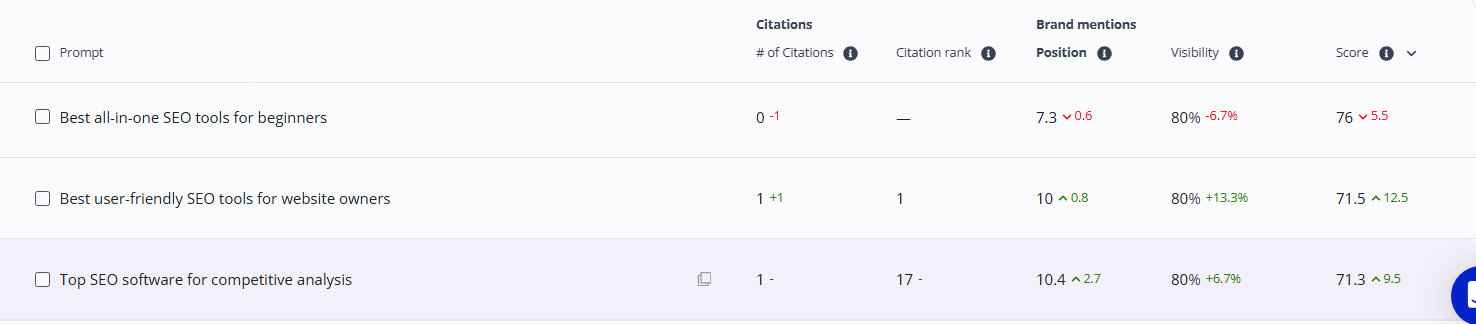
At its core, AI Search Watcher is a dedicated LLM tracker designed to quantify visibility across the most influential AI search engines. Unlike traditional SEO tools that focus on organic traffic and keyword positions in SERPs (Search Engine Results Pages), this tool operates by simulating user queries—running prompts multiple times to generate statistically significant data regarding average positions, visibility scores, and citation frequency.
The platform provides a centralized dashboard where users can monitor:
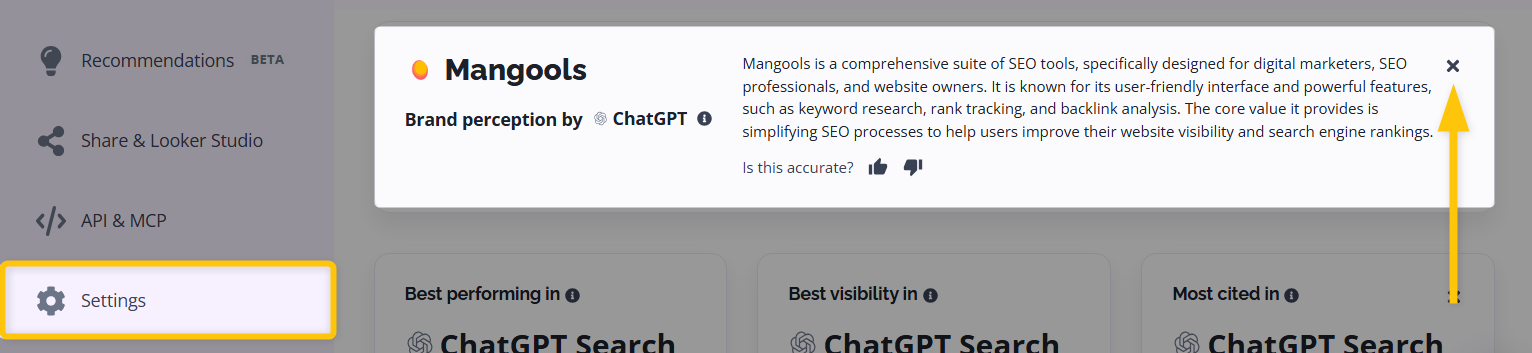
- Brand Perception: Understanding how an AI model describes your business when asked directly.
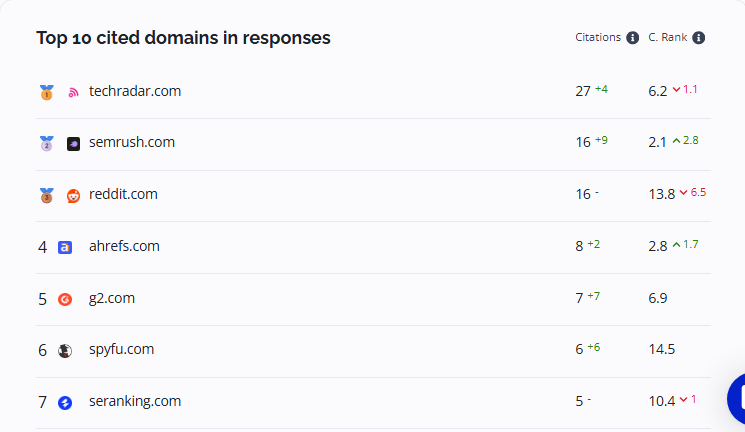
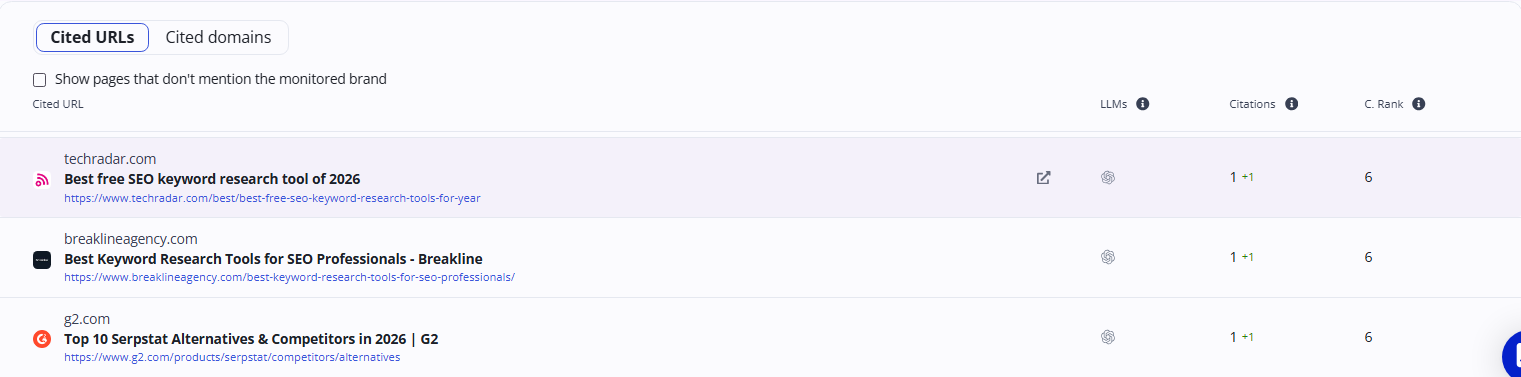
- Citation Tracking: Identifying which specific URLs and domains are being referenced by AI models as trusted sources.
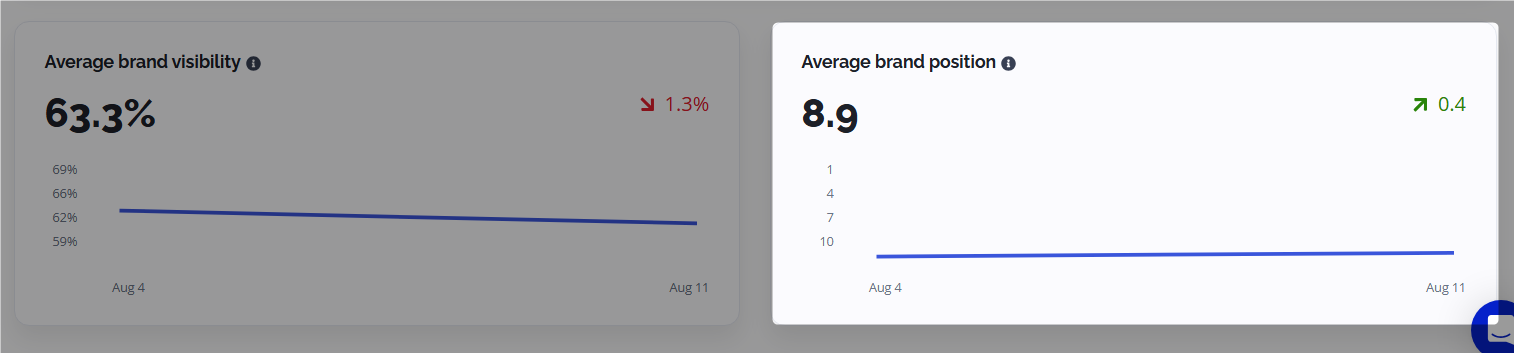
- Visibility Metrics: Measuring brand presence on a scale from 0% to 100% across various LLMs.
- Competitive Intelligence: Analyzing where competitors are outperforming your brand and identifying opportunities to bridge those gaps.
The service is structured to be accessible to everyone, from solopreneurs to large agencies, with a tiered plan structure that includes a free option for those just beginning their AI SEO journey.
Chronology of Setup: Launching Your First Project
The user experience in AI Search Watcher is streamlined for efficiency. For those ready to begin, the process follows a logical, step-by-step workflow:
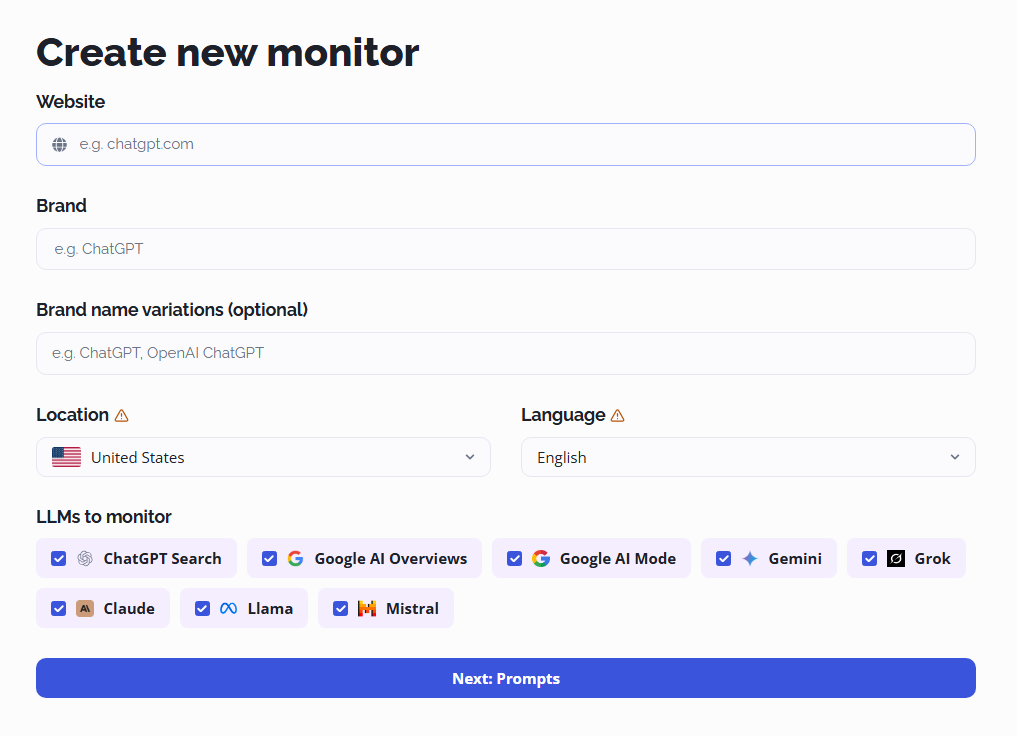
1. Initial Configuration
Upon launching the web app, users are directed to the project setup wizard. This is the foundation of your tracking, requiring the entry of your brand name and essential brand variations. Crucially, the tool prompts you to include common shorthand, domain names, and nicknames (e.g., "VW" for "Volkswagen Group"). This ensures the AI model aggregates data for a single entity, significantly reducing the occurrence of "false negatives" in your reports.

2. Strategic Prompt Selection
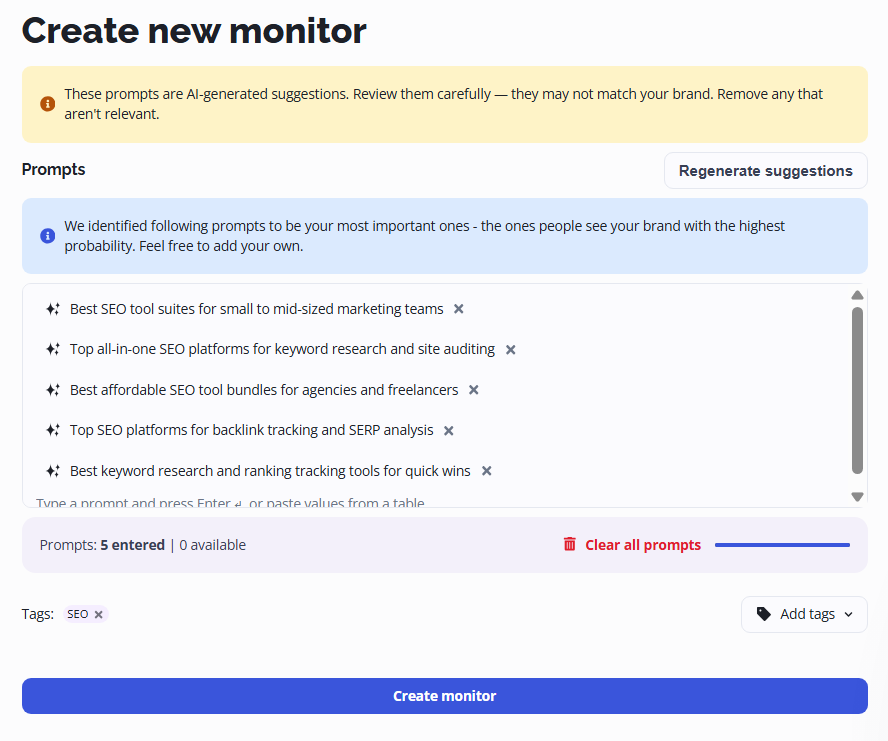
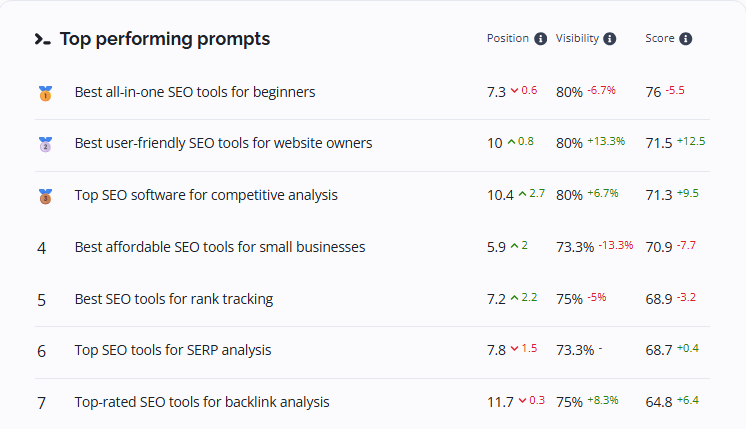
The next phase involves defining the prompts for which you want to monitor your brand. AI Search Watcher utilizes an integrated generator to suggest relevant queries based on your website’s context. However, for a truly professional implementation, users are encouraged to supplement these suggestions with:
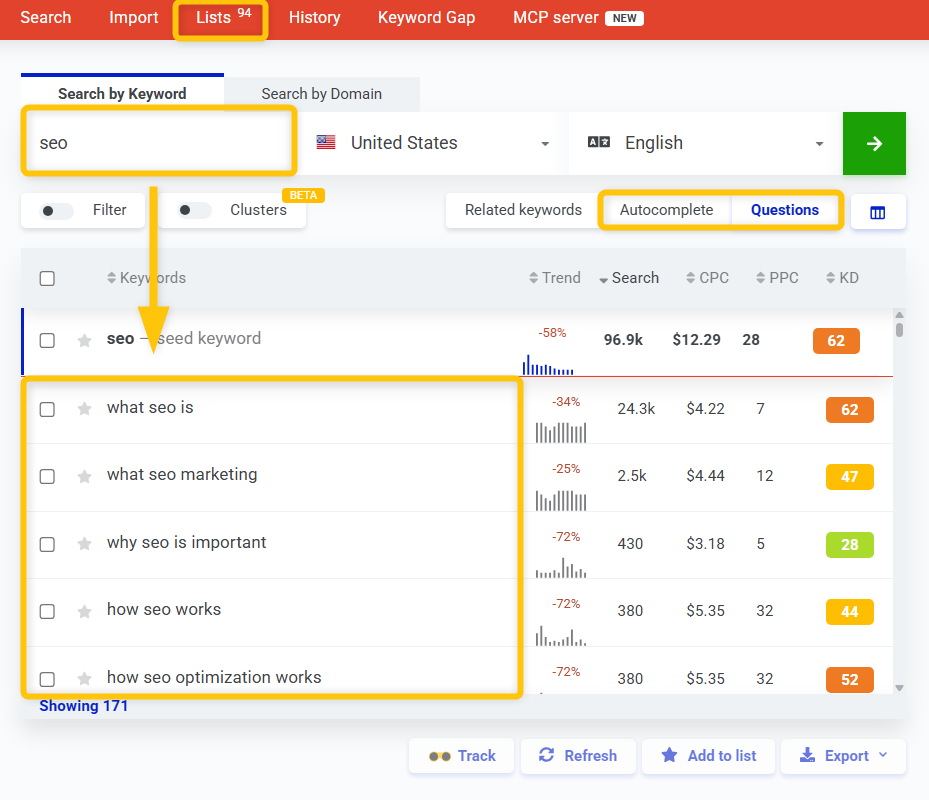
- KWFinder Integration: By importing question-based, long-tail keywords into the tool, you ensure your monitoring covers high-intent queries that real users are typing into LLMs.
- SERPWatcher Migration: Existing users can export their high-performing keywords from SERPWatcher, run them through an LLM to convert them into conversational, intent-focused prompts, and then import those into AI Search Watcher.
3. Execution
Once prompts are tagged—categorizing them by product type, service area, or intent—the system begins its monitoring cycle. By repeatedly testing these prompts across diverse AI models, the tool builds a robust, data-backed overview of your brand’s AI footprint.

Supporting Data: Understanding Key Performance Metrics
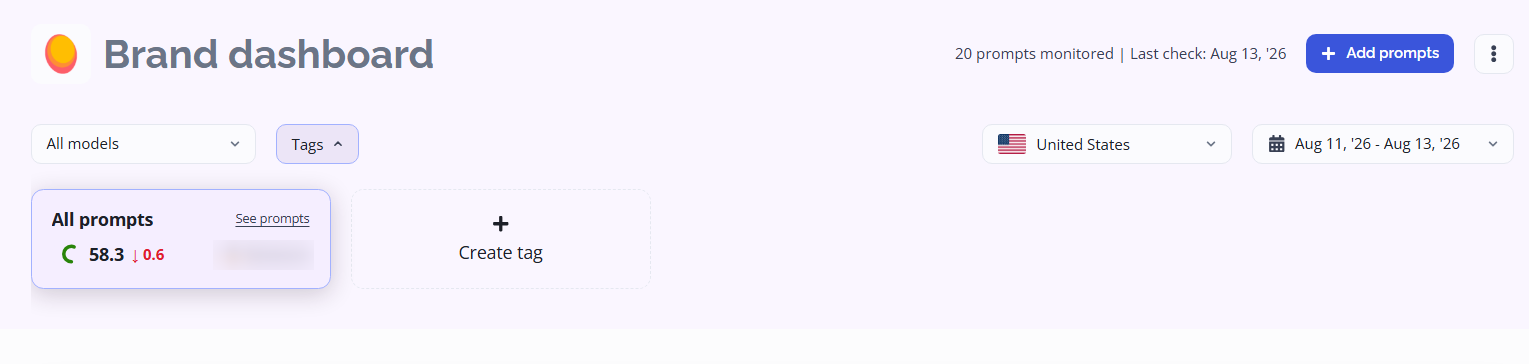
AI Search Watcher provides a wealth of data, but success depends on interpreting that data correctly. The dashboard is divided into several high-impact sections:

The AI Search Score
This is the North Star metric for your AI presence, ranging from 0 to 100.

- 0–59 (Needs Improvement): Indicates a critical gap in brand awareness or authority within the AI model’s training data.
- 60–69 (Fair): A baseline presence; your brand is being acknowledged but lacks consistent authority.
- 70–79 (Good): A solid position; you are frequently cited in relevant contexts.
- 80–89 (Excellent): You are a primary, trusted source for your niche.
- 90–100 (Outstanding): You are the definitive authority, consistently winning the "AI real estate."
Performance Cards
The dashboard offers a snapshot view of your standing through specialized cards:
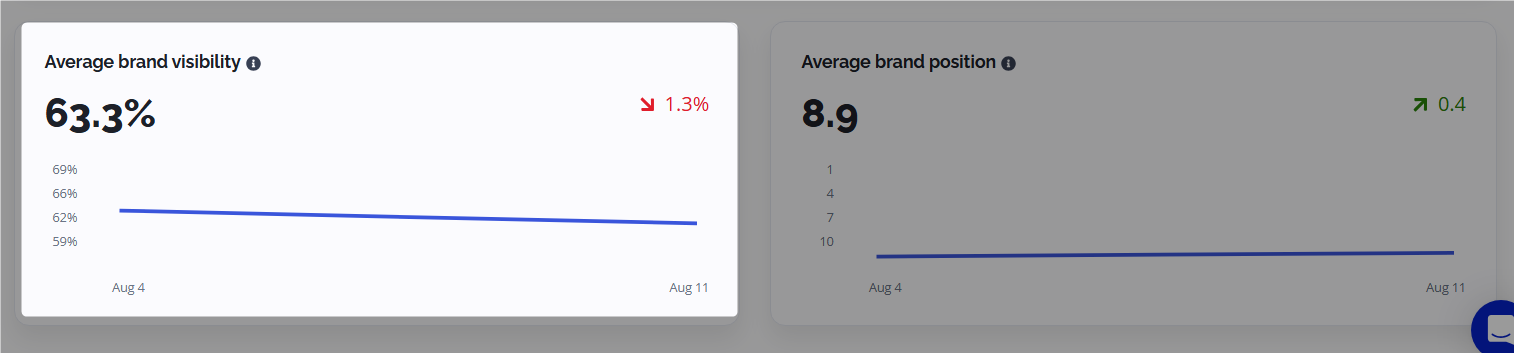
- Best Performing In: Identifies which LLM gives your brand the highest score.
- Best Visibility In: Displays the percentage of responses where your brand is prominently featured.
- Most Cited In: Tracks how often your specific website URLs are used as direct references.
The Power of Citations
The Citations tab is perhaps the most actionable feature for SEOs. It breaks down exactly which URLs are being favored by models like Claude or Gemini. If a competitor’s blog post is being cited more frequently than your cornerstone content, you now have the specific data needed to update your content strategy, improve your schema markup, or adjust your internal linking to better suit the needs of an AI aggregator.
Official Recommendations and Optimization Strategies
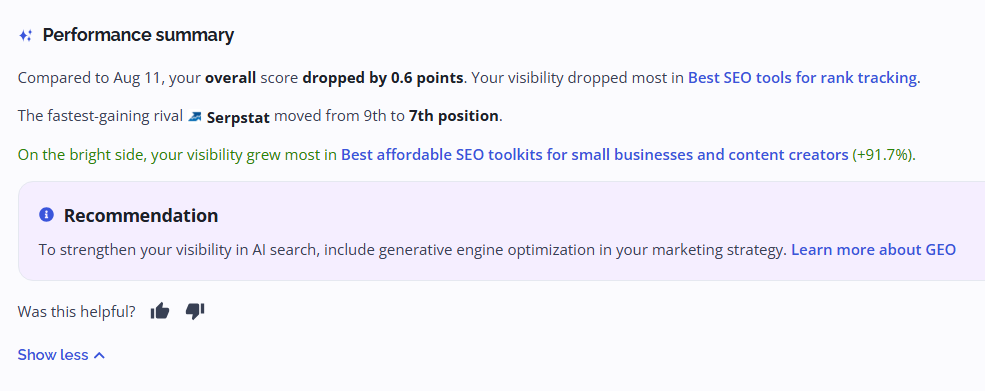
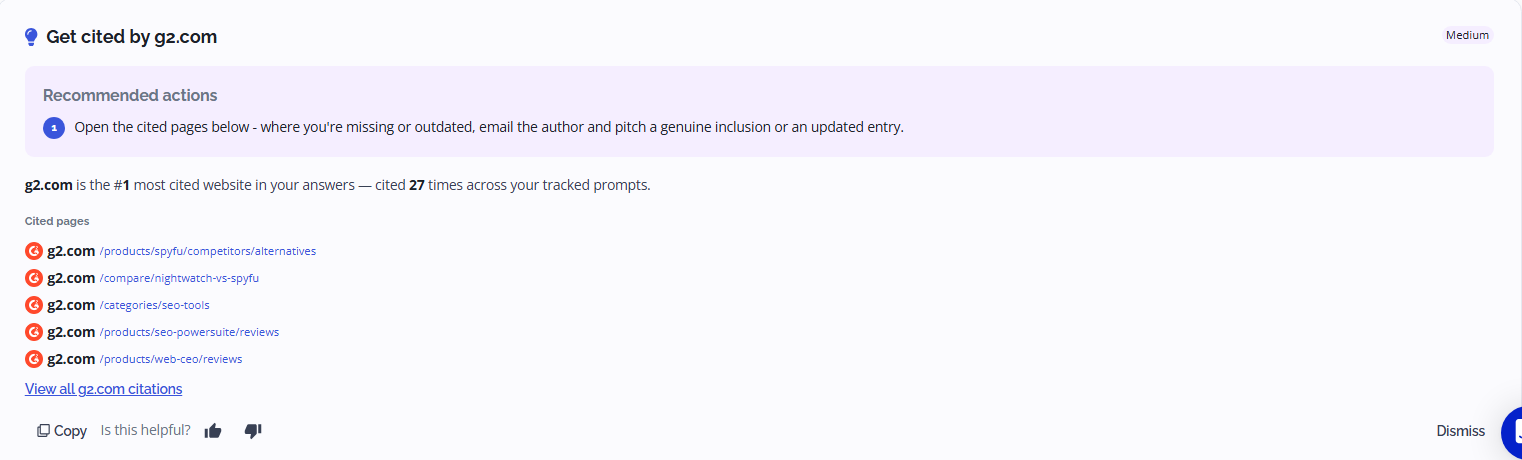
The "Recommendations" section of the platform acts as an automated consultant. By analyzing where you are losing ground, the tool provides specific, actionable advice:
- Content Gap Analysis: It highlights specific queries where your brand is notably absent, suggesting that your existing content may lack the depth or clarity required by AI models.
- Citation Acquisition: It shows you which pages are being cited by competitors, giving you a roadmap for link building and outreach efforts.
- Brand Perception Repair: If an AI model describes your brand incorrectly, the tool flags this as a priority. This usually signals a need for more consistent NAP (Name, Address, Phone) data, better Wikipedia or structured data presence, or a clearer "About Us" narrative across the web.
Implications: The Future of SEO and AI Integration
The implications of using a tool like AI Search Watcher are profound. As search engines prioritize "Answer Engine Optimization" (AEO) over traditional blue links, the ability to monitor the "hidden" logic of AI responses is becoming a competitive necessity.
Enterprise-Level Integration
For larger organizations, AI Search Watcher offers advanced connectivity options that go beyond the browser:
- Looker Studio Connector: Allows marketing teams to blend AI performance data with traditional search and social metrics for comprehensive reporting.
- API & MCP (Model Context Protocol): For power users and developers, the Mangools API allows for the programmatic extraction of data. Furthermore, the use of the MCP server enables users to feed this data directly into AI assistants like Claude Desktop, allowing for an interactive "AI-on-AI" analysis where you can ask your local LLM to interpret your live ranking data.
The Role of Reporting
Consistency is key. By setting up weekly or monthly automated email reports, teams can track the volatility of AI responses. Because LLMs update their training weights and RAG (Retrieval-Augmented Generation) sources frequently, an AI presence that is strong today could fluctuate tomorrow. The ability to track these trends over time allows for a proactive rather than reactive stance.
Conclusion
The era of passive SEO is drawing to a close. With AI Search Watcher, Mangools has provided the industry with a necessary bridge between traditional search metrics and the emerging world of generative AI. By understanding the "why" and "how" behind an AI’s decision to cite a specific brand, companies can refine their digital presence, ensure their messaging is accurate, and claim their rightful spot in the future of search.
Whether you are looking to fix a brand perception issue or dominate the "Most Cited" rankings for your industry’s top prompts, the journey starts with visibility. Start tracking your AI performance today and ensure that when the world asks an AI for a solution, your brand is the one providing it.