










In the ever-evolving landscape of Search Engine Optimization (SEO), the "focus keyword" stands as the cornerstone of digital visibility. It is the compass that guides search engines through the vast architecture of your website, ensuring that your content reaches the audience most likely to engage with it. While the technical mechanics of SEO may shift, the importance of defining a singular, authoritative focus for every page remains a constant. This article explores the strategic nuances, practical applications, and essential methodologies behind identifying and utilizing focus keywords to dominate search engine results pages (SERPs).
Main Facts: Defining the Focus Keyword
A focus keyword is not merely a string of text; it is the most accurate distillation of your page’s intent. It serves as the primary signal to search engines—and, more importantly, to your readers—that your content provides a definitive answer or solution to a specific query.
A crucial rule of thumb in professional SEO is the "one-page, one-keyword" principle. Each unique URL on your website should be optimized for exactly one focus keyword. This creates a clear topical authority for each page, preventing "keyword cannibalization," where multiple pages from the same site compete against one another in search results.
It is vital to distinguish between a focus keyword and the antiquated "meta keyword" tag. In the early days of the internet, developers would stuff meta tags with lists of keywords to manipulate rankings. Modern search engines, particularly Google, have long since abandoned this practice. Today, search engines prioritize the semantic quality of your on-page content, user experience, and the relevance of your headings and metadata, rendering meta keyword tags irrelevant.
Chronology: From Keyword Stuffing to Semantic Relevance
The evolution of SEO reflects a move away from mechanical manipulation toward human-centric content.

- The Early Era (Pre-2010): The focus was on "keyword density." Content was often produced specifically for algorithms, leading to disjointed, repetitive text that prioritized frequency over value.
- The Semantic Shift (2010–2015): Google’s algorithm updates (such as Panda and Hummingbird) began to penalize thin, keyword-stuffed content. The industry shifted toward "topics" rather than just isolated words.
- The User-Intent Era (2016–Present): Today, search engines utilize machine learning (like BERT and RankBrain) to understand the context of a search. A focus keyword is now a anchor point for a broader topical discussion, ensuring the page addresses the "search intent" behind the user’s query.
Supporting Data: The Keyword Tripod Rule
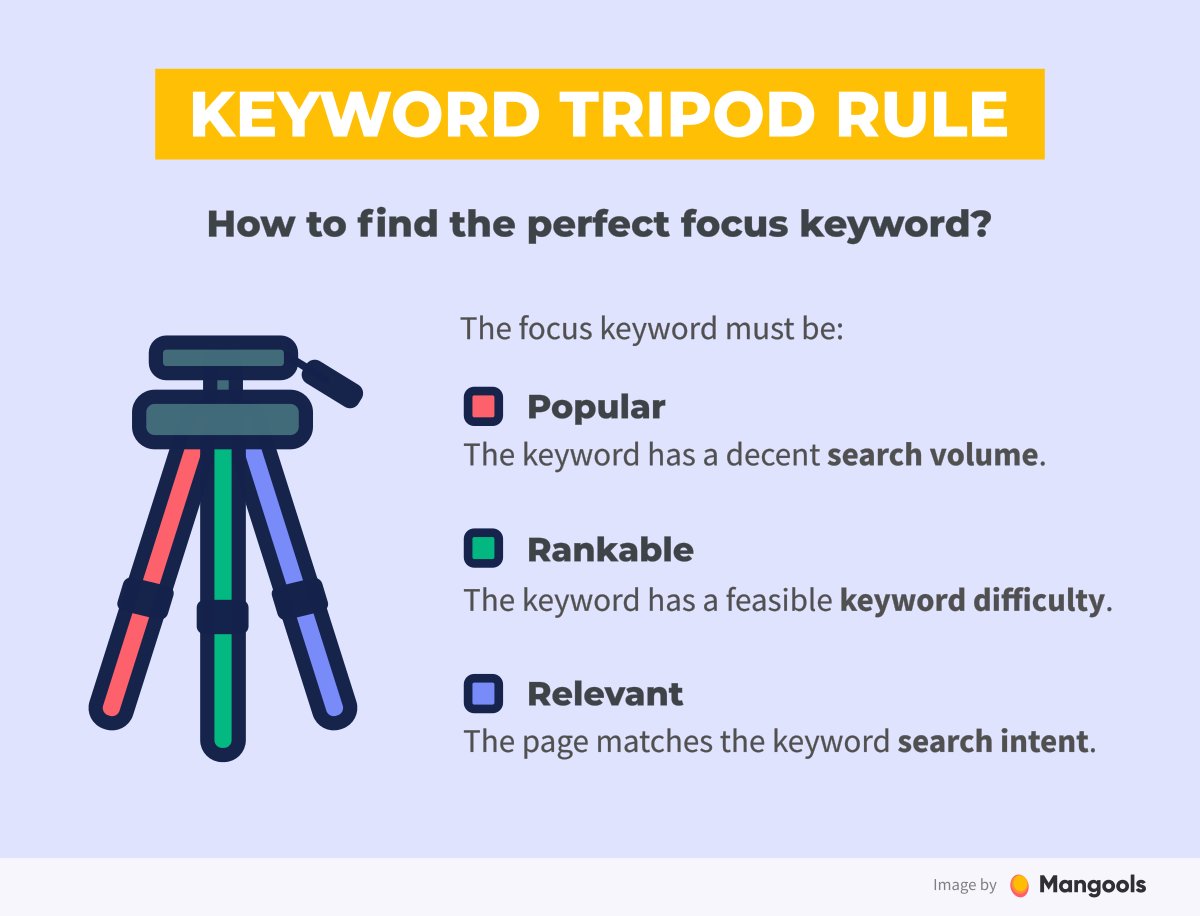
To select a high-performing focus keyword, professionals often rely on the "Keyword Tripod Rule." This framework ensures that your selection is grounded in data rather than guesswork. The three pillars of this tripod are:
- Search Volume: Does the query have enough traffic to justify the effort of creating content? If no one is searching for it, the content will not drive meaningful traffic.
- Keyword Difficulty: How competitive is the term? If you are a niche brand, targeting broad, high-difficulty terms like "fitness" is often a losing battle. It is more effective to target "long-tail keywords" (e.g., "pilates exercises for lower back pain"), which have lower competition and higher conversion potential.
- Search Intent: Does the user want to buy something, learn something, or find a specific website? Aligning your content type (e.g., a tutorial vs. a product page) with the user’s intent is the single most significant factor in ranking success.
These three metrics are typically analyzed via professional SEO suites, which aggregate historical search data to provide a forecast of how difficult it will be to capture the top spots on Google.
Strategic Implementation: Putting Keywords to Work
Finding the right keyword is only the beginning. The implementation phase requires a disciplined approach to content architecture.
1. The Strategy of Uniqueness
Never allow two pages to target the same keyword. If you have a primary service page optimized for "dog grooming," and a blog post optimized for the same, you are creating a "search engine dilemma." Google may not know which page to display, often resulting in neither ranking well. Instead, diversify: optimize the service page for "professional dog grooming services" and the blog post for "benefits of professional dog grooming."
2. Pre-Writing Optimization
The most common mistake is writing content first and trying to "bolt on" keywords later. This often leads to awkward phrasing. A superior workflow involves defining the focus keyword before drafting. This ensures that the structure, tone, and depth of the content are inherently aligned with the searcher’s needs.
3. Key Placement Areas
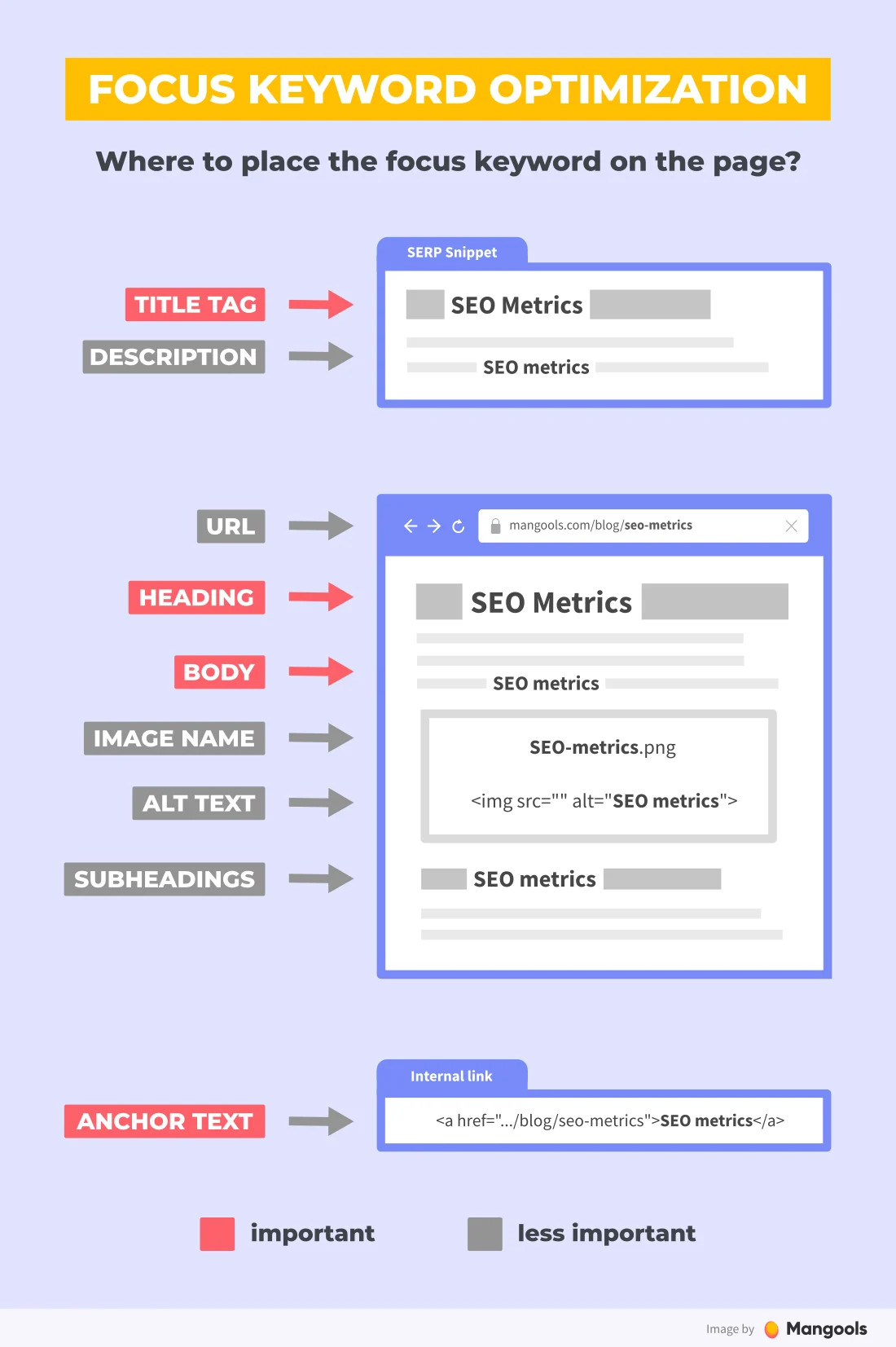
While there is no "secret tag" for keywords, search engines look for prominence. The focus keyword should naturally appear in:
- The Title Tag: The most influential factor for click-through rates.
- The H1 Heading: The primary title of your article.
- The First 100 Words: Establishing topical relevance early helps both the reader and the crawler.
- Subheadings (H2/H3): Breaking up text with relevant subheadings provides structure.
- The URL Slug: Clean, keyword-rich URLs (e.g.,
website.com/pilates-abs-exercises) are preferred by search engines.
Official Responses and Expert Perspectives
Industry experts and search engine representatives, such as Google’s John Mueller, have consistently emphasized that keyword placement is secondary to user experience. In various public forums and SEO documentation, the consensus remains: Content must be written for humans, not machines.
If your content is 20,000 words long but fails to address the focus topic until the final paragraph, you have failed the user. Search engines are sophisticated enough to recognize "keyword stuffing"—the practice of repeating a term unnaturally—and will often penalize sites that prioritize frequency over quality. The goal is to make the topic "perfectly obvious" to the reader from the moment they land on the page.
Implications: The Long-Term SEO Advantage
Adopting a disciplined focus keyword strategy has profound implications for your digital footprint.
- Topical Authority: By consistently producing high-quality content centered around specific focus keywords, your website builds a reputation as an expert in a particular niche.
- Improved User Experience (UX): When content is clear and focused, visitors are more likely to stay on the page, read the entire article, and engage with your calls to action.
- Measurable Results: With a clear keyword strategy, you can accurately track your performance. You will know exactly which queries are driving traffic, which allows for data-driven decisions on future content creation.
Conclusion
The focus keyword is more than a technical SEO requirement; it is a commitment to clarity. By selecting a specific, data-backed topic for each page, avoiding the trap of keyword stuffing, and ensuring that your content provides genuine value to the reader, you create a sustainable foundation for long-term search engine success. Remember that in the modern SEO landscape, the most successful strategy is to be the best answer to the user’s question. When you achieve that, the rankings will follow.



