










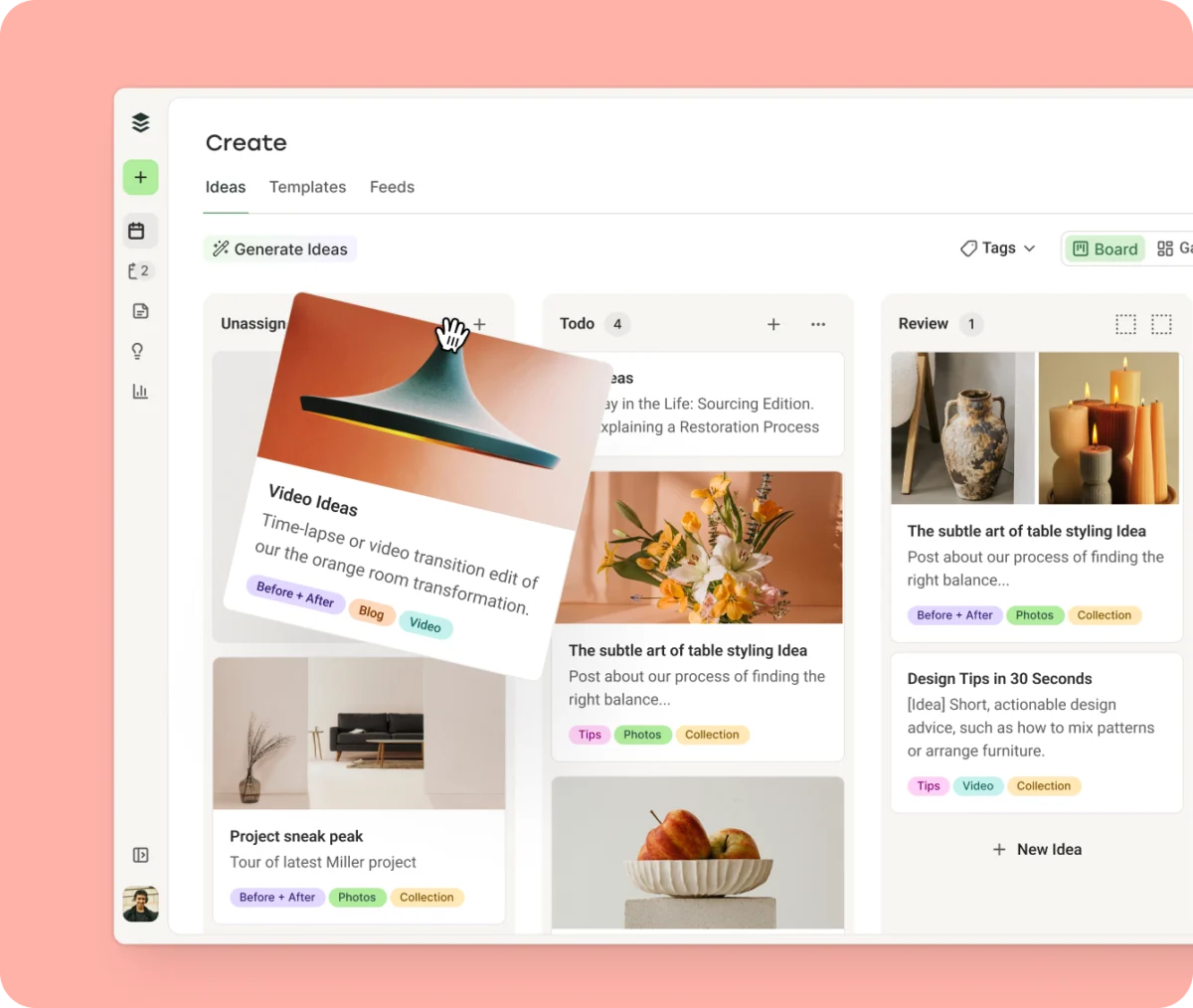
Juggling multiple social networks has become an increasingly complex undertaking for modern content creators, small business owners, and corporate marketing teams alike. On any given day, digital strategists are tasked with conceptualizing posts, repurposing multi-format media, monitoring real-time trends, and analyzing comprehensive performance metrics. For independent creators and entrepreneurs, this demanding workload operates in tandem with the actual day-to-day execution of running a business.
Fortunately, the market for social media management tools has evolved to lighten this operational load. Today’s software ecosystems go beyond simple scheduling to integrate unified messaging inboxes, artificial intelligence assistance, community management, and deep data analytics. To help organizations and individuals find the right fit, here is a comprehensive review of the 11 top social media management tools for 2026, structured around specific use cases, feature sets, and pricing models.
Understanding the Essentials: What is a Social Media Management Tool?
At its core, a social media management tool is a centralized software application that enables users to plan, schedule, publish, engage with, and analyze content across multiple digital networks from a single dashboard. Instead of forcing users to log in and out of individual applications, these platforms streamline workflows by combining a multi-channel calendar, a unified inbox for comments and direct messages, and performance analytics.
Modern platforms span a wide spectrum:
- Free Creator Plans: Lightweight solutions geared toward solo operators with minimal budgets.
- Mid-Tier Professional Suites: Feature-rich tools designed for growing brands and small agencies.
- Enterprise Ecosystems: Robust platforms incorporating advanced social listening, multi-layer approval workflows, and customer relationship management (CRM) integrations.
Ultimately, the ideal social media management software is not merely defined by a hefty feature list; it is a platform that users genuinely want to interact with on a daily basis.
The 11 Best Social Media Management Tools Compared (2026)
| Tool | Best For | Standout Feature | Free Plan | Starting Price |
|---|---|---|---|---|
| Buffer | Creators & small businesses | Per-channel pricing, Start Page, posting streaks | Yes (3 channels) | Free / $6/mo per channel |
| Hootsuite | Larger teams doing social listening | Talkwalker-powered listening | No (30-day trial) | $99/mo per user |
| Tailwind | Pinterest-first strategies | One-click pin design, Pinterest partner | Yes (5 posts/mo) | $29.99/mo |
| SocialPilot | Agencies managing many clients | White-label client dashboards | No (14-day trial) | $30/mo |
| Zoho Social | Existing Zoho users | Zoho CRM/Desk integration | Yes (1 user) | $14/mo |
| Sprout Social | Social + influencer + advocacy | Employee advocacy, Tagger influencer | No (30-day trial) | $99/mo per seat |
| Oktopost | B2B buyer-journey tracking | Campaign-tagged posts, buyer journeys | No | Not public |
| Later | Influencer marketing + listening | Creator discovery + campaign management | No (14-day trial) | $25/mo |
| Socialinsider | Deep analytics & benchmarking | Competitor KPI comparison | No (14-day trial) | $99/mo |
| Manychat | DM & comment automation | 24/7 chat automation (IG/FB/TikTok/WhatsApp) | Yes (limited) | $15/mo |
| Sprinklr | Enterprise, multi-platform CX | Persona apps, AI image detection | No | Not public |
(Note: Pricing reflects publicly listed individual/entry plans as of August 2026 and excludes team and custom-quote tiers.)
1. Buffer: Best for Creators and Small Businesses
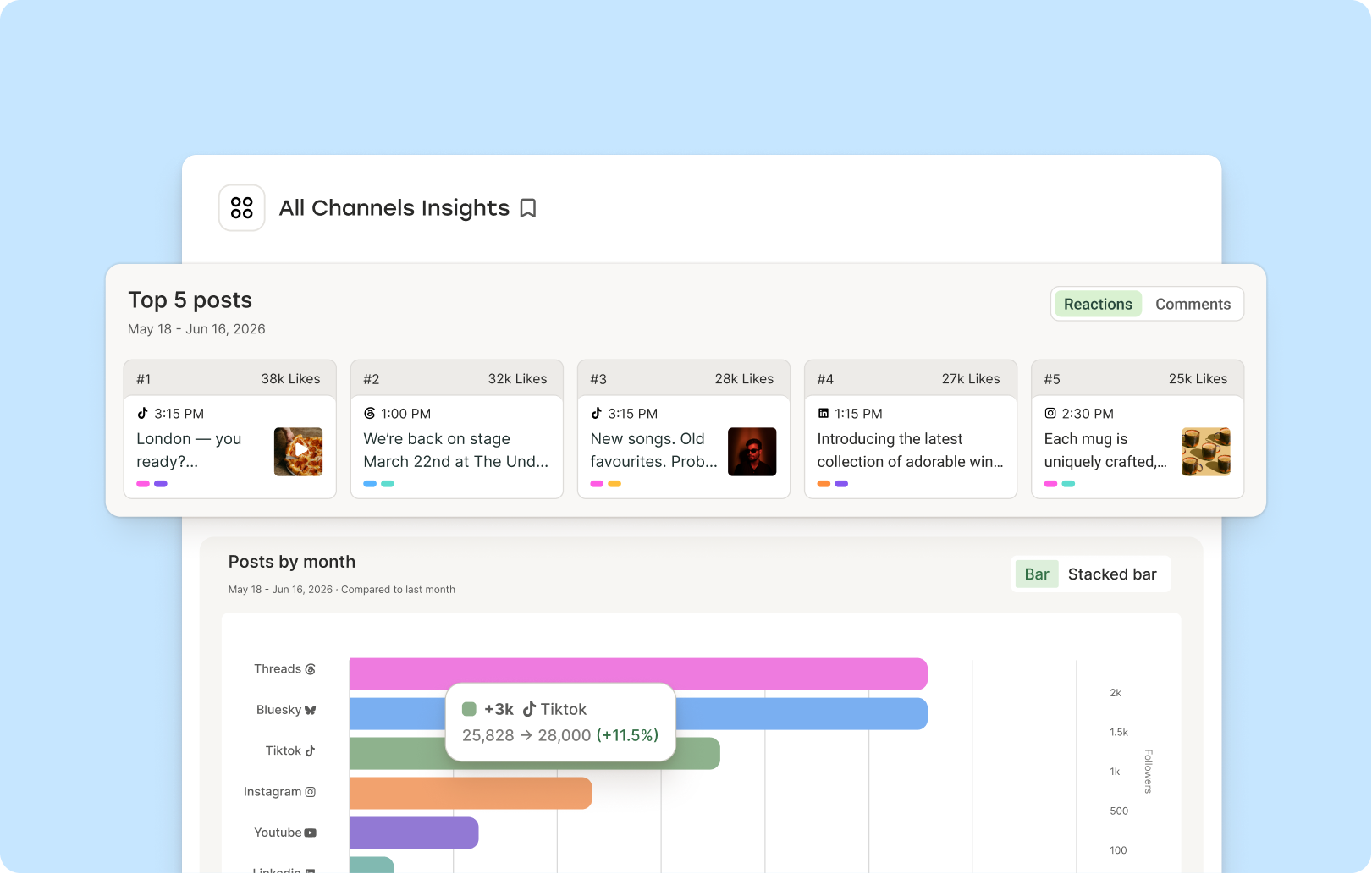
Buffer is a plug-and-play social media management tool built specifically for creators and lean teams seeking scheduling, engagement, and reporting capabilities without a steep learning curve. Featuring an accessible per-channel pricing model starting at $6 per month, Buffer emphasizes clean design and operational speed.
- Standout Features: Flexible drag-and-drop content calendar, smart scheduling queues, direct AI agent connectors, and a robust free plan.
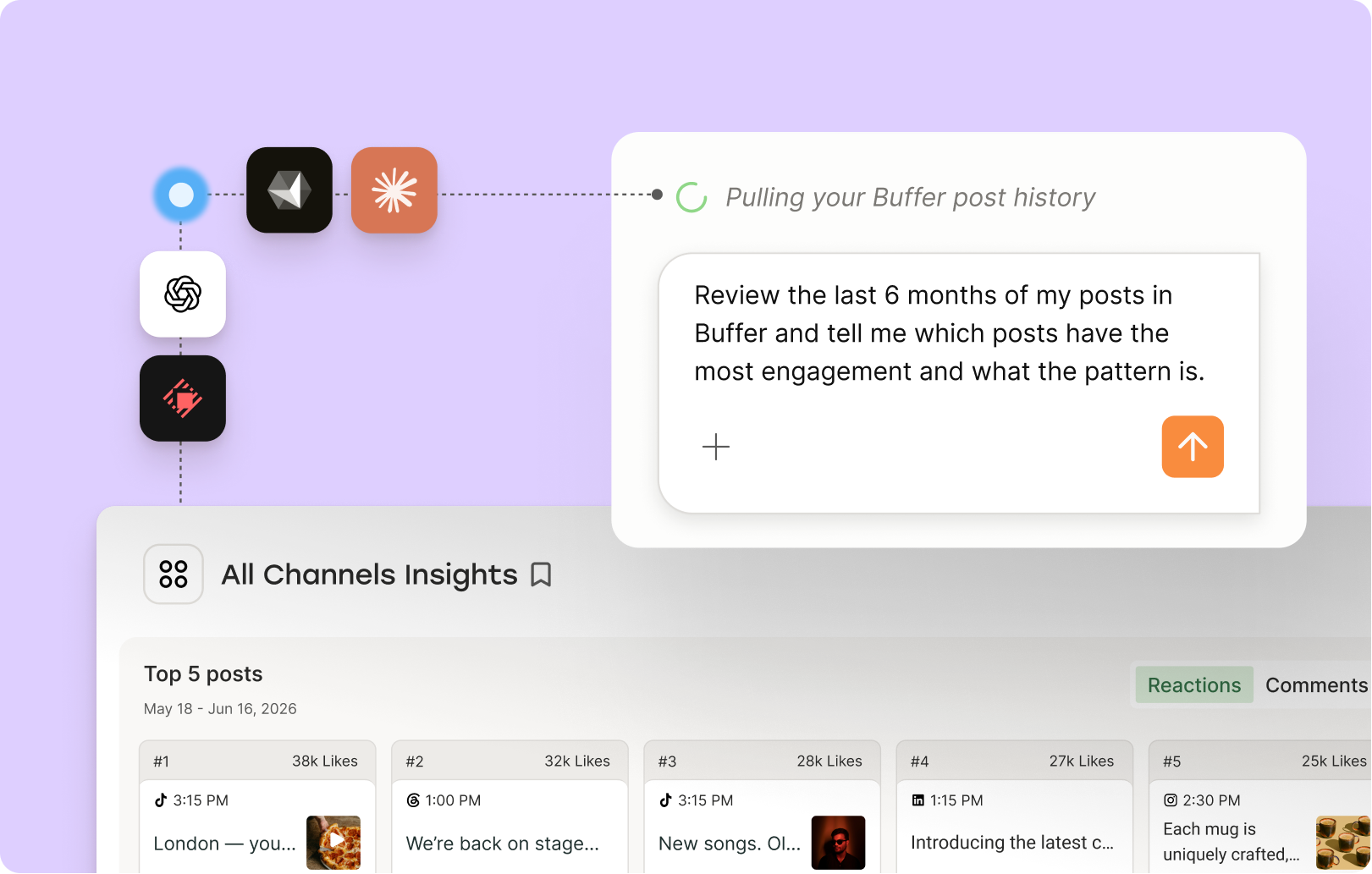
- Supported Platforms: Instagram, Facebook, Threads, TikTok, LinkedIn, Pinterest, YouTube Shorts, X, Bluesky, Mastodon, Substack Notes, and Google Business Profile.
- Pricing: Free forever plan for up to 3 channels; paid tiers start at $6/mo per channel.
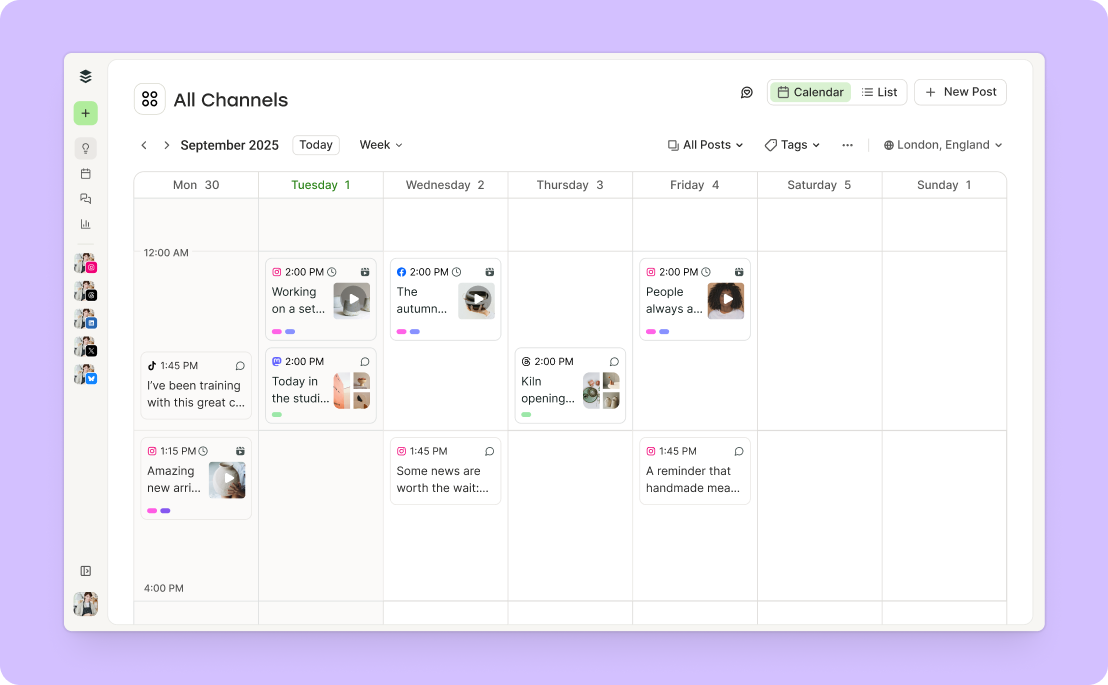
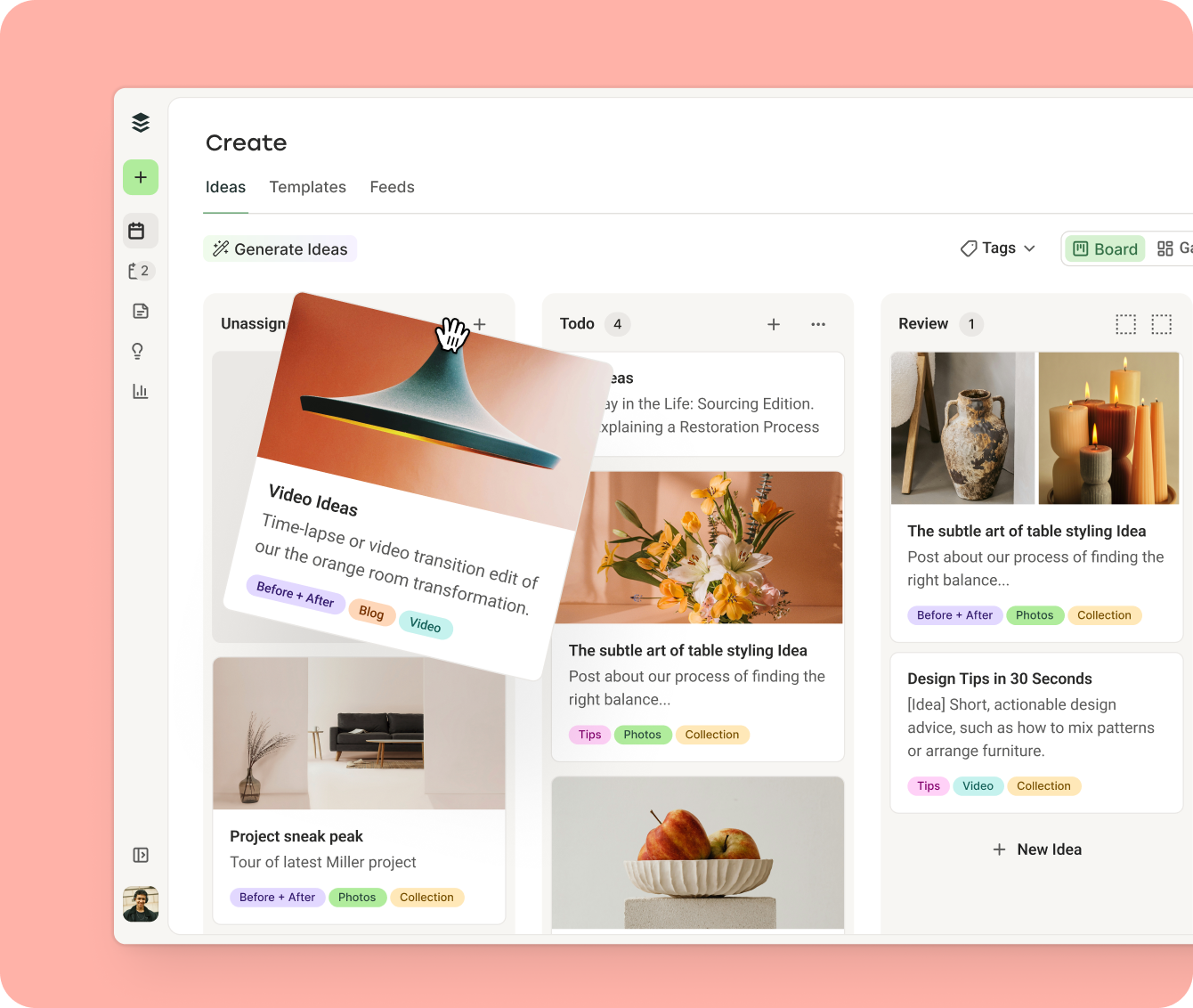
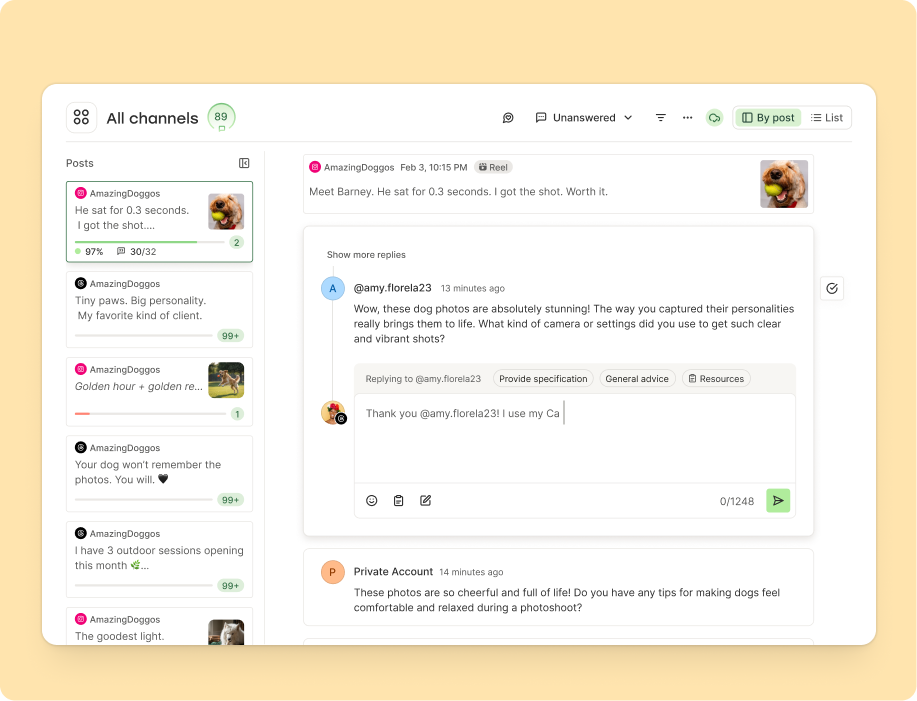
Buffer excels through its simplicity. Users can integrate social accounts and begin scheduling within minutes. Beyond basic publishing, Buffer offers taggable idea storage in its "Create Space," a centralized "Community" inbox for managing all incoming comments, cross-channel reporting, and rapid adaptation to emerging platforms like Threads and Bluesky. While it lacks heavy enterprise features like multi-layer approval workflows, it remains a premier choice for solo operators and growing teams.
2. Hootsuite: Best for Advanced Social Listening
Hootsuite is an established enterprise platform tailored for larger organizations that require granular access controls, multi-user management, and powerful social listening tools.
- Standout Features: Talkwalker-powered social listening dashboard and granular team permissions.
- Supported Platforms: Instagram, Facebook, LinkedIn, TikTok, YouTube, X, and Pinterest.
- Pricing: Starts at $99/mo per user (30-day trial available; no free plan).
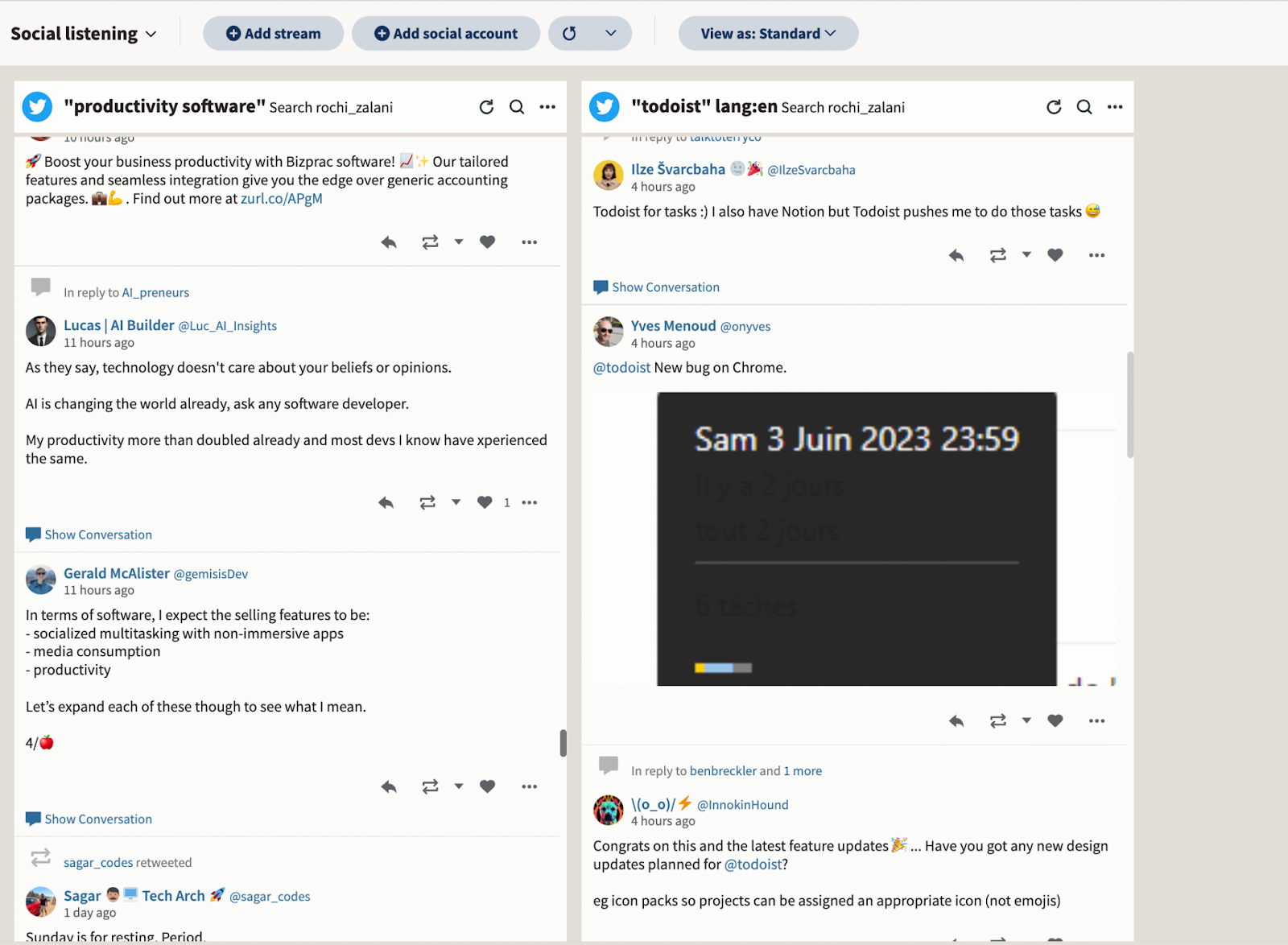
Following its acquisition of Talkwalker, Hootsuite’s social listening capabilities are among the most robust in the industry, allowing brands to track sentiment, location data, and industry conversations over extended periods. However, its feature-packed dashboard presents a steeper learning curve, making it better suited for well-resourced corporate marketing departments rather than independent creators.
3. Tailwind: Best for Pinterest-First Strategies
Tailwind is an officially partnered Pinterest tool engineered specifically for visual pin design, automated scheduling, and audience growth.
- Standout Features: One-click pin design and preset-interval scheduling.
- Supported Platforms: Pinterest (primary), alongside Instagram and Facebook.
- Pricing: Free plan limited to 5 posts/mo; paid plans start at $29.99/mo.
Tailwind functions as a specialized environment for creators and brands whose primary traffic driver is Pinterest. Its standout capability converts raw photos into optimized pin designs in a single click, functioning similarly to an embedded design assistant tailored explicitly for visual search algorithms.
4. SocialPilot: Best for Agency Client Management
SocialPilot is an agency-first platform designed to simplify multi-client management through white-label dashboards and streamlined content approvals.
- Standout Features: White-label client dashboards and shareable approval links requiring no client sign-ups.
- Supported Platforms: Instagram, Facebook, LinkedIn, TikTok, YouTube, X, Pinterest, and Google Business.
- Pricing: Starts at $30/mo for a single user (14-day trial available).
SocialPilot’s core strength lies in its frictionless client review process. Agencies can generate personalized approval links that display all scheduled posts on a single screen without requiring clients to log into the platform. Sub-dashboards keep separate client accounts strictly isolated, providing enterprise-grade agency control at an accessible price point.
5. Zoho Social: Best for Existing Zoho Ecosystem Users
Zoho Social is a reliable management tool that gains its primary strategic value from native integration with the broader Zoho software ecosystem, including Zoho CRM and Zoho Desk.
- Standout Features: Native Zoho CRM and customer service desk integration.
- Supported Platforms: Instagram, Facebook, LinkedIn, X, TikTok, YouTube, and Google Business.
- Pricing: Free plan available for 1 user; paid plans start at $14/mo.
For businesses already operating within the Zoho suite, Zoho Social bridges the gap between marketing initiatives and customer support queries originating on social media channels. While it lacks standout independent marketing innovations, it performs standard scheduling and reporting reliably for organizations building out their digital roadmaps.
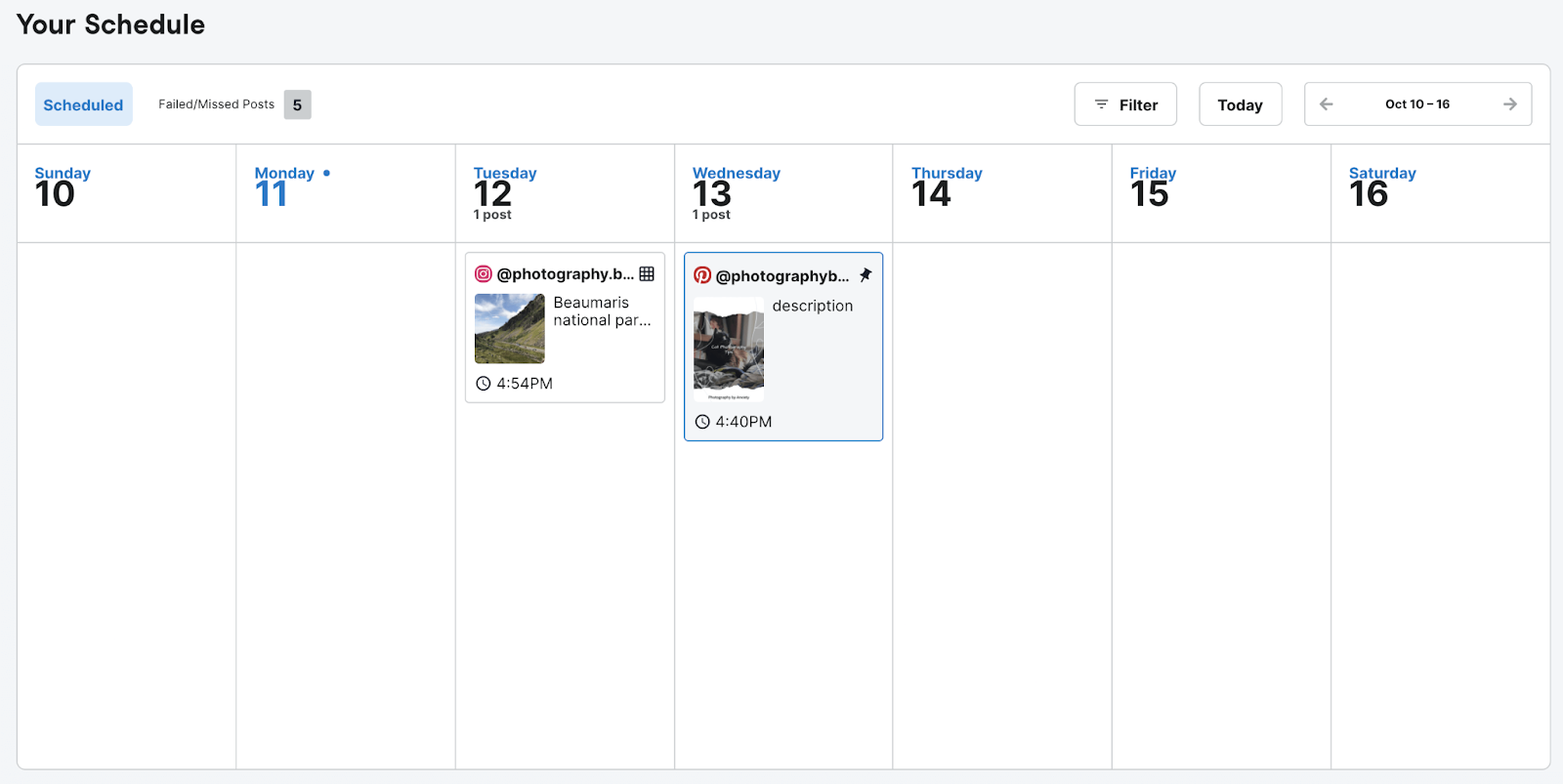
6. Sprout Social: Best for Multi-Disciplinary Enterprise Teams
Sprout Social is an enterprise-grade platform that unifies traditional social media management with influencer discovery and employee advocacy programs.
- Standout Features: Integrated employee advocacy and Tagger-powered influencer marketing.
- Supported Platforms: Instagram, Facebook, LinkedIn, X, TikTok, YouTube, Pinterest, and Threads.
- Pricing: Starts at $99/mo per seat (30-day trial available; advanced features require higher tiers).
Through its acquisition of Tagger Media, Sprout Social addresses a critical pain point for enterprise social managers: housing social media publishing and influencer vetting under one roof. Coupled with polished, highly visual interactive analytics charts and team collaboration controls, it is built explicitly for corporate environments with substantial marketing budgets.
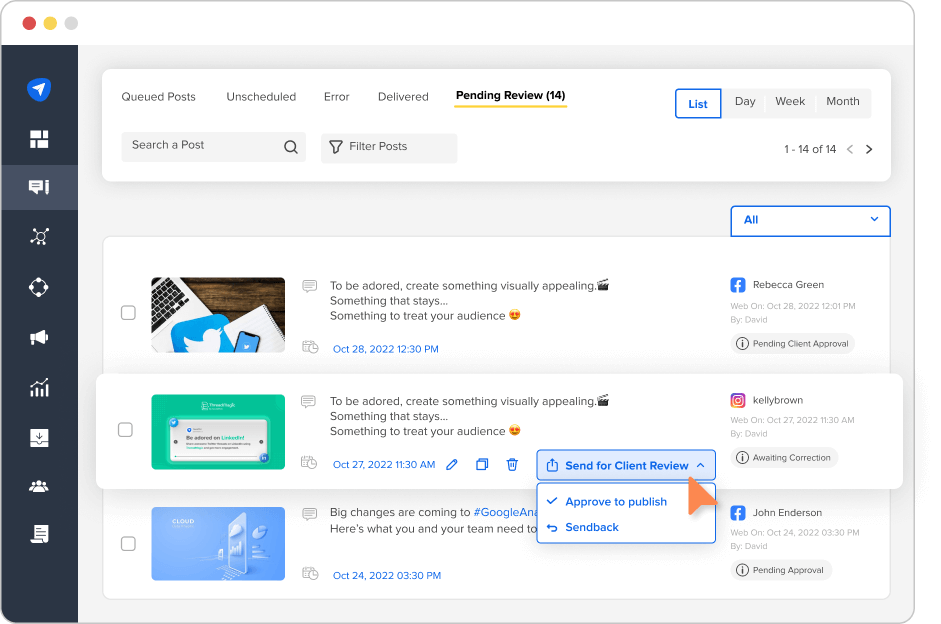
7. Oktopost: Best for B2B Buyer-Journey Tracking
Oktopost is a specialized B2B platform designed to connect social media engagement directly to revenue generation and pipeline metrics.
- Standout Features: Campaign-tagged post architecture and buyer-journey analytics.
- Supported Platforms: LinkedIn, Facebook, Instagram, X, and YouTube.
- Pricing: Custom pricing available upon request (no public pricing or free trial).
Oktopost departs from traditional vanity metrics by automatically appending UTM parameters and rolling every scheduled post into overarching campaign reports. It tracks how specific social initiatives impact the broader B2B buyer journey, making it a powerful tool for enterprise B2B revenue teams.
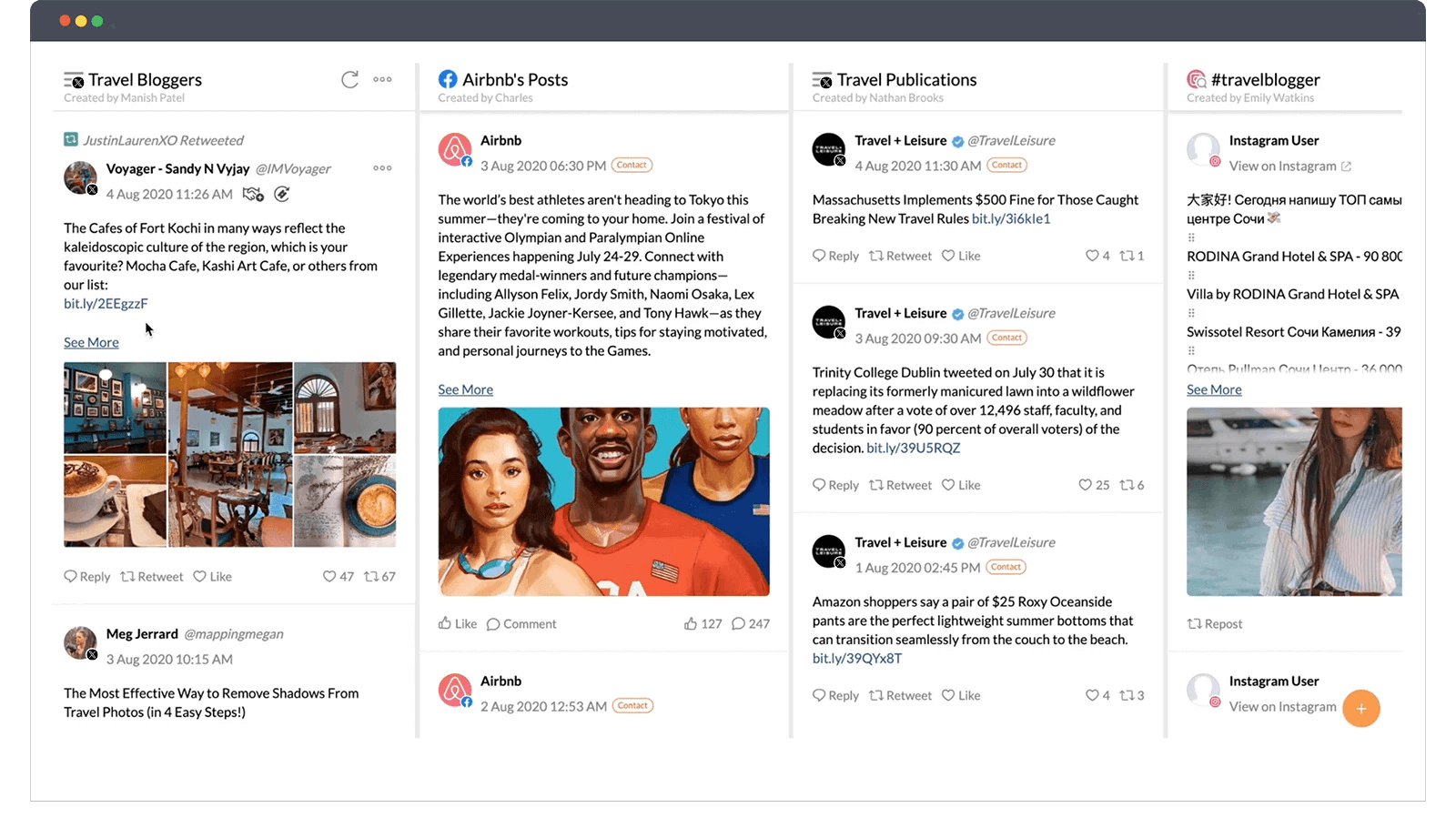
8. Later: Best for Influencer Campaigns and Visual Planning
Later has shifted its core focus from basic social scheduling toward an all-in-one hub for brand influencer marketing, creator discovery, and link-in-bio tools.
- Standout Features: Creator discovery workflows and campaign management.
- Supported Platforms: Instagram, Facebook, TikTok, LinkedIn, Pinterest, YouTube, and X.
- Pricing: Starts at $25/mo (caps at 30 posts per profile on entry tiers; 14-day trial available).
Later provides robust visual content planning tools alongside influencer discovery modules. However, users should note that entry-level pricing caps publishing volume at 30 posts per profile per month, making it less ideal for high-volume content operations.
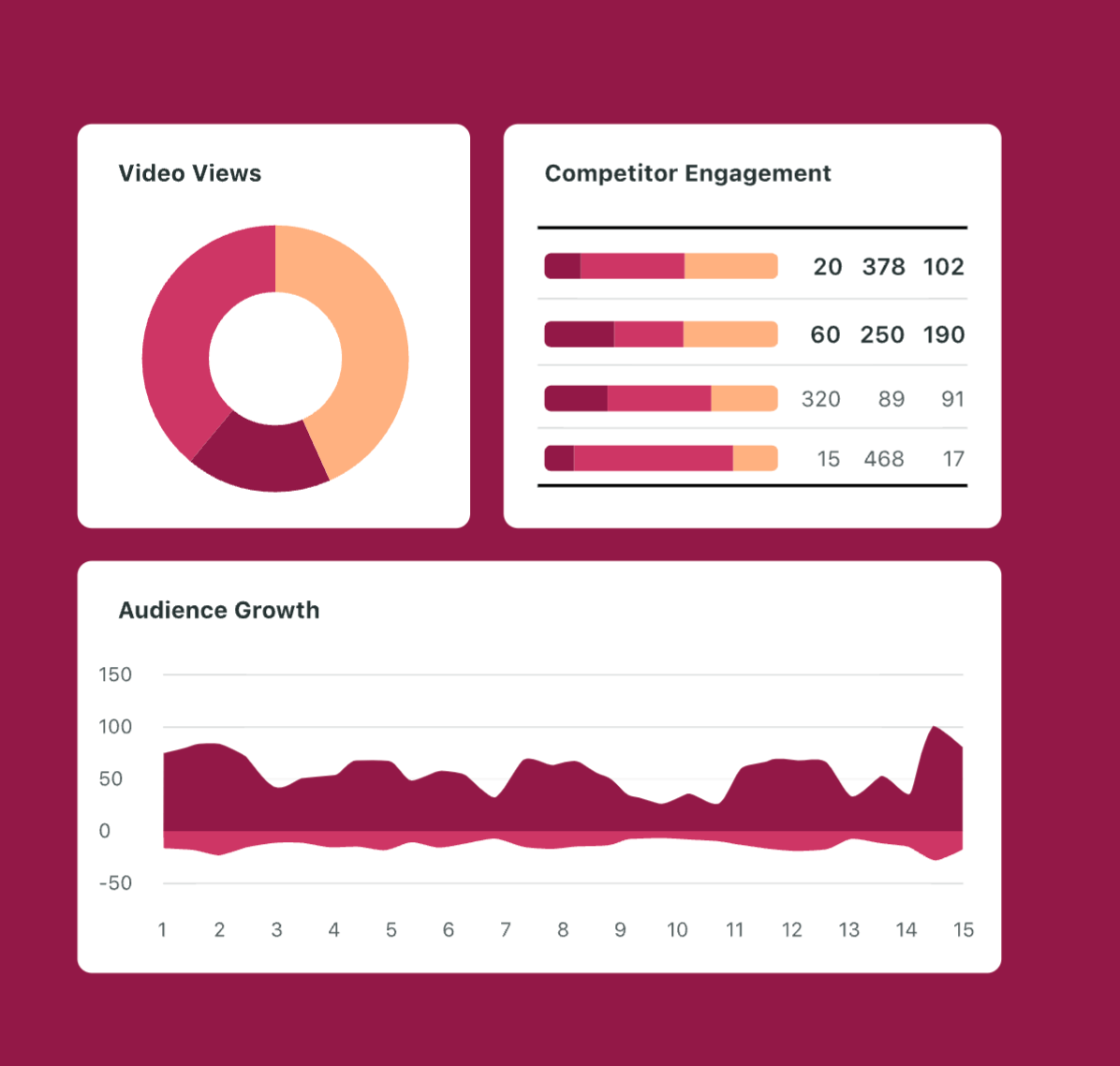
9. Socialinsider: Best for Deep Analytics and Benchmarking
Socialinsider is a dedicated analytics platform rather than a scheduler, offering deep performance data and competitor benchmarking.
- Standout Features: Comprehensive competitor KPI comparisons and content-pillar analytics.
- Supported Platforms: Instagram, Facebook, LinkedIn, TikTok, YouTube, and X.
- Pricing: Starts at $99/mo for up to 20 accounts (14-day trial available).
Designed for data-driven teams, Socialinsider sacrifices publishing capabilities to focus entirely on advanced metrics, reach diagnostics, and competitive landscape analysis. It is frequently paired alongside manual posting tools or simpler content schedulers.

10. Manychat: Best for DM and Comment Automation
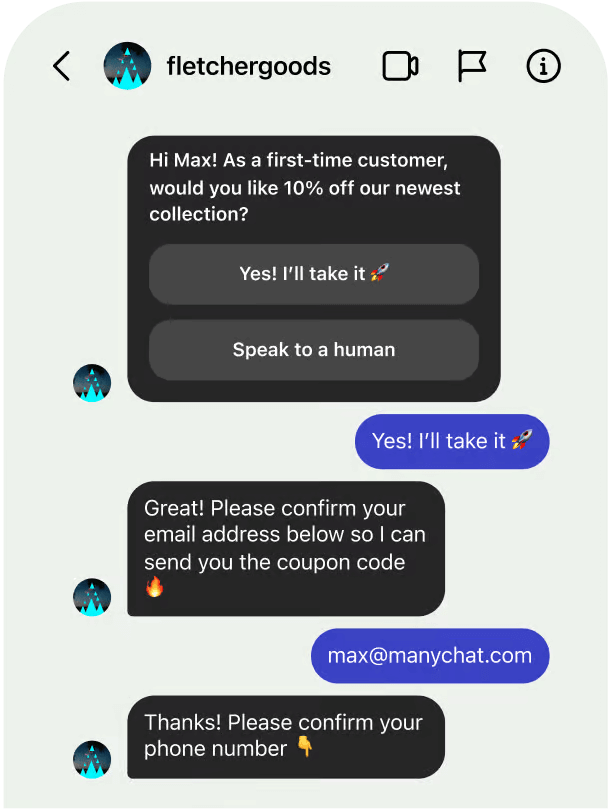
Manychat specializes in chat automation, enabling brands to convert social media comments and direct messages into leads via automated workflows.
- Standout Features: 24/7 automated DM and comment-triggered reply workflows.
- Supported Platforms: Instagram, Facebook, TikTok (beta), and WhatsApp.
- Pricing: Limited free plan available; paid tiers start at $15/mo scaling with contact volume.
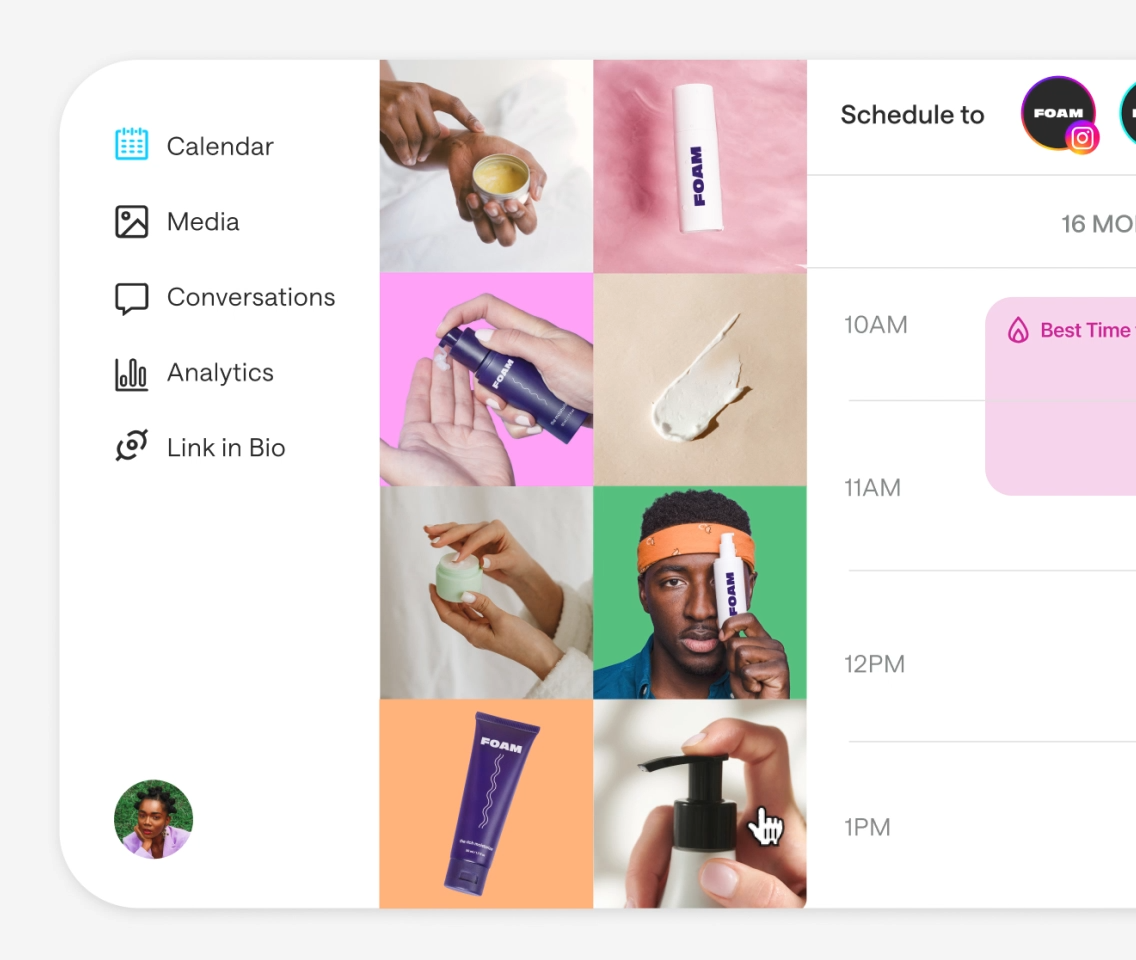
Manychat solves the operational bottleneck of manually responding to high-volume engagement campaigns—such as "comment ‘guide’ for the link." By automating initial direct message conversations, brands can capture leads around the clock across supported messaging platforms.
11. Sprinklr: Best for Complex Enterprise Governance
Sprinklr is a comprehensive customer experience (CX) and social media management suite built for large global enterprises.
- Standout Features: Persona-specific applications and AI-powered image detection.
- Supported Platforms: All major social networks, messaging applications, and review sites.
- Pricing: Custom enterprise pricing only (no free plan or trial).
Sprinklr meets rigorous corporate governance, security, and compliance requirements while offering advanced social listening, advertising integration, and conversational commerce. Due to its complexity and scale, it requires a significant financial investment and an extended onboarding timeline.
How to Choose the Right Tool: 5 Critical Questions
With numerous platforms available, selecting the correct software requires evaluating specific operational criteria:
- What networks do you need to support? Ensure the platform handles your current channels and scales to emerging ones (such as Threads or Bluesky). For instance, if you manage a Substack publication, verify Substack Notes compatibility early.
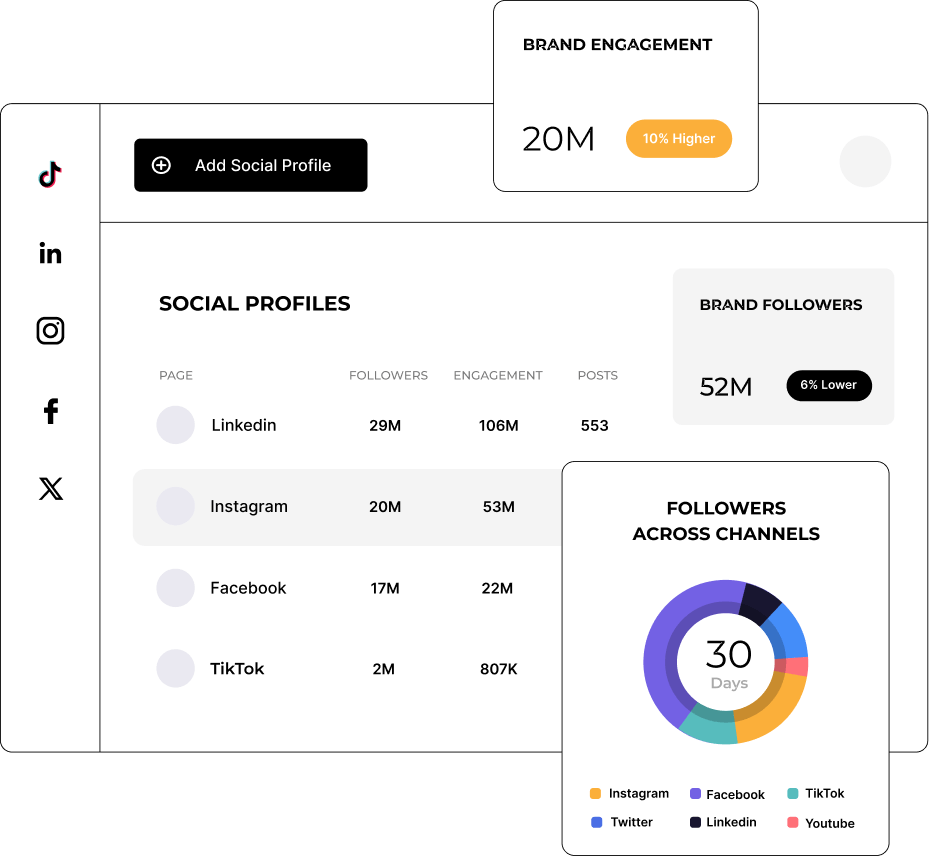
- How deep do your analytics need to go? Determine whether you require basic engagement summaries or advanced ROI tracking and competitor benchmarking.
- What collaboration controls are required? Multi-user teams and agencies need granular user permissions and client approval workflows to maintain brand safety.
- How does the pricing scale? Calculate projected costs 12 months out based on anticipated growth in team members and connected social profiles.
- What specialized features are non-negotiable? Identify specific workflows—such as link-in-bio builders, AI assistants, influencer databases, or CRM integrations.
Chronological Evolution and Industry Implications
The social media management software market has transitioned from basic web schedulers into sophisticated business intelligence ecosystems. Over the past decade, platforms have expanded horizontally into influencer marketing (evidenced by Sprout Social acquiring Tagger and Later’s brand repositioning) and vertically into conversational commerce through automated messaging tools like Manychat.
Implications for Stakeholders:
- For Small Businesses and Creators: The availability of affordable, per-channel pricing models (such as Buffer’s $6 tiers) democratizes enterprise-level publishing capabilities, lowering the barrier to entry for digital entrepreneurs.
- For Marketing Agencies: White-labeling and secure external approval workflows have become baseline expectations, shifting the competitive advantage toward tools that minimize administrative friction with clients.
- For Enterprise Organizations: The integration of AI-driven social listening and CRM data (via platforms like Hootsuite, Sprinklr, and Oktopost) elevates social media from a mere broadcasting channel into a quantifiable revenue driver and customer service touchpoint.
Ultimately, digital strategists should leverage free trials and freemium tiers to test shortlisted applications against their specific workflows. Choosing the right tool ensures that social media management remains a streamlined engine for audience growth rather than an operational burden.



