











As modern search engines, discovery platforms, and artificial intelligence systems increasingly rely on semantic web technologies to parse, understand, and serve web content, the technical implementation of structured data has transitioned from an optional optimization tactic into a critical web development standard. For developers engineering high-performance web applications using the Next.js App Router, integrating structured data requires precise handling of server-side rendering parameters, security considerations around HTML escaping, and continuous automated validation.
This comprehensive guide explores the structural mechanics of JSON-LD, its operational relationship with Schema.org vocabularies, and a bulletproof framework for implementing, securing, and automatically validating structured data inside a production-grade Next.js application.
Main Facts: The Core Mechanics of Structured Data and JSON-LD
Structured data provides a standardized, machine-readable format that explicitly tells search engines and algorithmic parsers what a web page represents. Instead of forcing web crawlers to heuristically deduce that a specific string represents an author’s name, a publication date, or a product’s price, structured data codifies these attributes using universally recognized vocabularies.
The Vocabulary Stack: Schema.org and JSON-LD
To understand structured data, developers must separate the underlying conceptual framework from its delivery format:
- Structured Data: The overarching concept of embedding machine-readable metadata into web documents.
- Schema.org: The shared vocabulary repository—founded by major tech enterprises including Google, Microsoft, Yahoo, and Yandex—that defines standardized types (e.g.,
Article,Person,Organization,Product) and properties (e.g.,headline,author,datePublished). - JSON-LD (JavaScript Object Notation for Linked Data): The W3C-recommended format for serializing this semantic data. In web pages, JSON-LD is housed within an independent script tag:
<script type="application/ld+json">

    "@context": "https://schema.org",
    "@type": "Article",
    "headline": "Engineering Next.js Applications"

</script>
Crucially, modern web browsers do not execute this script block. Because the tag utilizes a non-JavaScript MIME type, the HTML specification treats it as a dedicated "data block"—completely ignored by the user agent’s rendering engine, yet fully accessible to search engine indexers and web scrapers.
Chronology: The Evolution of Search Optimization and Developer Tooling
The integration of semantic data into web architectures has evolved significantly over the past decade, moving away from fragile HTML-embedded microdata toward centralized JSON payloads.

- Early Semantic Web Era (Pre-2015): Early optimization relied heavily on Microdata and RDFa. Developers were forced to inject complex attributes directly into existing HTML elements (e.g.,
itemprop="name"). This tightly coupled semantic metadata with visual presentation markup, making codebases difficult to maintain and prone to structural breakage during UI refactors. - The Rise of JSON-LD (2015–2020): Search engine providers increasingly favored JSON-LD due to its clean separation of concerns. Because it exists as a standalone JavaScript object independent of the DOM tree, developers could map data models directly from content management systems (CMS) straight into search-optimized payloads.
- Modern Framework Integration (2020–Present): With the widespread adoption of server-side rendering (SSR) frameworks like Next.js, developers faced new challenges regarding hydration, component architecture, and security vulnerabilities (specifically cross-site scripting via unescaped string serialization). Current industry standards, highlighted by continuous updates to the Next.js framework documentation in 2025, emphasize dedicated server-side components and rigorous build-time validation pipelines to catch semantic regressions early.
Supporting Data: Implementation Patterns in Next.js App Router
Implementing structured data within a Next.js App Router project requires a robust, reusable component that prevents common security pitfalls while ensuring strict adherence to TypeScript definitions.
Installing Prerequisites
To ensure strict type safety when crafting JSON-LD objects, developers should install schema-dts as a development dependency:
npm install -D schema-dtsBuilding a Secure JsonLd Component
A common vulnerability when serializing JSON-LD is the unescaped rendering of closing script tags (</script>) or HTML comment sequences (<!--) pulled from external CMS inputs. If left unmitigated, malicious content can break the HTML parser, resulting in cross-site scripting (XSS) vectors or broken markup.
Create a safe serialization utility and component at components/JsonLd.tsx:
import type  Graph, Thing, WithContext  from "schema-dts";

type JsonLdData = WithContext<Thing> | Graph;

export function serializeJsonLd(data: JsonLdData): string
  // Replace '<' characters with their unicode equivalents to prevent script injection breaks
  return JSON.stringify(data).replace(/</g, "\u003c");


export function JsonLd( data :  data: JsonLdData )
  return (
    <script
      type="application/ld+json"
      dangerouslySetInnerHTML= __html: serializeJsonLd(data)
    />
  );
Why Avoid next/script?
While Next.js provides a native Script component, it is expressly optimized for loading and executing asynchronous JavaScript. Utilizing strategies like afterInteractive injects scripts into the DOM via client-side execution. Consequently, static HTML crawlers examining the initial server response will fail to locate the structural metadata. A plain HTML <script> tag operating inside a Server Component guarantees that the JSON-LD payload is present in the initial server-rendered HTML document.
Official Responses & Industry Guidelines: What Search Engines Say
Platform maintainers provide clear guidelines regarding what structured data can—and cannot—achieve for digital platforms.
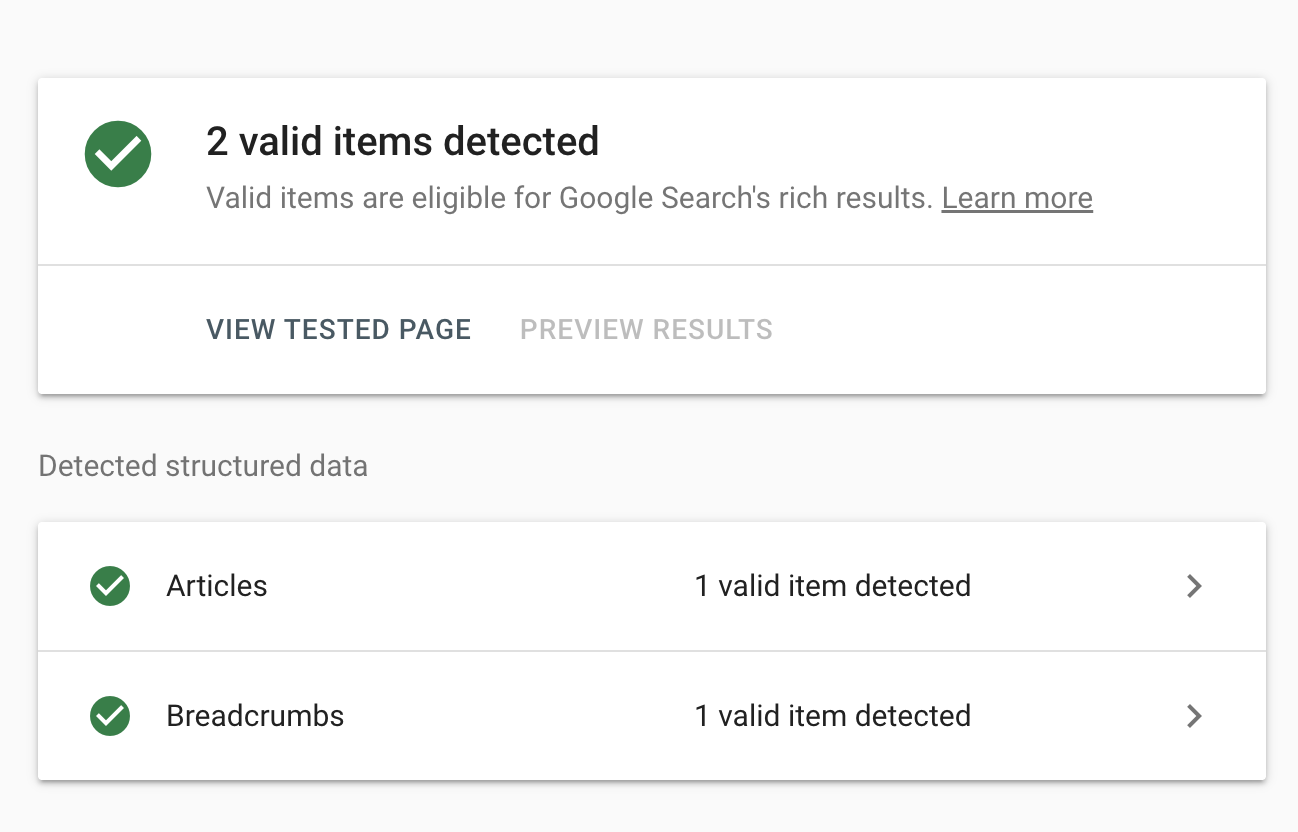
- Google Search Central: Google explicitly confirms that structured data helps systems comprehend page content and makes pages eligible for rich results (such as breadcrumb trails, product carousels, and review stars). However, valid JSON-LD does not guarantee rich result generation, nor does it function as a direct search ranking boost. Search engineers frequently emphasize that markup must accurately reflect visible on-page content.
- AI Search Engines and Large Language Models: Leading search and AI indexing guidelines state that standard Schema.org markup assists in grounding entity relationships, but specialized markup is not strictly required to achieve visibility within modern AI features or answer engines. Nevertheless, maintaining clean semantic documentation ensures maximum accessibility across all automated parsing agents.
- Empirical Industry Data: Auditing data from website analysis tools indicates that while a significant majority of established homepages implement structured data successfully, a notable percentage of deployments continue to utilize deprecated schema types (such as retired
FAQPageimplementations on non-eligible domains), underscoring the necessity of continuous semantic auditing.
Implications: Automated Validation and Continuous Integration
Deploying structured data without automated oversight invariably leads to silent regressions. CMS updates, refactored React components, and altered headline tags can quietly break schema integrity long after initial deployment.
To mitigate this risk, engineering teams should implement an automated validation script that executes immediately following production builds.
Automated Validation Script (scripts/check-jsonld.mjs)
The following script launches against a running local Next.js instance, fetching designated pages, parsing their JSON-LD payloads, and cross-referencing them against required properties and on-page DOM elements:
// Executes post-build verification of JSON-LD blocks against running Next.js instance
const BASE_URL = process.env.BASE_URL ?? "http://localhost:3000";
const PAGES = ["/", "/blog/nextjs-caching"];

const REQUIRED =
  Organization: ["name", "url", "logo"],
  WebSite: ["name", "url"],
  BlogPosting: ["headline", "datePublished", "author", "image"],
  BreadcrumbList: ["itemListElement"],
;

const errors = [];

function fail(page, message)
  errors.push(`$page: $message`);


for (const page of PAGES)
  const response = await fetch(BASE_URL + page);
  const html = await response.text();

  const blocks = [
    ...html.matchAll(/<script type="application/ld+json">(.*?)</script>/gs),
  ].map((match) => match[1]);

  if (blocks.length === 0)
    fail(page, "No JSON-LD metadata blocks detected.");
    continue;


  const h1Match = html.match(/<h1[^>]*>(.*?)</h1>/s)?.[1]?.replace(/<[^>]+>/g, "");

  for (const block of blocks)
    let data;
    try
      data = JSON.parse(block);
     catch (error)
      if (error instanceof Error)
        fail(page, `Invalid JSON structure: $error.message`);
       else
        fail(page, "Invalid JSON structure due to unknown error.");

      continue;


    if (data["@context"] !== "https://schema.org")
      fail(page, 'Schema context must explicitly point to "https://schema.org".');


    for (const node of data["@graph"] ?? [data])
      const type = node["@type"];
      for (const property of REQUIRED[type] ?? [])
        if (node[property] === undefined)
          fail(page, `Schema type "$type" is missing required property: "$property".`);


if (errors.length > 0)
  console.error("Structured Data Validation Failed:n" + errors.join("n"));
  process.exit(1);


console.log(`Success: JSON-LD validated cleanly across $PAGES.length routes.`);
By integrating this validation script into continuous integration (CI/CD) pipelines—running immediately after npm run build—engineering teams ensure that invalid markup, broken references, or missing attributes are intercepted before reaching production environments.
Conclusion
Structured data is an indispensable pillar of modern web architecture. By combining type-safe schema generation, rigorous HTML string escaping, and automated build-time validation within Next.js applications, developers can future-proof their digital properties for search engines, crawlers, and AI-driven discovery platforms alike.



