







SAN FRANCISCO, CA — Apple has officially opened the floodgates for developers to prepare their ecosystems for its next-generation hardware lineup. With the highly anticipated iPhone Duo slated to land in customer hands on October 23, 2026, the technology giant has issued comprehensive guidelines, updated developer tools, and strict timeline milestones to ensure that the App Store is fully optimized for the new form factor from day one.
Developers can now build, test, and submit applications optimized for the iPhone Duo using newly released enterprise-grade software development kits and integrated design environments. As the mobile industry shifts its focus toward advanced multi-pose hardware and dynamic dual-screen capabilities, Apple’s latest announcements signal a pivotal evolution in smartphone design and user experience architecture.
Main Facts
The core of Apple’s October 5, 2026 announcement centers on readiness, tooling, and compliance mandates for the upcoming device. Key highlights include:
- Official Launch Date: The iPhone Duo will officially be available to consumers worldwide starting October 23, 2026.
- Development Environment: Apple has released Xcode 27.1, introducing robust native development support tailored explicitly for the iPhone Duo’s unique architecture, diverse poses, and variable orientations.
- Prototyping and Testing: A newly enhanced Device Hub feature within the development suite allows engineers to simulate, visualize, and debug how existing and novel apps behave across all possible physical configurations of the iPhone Duo.
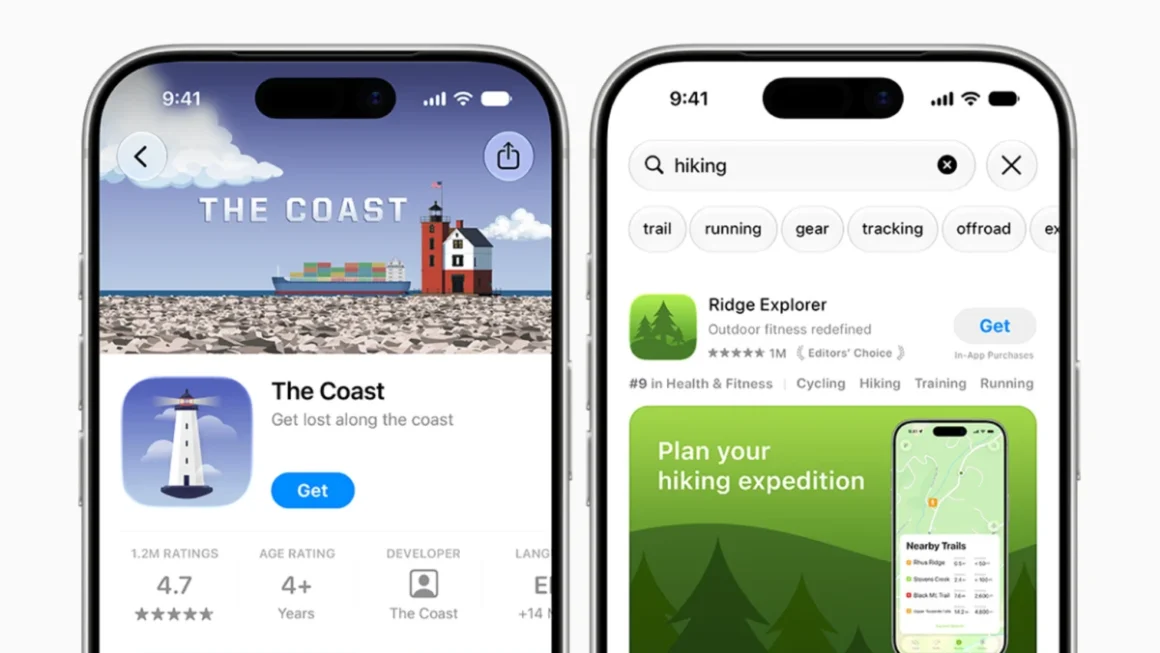
- App Store Presentation & Badging: Developers who submit updated screenshots and metadata optimized for the iPhone Duo will receive a special promotional App Store badge on their product pages, signaling to consumers that the application is fully optimized for the new hardware.
- Mandatory Deadlines: While submissions open immediately, Apple has instituted a hard compliance deadline of April 2027, after which all new apps and app updates submitted to the App Store must include dedicated iPhone Duo screenshot assets.
Chronology of the iPhone Duo Developer Rollout
The path toward the October 2026 launch of the iPhone Duo has been characterized by meticulous planning, iterative hardware prototyping, and staggered software deployments. Below is the operational timeline tracing Apple’s developer ecosystem preparation:
Early 2026: Internal Prototyping and Framework Design
Following months of rumors regarding Apple’s exploration into foldable or dual-screen form factors, internal software frameworks began circulating among select engineering teams. These early builds focused on abstracting screen real estate, managing dynamic layout transitions, and establishing fluid state preservation when applications shift between single-screen and extended-display postures.
Mid-2026: Worldwide Developers Conference (WWDC) Previews
During WWDC earlier this year, Apple quietly seeded preliminary documentation regarding "multi-pose devices" to registered developers. While direct references to the "iPhone Duo" moniker were withheld to preserve hardware launch secrecy, the foundational APIs—such as adaptive size classes and enhanced continuity layout triggers—were introduced to the developer community, giving early adopters a head start on architectural refactoring.
October 5, 2026: Official Developer Tooling Release
Apple formally unveiled the iPhone Duo release schedule and dropped Xcode 27.1. Simultaneously, App Store Connect was updated with new preview tools, layout validators, and asset template packages. This milestone kicked off the active optimization window, giving developers precisely eighteen days before the device hits retail shelves to test and submit their optimized titles.
October 23, 2026: Commercial Launch Day
The iPhone Duo officially reaches consumers and enterprise clients globally. On this day, initial app reviews will populate the store, and users will begin interacting with the first wave of software featuring the exclusive "Optimized for iPhone Duo" App Store badge.
April 2027: Mandatory Compliance Deadline
Marking the final phase of the initial rollout, Apple’s April 2027 mandate takes effect. From this date forward, any application or game submission—whether a brand-new release or a minor maintenance update—will be automatically rejected by the App Store review pipeline if it lacks dedicated iPhone Duo screenshot assets and layout verifications.
Supporting Data & Technical Requirements
Transitioning an application to support a radically new hardware architecture requires rigorous attention to technical specifications. Apple’s documentation outlines three fundamental pillars for developers aiming to achieve full compliance and optimal performance on the iPhone Duo: Xcode integration, visual asset preparation, and metadata configuration.
1. Building and Recompiling with Xcode 27.1
The release of Xcode 27.1 is the cornerstone of the iPhone Duo developer ecosystem. Existing applications written in Swift and Objective-C must be recompiled under the new SDK to properly handle the hardware’s dynamic display topologies.
- The Device Hub: Developers no longer need physical hardware units immediately to test spatial behavior. The updated Device Hub in Xcode 27.1 features high-fidelity simulation models of the iPhone Duo. It allows engineers to dynamically alter the device’s physical poses—ranging from fully folded, tent-mode, laptop-style orientation, to fully expanded flat tablet views—while monitoring memory allocation, UI responsiveness, and lifecycle events in real time.
- Adaptive Layouts: Because the iPhone Duo can radically change its aspect ratio mid-session, Apple strongly encourages developers to rely on SwiftUI and Auto Layout constraints rather than hardcoded coordinate frames. Xcode 27.1 introduces automated linting rules that flag legacy fixed-frame declarations, helping teams eradicate UI clipping and whitespace anomalies before deployment.
2. App Store Product Page Assets and Media Specifications
First impressions matter, and the App Store product page is the primary conversion engine for software downloads. Apple has completely overhauled its design guidelines to help developers showcase their products across the iPhone Duo’s expanded screen layouts.
- Downloadable Templates: Apple has provided a comprehensive suite of downloadable templates covering every required marketing asset. This includes new product page headers, search result banners, and promotional artwork specifically proportioned for the iPhone Duo’s dual-screen canvas.
- App Previews and Screenshots: Capturing video previews that demonstrate how an app utilizes the dual-screen capabilities of the iPhone Duo is expected to be a major conversion driver. Developers must produce high-resolution screenshots highlighting multi-tasking workflows, split-screen data sharing, and expanded viewing modes.
- App Store Connect Preview Tool: To eliminate guesswork, Apple integrated a brand-new preview tool directly into App Store Connect. Developers can upload their metadata, header graphics, and localized screenshots to instantly preview how their entire product page renders on an iPhone Duo in both portrait and landscape poses.
3. Submission Workflow and the Optimization Badge
Submitting an iPhone Duo-ready application follows the standard App Store Connect pipeline, with a few crucial additions:
[Developer Code]
       │
       ▼
[Xcode 27.1 Recompilation]
       │
       ▼
[Device Hub Multi-Pose Testing]
       │
       ▼
[App Store Connect Asset Upload]
       │
       ▼
[Verification & Automated Badging]
       │
       ▼
[Public Release / April 2027 Mandate]
When developers upload their newly compiled binaries alongside the required iPhone Duo visual assets, Apple’s automated ingestion system verifies the layout constraints. Upon successful review, a distinct "Optimized for iPhone Duo" badge is automatically appended to the app’s public product page. This visual marker serves as an immediate indicator to consumers that the application has been engineered to take full advantage of the device’s cutting-edge hardware features.
Official Responses and Developer Community Reactions
The response from the global developer community has been a mixture of immense excitement and pragmatic urgency. Major software houses and independent developers alike are racing to adapt their product roadmaps to meet Apple’s aggressive timelines.
Speaking on condition of anonymity, the lead mobile architect for a prominent productivity software suite remarked:
"The iPhone Duo represents the most significant paradigm shift in iOS development since the introduction of the iPad. While recompiling our codebase for Xcode 27.1 was relatively straightforward, rethinking our user interface to take advantage of dual-pose interaction models required a complete redesign of our core workspace. The Device Hub has been a lifesaver for our remote engineering teams, allowing us to simulate edge-case layout shifts without having physical dev kits on every desk."
Meanwhile, independent game developers have focused heavily on the immersive potential of the hardware. Several indie studios noted that the ability to split gameplay controls across one surface while rendering high-framerate action on another opens up novel design spaces reminiscent of classic dual-screen handhelds, albeit executed with modern OLED fidelity and high-performance processing chips.
Apple’s Developer Relations division emphasized that the strict April 2027 deadline is designed to protect overall consumer experience quality. In an official briefing statement, Apple noted:
"Our goal has always been to provide a cohesive, premium ecosystem where hardware and software exist in perfect harmony. By establishing clear design guidelines, robust simulation tools in Xcode 27.1, and progressive submission milestones, we are empowering developers to build magical experiences on the iPhone Duo. The April 2027 compliance window ensures that users browsing the App Store can trust that every title they download will look and perform impeccably, regardless of how they choose to hold their device."
Strategic Implications for the Mobile Industry
The launch of the iPhone Duo and its accompanying developer ecosystem rollout carry profound implications for the broader technology landscape.
First, it signals Apple’s formal entry into the flexible and multi-form-factor hardware market. For years, Android manufacturers have experimented with foldables and dual-screen devices, often struggling with fragmented software support and inconsistent third-party app optimization. By mandating strict asset requirements, providing world-class emulation tools via Xcode, and leveraging the immense pull of the App Store economy, Apple is attempting to solve the fragmentation problem from day one. Developers are economically incentivized—through prominent badging and potential editorial feature placement—to treat the iPhone Duo as a first-class citizen rather than an afterthought.
Second, UI/UX design paradigms are bound to evolve rapidly over the coming months. Software design over the past decade has been heavily anchored around the single, flat, rigid rectangle. The iPhone Duo invites designers to think in terms of continuity, physical folding angles, and dynamic screen real estate. Apps that can seamlessly transition from a compact pocketable layout to an expansive dual-screen workstation will likely dominate productivity and creative categories.
Finally, the October 23 launch date establishes a high-stakes timeline for enterprise software developers. Financial institutions, healthcare providers, and enterprise logistics platforms that rely heavily on internal iOS deployments must audit their enterprise applications to ensure compatibility. A failure to update applications could result in layout breakages for corporate clients upgrading to the new hardware, making Xcode 27.1 adoption an immediate boardroom priority.
As countdown clocks tick toward October 23, 2026, the global mobile development community finds itself at the precipice of a new era. With tools in hand, assets prepared, and submission pipelines open, developers have until April 2027 to ensure their portfolios are fully transformed—cementing a future where hardware and software bend, adapt, and evolve together.