










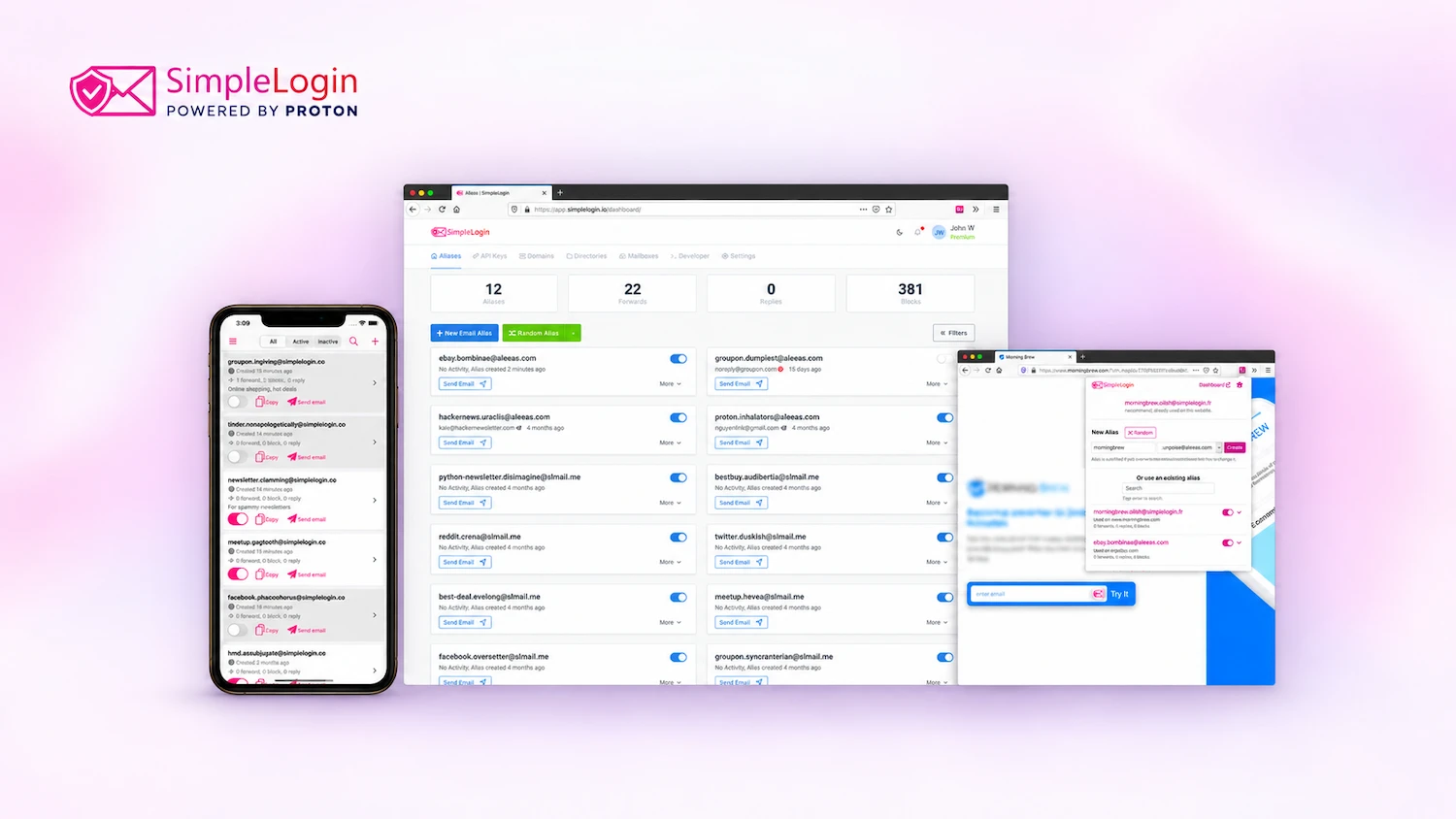
In an era defined by ubiquitous data harvesting and an endless barrage of unwanted solicitations, the sanctity of one’s primary email address has become a rare commodity. As users navigate an increasingly complex web of online services, subscriptions, and retail platforms, the exposure of a personal email address often serves as the "master key" for data brokers and malicious actors to link disparate profiles. Enter SimpleLogin, an open-source email alias service acquired by the privacy-focused giant Proton. By acting as a sophisticated, privacy-preserving intermediary between a user’s inbox and the outside world, SimpleLogin offers a robust mechanism for digital self-defense.
The Core Concept: Redefining Email Architecture
At its heart, SimpleLogin functions as an advanced email forwarding proxy. Rather than providing a full-fledged email hosting service, it creates unique, randomized, or custom aliases that route traffic to a user’s existing mailbox—be it Gmail, Outlook, or Proton Mail.
The philosophy behind the service is one of compartmentalization. By assigning a distinct alias to every service, website, or contact, users can effectively trace the source of data leaks or spam. If a specific alias begins receiving unsolicited promotional material or phishing attempts, the user can instantly deactivate that specific address, severing the connection without ever compromising the integrity of their primary, "real" inbox. Because the service is open-source and supports self-hosting, it appeals not only to privacy-conscious general users but also to technical power users who demand transparency and control over their digital infrastructure.
Chronology: From Independent Utility to Proton Ecosystem
SimpleLogin’s journey mirrors the broader movement toward decentralized and user-controlled digital tools. Founded on the principle that email shouldn’t be a vector for surveillance, the project gained rapid traction among the cybersecurity community for its ease of use and adherence to privacy-by-design principles.
In early 2022, Proton, the Switzerland-based company famous for its end-to-end encrypted email service, announced the acquisition of SimpleLogin. This move was widely interpreted as a strategic effort by Proton to consolidate privacy tools into a unified ecosystem. Since the acquisition, SimpleLogin has benefited from Proton’s infrastructure and security expertise while maintaining its commitment to the open-source community. The integration has allowed for seamless interoperability with Proton Mail, although the service remains functionally agnostic and continues to support virtually any email provider.
Hands-On Experience: Initial Setup and Functionality
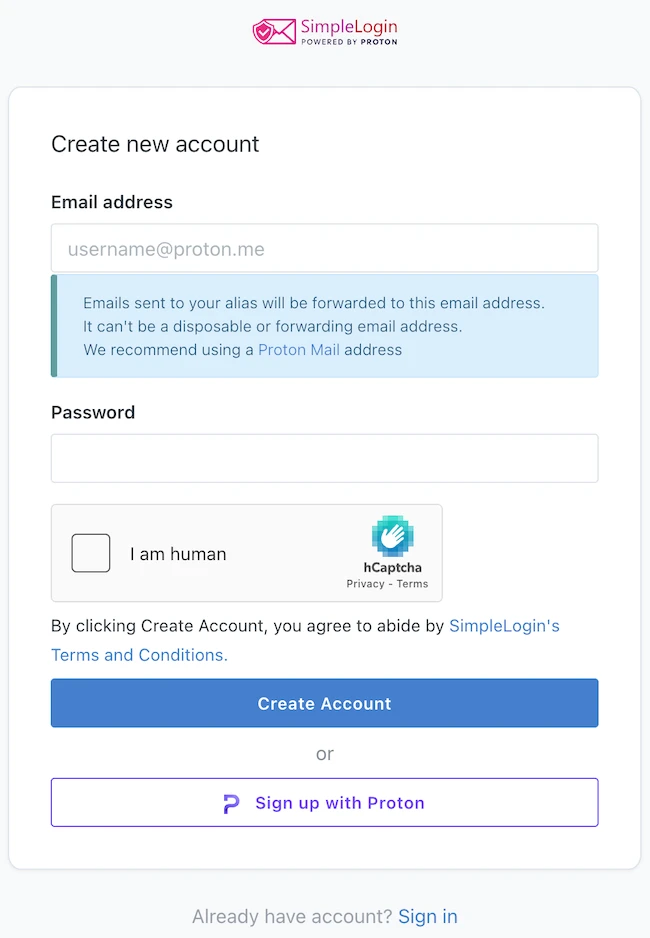
To understand the practical implications of the service, one must look at the onboarding process. Upon connecting a standard Gmail account to the SimpleLogin dashboard, the user is greeted with an intuitive, minimalist interface. Verification is instantaneous, and the dashboard immediately provides a "starter alias" for internal communications.
Managing the Digital Footprint
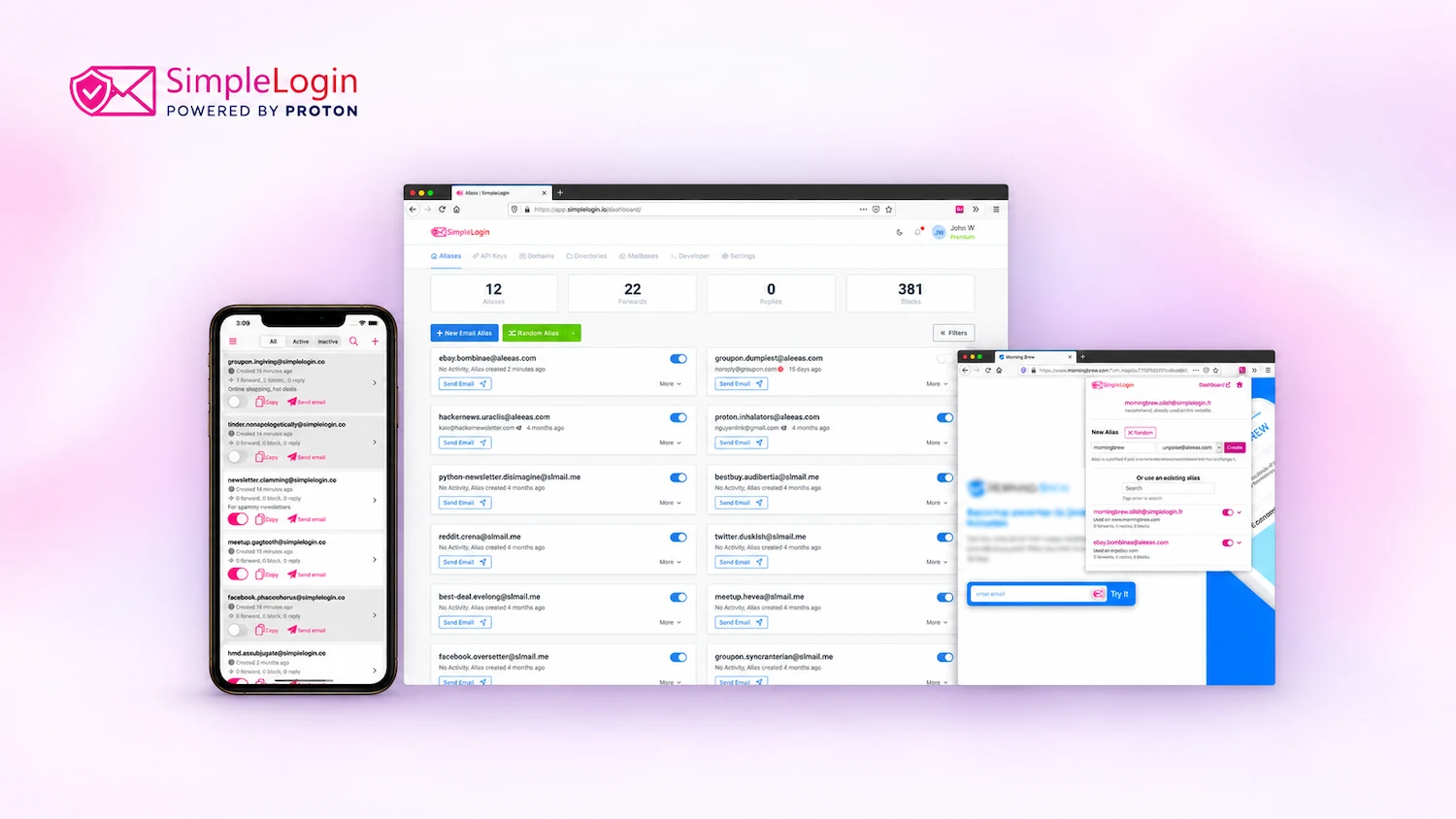
The dashboard is meticulously organized. Each alias is represented as a "card" containing an enable/disable toggle, a custom description field, and a detailed contact list. The UI provides granular control, allowing users to toggle statistics and apply filters to manage high-volume aliases.
When expanding a card, the depth of information available is impressive. Users can view forwarding activity logs, update display names, or initiate administrative actions like pinning, transferring, or deleting an alias. During testing, the activity counter proved to be a vital diagnostic tool, accurately reflecting forwarded messages while tracking blocked attempts—a crucial metric for users looking to audit the security of their accounts.
Bidirectional Communication Testing
A common concern with forwarding services is the reliability of bidirectional communication. If a user receives an email via an alias, they must be able to reply without revealing their true email address.
In controlled tests, sending an email from an alias to an external, third-party address was seamless. The recipient perceived the sender as the alias itself, and subsequent replies were routed through SimpleLogin’s servers before reaching the original Gmail inbox. This "masking" process preserves the user’s anonymity throughout the entire conversation thread, ensuring that the primary email remains shielded from the recipient.
Supporting Data: Security and Accessibility
Security in the context of email forwarding involves more than just masking addresses; it necessitates a hardened infrastructure. SimpleLogin enforces this through multiple layers of protection:
- Multi-Factor Authentication (MFA): The service supports both time-based one-time password (TOTP) authenticator apps and FIDO2/WebAuthn hardware security keys, ensuring that even if a password is compromised, the alias management console remains inaccessible to unauthorized parties.
- Cross-Platform Integration: Recognizing that security must be convenient to be effective, SimpleLogin offers robust browser extensions for Chrome, Firefox, and Safari. These extensions allow users to generate new aliases on the fly during the registration process on any website, removing the friction associated with manually logging into the dashboard.
- Mobile Accessibility: Dedicated iOS and Android applications ensure that users can manage their aliases on the go, providing push notifications for new, suspicious activity or enabling quick toggles for alias management.
Privacy Implications: Transparency and Data Handling
While SimpleLogin offers significant privacy benefits, users should remain informed about the metadata involved in the forwarding process. According to the service’s privacy policy, SimpleLogin must process certain metadata to facilitate delivery, including sender and recipient addresses, message subjects, and timestamps.
However, this is a calculated trade-off. Incoming messages that are not end-to-end encrypted are automatically scanned for spam and malicious content, such as phishing links or malware, before they are forwarded to the user’s primary inbox. This creates a "security buffer" that prevents malicious payloads from ever reaching the user’s main mailbox, effectively outsourcing the risk to a dedicated, hardened infrastructure.
Financial Model: Accessibility vs. Premium Features
SimpleLogin maintains a bifurcated pricing structure that ensures privacy is accessible to everyone while providing power-user features for those willing to pay.
- The Free Tier: This plan is generous, offering up to 10 aliases and one destination mailbox. It includes full support for replies, making it ideal for users who want to protect their email from low-risk, one-off registrations.
- The Premium Plan: Priced at $4/month (or $36/year), this tier removes the limitations on aliases and destination mailboxes. It introduces support for custom domains—allowing users to create aliases like
[email protected]—and adds PGP encryption for forwarded messages, ensuring that even the intermediary cannot read the contents of the emails being forwarded.
Implications for the Modern Internet User
The broader implications of using a service like SimpleLogin extend far beyond simple spam reduction. In the context of the 2026 Verizon Data Breach Investigations Report (DBIR) and other major security studies, it is clear that email addresses are the primary vector for credential stuffing and targeted social engineering attacks.
By adopting an alias-based strategy, users fundamentally change their threat profile. When a company experiences a data breach, the leaked email address is not the user’s primary one; it is a unique, service-specific identifier. This prevents "credential cross-contamination," where a breach on one site can be used to compromise accounts on others.
Furthermore, the ability to identify the origin of unwanted correspondence—by seeing which alias received the mail—is a powerful tool for holding companies accountable. If an alias created solely for "Site A" starts receiving spam from "Company B," the user knows precisely that their data was sold or leaked by the first entity.
Conclusion: A Practical Necessity
SimpleLogin has transitioned from a niche developer tool to a practical necessity for the modern, security-conscious individual. By abstracting the email address, it provides a layer of insulation that is increasingly vital in a digital landscape rife with tracking and exploitation. While it requires a modest shift in habit—remembering to generate an alias rather than copy-pasting a primary address—the payoff in terms of security, privacy, and inbox hygiene is immense. Whether through the free plan for casual users or the premium suite for professionals, SimpleLogin offers a straightforward, elegant solution to one of the internet’s most persistent and annoying problems.



