LONDON — In a major development for technical search engine optimization professionals, Screaming Frog has officially released version 24.0 of its industry-standard SEO Spider tool, internally codenamed "bolus." Known universally for its robust website auditing capabilities, this latest flagship update introduces groundbreaking features designed to bridge the gap between desktop data extraction and modern artificial intelligence assistants.
Alongside the integration of the Model Context Protocol (MCP) for conversational AI control, version 24.0 delivers automated crawl comparisons, enhanced email notification telemetry with zipped export attachments, precise identification of non-standard internal links, and a personal analytics dashboard to track crawl utilization.
Following the initial major rollout in May 2026, the company has maintained an aggressive deployment cadence, pushing out subsequent iterative maintenance patches—versions 24.1, 24.2, and 24.3 throughout June 2026—to fine-tune performance and eradicate software bugs.
1. Main Facts: What is New in Screaming Frog SEO Spider v24.0?
The release of version 24.0 marks a evolutionary step forward for the SEO Spider ecosystem. Rather than offering routine bug fixes, this update directly addresses the shifting paradigms of workflow automation, cross-team reporting, and compliance with search engine crawling architectures.
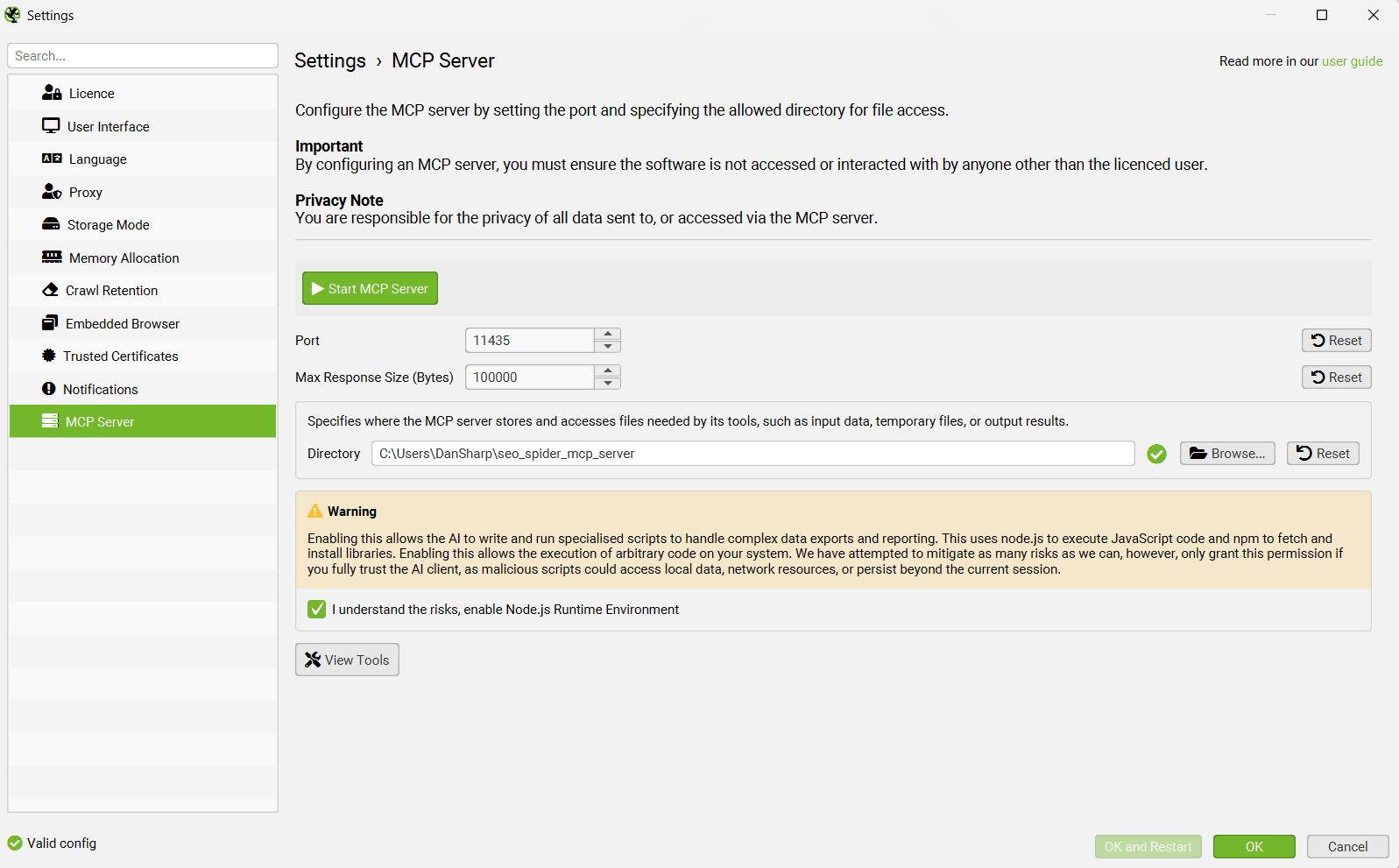
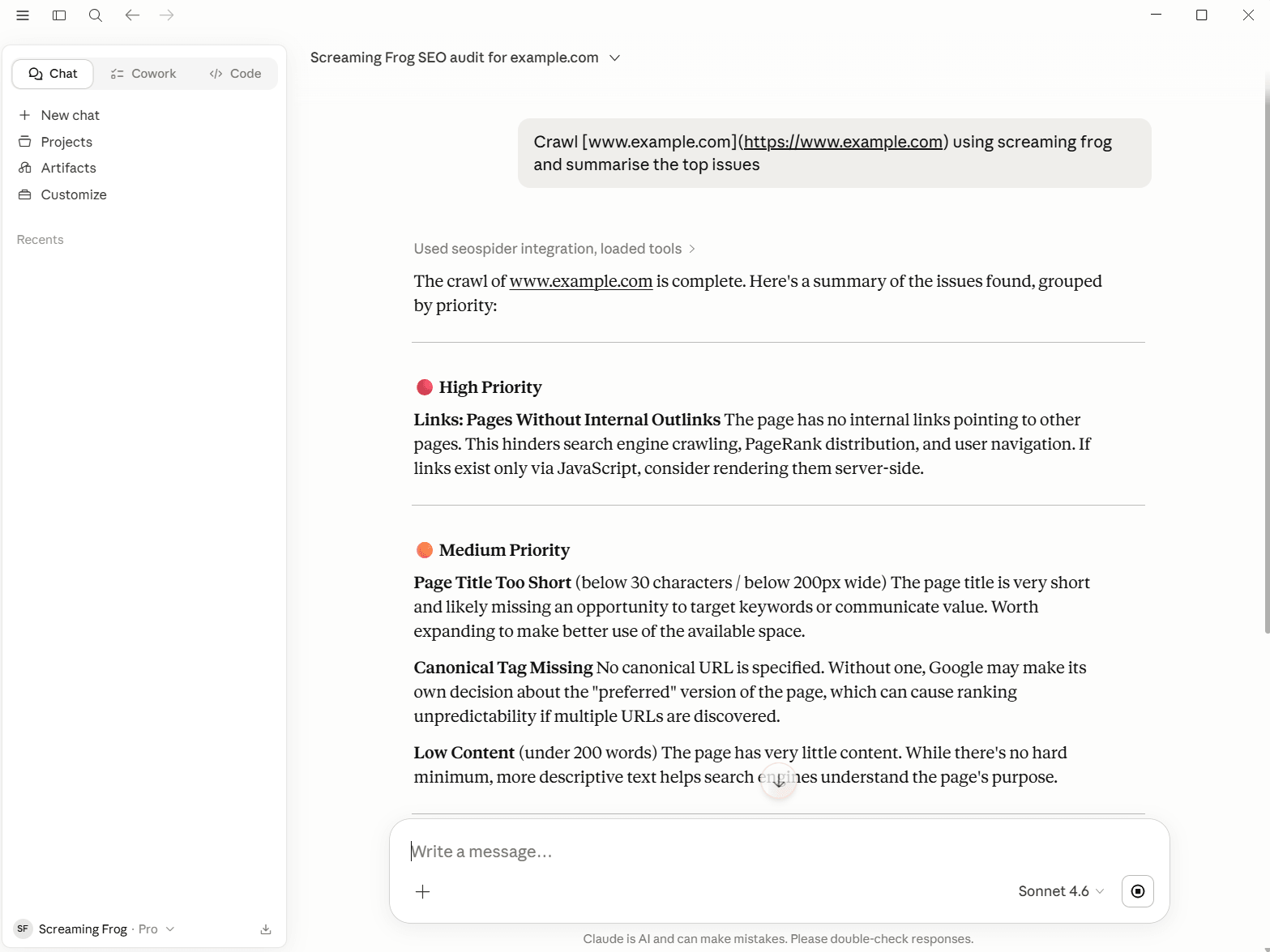
Screaming Frog SEO Spider MCP: By implementing the Model Context Protocol alongside Node.js, users can now connect the desktop application directly to generative AI chat assistants—such as Anthropic’s Claude and local implementations via LM Studio. This enables natural language commands for managing crawls, analyzing datasets, and orchestrating complex visualization pipelines.
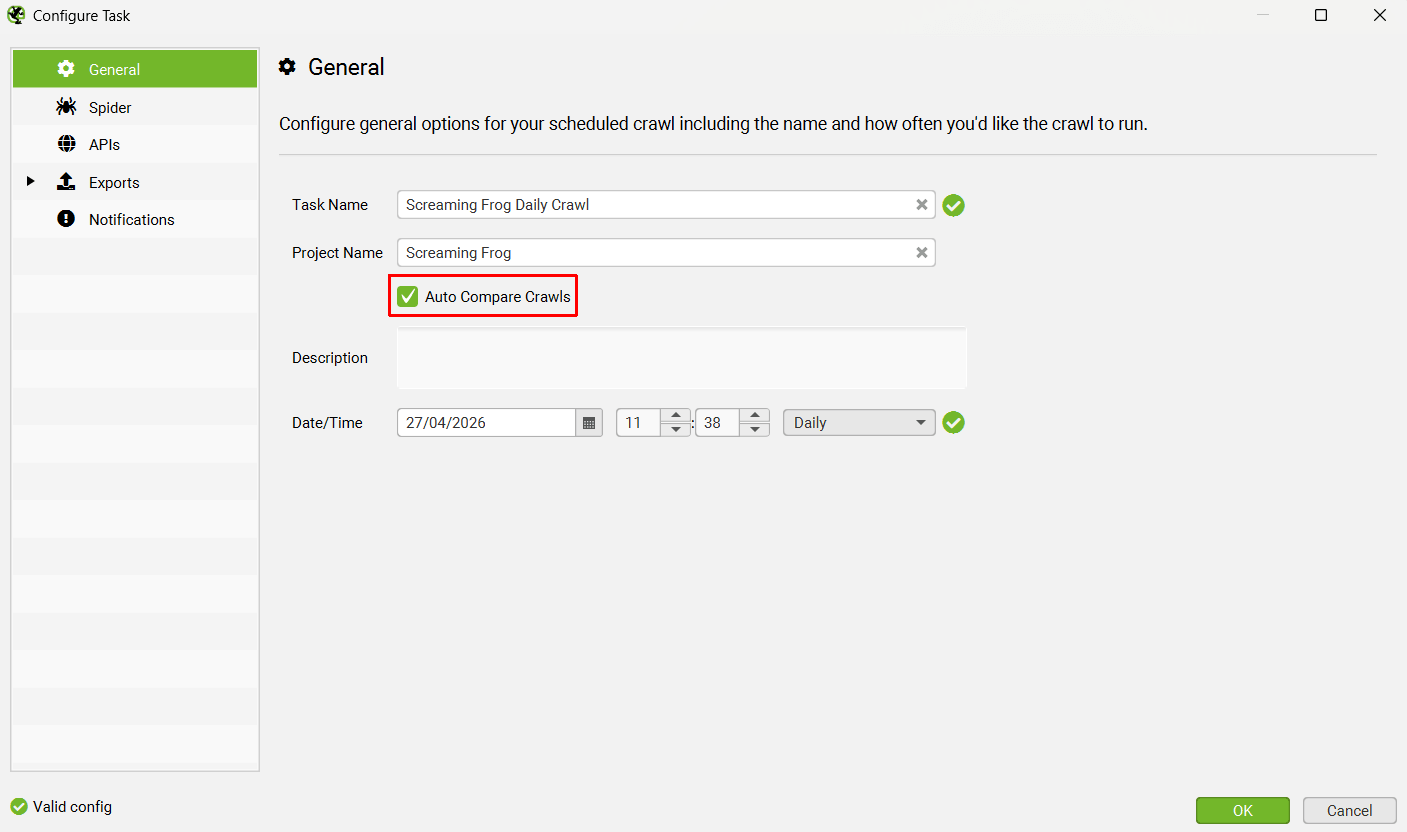
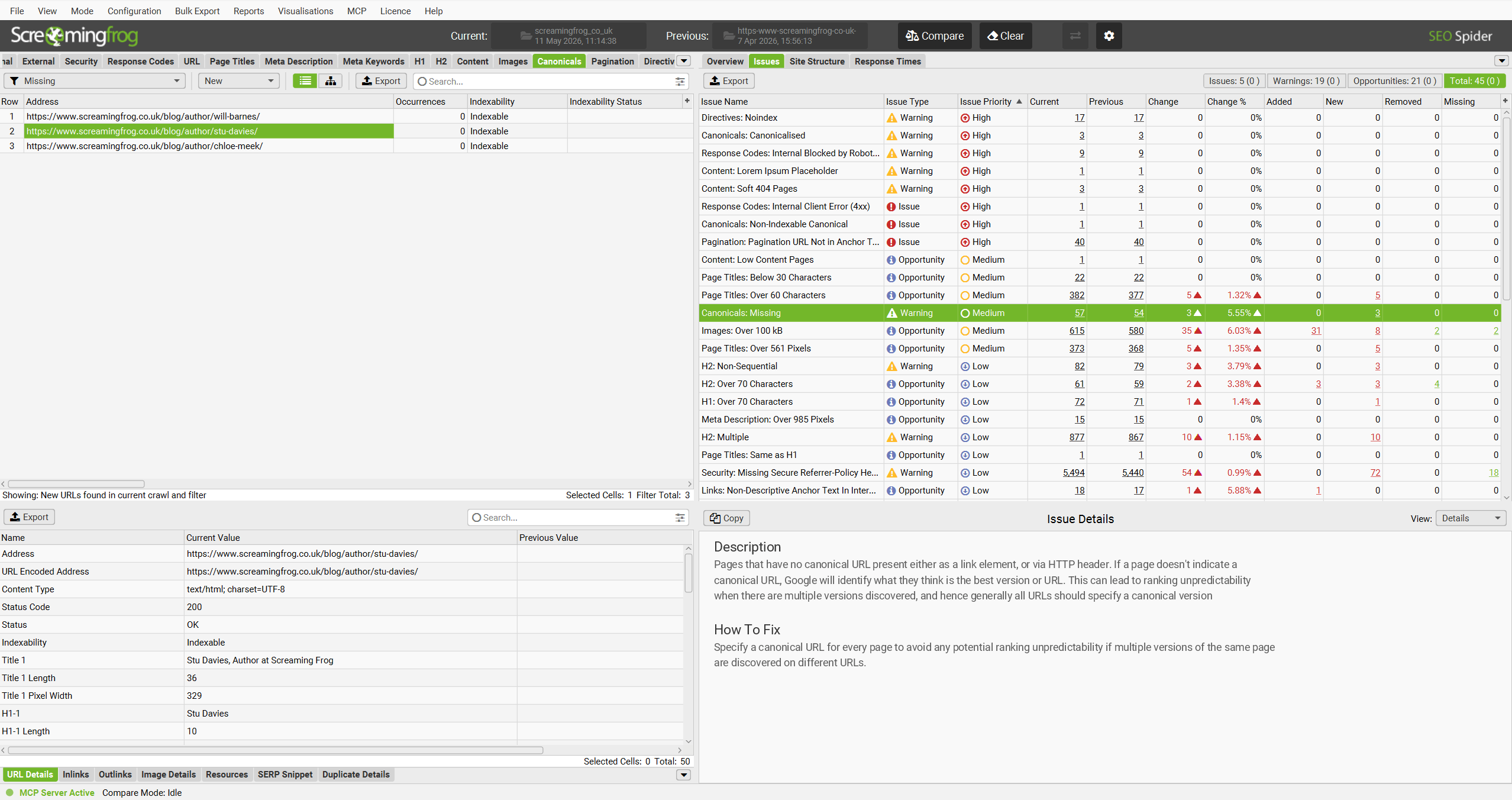
Auto Compare Crawls for Scheduled Tasks: Enterprise teams relying on automated workflows can now programmatically contrast the two most recent iterations of a project directly within scheduled or Command Line Interface (CLI) crawls.
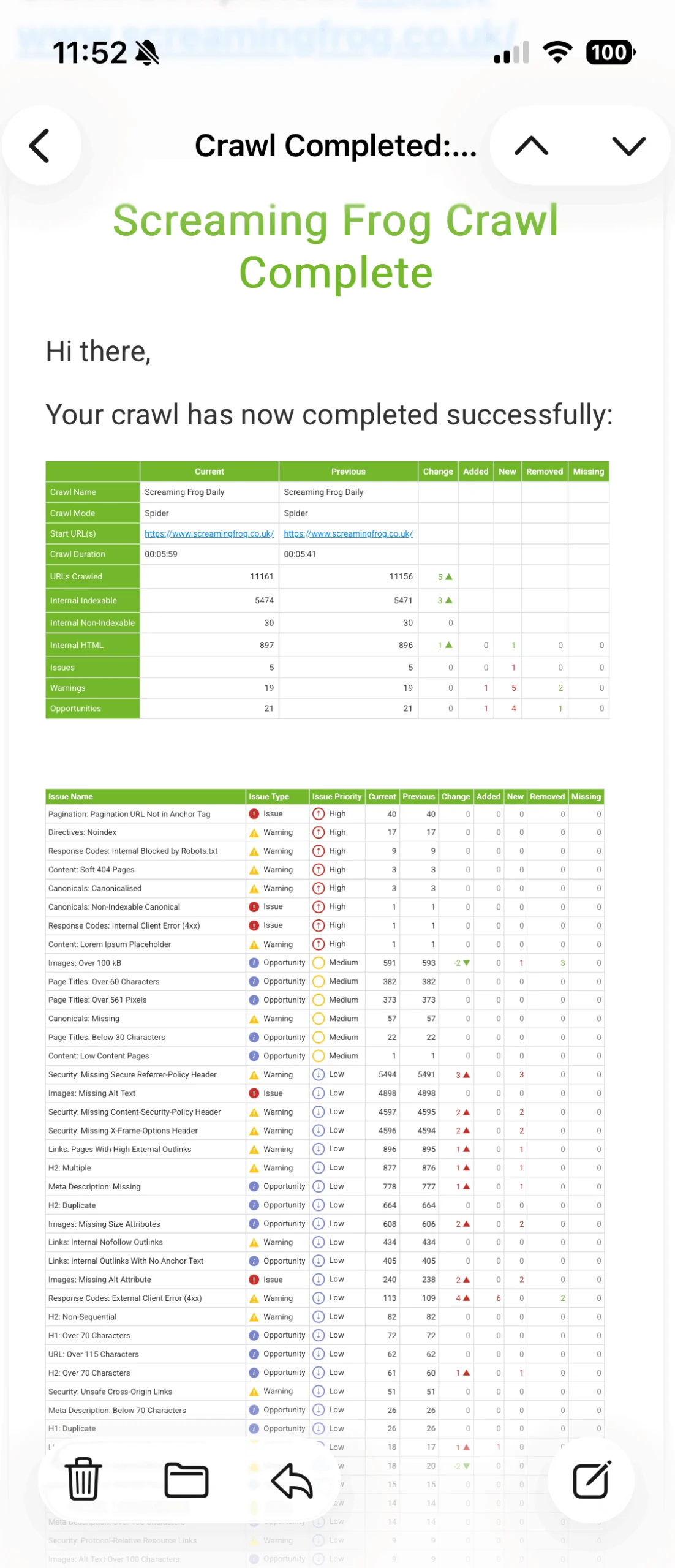
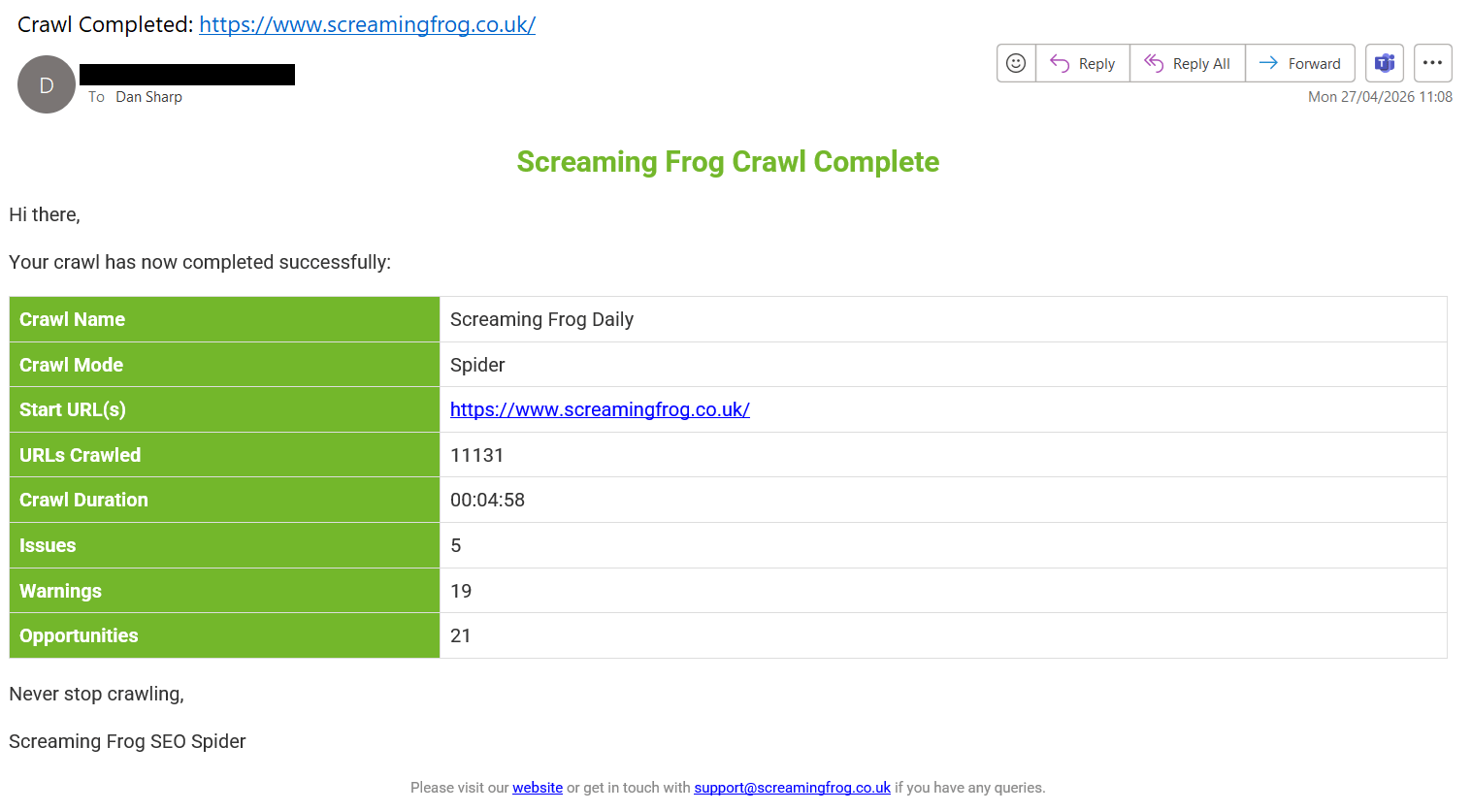
Actionable Email Notifications: Crawl completion summaries have been elevated from basic status alerts to comprehensive data-at-a-glance reports, complete with issue tables and historical diff metrics highlighting changes between runs.
Automated Export Attachments: Stakeholders and development teams can now receive tailored, zipped data exports (such as broken link reports or crawl issue breakdowns) automatically delivered to their inboxes upon crawl completion.
Uncrawlable Link Detection: A dedicated "Pages With Uncrawlable Internal Outlinks" filter tracks non-standard internal hyperlinks—such as improperly coded <span> or <div> elements masquerading as navigational pathways.
Usage Statistics Dashboard: A new localized telemetry tool allows individual practitioners to audit their software utilization, measuring cumulative hours spent executing site crawls.
2. Chronology: From AI Integration to June Patch Cycles
The journey toward version 24.0 represents months of backend engineering focused on integrating modern LLM architectures into a legacy desktop application framework.
May 2026 — The "bolus" Launch: Screaming Frog officially rolled out version 24.0 to the global SEO community, highlighting the revolutionary MCP integration and the newly automated notification pipeline.
June 8, 2026 — Version 24.1 Deployed: Addressing early adopter feedback, the development team published version 24.1, focusing on minor bug fixes and stabilizing internal parsing routines following the massive architectural shifts introduced in "bolus."
June 22, 2026 — Version 24.2 Deployed: A secondary patch was rushed to production to resolve minor interface edge cases and improve command-line execution stability for enterprise-level automated workflows.
June 29, 2026 — Version 24.3 Deployed: Rounding out the month, version 24.3 delivered final polish, resolving peripheral UI bottlenecks and optimizing memory management during heavy, multi-threaded site crawls.
3. Supporting Data and Deep Dive Into Key Features
To fully appreciate the scope of version 24.0, technical SEOs must examine how these individual components fundamentally alter daily workflows.
The MCP Server and AI-Driven Data Analysis
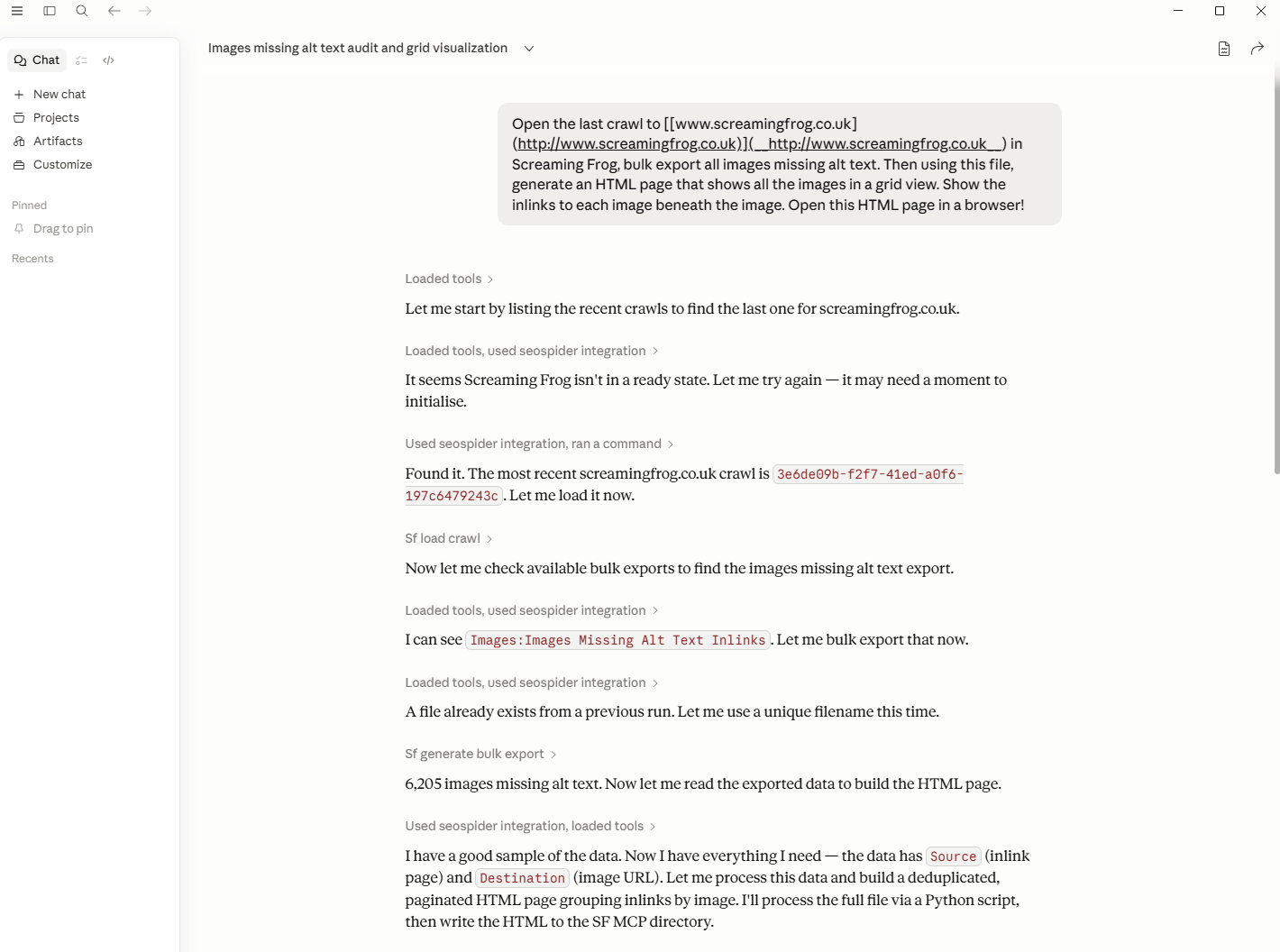
The marquee feature of "bolus" is undoubtedly the SEO Spider MCP. By bridging Node.js capabilities with chat-based AI agents, practitioners are no longer restricted to manual spreadsheet filtering or native UI dashboards. Through natural language prompting, users can instruct Claude or LM Studio to execute a crawl, isolate specific anomalies, and write custom data visualization scripts.
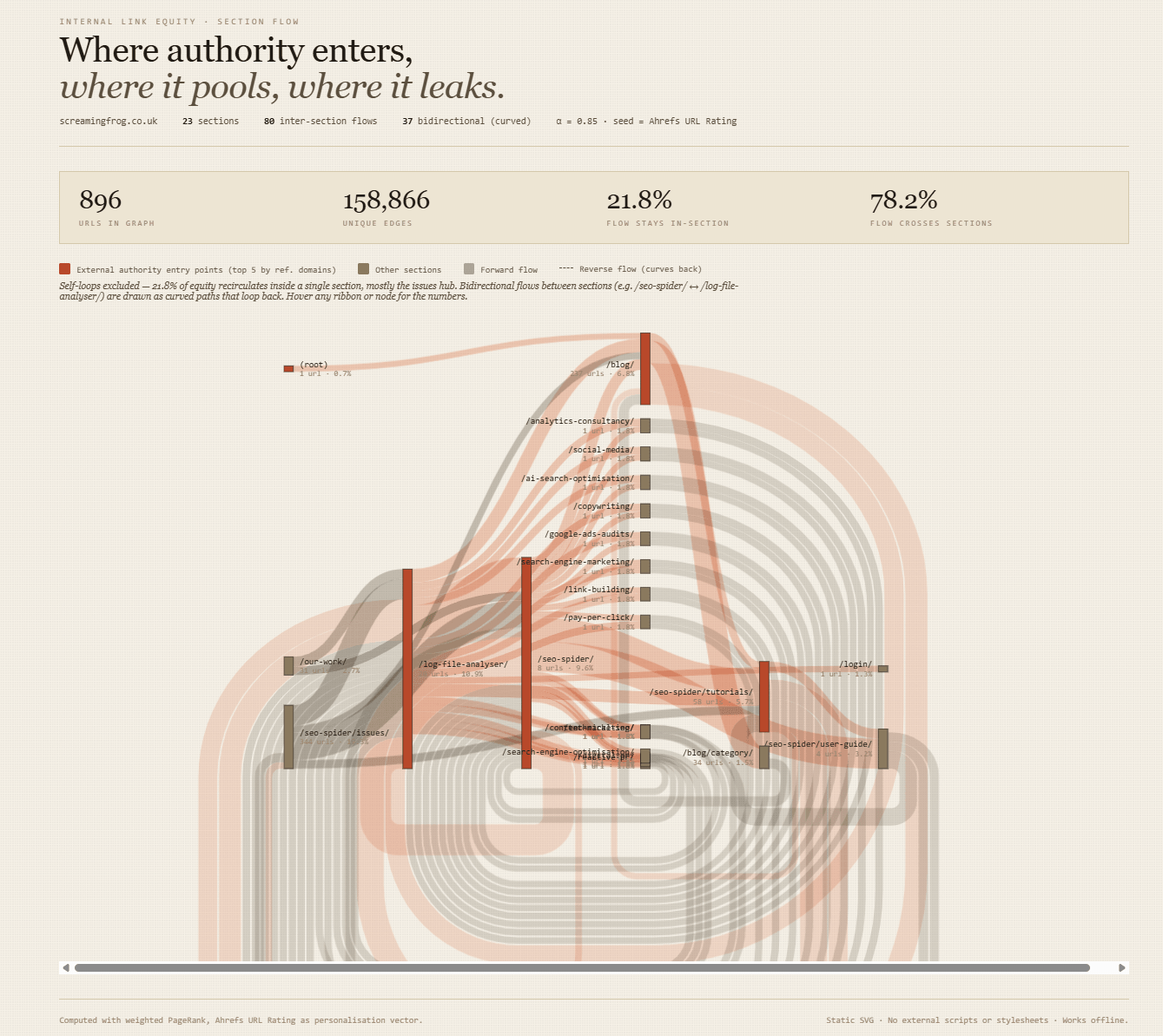
For instance, SEOs can command an AI assistant to combine raw crawl data with third-party metrics—such as Ahrefs internal link equity flows—and automatically render interactive dependency graphs. While Screaming Frog emphasizes that the MCP is intended to augment, rather than replace, human strategic analysis, it dramatically reduces the "legwork" phase of technical audits.
[SEO Spider Core Engine] <---> [Node.js / MCP Server] <---> [Claude / LM Studio / AI Assistants]
Automated Crawl Comparisons and Email Telemetry
For agencies and large in-house teams managing massive web properties, monitoring regressions has historically required manual comparisons between saved crawl files. Version 24.0 automates this friction point. When configured within a scheduled task, the software performs differential analyses autonomously.
The resulting email notifications now feature exhaustive change logs. If an enterprise site suddenly drops indexable pages or experiences widespread title tag eradication, system administrators and client stakeholders are instantly notified via zipped, attachment-ready reports containing precisely filtered inventories of the anomalies.
Deconstructing "Uncrawlable" Link Detection
Search engine algorithms have grown increasingly sophisticated at parsing non-standard web architectures. However, link equity transmission best practices dictate that hyperlinks should rely on standard semantic HTML anchor tags (<a href="...">).
Version 24.0 introduces the Pages With Uncrawlable Internal Outlinks filter, allowing auditors to isolate markup anomalies such as:
<span href="https://example.com">
<div href="https://example.com">
<a onclick="goto('https://example.com')">
<a href="javascript:goTo('products')">
While Screaming Frog’s research indicates that modern search engines like Google will attempt to parse virtually any HTML string resembling a destination URL for discovery purposes, these non-standard implementations remain risky. They cannot be relied upon consistently to pass link signals (PageRank) with the same fidelity as recommended semantic hyperlinks.
4. Official Responses and Industry Reception
The response from the digital marketing community has been overwhelmingly positive, particularly regarding the inclusion of the MCP server framework. Industry veterans have praised Screaming Frog for acknowledging the rapid pivot toward AI-assisted workflows without locking users into a proprietary, cloud-only infrastructure.
In their official release documentation, the Screaming Frog product team struck a collaborative tone, emphasizing that user-driven telemetry and feature requests continue to dictate the software’s roadmap:
"We’re delighted to announce Screaming Frog SEO Spider version 24.0… The idea of the integration is to make daily tasks and workflows that much more efficient. This is not a replacement for an experienced SEO professional, obviously. Not every feature and function is currently supported in the SEO Spider MCP, but we plan to extend functionality based upon user feedback. So let us know what else you’d like to see!"
Furthermore, the engineering team addressed the nuances surrounding link crawlability, noting that while search engines are increasingly fault-tolerant, adhering strictly to standards remains the gold standard for site architecture:
"Our research indicates Google will crawl anything in the HTML that looks like a link. They will attempt to parse it and use it for discovery. So strictly speaking, many of these link types will likely be ‘crawlable.’ However, they are not recommended, and should not be relied upon. They might not be treated in the same way as a recommended hyperlink for passing link signals."
5. Strategic Implications for SEO Professionals
The deployment of version 24.0 carries profound implications for how technical audits are conducted, reported, and operationalized across modern marketing organizations.
Democratization of Complex Data Manipulation: By pairing the SEO Spider with natural language models via the MCP server, junior team members can perform advanced data slicing, regex generation, and Python-based visualization tasks that previously required dedicated data science or advanced scripting capabilities.
Accelerated Client and Stakeholder Communication: The ability to auto-generate zipped, customized export reports—such as weekly broken link matrices or immediate issue differential summaries—directly upon crawl completion minimizes administrative overhead. Agencies can now push transparent, timely data streams straight to client inboxes or developer Slack channels with zero manual intervention.
Proactive Technical Debt Management: The focus on automated crawl comparisons, email notification diffs, and uncrawlable link auditing shifts technical SEO from a reactive posture to a proactive monitoring framework. Catching the silent disappearance of meta tags or the widespread introduction of JavaScript-dependent navigation elements before they manifest as organic traffic declines gives site owners a distinct competitive advantage.
Summary and Next Steps
Screaming Frog SEO Spider version 24.0 ("bolus"), supported by the subsequent June stability patches (v24.1, v24.2, and v24.3), cements the tool’s status as an indispensable asset in the modern SEO stack. Existing license holders can download the update directly through the application interface or via the official Screaming Frog website. Practitioners looking to leverage the new AI capabilities are encouraged to review the comprehensive documentation covering the MCP Server configuration and automated export protocols.