










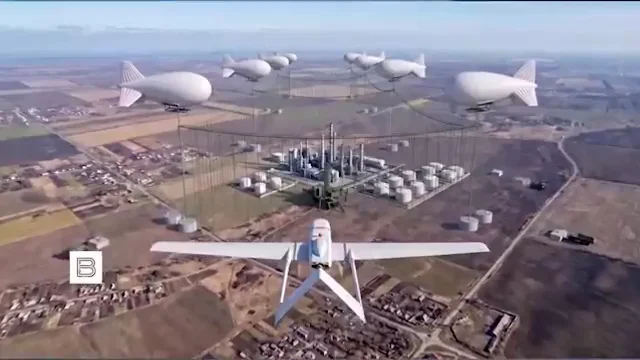
In a desperate bid to shield its critical energy infrastructure from persistent Ukrainian long-range drone strikes, Russia has turned to a defense technology that seemingly belongs to the annals of the early 20th century: the barrage balloon. Across several key oil refineries, observers have noted the deployment of tethered balloons, connected by complex cable networks and purportedly managed by radar-linked, altitude-adjusting motor systems. While the Russian state media frames this as a high-tech innovation, military analysts and defense experts are raising significant questions about the efficacy of these measures, suggesting that the strategy may be more indicative of a "propaganda theater" than a viable deterrent against modern autonomous warfare.
The Strategic Importance of Russian Oil Refineries
Russia’s oil refining capacity is the lifeblood of its economy and, by extension, its ongoing invasion of Ukraine. By processing crude oil into gasoline, diesel, and aviation fuel, these refineries ensure the mobility of Russian armored columns and provide the necessary revenue to sustain the war effort.
Over the past year, Ukrainian forces have systematically targeted these facilities using long-range, one-way attack (OWA) unmanned aerial vehicles (UAVs). These strikes have been remarkably successful, forcing the temporary suspension of operations at several major facilities and putting significant strain on Russia’s domestic fuel supply. As traditional air defense systems—such as the S-400 or Pantsir-S1—are prioritized for the frontlines or the protection of high-value political assets in Moscow, regional refinery operators have been left to improvise their own perimeter defenses.

A Blast from the Past: The Chronology of Barrage Balloons
To understand the current deployment, one must look at the historical precedent of "aerial minefields."
- World War I (1914–1918): As early as 1917, the British Royal Naval Air Service began experimenting with tethered balloons to force enemy aircraft to fly at higher altitudes, where they were more vulnerable to ground fire and less accurate in their bombing runs.
- World War II (1939–1945): The technique reached its zenith during the Blitz. The British government deployed thousands of barrage balloons over London and other industrial centers. The primary goal was to create a physical obstacle that forced Luftwaffe bombers to ascend, thereby limiting their ability to hit targets with precision.
- The V1 "Buzz Bomb" Era: By 1944, the British found that these balloons were moderately successful against the Nazi V1 flying bombs. The cables could physically snag the pulsejet-powered missiles, causing them to crash before reaching their targets. Records indicate that over 200 V1s were downed by balloon cables during the war.
- Modern Resurgence (2024): In a stark return to these mid-century tactics, Russian operators are now utilizing balloons equipped with radar-informed automated winch systems, designed to raise or lower cables in real-time based on the flight path of incoming drones.
The Technical Reality vs. Theoretical Efficacy
The Russian defense model currently being socialized via Telegram and state-aligned media outlets involves a series of cables suspended by balloons. The innovation, according to proponents, lies in the integration of radar sensors that track the altitude of incoming drones, allowing the winch motors to adjust the cable height to intercept the flight path.
However, the laws of physics and the evolution of drone technology suggest major flaws:

- The "Blade" Countermeasure: Modern Ukrainian drones are often built with modularity in mind. It is a trivial engineering task to install hardened wire cutters or simple blades on the leading edges of a drone’s wings. Should these drones strike a thin steel cable, the momentum and the cutting edge could easily shear the wire, allowing the drone to continue its flight toward the target.
- Detection and Evasion: Unlike the V1 rockets of the 1940s, which flew on relatively predictable, straight-line trajectories, modern UAVs are capable of autonomous flight path adjustment. If a drone’s optical or GPS sensors detect a cable network, the craft can potentially reroute or ascend above the balloon ceiling, which is inherently limited by the weight of the cables and the power of the winches.
- Environmental Vulnerability: Barrage balloons are susceptible to high winds, lightning, and simple wear and tear. Maintaining a "wall" of balloons over a sprawling oil refinery—often kilometers in diameter—requires immense logistical overhead.
Propaganda or Practicality?
The presentation of this technology through Telegram channels has been criticized for its "cinematic" quality. The videos often feature small, slow-moving hobbyist drones being "captured" or deflected by the cables. Military analysts point out that these demonstrations do not replicate the speed, maneuverability, or explosive payload of the purpose-built military drones currently being utilized by the Ukrainian Armed Forces.
There is a growing consensus among international defense observers that the deployment serves a domestic function: to reassure the Russian public that the state is "doing something" to protect critical infrastructure. By invoking the imagery of a time when barrage balloons successfully defended London from Nazi bombers, the Russian defense apparatus is attempting to tap into a collective memory of successful resistance. Whether it actually stops a strike or simply provides a photo opportunity for state media remains the subject of intense debate.
Official Responses and Strategic Implications
Neither the Russian Ministry of Defense nor the operators of the refineries have issued formal technical specifications regarding the success rates of these balloon systems. In the absence of data, the silence speaks volumes.
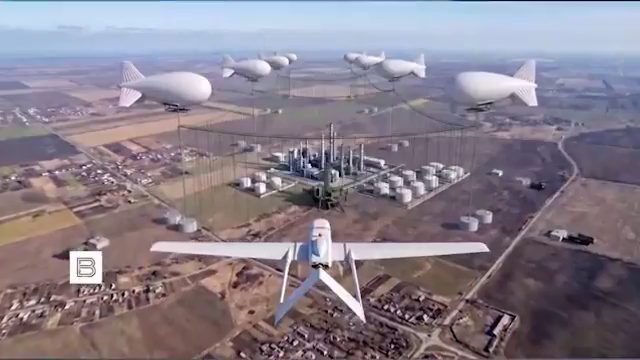
From the perspective of Ukrainian military planners, the presence of barrage balloons is unlikely to alter their targeting strategy. If anything, the balloons provide high-visibility markers for the locations of refineries, potentially making it easier for drones to navigate toward the facility’s perimeter. If a drone is equipped with advanced anti-cable measures, the balloons become little more than expensive, high-altitude obstacles that offer no real resistance to the kinetic energy of a modern strike.
Conclusion: The Limits of Yesterday’s Tech
The use of barrage balloons in the 21st century is a testament to the asymmetrical nature of the war in Ukraine. As Russia struggles to defend its vast energy infrastructure against a swarm of cost-effective drones, the reliance on such antiquated methods highlights a lack of sophisticated, area-denial electronic warfare capabilities in the deep rear of their territory.
While the balloons may offer a marginal increase in defense against very low-flying, unsophisticated threats, they are fundamentally ill-equipped to counter the evolving threat of modern aerial warfare. As the conflict continues to drive innovation in drone technology—from AI-guided navigation to hardened airframes—the "sky-high" defenses of Russia’s oil refineries appear increasingly like a relic of the past, serving better as a tool for public morale than as a genuine shield against the reality of 21st-century combat.



