










Introduction: A New Player Enters the Arena
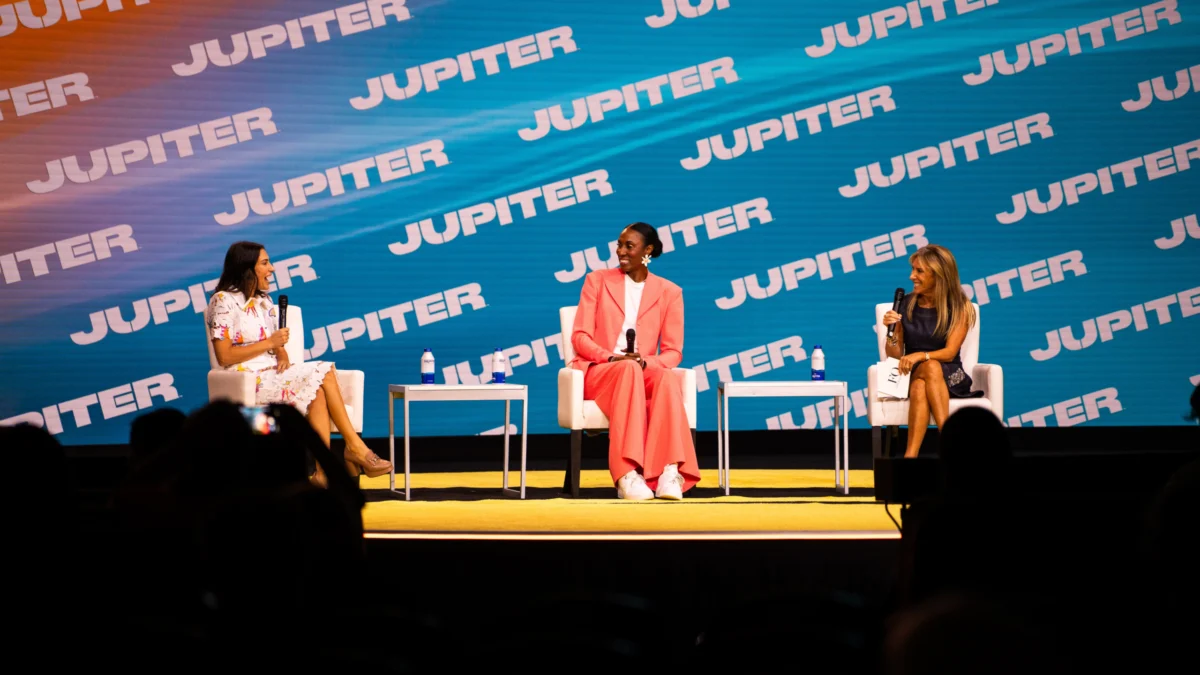
In the competitive ecosystem of global professional conferences, the arrival of a new entity is often met with skepticism. However, when the Jupiter Festival touched down in Miami Beach this week, it did so with a level of institutional gravity rarely seen in a debut event. Founded by Cannes Lions veteran William Mellis and former Fox Sports Media Group CMO Eric Markgraf, the festival seeks to carve out a permanent home at the intersection of media, technology, and sports.
Over the course of four days and across three distinct stages, Jupiter has positioned itself not merely as another industry mixer, but as a critical laboratory for the "attention economy." As the traditional advertising model faces existential pressure from AI, fragmentation, and shifting consumer behaviors, Jupiter aims to provide the blueprint for the next generation of creative commerce.
Main Facts: The Anatomy of the Event
The Jupiter Festival is a multi-disciplinary summit designed to bridge the gap between legacy media conglomerates and the burgeoning creator economy. Its central premise is that the traditional silos of sports broadcasting, entertainment production, and digital advertising are no longer viable.
- Founding Visionaries: William Mellis, known for his work with Cannes Lions, and Eric Markgraf, a veteran CMO from the Fox Sports Media Group.
- Duration and Scope: A four-day event spanning three stages, focusing on high-level discourse rather than mere networking.
- Strategic Focus: The festival’s programming centers on three core pillars:
- The Attention Economy: How creators are reclaiming power from traditional gatekeepers.
- Fandom and Sports Rights: The evolution of live sports as the final frontier for linear viewership.
- AI Integration: The transformative impact of artificial intelligence on creative workflows and content discovery.
The event’s prestige is bolstered by its heavy-hitting backing. With MCH Group—the parent company of the global powerhouse Art Basel—holding a 20% stake, Jupiter enters the market with a sophisticated operational infrastructure. Additional partnerships with YouTube, Boston Consulting Group (BCG), and the Interactive Advertising Bureau (IAB) underscore a clear mandate: to capture the attention of high-level executives and marketing spenders.
Chronology: A Four-Day Deep Dive
The festival was structured to create a narrative arc, moving from foundational macro-trends to granular technical applications.
Day 1: The Macro-Landscape
The opening day focused on the "State of the Attention Economy." Keynote speakers from major streaming platforms and advertising agencies debated the efficacy of the "attention capture" model. Discussions focused on the diminishing returns of traditional display advertising and the necessity of "earned" attention through long-form creator partnerships.
Day 2: The Future of Sports Fandom
Day two shifted focus to the sports-media complex. With sports rights currently seeing valuations that defy traditional market logic, panels explored how the fan experience is being gamified. Representatives from top-tier media groups discussed the shift from passive viewing to active participation, including the integration of betting data and real-time social interaction into the broadcast stream.
Day 3: The AI Revolution
Perhaps the most high-traffic day of the festival, day three focused on the ethical and practical applications of AI. From generative video tools to predictive analytics for content discovery, the discourse centered on how AI will either displace or augment the human creative process. A recurring theme was the "democratization of production," where high-end content creation becomes accessible to the individual creator, challenging the dominance of traditional studios.
Day 4: Synthesizing the Future
The final day was dedicated to synthesis and roadmap building. Industry leaders collaborated on a series of roundtable discussions aimed at establishing "best practices" for brand safety in an AI-driven landscape. The festival concluded with a vision for the 2025 cycle, framing Jupiter not as a one-off, but as an annual benchmark for the industry.
Supporting Data: The Economic Context
The launch of Jupiter occurs within a volatile economic landscape. According to recent reports from the Interactive Advertising Bureau (IAB), digital advertising spending continues to grow, but the nature of that spending is shifting rapidly.
- The Creator Economy Surge: The market for creator-led media is estimated to be worth over $250 billion, with projections suggesting it could double by 2027. Jupiter is banking on the fact that this sector is currently underserved by traditional, legacy-focused conferences.
- AI Investment: A recent study by Boston Consulting Group (BCG) indicated that nearly 70% of C-suite executives in media and advertising plan to increase their AI infrastructure spending by at least 20% over the next fiscal year.
- The "Cannes" Factor: By leveraging the operational DNA of Cannes Lions—the gold standard for creative excellence—MCH Group is betting that a more focused, "high-signal" event can justify the premium ticket prices required for sustainability.
Official Responses and Industry Sentiment
The reception to Jupiter has been largely positive, though seasoned observers have noted the saturation of the conference circuit.
William Mellis, Co-Founder: "We didn’t want to create another event where people just exchange business cards. The industry is facing a fundamental pivot. Our goal was to create a venue where the hardest questions regarding AI and the future of fandom aren’t just asked, but interrogated with the leaders who have the power to change them."
Eric Markgraf, Co-Founder: "The partnership with MCH Group allowed us to approach this with the rigor of an art fair but the agility of a tech summit. We saw a gap in the market for a high-level, concentrated event that deals with the realities of sports media and the shifting power dynamics of the attention economy."
Industry Analysts: While some analysts have questioned whether the market has room for another high-priced summit, the consensus is that the strategic partnerships with YouTube and the IAB give Jupiter a "moat." One marketing consultant noted, "If you aren’t at Jupiter, you’re missing the conversation about how the ad-tech landscape is being rewired for the AI era."
Implications: The Long-Term Impact
The Jupiter Festival represents a significant experiment in the future of industry discourse. Its success or failure will have several implications for the broader media landscape.
1. The Consolidation of Thought Leadership
If Jupiter succeeds, it will likely accelerate the consolidation of industry conferences. We are already seeing a trend where smaller, niche events are being swallowed by larger organizations. Jupiter’s model—high-level, cross-industry, and backed by global infrastructure—may become the template for the future.
2. The Professionalization of Creator Relations
By hosting panels that treat "creators" with the same gravity as "network executives," the festival is signaling a shift in the hierarchy of the media world. We are moving toward a reality where the lines between a major network and a solo creator are increasingly blurred, and Jupiter is providing the professional framework for that integration.
3. AI as the New Baseline
The festival has solidified the notion that AI is no longer a "topic of discussion"—it is now the infrastructure upon which the entire industry rests. Moving forward, any conference that does not center its programming on the technical and ethical implications of AI will likely be viewed as antiquated.
4. Miami as a Tech-Media Hub
Finally, the choice of Miami Beach is not incidental. By moving away from the traditional hubs of New York and Los Angeles, Jupiter is capitalizing on the "Sun Belt" migration of media and tech talent. If the festival establishes itself as a permanent fixture in the city, it could signal a long-term shift in where the industry chooses to congregate and network.
Conclusion
The Jupiter Festival has set a high bar for its inaugural year. By successfully aggregating the top minds in sports, media, and technology, it has managed to bypass the "new kid on the block" phase and immediately demand a seat at the head of the table. Whether it can maintain this momentum in an increasingly crowded and cost-conscious market remains to be seen. However, as the attention economy continues to fracture and re-form, the conversations initiated in Miami this week will likely be the ones that define the business models of tomorrow. The industry is watching, and for now, the signal from Jupiter is loud and clear.



