










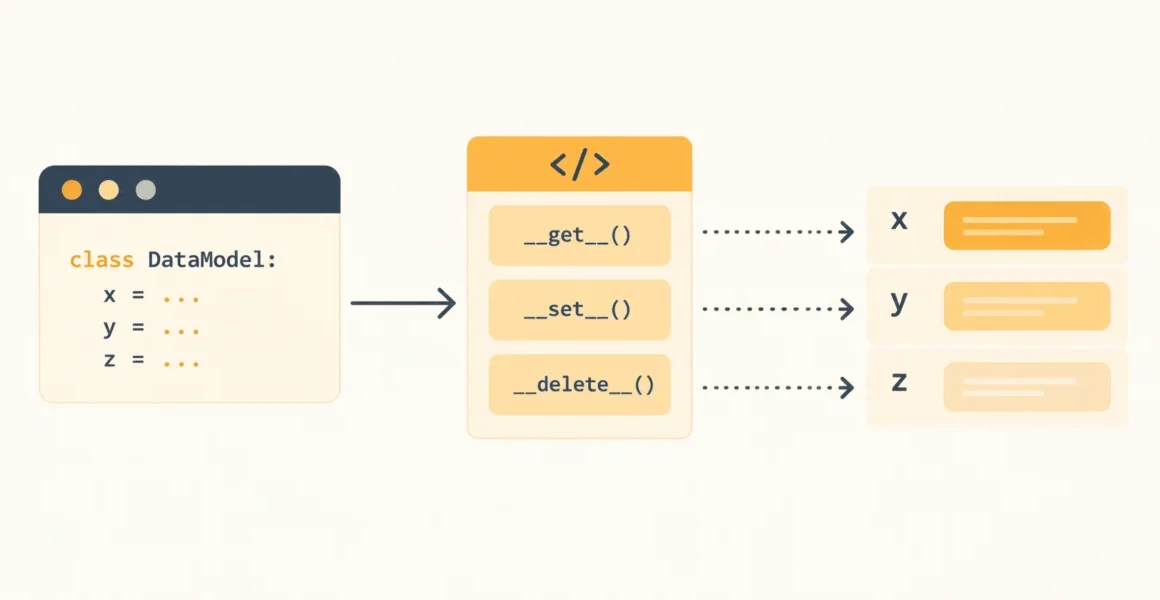
In the sophisticated landscape of Python development, the ability to manage how object attributes are accessed, modified, and computed is a hallmark of senior-level engineering. While many developers rely on @property decorators to encapsulate logic, there exists a more powerful, reusable, and elegant mechanism under the hood: Python Descriptors. Descriptors represent the structural "glue" that […]

Embracing the Controlled Chaos: The Rise, Reality, and Polyfill of Native CSS random()
Main Facts: The Web Design Paradigm Shift Toward Native Randomness In modern web development, predictability has long reigned supreme. Cascading Style Sheets (CSS) were built on deterministic foundations—give an element a specific width, color, or position, and it will render identically across thousands of screens. However, a quiet revolution is underway in the browser ecosystem. […]

Embracing Controlled Chaos: How the CSS random() Function is Rewriting Web Design
For the better part of a decade, the web design industry has been defined by the pursuit of absolute precision. We have built our careers on the back of rigid design systems, atomic tokens, and pixel-perfect alignment. We obsess over the spacing of our margins and the modularity of our grids, viewing the browser as […]

Embracing Controlled Chaos: The Rise of Native CSS Randomness and a New Cross-Browser Polyfill
In an era where web design often leans heavily toward strict alignment, predictable grids, and pixel-perfect automation, a fascinating counter-movement is taking shape: the introduction of controlled chaos. From generative user interfaces to probabilistic web design, developers are rediscovering the beauty of the unpredictable. This philosophy mirrors themes found far beyond computer science. In Michael […]

Embracing Controlled Chaos: The Rise of Native CSS Randomness and Cross-Browser Polyfilling
In Michael Schur’s hit philosophical television sitcom The Good Place, characters frequently grapple with the cosmic unfairness of existence, weighing moral accountability against the invisible hand of circumstance. In a tie-in companion book exploring moral philosophy, Schur dedicates a chapter titled “The Luck of the Draw” to dissecting the myth of meritocracy. He argues that […]

The Anatomy of a Controlled Cutover: Mastering Incremental Legacy System Modernization
Main Facts Large-scale enterprise legacy migrations carry a notorious reputation for failure, often collapsing long before the final cutover weekend. Traditional modernization approaches typically frame the transition as a monolithic, all-or-nothing event: move the application, migrate the database, shift the user base, switch live traffic, and abruptly power down the legacy infrastructure. This creates a […]

Embracing Controlled Chaos: How the New CSS random() Specification Is Redefining Web Design and Why One Developer Built a Cross-Browser Polyfill
In his tie-in book to the critically acclaimed television sitcom The Good Place, creator Michael Schur examines the illusion of meritocracy, arguing that human beings consistently "underestimate the role that luck has played in their lives." This philosophical exploration of life’s inherent unpredictability—echoing the classic sentiment that the universe operates on a bedrock of chance—is […]

The Roll of the Dice in Web Development: How a New CSS Spec and a Clever Polyfill Bring Controlled Chaos to All Browsers
In Michael Schur’s hit television comedy The Good Place, moral philosophy is brought to the masses by exploring the profound nuances of human existence. In a tie-in book accompanying the series, Schur explores the concept of "The Luck of the Draw," addressing how the pervasive myth of meritocracy causes individuals to routinely underestimate the role […]