





For decades, the barrier to entry for establishing an online presence was defined by a steep technical tax. Aspiring entrepreneurs, small business owners, and creative professionals were forced to either invest thousands of dollars in professional developers or spend hundreds of hours mastering the cryptic syntax of HTML, CSS, and JavaScript.
Today, that barrier has effectively collapsed. The emergence of AI-powered website builders has transformed the digital landscape, turning the complex process of web development into a conversational experience. By shifting the burden of syntax to generative AI, these platforms allow users to go from a simple idea to a fully functional, professional-grade website in a matter of minutes.
The Paradigm Shift: What AI Website Builders Actually Are
To understand the current revolution, one must first distinguish between simple automation and true generative intelligence. An AI website builder is not merely a tool for scheduling social media posts or automating routine maintenance; it is a purpose-built generative platform.
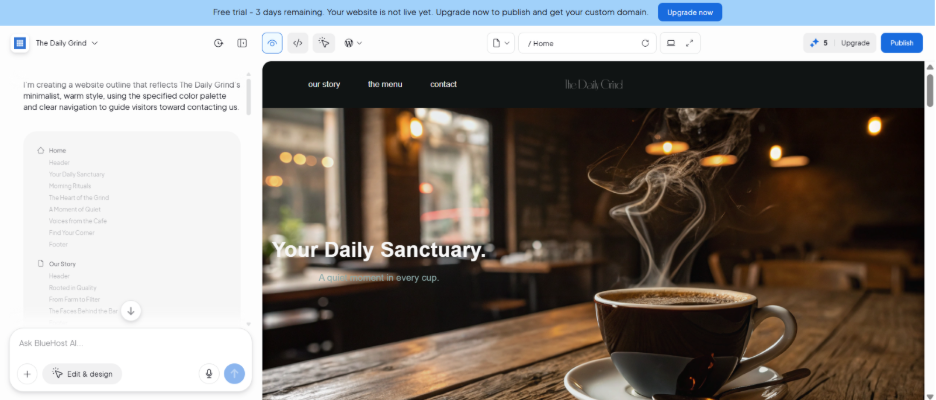
Unlike traditional drag-and-drop editors that force users to stare at a blank canvas and piece together elements manually, AI builders operate on a model of intent. You provide the "vibe," the goals, and the industry specifics, and the system synthesizes a structural blueprint. It constructs the site’s hierarchy, writes initial copy, generates images, and suggests color palettes—all based on a deep understanding of web design best practices.
The Mechanics of Creation
The process is fundamentally iterative, following a three-step cycle:
- Prompting: The user provides high-level context—industry, target audience, brand aesthetic, and specific business objectives.
- Generation: The AI translates these inputs into a cohesive site structure, generating placeholder copy and layouts that align with modern UI/UX standards.
- Refinement: The AI produces a "first draft," which the user then polishes via a visual editor. This ensures that while the heavy lifting is automated, the human creator maintains absolute authority over the final brand identity.
Market Data: A Multi-Billion Dollar Trajectory
The rise of AI-assisted design is not merely a passing technological trend; it is a fundamental shift in the global digital economy. Data from Custom Market Insights suggests the global AI-powered website builder market is poised for explosive growth, rising from $3.41 billion in 2026 to an estimated $14.78 billion by 2035.
Precedence Research offers an even more bullish outlook, forecasting a market valuation of $17.4 billion by the same year. This massive capital influx is driven by a singular demand: the need for speed. Businesses are no longer willing to wait weeks for a launch; they require agility, low-cost overhead, and the ability to pivot their digital presence as quickly as their business models evolve.
The Advantages: Why "Vibe Coding" is Winning
The core philosophy driving this adoption is often referred to as "vibe coding"—a methodology where the user describes the desired outcome in natural language rather than machine code.
1. Radical Efficiency
Traditional development lifecycles, which once took weeks of prototyping, are now condensed into minutes. By automating the boilerplate—the CSS grids, the responsive design adjustments, and the foundational copy—AI allows creators to focus on strategy and marketing rather than debugging code.
2. Context-Aware Personalization
Modern AI is becoming increasingly sophisticated. Rather than deploying generic, cookie-cutter templates, these platforms use contextual awareness. A restaurant’s website built via AI will prioritize high-quality visuals and menu integration, while a professional portfolio site will prioritize clean whitespace and contact forms. The more data the user provides, the more bespoke the resulting site becomes.
The Prerequisites of a Modern Digital Home
While AI handles the assembly, the foundational infrastructure remains a non-negotiable requirement for any serious online presence. Before initiating an AI-generated build, owners must still secure:
- The Domain Name: The digital real estate. A memorable, brand-aligned domain is essential for credibility.
- Web Hosting: The physical server space where your site lives.
- SSL Encryption: Mandatory for security and trust.
- The CMS: A Content Management System, such as WordPress, remains the industry standard for its flexibility, ownership, and scalability.
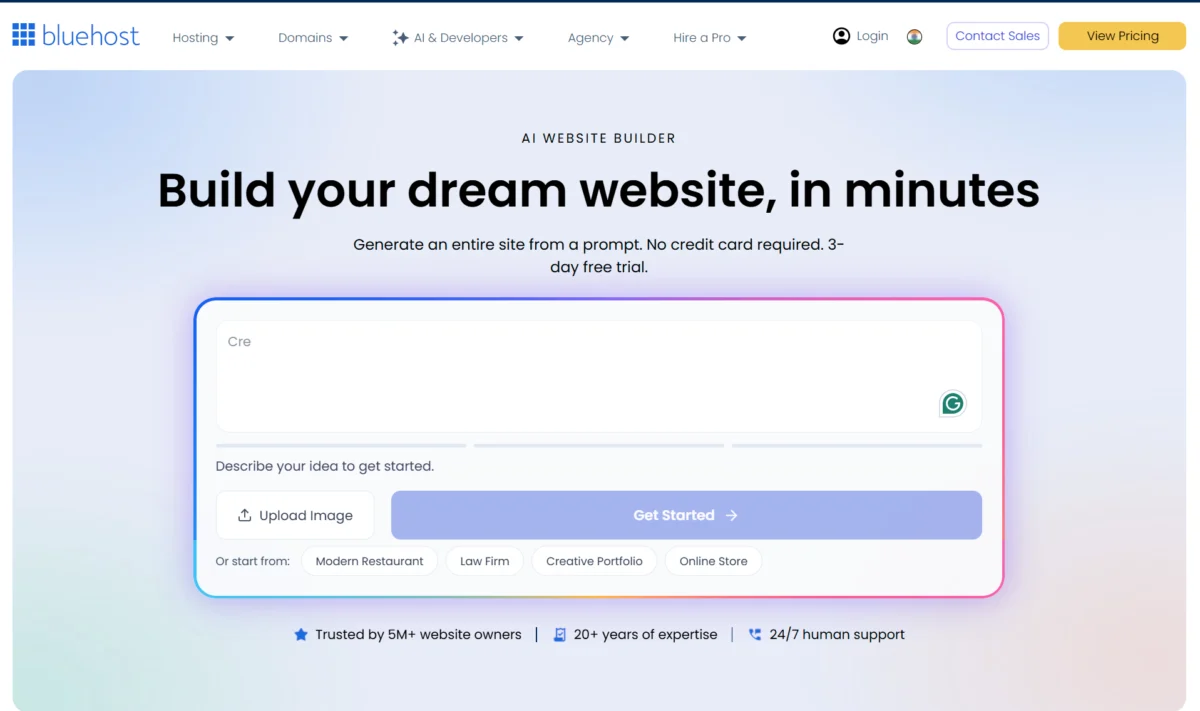
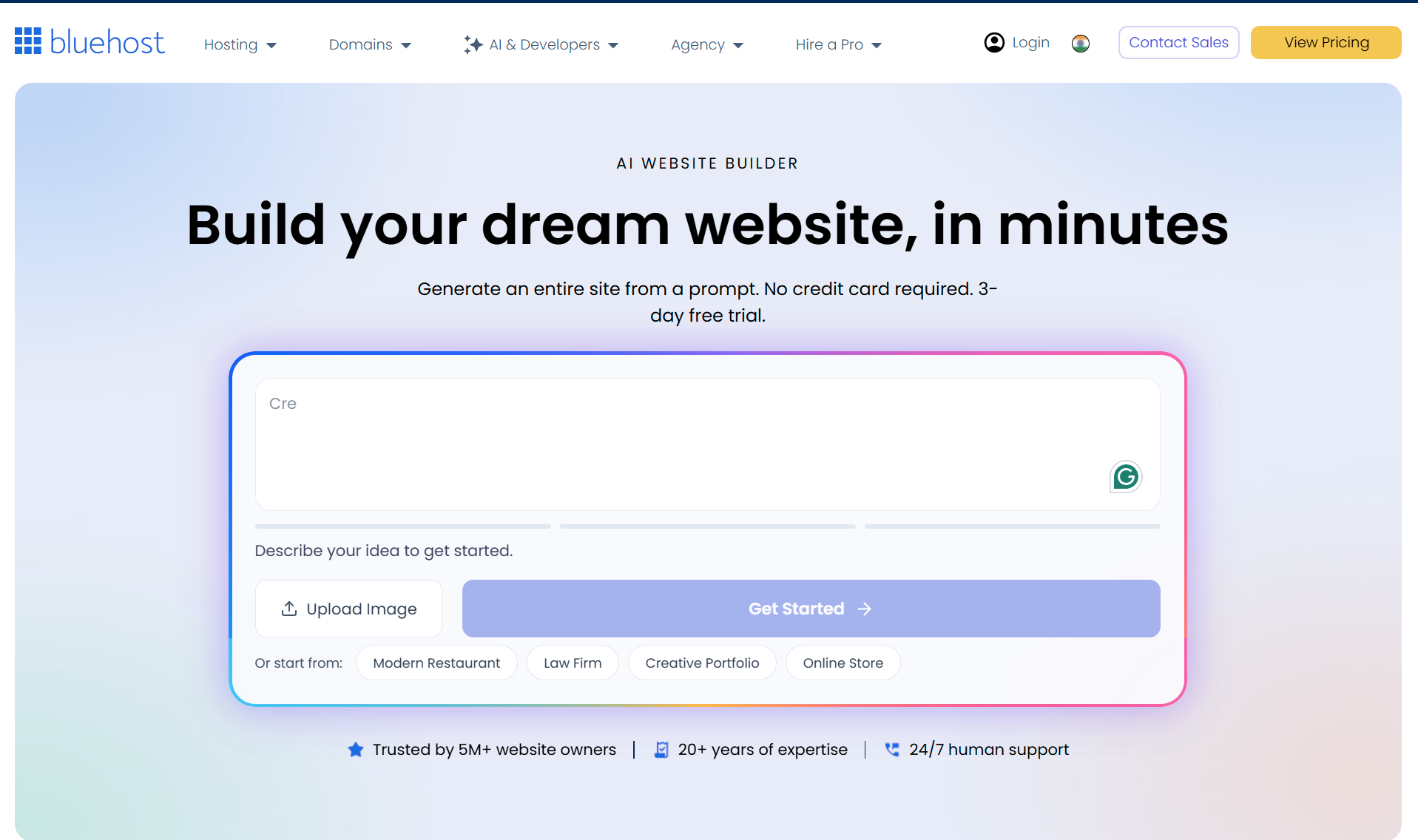
Platforms like the Bluehost AI Website Builder are currently leading the market by consolidating these traditionally fragmented services. By integrating domain registration, managed hosting, and AI-generation into a single dashboard, they remove the technical friction that often discourages beginners from ever hitting "publish."
Official Perspectives: Complexity as the Enemy
Industry leaders are increasingly vocal about the mission to strip away technical gatekeeping. Sachin Puri, CEO of Bluehost, has emphasized that "the real power of AI lies in removing complexity for users."
This sentiment is echoed across the tech sector. By simplifying the stack, companies are enabling a new wave of "citizen developers." The goal is to allow a local baker, an freelance artist, or a startup founder to compete with established enterprises by having a digital footprint that is as professional and performant as any custom-coded site.
Strategic Implications: Best Practices for AI Success
While AI can build the site, it cannot replicate the human spirit or the unique value proposition of a business. To ensure long-term success, users should follow a rigorous "Human-in-the-Loop" strategy.
Context Over Keywords
Avoid the temptation to dump keywords into an AI prompt. Instead, provide a narrative. Explain the business’s "why," its target audience’s pain points, and the brand’s unique tone of voice. A site built with deep context will rank better and convert higher than a site built solely for SEO keyword stuffing.
The Essential Human Touch
AI is a mirror—it reflects the data it was trained on. Without human intervention, an AI site may feel generic. Developers must inject real-world testimonials, original photography, and anecdotal stories that AI cannot hallucinate. This is the difference between a "dead" website and a brand.
The Post-Launch Cycle
The launch is not the finish line; it is the starting block. Post-deployment best practices include:
- Technical SEO Audits: Ensure your site is crawlable and that metadata is optimized.
- Accessibility Standards: Use alt-text, maintain high color contrast, and ensure keyboard navigation works, as these are both ethical imperatives and legal requirements in many jurisdictions.
- Iterative Growth: Treat the website as a living document. Regularly update content, fix broken links, and optimize older pages based on user behavior metrics.
Conclusion: The Future is Accessible
We are witnessing the end of the "developer-as-gatekeeper" era. The democratization of web development does not spell the end of the professional developer; rather, it shifts their role toward high-level architecture and complex systems, while empowering everyone else to build.
As AI continues to evolve, the distinction between "code" and "creation" will continue to blur. For those who have been waiting for the right moment to claim their space online, that moment has arrived. With the right prompt, a clear vision, and a robust platform, the gap between an idea and a globally accessible website has never been narrower. The tools are ready—the only remaining variable is your initiative.