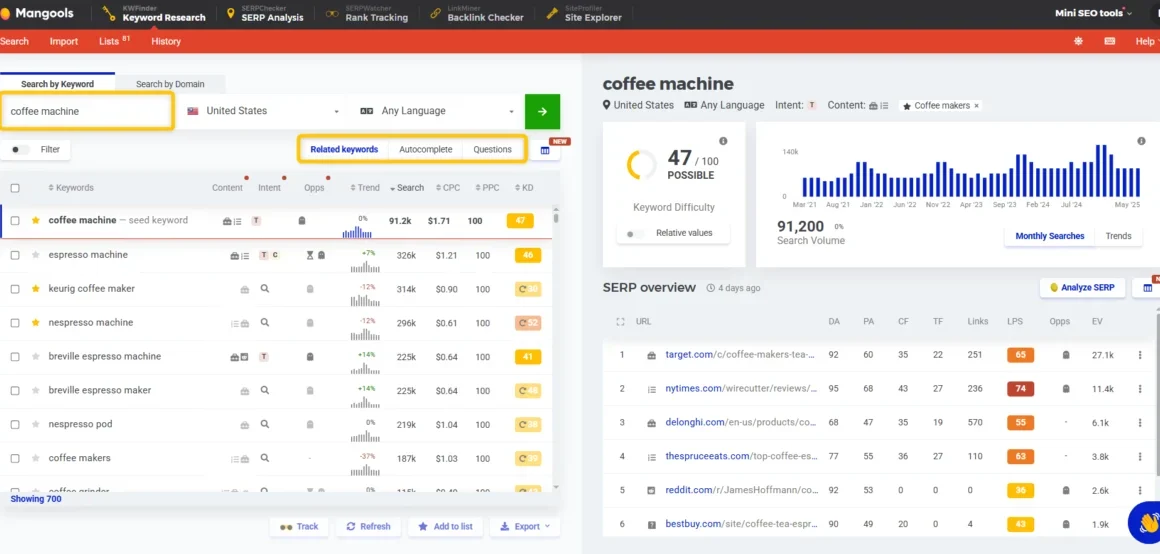










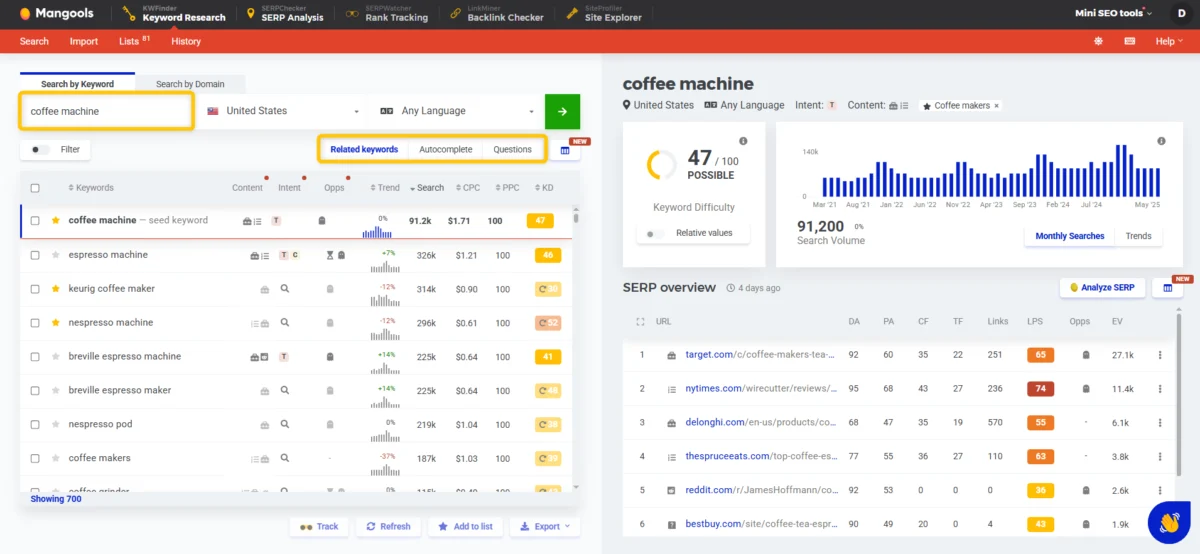
In the modern digital landscape, the visibility of your website is determined by one fundamental factor: how well you align your content with the language of your users. Keywords—often called SEO keywords—are the primary gateway that connects a searcher’s intent to your digital doorstep. Whether you are a blogger, an entrepreneur, or an SEO specialist, understanding how to identify and leverage these terms is the cornerstone of sustainable organic growth.
![Keyword Research for SEO: The Beginner's Guide [2026]](https://mangools.com/blog/wp-content/uploads/2020/04/keyword-research-guide.png)
What Are Keywords and Why Do They Matter?
At their simplest, keywords are the specific words or phrases users type into search engines to find information. Think of them as the bridge between a user’s question and your solution. When you identify the right phrases within your niche, you can tailor your content strategy to answer those specific queries, leading to higher search rankings and a more targeted stream of visitors.
![Keyword Research for SEO: The Beginner's Guide [2026]](https://mangools.com/blog/wp-content/uploads/2019/07/kw-research-evolution-2-1.png)
The process of discovering these phrases is known as keyword research. It is not merely a technical task; it is an exercise in empathy. It involves understanding the language of your audience, the problems they are trying to solve, and the level of detail they require.
![Keyword Research for SEO: The Beginner's Guide [2026]](https://mangools.com/blog/wp-content/uploads/2019/08/3-steps-of-keyword-research.png)
A Brief Chronology of Keyword Evolution
The practice of keyword research has undergone a seismic shift over the past two decades.
![Keyword Research for SEO: The Beginner's Guide [2026]](https://mangools.com/blog/wp-content/uploads/2020/03/long-tail-keywords-1.png)
- The Early 2000s (The Era of Stuffing): In the early days of search, strategy was often reduced to finding high-volume keywords via tools like Google Keyword Planner and "stuffing" them into website copy. This led to a flood of low-quality, unreadable content that manipulated ranking systems.
- The Algorithmic Response: Google responded with a series of sophisticated updates (such as Panda, Penguin, and Hummingbird) designed to penalize spam and prioritize "helpful, reliable, people-first content."
- The AI Revolution (RankBrain and Beyond): In 2015, Google introduced RankBrain, an AI-driven component that allowed the search engine to understand the context and intent behind queries, rather than just matching exact characters. Today, with the rise of AI Overviews and conversational search, keyword research has moved away from "exact-match" obsession toward a more topical approach.
The "Keyword Tripod": A Framework for Analysis
To determine if a keyword is worth your time, you must evaluate it against three essential legs of a tripod: Popularity, Difficulty, and Relevance.
![Keyword Research for SEO: The Beginner's Guide [2026]](https://mangools.com/blog/wp-content/uploads/2021/02/google-keyword-planner-navigation.png)
1. Popularity (Search Volume and Trends)
Search volume represents the average monthly interest in a phrase. However, volume is not a static metric. Using tools like Google Trends, you can identify whether a keyword is seasonal (e.g., "garden pool" spikes in summer) or declining in long-term popularity. Do not become a slave to high volumes; prioritize keywords that align with your business goals.
![Keyword Research for SEO: The Beginner's Guide [2026]](https://mangools.com/blog/wp-content/uploads/2021/02/gkp-enter-keywords.png)
2. Keyword Difficulty
This metric estimates the effort required to rank for a term. It is generally calculated based on the "Domain Authority" or link profile of the websites already ranking in the first Search Engine Results Page (SERP). If the top results are dominated by high-authority media giants, your path to ranking will be steeper.
![Keyword Research for SEO: The Beginner's Guide [2026]](https://mangools.com/blog/wp-content/uploads/2021/02/google-keyword-planner-suggestions.png)
3. Relevance (Search Intent)
This is arguably the most critical leg. Even if a keyword has high volume and low difficulty, it is useless if the intent doesn’t match your content. There are four primary types of search intent:
![Keyword Research for SEO: The Beginner's Guide [2026]](https://mangools.com/blog/wp-content/uploads/2025/07/KWFinder-dashboard-example.png)
- Informational: Looking for an answer ("how to fix a leaky faucet").
- Navigational: Looking for a specific site ("Facebook login").
- Commercial: Investigating products ("best espresso machine").
- Transactional: Ready to buy ("buy Nike Air Max size 10").
If you attempt to rank a product page for an informational query, Google’s algorithms will likely push your page down, as it fails to satisfy the user’s need for a guide or review.
![Keyword Research for SEO: The Beginner's Guide [2026]](https://mangools.com/blog/wp-content/uploads/2025/07/KWFinder-competitive-research-example.png)
Practical Strategies for Keyword Discovery
To build a robust content strategy, you need to look beyond standard tools.
![Keyword Research for SEO: The Beginner's Guide [2026]](https://mangools.com/blog/wp-content/uploads/2021/02/pour-over-coffee-serp-results.png)
- The Competitor Gap: Use professional SEO tools to conduct a "keyword gap analysis." This reveals the terms your competitors rank for that you currently do not. It is one of the most effective ways to find "low-hanging fruit."
- Leveraging Google’s Ecosystem: Use features like "Autocomplete" and "People Also Ask." Clicking on an "Also Ask" question often triggers an infinite loop of related queries, providing a goldmine of long-tail, question-based keywords.
- Community Forums: Platforms like Reddit and niche-specific forums are invaluable. By monitoring what your audience discusses in these spaces, you can uncover the specific language and "pain points" they use, which can then be incorporated into your content.
- Wikipedia Exploration: Wikipedia is a masterclass in hierarchical content structure. By starting with a broad term and navigating through their tables of contents, you can map out an entire content hub of sub-topics within minutes.
Implementing the Content Hub Model
Modern SEO favors the Content Hub (or Topic Cluster) model. Instead of creating isolated, unrelated articles, organize your content into clusters:
![Keyword Research for SEO: The Beginner's Guide [2026]](https://mangools.com/blog/wp-content/uploads/2021/02/kwfinder-search-by-url.png)
- Pillar Content: A comprehensive, long-form guide covering a broad topic.
- Cluster Articles: Smaller, highly specific articles that answer niche questions, all linking back to the pillar content.
This structure reinforces the semantic relationship between your pages, helping search engines recognize your site as an authoritative source on a specific subject.
![Keyword Research for SEO: The Beginner's Guide [2026]](https://mangools.com/blog/wp-content/uploads/2025/12/keyword-gap-analysis-example-1.png)
The Reality of "LSI Keywords" and AI
There is a persistent myth regarding "LSI keywords" (Latent Semantic Indexing), with many claiming you must sprinkle synonyms throughout your text to trick search engines. Google has officially stated that LSI keywords, as a specific SEO tactic, do not exist.
![Keyword Research for SEO: The Beginner's Guide [2026]](https://mangools.com/blog/wp-content/uploads/2021/02/google-autocomplete-results-small.png)
Instead, search engines use advanced natural language processing to understand the context of your writing. If you write a comprehensive, high-quality article about "strong coffee," you will naturally rank for terms like "high caffeine content" or "caffeine extraction," even if you never use those exact phrases. The goal is to provide value, not to hit an arbitrary keyword density.
![Keyword Research for SEO: The Beginner's Guide [2026]](https://mangools.com/blog/wp-content/uploads/2021/02/google-autocomplete-results-a.png)
Implications for the Future
Does the rise of AI mean keyword research is dead? Far from it. As search queries become more conversational and complex—moving from "hiking boots" to "lightweight hiking boots for a 3-day trip in the Alps in early autumn"—the need for deep, topical research is higher than ever.
![Keyword Research for SEO: The Beginner's Guide [2026]](https://mangools.com/blog/wp-content/uploads/2021/02/people-also-ask.png)
Keyword research today is about understanding the audience’s journey. It is about covering topics in such a complex, helpful, and thorough way that you rank for queries you didn’t even know you were targeting.
![Keyword Research for SEO: The Beginner's Guide [2026]](https://mangools.com/blog/wp-content/uploads/2021/02/people-also-ask-long.png)
Summary Checklist for Your Content Strategy:
![Keyword Research for SEO: The Beginner's Guide [2026]](https://mangools.com/blog/wp-content/uploads/2021/02/related-searches.png)
- Do: Focus on search intent, create comprehensive content hubs, and prioritize user experience.
- Do: Use your focus keyword in the title, URL, and H1/H2 tags.
- Avoid: Keyword stuffing, obsession with arbitrary keyword density, and targeting terms that do not match the intent of your landing page.
By treating keywords as topics rather than just data points, you move from "chasing rankings" to "building authority." In an age where content is abundant, the creators who truly understand their audience’s questions will always be the ones who dominate the results.