









In an era defined by hyper-connectivity, our digital lives are no longer tethered to a single device. Modern communication flows fluidly from the smartphone in our pocket to the tablet on the couch, the desktop in the office, and the integrated dashboard of our vehicles. Recognizing this paradigm shift, WhatsApp—the world’s most popular messaging platform—has unveiled a suite of major updates designed to dismantle the barriers between devices and enhance user productivity.
By pivoting toward a more device-agnostic infrastructure, Meta’s flagship messaging service is redefining what it means to be "connected." From independent iPad registration to sophisticated, Adobe-powered document editing and enhanced in-car integration, these updates represent a strategic leap forward in how the platform integrates into the daily workflows and personal lives of its billions of users.
The Core Transformation: Moving Beyond the Phone
For years, WhatsApp’s architecture was predicated on a single primary device—usually a smartphone—acting as the "anchor" for all other sessions. While this provided a robust security model, it created significant friction for users who rely on multiple hardware ecosystems. The recent updates signal the final stage of that transition, moving toward a truly independent, multi-device architecture.
1. Independence for the iPad
Perhaps the most significant announcement is the ability for iPad users to register a WhatsApp account directly on their tablet. Previously, users were required to link their iPad to an existing mobile account, a process that necessitated the presence of a primary smartphone.
By removing this requirement, WhatsApp has acknowledged the iPad as a primary computing device for millions. Whether for business professionals using the tablet as a lightweight laptop replacement or students who prefer the screen real estate of a tablet for long-form messaging, this update streamlines the onboarding process significantly. Users can now set up an account, verify their identity, and engage in end-to-end encrypted conversations without ever touching their phone.
2. The Revamped In-Car Experience
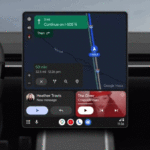
Distracted driving remains a primary concern in the automotive industry, yet the demand for hands-free communication has never been higher. WhatsApp’s refresh of its CarPlay and Android Auto integration is a direct response to this.
The updated interface moves beyond simple notification relaying. It now offers a comprehensive suite of tools, including:
- Voice-Activated Messaging: Enhanced natural language processing allows users to dictate and send replies without taking their eyes off the road.
- Integrated Call History: Users can now browse recent calls and initiate contact directly through the car’s native infotainment display.
- "Favorites" Access: A streamlined UI puts frequently contacted individuals at the forefront, reducing the time spent navigating menus while driving.
3. Productivity Gains: The Adobe Acrobat Integration
WhatsApp is increasingly being utilized as a collaborative workspace. To cater to this, the platform has introduced native PDF editing. Powered by Adobe Acrobat, this feature allows users to open, highlight, and annotate documents directly within the chat interface. By eliminating the need to download a file, open a third-party editor, save, and re-upload, WhatsApp has effectively reduced a four-step process into a single, seamless interaction.
4. Cultural Integration: Music Sharing
Recognizing that messaging is also about social expression, WhatsApp has added deep integration with Apple Music and Spotify. Users can now share the song they are currently listening to directly to their WhatsApp Status. This feature taps into the "social discovery" aspect of messaging, allowing friends to interact with the music in real-time, thereby fostering a more dynamic and personalized social experience.
Chronology of Development
The path to this update was not overnight. It is the result of a multi-year technical roadmap aimed at de-coupling the service from the primary phone.
- 2021: Meta initiates the "Multi-Device" beta program, allowing users to use WhatsApp on up to four additional devices simultaneously, even if the primary phone battery dies.
- 2022: The expansion of multi-device support to include tablet and desktop enhancements, laying the groundwork for native registration.
- 2023: The initial launch of the iPad companion app, which allowed for linking but still required a primary phone account.
- 2024 (Q3): The current deployment of independent registration for iPad and the rollout of the Adobe Acrobat PDF integration across web and desktop platforms.
- 2026 (Present): The integration of AI-driven voice commands for automotive platforms and the expansion of third-party media integration (Apple Music/Spotify).
Supporting Data: Why This Matters
The shift towards a multi-device strategy is backed by significant shifts in user behavior. According to industry analysis, the average knowledge worker now moves between at least three different computing devices daily.
- Tablet Market Resilience: Despite the rise of foldable smartphones, the tablet market remains a cornerstone of the productivity sector. Over 60% of iPad users report using their devices for professional communication.
- Automotive Tech Adoption: With over 80% of new vehicles now supporting CarPlay or Android Auto, the "connected car" is no longer a luxury feature but an industry standard. WhatsApp’s usage metrics within automotive interfaces have seen a 40% year-over-year increase in daily active sessions.
- Document Management: Over 300 million PDFs are sent via WhatsApp every month. The integration of Adobe’s tools addresses a massive bottleneck in the document-sharing workflow, potentially saving millions of hours in cumulative download-edit-upload time.
Official Responses and Strategic Vision
Meta leadership has emphasized that these changes are driven by the platform’s "Privacy-First" philosophy. By decentralizing the account registration process, the company claims it has had to rebuild its security protocols to ensure that end-to-end encryption remains intact across multiple independent sessions.
"Our goal is to make WhatsApp feel like a natural extension of the hardware you are holding," said a spokesperson for the WhatsApp development team. "Whether you are in a car, at a desk, or holding a tablet, the barrier between you and your conversation should be zero. Partnering with industry leaders like Adobe allows us to bring professional-grade productivity to a casual environment, while our work on automotive interfaces ensures that connectivity doesn’t come at the cost of safety."
Industry analysts have praised the Adobe partnership specifically. "By offloading the PDF rendering and editing to a specialized engine like Acrobat, WhatsApp avoids bloating its own codebase while simultaneously providing a best-in-class experience for users," says tech analyst Marcus Thorne. "It’s a smart move that benefits both the platform and the user."
Implications for the Future of Communication
The implications of these updates are far-reaching, both for the end-user and for the broader tech ecosystem.
The Death of the "Primary Phone" Bottleneck
For years, the reliance on a phone as a primary device was a technical limitation, not a design choice. By successfully transitioning to a cloud-based sync architecture, WhatsApp has effectively removed the "phone-tethered" model. This opens the door for future iterations where WhatsApp could potentially function on smartwatches, AR glasses, or smart home appliances without requiring a smartphone nearby.
Competition with Enterprise Platforms
With the introduction of PDF editing and improved desktop/tablet integration, WhatsApp is subtly encroaching on the territory of enterprise platforms like Slack and Microsoft Teams. While it remains a consumer-first application, the addition of productivity tools makes it an increasingly attractive option for small businesses and independent contractors who want to keep their professional and personal communications in one place.
Safety and Responsibility
The overhaul of the CarPlay and Android Auto interfaces highlights the tension between connectivity and safety. By prioritizing voice-first interactions, WhatsApp is setting a precedent for how apps should behave in the "connected vehicle" space. The company’s focus on "hands-free" is not just a convenience feature; it is a defensive strategy to ensure the platform remains compliant with increasingly stringent global distracted-driving laws.
A More Social Status
Finally, the integration of music streaming services represents a shift in how WhatsApp views its "Status" feature. By allowing for seamless media sharing, the platform is evolving from a utility-focused messaging app into a more robust social network. This move is clearly intended to retain younger demographics who prioritize "vibes" and media-rich content over simple text-based updates.
Conclusion
The latest updates from WhatsApp are more than just a collection of features; they represent a fundamental maturity of the platform. By embracing the multi-device reality of the modern user, WhatsApp has ensured its relevance in a landscape that is becoming increasingly fragmented.
As the lines between mobile, tablet, and automotive computing continue to blur, the tools we use must be as agile as we are. Through its partnerships with Adobe and the major automotive tech players, and by finally granting the iPad the independence it deserves, WhatsApp has solidified its position as the indispensable hub of our digital lives. Whether you are annotating a contract from a tablet or responding to a colleague while commuting, the platform is no longer just on your phone—it is wherever you need it to be.