







The 2026 World Cup was more than just a tournament; it was a watershed moment in digital history. As the world’s attention turned toward the host nations, the Meta ecosystem—spanning WhatsApp, Instagram, Facebook, and Threads—transformed into the heartbeat of the global football conversation. From record-shattering messaging traffic to a seismic shift in how fans interact with their favorite athletes, the tournament proved that while the match lasts 90 minutes, the conversation lives on Meta.
The Data Revolution: A Tournament of Records
This year’s tournament set new benchmarks for digital engagement, proving that the modern fan experience is intrinsically linked to social connectivity. The sheer volume of data processed across Meta’s platforms during the month-long event highlights a shift in how global audiences consume and participate in live sports.
WhatsApp: The Pulse of Global Communication
During the Round of 16 clash between Argentina and Egypt, WhatsApp recorded an unprecedented milestone: 29 million messages per second. This figure eclipsed the previous all-time record set during the 2022 World Cup Final, cementing WhatsApp as the primary medium for real-time, high-stakes communal reaction. This massive influx of traffic reflects the platform’s role as the "digital living room" for fans across the globe, allowing for instantaneous celebration and commiseration at a scale never before witnessed in human history.
Instagram: The Explosion of Athlete Influence
Instagram functioned as the visual stadium of the tournament. Between June 11 and July 11, the platform saw an incredible surge in engagement, with final-squad players gaining a collective 213.6 million new followers. This 6.6% increase pushed the combined follower count of tournament participants from 3.26 billion to 3.47 billion.
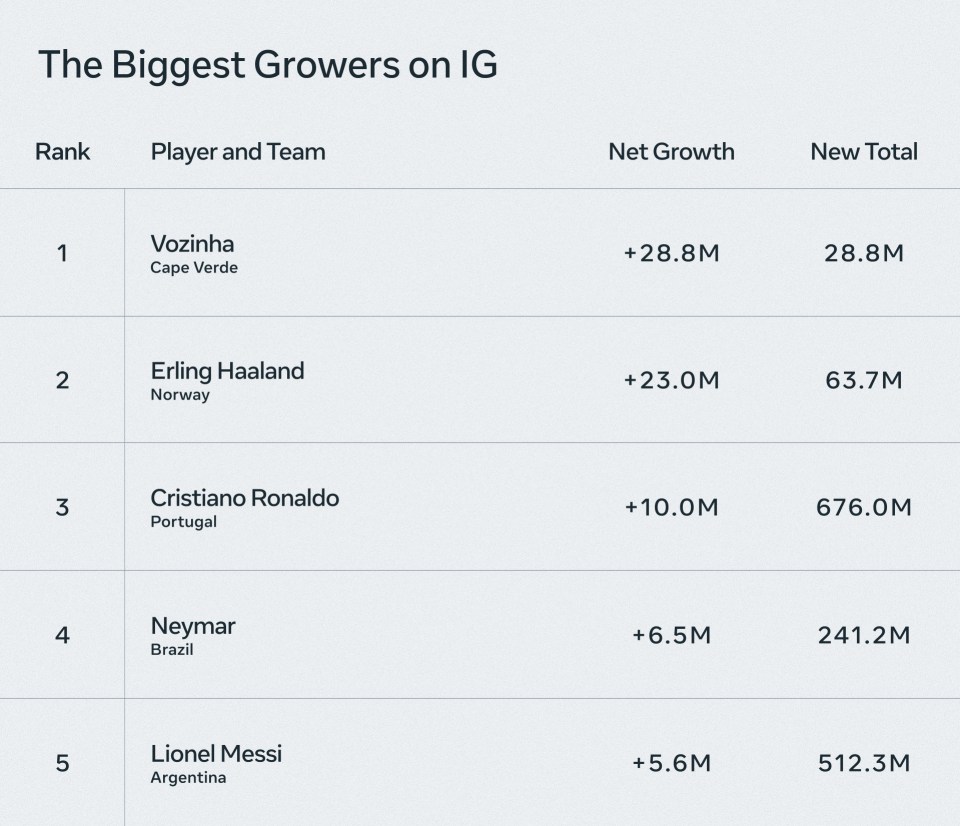
The breakout story of the summer was undeniably Cape Verde goalkeeper Vozinha. In what is perhaps the most significant individual growth spike in the history of sports social media, Vozinha vaulted from 37,000 followers to 28.8 million—a staggering +77,000% increase. His transformation from a relative unknown to a global icon serves as a case study in how a singular, electrifying tournament performance can reshape a player’s brand overnight.
Chronology: The Arc of Engagement
The tournament’s digital trajectory can be divided into three distinct phases: the "Ignition Phase," the "Ascension of the Underdogs," and the "Global Peak."
Phase 1: The Ignition (June 11–June 20)
As the group stages kicked off, Facebook saw an immediate uptick in activity. The platform hosted 80 million posts mentioning the World Cup, as users began sharing match analysis, historical anecdotes, and predictions. During this phase, established stars like Erling Haaland and Cristiano Ronaldo began their climb, with Haaland adding 23 million followers as he spearheaded the global interest in Norway’s campaign.
Phase 2: The Underdog Ascension (June 21–July 5)
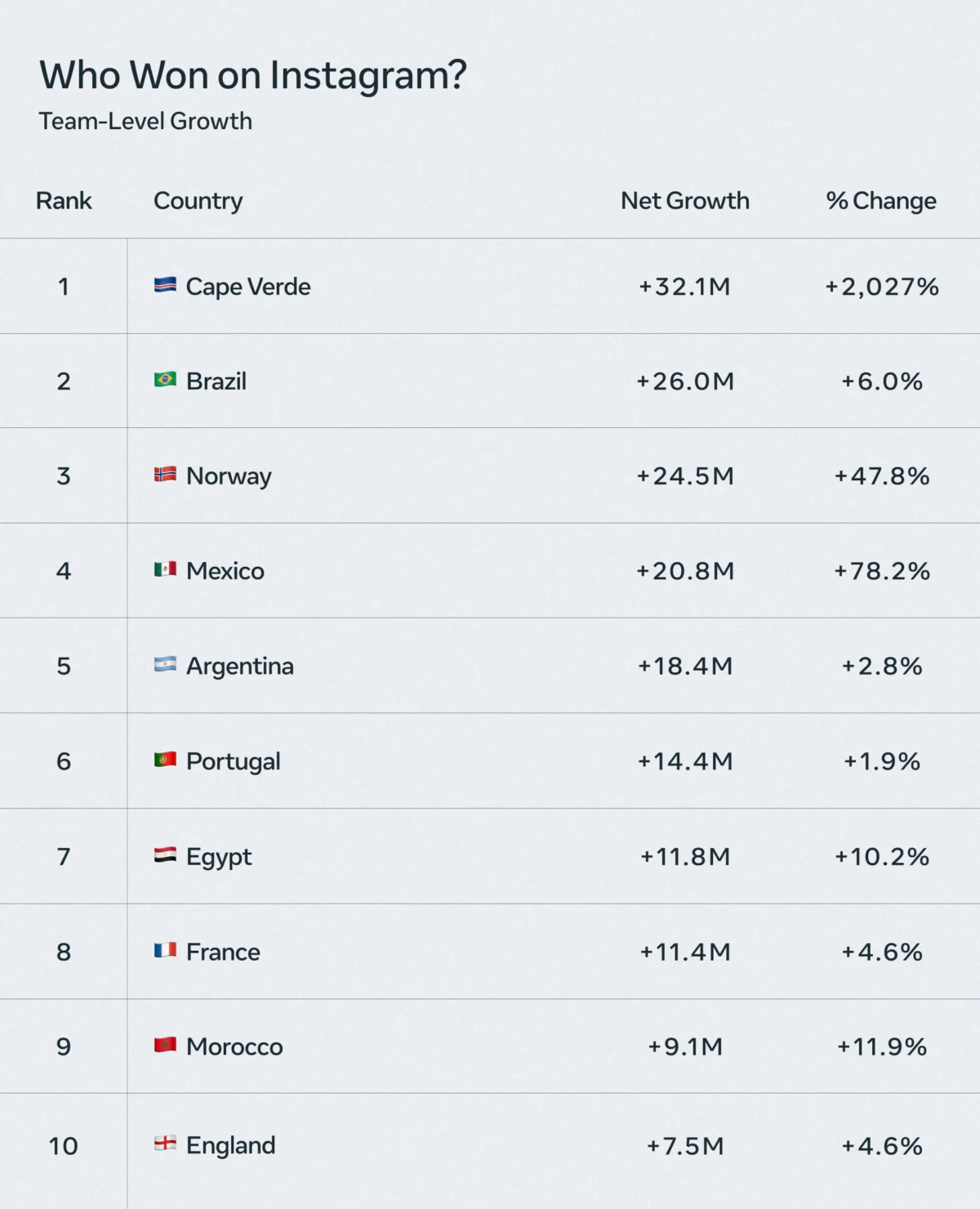
Mid-tournament, the focus shifted to surprise performances. The Cape Verde national team became the centerpiece of the digital narrative. Driven by Vozinha’s viral saves, the team’s collective social presence grew by 2,000%, with the squad gaining 32.1 million net followers. Simultaneously, Mexico saw a 78% surge in digital interest, bolstered by the rising stars Gilberto Mora and Julian Quiñones.
Phase 3: The Global Peak (July 6–July 13)
The tournament hit its digital zenith on July 6, when Threads—Meta’s newest social platform—recorded a peak of 25 million people engaging with World Cup-tagged content in a single day. This period underscored the maturation of the Meta ecosystem: while Instagram handled the visual storytelling and WhatsApp carried the live conversation, Threads emerged as the hub for real-time discourse and community-driven commentary.
Supporting Data: By the Numbers
The impact of the 2026 World Cup on Meta’s infrastructure and user behavior is best illustrated through its multi-platform metrics:
- Facebook: 80 million unique posts dedicated to the tournament, highlighting the platform’s continued relevance for long-form discussion and fan groups.
- Threads: 1.5 billion total impressions on tournament-tagged posts. At its peak, the platform reached 25 million users daily, demonstrating the rapid adoption of Threads for live, trending events.
- Instagram Growth (Key Players):
- Erling Haaland: +23 million new followers (nearly doubling his base).
- Cristiano Ronaldo: Added 10 million followers, reaching a historic 676 million.
- Vozinha: +28.7 million followers (the tournament’s "Viral Hero").
- National Team Surge:
- Cape Verde: +2,000% increase in collective squad followers.
- Mexico: +78% surge in interest.
- Japan: +42% increase, driven by talents like Keito Nakamura.
Official Response: The Vision Behind the Numbers
The record-breaking engagement was no accident. Meta’s strategy was centered on creating an environment that complemented the 90 minutes of gameplay with deep, immersive content. Rob Pilgrim, Global Football Lead at Meta, noted that the success of the platform was a result of collaboration across the entire football ecosystem.
"This summer we set out to make Meta the cultural epicenter of the beautiful game," Pilgrim stated. "While fans watch the 90 minutes on TV, they come to our apps for everything around it—the community, the conversation, the clips, and the memes. The real winners were the fans."
Pilgrim emphasized that the platform’s tools were designed to allow creators, players, and rights holders to "lean in and experiment." By facilitating behind-the-scenes access, coaching analysis, and locker-room celebrations, Meta ensured that the digital experience was just as essential as the live matches themselves.
Implications: The New Standard for Live Events
The 2026 World Cup has redefined the relationship between live sports and social media. The implications of this shift are threefold:
1. The Death of the "Second Screen"
The term "second screen" is becoming obsolete. The data shows that for the modern fan, the digital platform is the primary screen for community and context. The 29 million messages per second on WhatsApp suggest that the platform has become a live-synchronous experience, where the social reaction is inextricably linked to the event itself.
2. Algorithmic Personalization as a Discovery Engine
Instagram’s "Your Algorithm" feature, which allows users to curate their own content interests, proved to be a powerful engine for discovery. In the U.S., this feature helped fans move beyond mainstream stars to engage with rising talents. The fact that fans could effectively "teach" the algorithm what they liked allowed for a highly personalized World Cup experience, which in turn increased the longevity and depth of their engagement.
3. The Democratization of Sports Stardom
The rise of players like Vozinha and Keito Nakamura proves that in the digital age, talent combined with platform-native storytelling can dismantle traditional barriers to fame. Previously, a player’s global profile was largely dictated by the league they played in or their marketability in Western Europe. Today, a standout performance at the World Cup—amplified by viral content and algorithm-driven discovery—can make a player a household name in a matter of weeks.
Conclusion
As the dust settles on the 2026 tournament, the legacy left behind is one of unprecedented digital connection. Meta’s family of apps successfully bridged the gap between the physical stadium and the digital global village. By providing the infrastructure for 80 million posts, record-breaking message volumes, and the birth of new global superstars, Meta has proven that it is no longer just a spectator to the World Cup—it is the digital stage upon which the modern game is played, discussed, and immortalized.
For the football industry, the message is clear: the future of the sport is digital, communal, and, if the 2026 World Cup is any indication, moving at the speed of 29 million messages per second.