










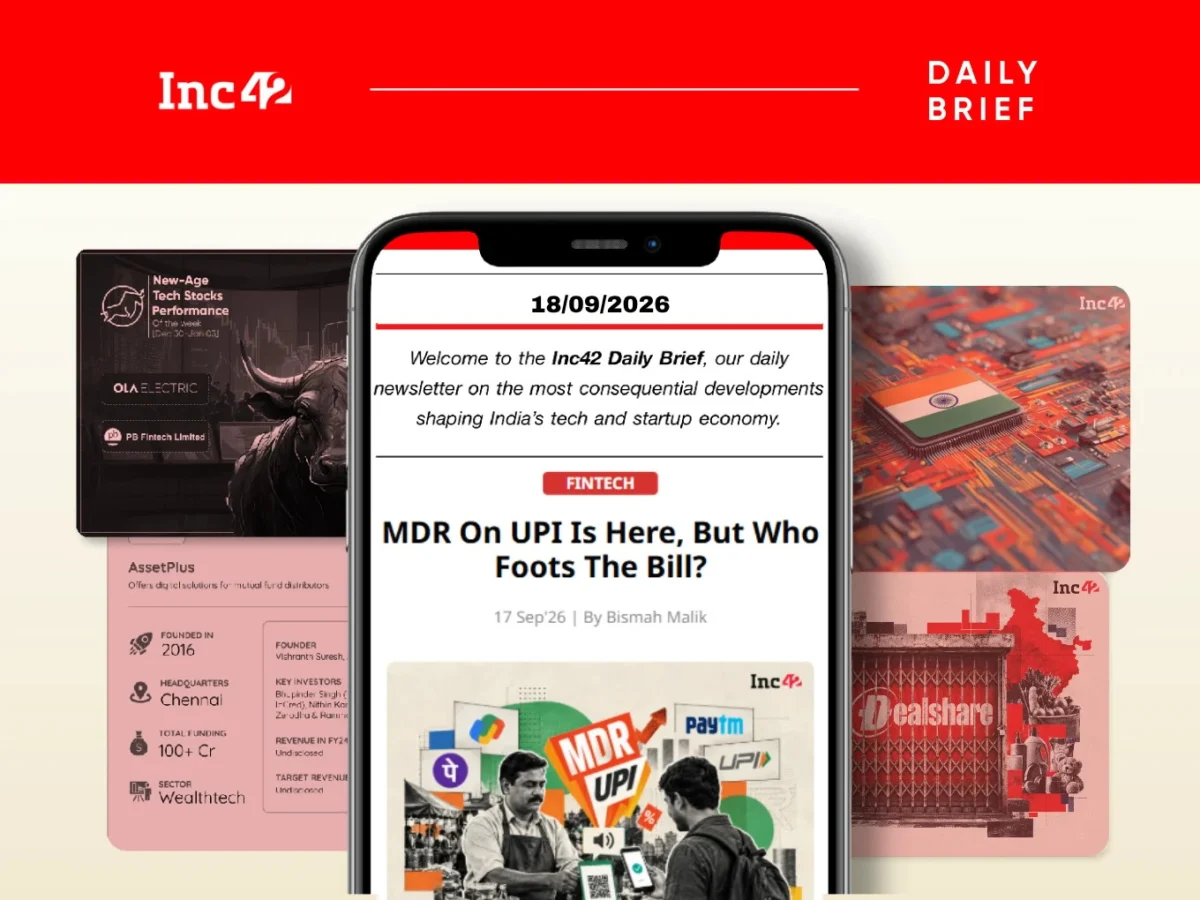
For nearly a decade, the Unified Payments Interface (UPI) has been the crown jewel of India’s digital transformation. It democratized finance, eliminated the friction of cash, and turned the humble smartphone into a universal wallet. However, the "free" era of digital payments is approaching a structural inflection point. Starting October 15, the landscape of UPI transactions will shift as high-value payments begin to attract Merchant Discount Rates (MDR). This transition—from a state-subsidized utility to a market-driven revenue model—raises a critical question: Who will ultimately foot the bill for the next phase of India’s fintech evolution?
The New Framework: A Shift in Policy
The government’s new framework represents a departure from the zero-MDR policy that fueled UPI’s explosive adoption. Under the new guidelines, a 0.4% MDR will be imposed on Person-to-Merchant (P2M) UPI transactions exceeding ₹2,000. To prevent excessive costs on large-ticket purchases, the government has introduced a cap of ₹300 for transactions valued at ₹75,000 and above.
Crucially, the policy includes a safeguard for the backbone of the Indian economy: small businesses. Merchants receiving up to ₹1 Lakh per month via QR codes remain exempt from these charges. However, the policy creates a "sliding scale" of compliance; sellers who consistently breach this monthly threshold will be brought into the MDR net. As the festive season approaches—a period traditionally defined by high-value retail activity—this change could place significant pressure on medium-to-large enterprises that have grown accustomed to the zero-cost payment environment.
Chronology of the UPI Evolution
The trajectory of UPI has been marked by strategic, state-led support followed by an inevitable move toward fiscal sustainability.

- 2016 (The Launch): The National Payments Corporation of India (NPCI) launches UPI, aiming to minimize cash dependency.
- 2018–2020 (Rapid Scaling): The government maintains a zero-MDR mandate to encourage merchant adoption, effectively subsidizing the infrastructure through state coffers.
- 2022–2023 (Infrastructure Strain): As transaction volumes hit record highs, fintech startups and banks begin lobbying for a sustainable revenue model, arguing that the cost of maintaining high-availability servers and security protocols cannot be sustained by subsidies alone.
- 2024–2025 (Regulatory Consultation): Extensive discussions between the RBI, NPCI, and industry stakeholders regarding a balanced MDR structure.
- October 15, 2026 (The Implementation): The new MDR regime goes into effect, marking the end of the "free ride" for high-value P2M transactions.
Supporting Data: The Economics of Acceptance
For the average kirana store owner, the impact may be negligible. However, for D2C (Direct-to-Consumer) brands and organized retail, the arithmetic of payments is changing. When a merchant calculates their "cost of doing business," payment acceptance is no longer a silent variable.
Industry analysis suggests that while low-ticket items (under ₹2,000) will continue to see no MDR, the cumulative effect on high-value segments will be felt in the quarterly balance sheets. Merchants must now reconcile MDR alongside existing overheads: payment gateway fees, logistics, platform commissions, and customer acquisition costs. For businesses operating on razor-thin margins, the 0.4% levy is not merely a transaction fee—it is a significant deduction from the bottom line.
Official Responses and Industry Sentiment
The reaction from the fintech ecosystem has been one of cautious optimism. Startups and major payment aggregators have long argued that a zero-MDR environment stifles innovation. Without a sustainable revenue stream, payment players are limited in their ability to invest in advanced fraud detection, AI-driven credit scoring, and infrastructure upgrades.
"The introduction of MDR is not just about revenue; it is about the long-term viability of the ecosystem," notes one fintech executive. "If we want to build a world-class payment network that supports credit-on-UPI and other advanced features, we need a mechanism that covers the operational cost of high-value transactions."

However, the government has been firm in its directive: merchants are prohibited from passing these costs directly to consumers in the form of a "surcharge." This move is intended to protect the consumer experience and ensure that the "frictionless" nature of UPI remains intact.
The Implication: Will Costs Flow Downstream?
The prohibition on direct surcharging creates a "hidden" economic consequence. While a merchant cannot explicitly charge a customer for using UPI, businesses are under immense margin pressure. Analysts predict that instead of itemized fees, we will see a "general price adjustment." Businesses are likely to absorb the MDR into their broad product pricing, effectively raising costs for all consumers regardless of their payment method.
Moreover, there is a looming concern regarding "cash reversion." If merchants perceive the MDR as too burdensome, there is a risk that they may nudge consumers toward cash or non-UPI digital channels that offer better incentives. The success of the new policy will depend on whether the value-add of UPI—convenience, speed, and reliability—remains higher than the incremental cost of the transaction.
The Broader Market Landscape: Beyond Payments
The transition in the UPI space comes at a time when the broader Indian startup ecosystem is undergoing a maturation phase. From the record-breaking ₹1 Lakh Cr investment commitment for the SEMICON India 2026 initiative to the mixed performance of recent market listings like RentoMojo, the message is clear: investors are now prioritizing profitability and unit economics over "growth at any cost."

This shift is echoed in other sectors:
- DealShare’s Uncertain Future: Once a high-flying social commerce darling, the firm is currently navigating a difficult pivot, highlighting the risks of burn-heavy models.
- Aakash’s Strategic Trimming: By narrowing its losses by 16% to ₹186.5 Cr, the firm illustrates the current trend of focusing on operational efficiency rather than just topline expansion.
- Innovation in EV Infrastructure: Startups like Swapp Design are proving that even in capital-intensive sectors like Electric Vehicles, the "frugal innovation" approach is the new standard. By utilizing autonomous robots to swap batteries, Swapp Design is reducing station infrastructure costs from ₹4 Cr to a mere ₹15 Lakh, demonstrating that efficiency is the new currency for success.
Conclusion: Balancing Sustainability and Scale
As India moves into this new chapter of digital finance, the UPI MDR regime serves as a litmus test for the country’s economic maturity. Can UPI remain the world’s most successful payment system while simultaneously evolving into a profit-generating engine for the companies that maintain it?
The government’s decision to exempt smaller merchants shows a commitment to protecting the grassroots of the economy, while the imposition of MDR on high-value transactions ensures that the payment giants have the resources to keep the network secure and cutting-edge. The true test will be in the coming months: if the policy is implemented with transparency, it will secure the future of India’s digital backbone. If it leads to hidden costs and consumer frustration, the "frictionless" promise of UPI may face its first real hurdle.
For now, the industry watches with bated breath. The free ride is over, but the journey towards a financially sustainable digital economy has only just begun.
Editor’s Notes: Industry Briefings
- SEMICON India 2026: Day 1 marked a historic milestone for India’s manufacturing ambitions, with massive investment commitments signaling a shift toward indigenous semiconductor fabrication.
- The RentoMojo Debut: The rental platform’s strong market listing, clocking a 19% premium, underscores the growing investor appetite for asset-light, service-oriented business models.
- DheyaTech’s Scaling: With a fresh infusion of ₹43 Cr, the startup is set to revolutionize indigenous gas turbine engine technology, marking a significant step for India’s aerospace sector.
- Legal Battles: The ongoing dispute between Bombay Shaving Company and Gillette serves as a reminder of the intense competition in the FMCG space, as brands scramble to defend their market share through aggressive marketing and legal recourse.



