The JavaScript and web development landscape is currently undergoing a period of intense innovation. From the maturation of foundational frameworks like Preact to the rise of sophisticated agentic coding tools and the relentless pursuit of performance optimization at scale, developers are witnessing a fundamental shift in how applications are built, maintained, and deployed. This report synthesizes the latest industry developments, providing a comprehensive look at the tools and strategies shaping the future of the web.
I. Main Facts: The Big Shifts in Frameworks and Tooling
The current development cycle is defined by a push toward performance, developer experience (DX), and the integration of artificial intelligence into the standard engineering workflow.
Preact 11: A Milestone Achievement
After a six-year development cycle, the Preact team has officially released Preact 11. Known as the "alternative to React with the same modern API," Preact has long been the go-to choice for developers seeking a lightweight, high-performance library that maintains compatibility with the React ecosystem. Version 11 introduces significant architectural improvements, including refined hydration processes, automatic ref forwarding, and a shift to an ESM-only package structure. These changes represent a concerted effort to align the library with modern browser standards and improve tree-shaking capabilities, effectively reducing the footprint for end-users.
Effect 4.0: Rethinking Runtime Reliability
Simultaneously, the Effect team has launched Effect 4.0. This release is a ground-up rewrite of the core library, which serves as a powerful utility for managing concurrency, typed errors, retries, and resource management in complex TypeScript applications. The performance gains in version 4.0 are substantial: the minimal bundle size is now five times smaller, and the runtime consumes 86% less memory per concurrent task. For developers building high-stakes, resilient applications, this represents a significant leap in efficiency.

Claude Code Mods: Bringing Intelligence to the CLI
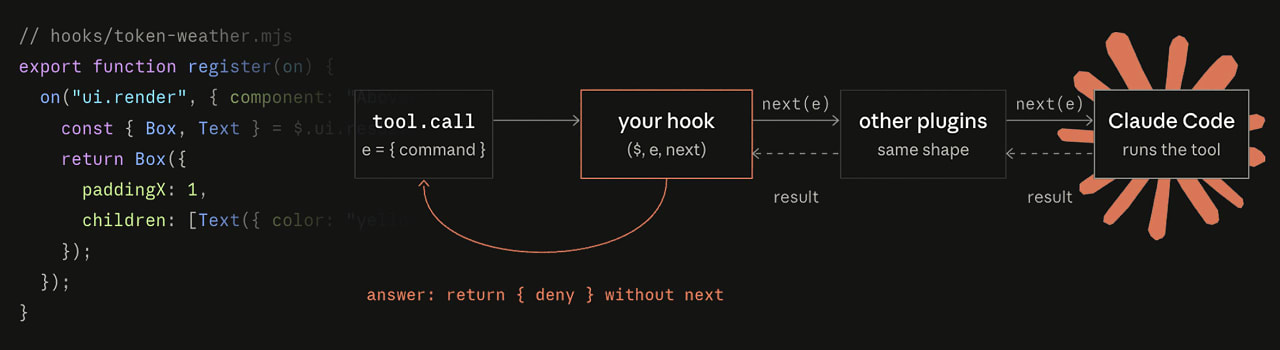
The intersection of AI and CLI-based development has reached a new level with the introduction of "Mods" for Claude Code. This feature allows developers to extend the agentic coding harness using JavaScript. By enabling developers to hook into event streams, modify agent behavior, and render custom UI components directly in the terminal, Claude is moving beyond simple code generation into the realm of fully integrated development environments. Addy Osmani’s recent demonstration, which created a live context-window forecast in just 80 lines of code, showcases the potential for highly personalized developer workflows.
II. Chronology: The Path to Modern Web Standards
The journey to these current releases has been long and meticulous, reflecting a broader trend in the software industry: the move away from "moving fast and breaking things" toward "moving deliberately and ensuring long-term maintainability."
- 2020-2021: The "Road to Preact 11" begins. The team prioritizes backward compatibility while exploring how to modernize internal structures for better ESM support.
- 2023-2024: The rise of TypeScript-first libraries like Effect gains momentum, as the community demands more robust type-safety for asynchronous and error-prone operations.
- Late 2025 – Early 2026: AI agents evolve from chat-based assistants to proactive "coding harnesses." Tools like Claude Code begin to support modular extensibility, allowing developers to define their own AI-augmented coding behaviors.
- October 2026: A convergence of major releases, including the official rollout of Preact 11 and Effect 4.0, highlights a industry-wide focus on reducing bundle sizes and improving runtime efficiency.
III. Supporting Data: Performance and Cost Optimization
The technical community is increasingly focused on the "cost of compute." Two key areas highlight this trend: infrastructure optimization and type-safety.
The Booking.com Cost-Cutting Success Story
A landmark case study in infrastructure efficiency comes from Booking.com, which successfully reduced the costs of its Node.js services by 38%. The strategy was twofold:

- Migration: Moving away from the long-standing PM2 process manager.
- Architecture: Implementing Platformatic’s "Watt" to leverage worker threads.
By rethinking load balancing and worker configuration, the engineering team demonstrated that significant cost savings are possible through architectural refinement rather than just scaling hardware.
Type Refinements and Regex
In the world of TypeScript, developers are also focusing on the "small stuff" that makes a big impact on codebase reliability. Recent discussions on "Automatic Type Refinements" have highlighted the nuances of filter callbacks and how they interact with TypeScript’s control-flow analysis. Similarly, innovative approaches—such as rebuilding complex regex patterns (like SemVer) into composable, named pieces inspired by Emacs—are gaining traction, emphasizing the need for readable, maintainable code in an increasingly complex ecosystem.
IV. Official Responses and Industry Sentiment
The general sentiment among maintainers and industry leaders is one of cautious optimism. The transition to ESM-only packages (as seen in Preact 11) is viewed as a necessary, if sometimes painful, step toward eliminating legacy overhead.
The Effect team has framed their 4.0 release as a response to the "complexity crisis" in modern web development. By providing a unified abstraction for concurrency and resource management, they aim to reduce the boilerplate code that often plagues enterprise-scale TypeScript applications.
Regarding the rise of AI coding agents, the consensus is that the next year will define whether these tools become essential utilities or mere novelties. The ability for developers to write their own "Mods" suggests that the community is prioritizing customizability over monolithic, "black-box" AI solutions.
V. Implications: The Future of the Developer Experience
What do these developments mean for the average developer? Several key implications emerge:
1. The Rise of the "Architect-Developer"
With tools like Watt for Node.js and the advanced extensibility of Claude Code, the developer of the future is expected to be more than just a feature builder; they must be an orchestrator of systems. Understanding how to optimize runtime memory usage and how to extend AI agents will become as essential as understanding CSS or API design.
2. The End of "One-Size-Fits-All" Tooling
The shift toward modular libraries like Effect and the ability to customize AI agents signifies a move away from rigid, all-encompassing frameworks. Developers are choosing "surgical" tools that solve specific, high-value problems—such as error handling or bundle size optimization—rather than adopting entire ecosystems that force specific design patterns.

3. Sustainability and Efficiency
The 38% cost reduction at Booking.com and the 86% memory reduction in Effect 4.0 are not just vanity metrics. They point to a maturing industry that is beginning to prioritize sustainable engineering. As AI agents generate more code, the demand for efficient, high-performance runtimes will only increase, as poorly optimized code produced by AI could lead to significant increases in cloud compute costs.
4. Community and Connection
Events like the Mozilla Festival in Barcelona (October 28-30) remain vital. While the technical landscape is dominated by digital tools and automated agents, the importance of human connection—gathering to share "wild ideas" and discuss the ethical implications of these new technologies—remains a cornerstone of the open-source spirit.
Conclusion
The web development ecosystem is currently in a state of high-velocity refinement. Whether it is through the meticulous update of a classic framework like Preact, the ground-up re-engineering of reliability tools like Effect, or the innovative application of AI-driven coding mods, the trend is clear: we are entering an era where the focus is on smarter, smaller, and more intentional software. For developers, the opportunity lies in mastering these new layers of abstraction and leveraging them to build the next generation of resilient, cost-effective, and highly capable web applications. As the industry moves forward, the ability to balance the rapid adoption of new AI-driven workflows with the proven principles of robust software engineering will be the defining trait of the successful engineer.