










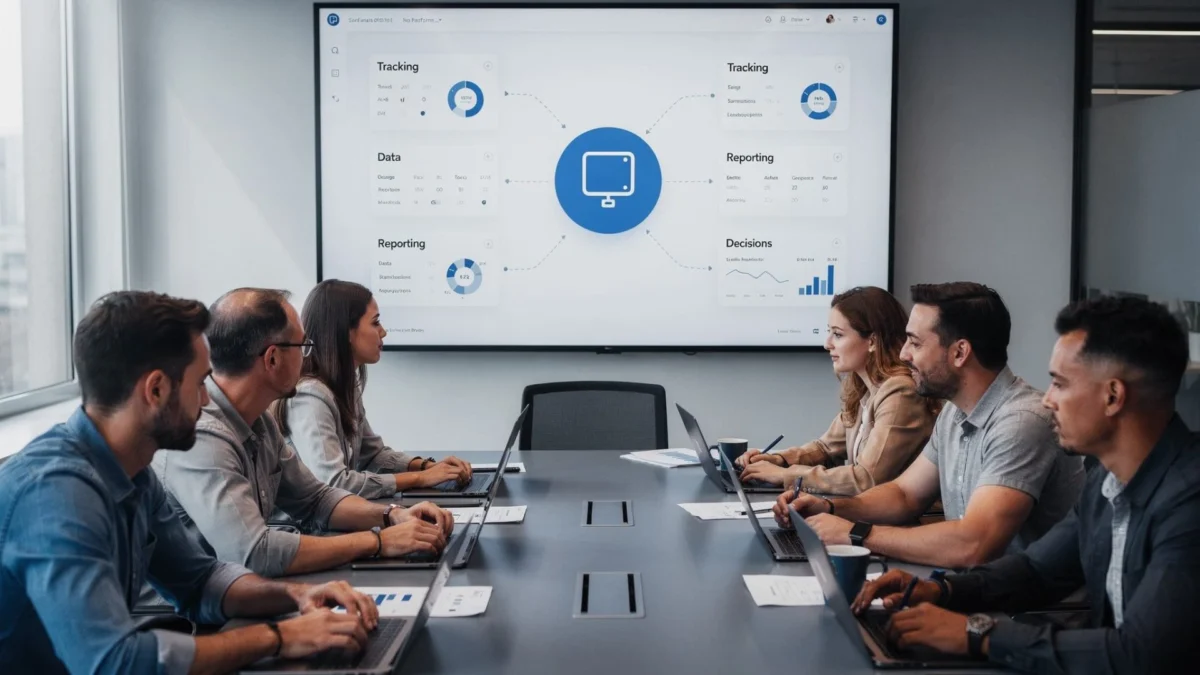
In the digital landscape, a recurring pattern has defined the evolution of big tech: the slow, seductive shift from open ecosystems to proprietary "walled gardens." It begins with convenience—easier integrations, streamlined dashboards, and the removal of the need for complex decision-making. However, as these platforms consolidate control over tracking, reporting, and AI-driven decision-making, the interests of the platform often diverge from those of the brands they serve.
We are currently witnessing this transition within the partner marketing sector. The recent, seismic partnership between Impact.com and Rakuten—two of the industry’s largest players—has created a formidable giant, bundling tracking, attribution, managed services, and proprietary AI tools into a singular stack. This move, alongside similar consolidation efforts by Awin and AppDirect’s acquisition of PartnerStack, suggests that the industry is at a pivotal inflection point. For brand managers and agency heads, the strategic decisions made in the next 18 months will determine their level of autonomy for the remainder of the decade.
The Chronology of Consolidation
The path to the current state of industry concentration did not happen overnight. It is the result of a deliberate, multi-year shift in how affiliate networks view their role in the marketing ecosystem.
- Early 2012: Salesforce transitioned from a feature-focused CRM to a foundational ecosystem. This marked a shift in B2B software where the "best product" became secondary to "who owns the ecosystem." The partner marketing industry is now mirroring this maturation.
- Early 2024 (Awin): Awin hit the deadline for its new tracking-standards initiative, signaling a move toward tighter, more controlled infrastructure.
- May 6, 2024: Rakuten launched Mirai, an advanced AI optimization agent, signaling an aggressive push to embed AI directly into the network’s value proposition.
- Mid-May 2024: Impact.com announced a strategic alliance with Rakuten. This effectively bundled two massive affiliate networks, creating a unified stack that includes consumer purchase data, managed services, and AI agents.
- Late May 2024: AppDirect finalized its acquisition of PartnerStack, further consolidating the mid-market and B2B SaaS partner landscape.
These moves represent a fundamental bet: that the future of partner marketing lies in "bundled" ecosystems rather than interoperable, independent tools.
The "Walled Garden" vs. Independent Infrastructure
The industry has effectively split into two competing philosophies. On one side are the Bundle Providers (Impact, Rakuten, Awin), who argue that brands are overwhelmed by fragmented technology and that a unified, "one-stop-shop" approach is the only way to effectively leverage AI.
On the other side are the Independent Infrastructure Platforms (Everflow, Tapfiliate, and to a nuanced extent, TUNE). These companies are betting on the opposite: that brands do not want to be locked into a one-size-fits-all AI solution. Instead, they are prioritizing interoperability, allowing brands to use their own data and bespoke AI models to drive performance.
Supporting Data and Technical Architecture
The technical divide is best illustrated by the adoption of Model Context Protocol (MCP) support. Everflow has already shipped MCP support in beta, and Tapfiliate is currently operating an MCP server in production. These protocols allow external AI agents to "talk" to the platform, pulling data directly into a brand’s internal AI ecosystem.
Conversely, the bundled approach focuses on proprietary AI assistants—such as Impact’s "Ask Impact" or Rakuten’s "Mirai"—which are trained exclusively on the network’s data. While this lowers the barrier to entry for smaller teams, it limits the brand’s ability to build a truly unique competitive advantage based on their proprietary customer insights.
Official Stances and The Consolidation Argument
The logic behind the bundle is, from a management consultancy perspective, unimpeachable. David Yovanno, CEO of Impact.com, articulated this vision in May: "Partnerships are fundamentally reshaping how businesses grow… brands need more than fragmented tools. They need a unified approach that brings together technology, data, and partner relationships."
For a mid-market brand with a lean marketing team, the bundle is a compelling proposition. It eliminates the need to stitch together disparate vendors for attribution, tracking, and managed services. Furthermore, the inclusion of Rakuten’s deep consumer data layer—behavioral insights on millions of U.S. shoppers—provides a level of attribution accuracy that is difficult to replicate through independent tools.
However, critics argue that this convenience comes at a cost. Greg Hoffman, principal of the agency Apogee, has noted that network-owned bundles create inherent conflicts of interest. "All of the audits we have performed show that network managers favor network-owned or favored properties, such as cash-back or loyalty sites, over the middle tier of content-based partners," Hoffman stated. This creates a risk where the platform’s growth metrics, not the brand’s long-term program health, drive the optimization strategy.
The Implications for Agencies and OPMs
For independent agencies and Outsourced Program Management (OPM) firms, the alliance between giants like Impact and Rakuten is an existential threat. Historically, the agency model relied on being an impartial advisor, selecting the best technology for the client’s unique needs.
If the platforms move toward a "bundled" model, agencies face two significant pressures:
- Direct Competition: With Rakuten’s business development arm working in proximity to Impact’s platform, agencies are questioning whether their client lists are being treated as prospecting grounds for the platform’s internal managed services.
- AI Obsolescence: As bundled AI tools begin to handle strategic recommendations and partner mix optimization, the "human-in-the-loop" services provided by agencies may be commoditized. Agencies that do not evolve their value proposition to focus on high-level strategy—which AI cannot yet replicate—will struggle to justify their retainers by 2028.
The Strategic Choice for Brands
Brands currently evaluating their platform architecture through 2026 are faced with a fundamental question: What is the platform actually for?
The Case for the Bundle
If a brand lacks an internal data science team and views affiliate marketing as a "set-it-and-forget-it" channel, the bundle is the superior choice. It provides immediate, high-quality performance marketing with minimal engineering overhead. The "walled garden" protects the brand from the complexity of integrating disparate data sources, offering a faster path to ROI.
The Case for Open Infrastructure
For enterprise brands with in-house data capabilities and a clear AI strategy, the bundle is a constraint. These brands require "data sovereignty." By using open infrastructure, they can connect their CRM, billing, and affiliate data to their own private AI agents. This allows for hyper-personalized, cross-channel attribution that is impossible when the brand’s data is trapped inside a vendor’s proprietary AI sandbox.
The Middle Ground: The CJ Affiliate Model
It is worth noting that CJ Affiliate represents a third way. While they possess the scale of a network-plus-services bundle, they have maintained an open API posture, providing public access to their data via GraphQL and supporting third-party integrations. By focusing on emerging commerce-media surfaces like CTV and podcasts, CJ demonstrates that one can be a large-scale operator without closing the door to independent developer innovation.
Conclusion: The Long View
The tidal wave of AI-driven marketing is not waiting for brands to deliberate on their tech stack. The architecture a brand commits to between now and the end of 2026 will, in all likelihood, be the architecture that governs their partner marketing for the rest of the decade.
The decision is a binary one regarding organizational culture:
- The CFO’s Path: Prioritize efficiency, predictability, and speed. Accept the trade-offs of a bundled, walled-garden environment.
- The CTO/CMO Path: Prioritize flexibility, data ownership, and long-term control. Accept the higher upfront cost and technical complexity of an open, interoperable infrastructure.
As the industry matures, the value of the "platform" will continue to shift. The networks that succeed will be those that provide either the most seamless, integrated "done-for-you" experience, or the most robust, open foundation upon which brands can build their own future. For the brand manager, the era of passive vendor management is over. The era of architectural strategy has begun.



