This post was created in partnership with Weber Shandwick
In an era where artificial intelligence is rapidly automating technical workflows and marketing budgets face unprecedented scrutiny, a counter-intuitive truth has emerged: the most valuable asset in the creative process is not a software suite or a predictive algorithm, but the depth of human partnership. As brands navigate the volatile landscape of modern consumer attention, the friction between internal teams and external agencies is being replaced by a model of radical, early-stage collaboration.
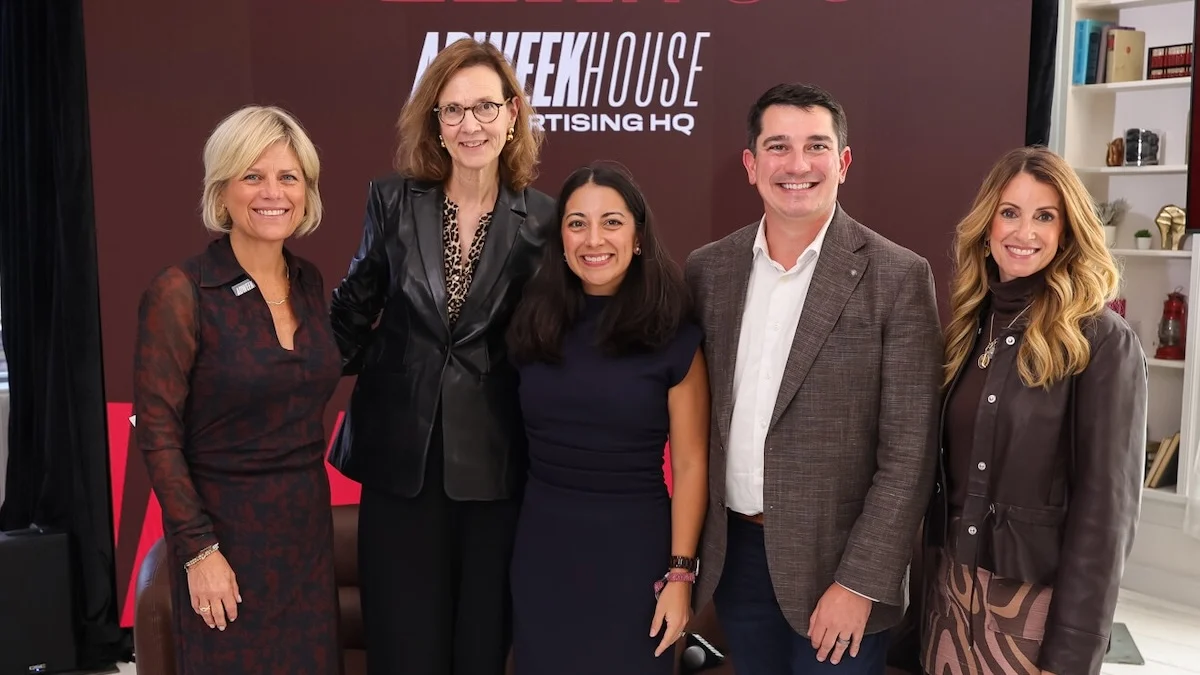
This shift was the central theme of a recent ADWEEK House Advertising HQ Marketing Vanguard roundtable, co-hosted by global communications powerhouse Weber Shandwick. The discussion, moderated by ADWEEK Chief Brand and Community Officer Jenny Rooney and Weber Shandwick CEO Karen Pugliese, brought together C-suite executives from some of the world’s most recognizable brands—Unilever, Supergoop!, and PurposeBuilt Brands—to dissect the anatomy of a high-performing marketing ecosystem.
The Death of the "Agency Reveal"
For decades, the standard agency-client dynamic was built on a "waterfall" model: a brand would provide a brief, the agency would disappear into a silo for weeks, and then emerge with a highly polished "reveal." This approach, while traditional, is increasingly viewed as a relic.
Karen Pugliese, CEO of Weber Shandwick, argues that the most potent work is born from a partnership, not a transactional vendor relationship. For Pugliese, the value of an agency is not in the delivery of a finished product, but in the alchemy of shared thought.
“We want to get into it with brands when the clay is still wet,” Pugliese noted during the panel. “Because that’s how we make the work better together. That’s what collaboration looks like; how we get to great work.”
This sentiment is echoed by Jon Bellante, CMO of PurposeBuilt Brands. Having brought Weber Shandwick on to support two of his company’s brands, Bellante sought to eliminate the traditional disconnect. “We ultimately wanted to move faster and, essentially, get rid of the agency reveal,” Bellante explained. “We needed to have a partner that was going to be an extension of our team that we could collaborate with on an ongoing basis.”
By moving away from the "reveal" and toward a "co-creation" model, brands are able to course-correct in real-time, avoiding the costly delays that occur when a final product misses the mark due to a lack of alignment in the early stages.
Leading from the Middle: Breaking Hierarchies
The modern CMO is no longer just a strategist; they are a facilitator of creative friction. As the pace of market change accelerates, leadership styles are evolving to favor transparency and egalitarianism over top-down directives.
Lauren Weinberg, CMO of Supergoop!, has been at the forefront of this shift. Tasked with building a high-velocity team, Weinberg prioritizes being “in the work” rather than observing from a distance. She actively dismantles hierarchy to ensure that the best ideas rise to the surface, regardless of tenure or title.
“Whenever we review work in a group setting, I always go last because I want to make sure everyone else’s voice is heard before I say whatever I’m going to say,” Weinberg explained. “I think bringing those divergent perspectives to the table and having us debate it openly allows us to move quickly and helps us create the best work.”
This approach requires a level of psychological safety that is often missing in corporate environments. By delaying her own input, Weinberg creates a vacuum that allows junior staff and agency partners to contribute without the chilling effect of a superior’s immediate judgment.
The Cost of Late-Stage Intervention
For Melanie Cappella, Chief Growth Officer of cooking aids and mini meals at Unilever Foods U.S., the importance of early involvement is grounded in operational efficiency. Her experience has taught her that once a creative project reaches the later stages of production, the ability to pivot becomes both expensive and logistically daunting.
“Being involved in the early phases and making sure that you see the brief, you see the assignment that’s going over to the agency partners, and that you are in the first early rounds of shaping an idea, can really leave an impact,” Cappella said.
By front-loading the collaboration, Cappella ensures that the creative output is culturally resonant and commercially viable from the start. This proactive strategy mitigates the risk of "creative drift," where an idea might be aesthetically pleasing but functionally misaligned with the brand’s broader objectives.
AI as an Accelerator, Not a Substitute
As AI tools—from generative design to data analytics—become ubiquitous, the definition of a "skilled marketer" is undergoing a fundamental transformation. The panel agreed that AI is an incredible tool for efficiency, but it cannot replicate the nuance of human cultural intelligence.
When building her team at Supergoop!, Weinberg specifically screened for individuals who possessed both an aptitude for AI experimentation and a strong foundation in traditional creative skills. She envisions a future where the administrative burden of marketing is handled by machines, leaving humans to focus on the high-level strategy and emotional storytelling that define iconic brands.
“It’s those kinds of skills—creativity, communication, and being in touch with culture—combined with the right mindset and the ability to be agile, that I think are most important in a world where you can have AI take on different tasks,” Weinberg added.
The consensus among the panelists was clear: AI is a powerful force-multiplier, but it requires a human hand to steer it. The "humanity space"—that elusive intersection of empathy, cultural intuition, and strategic foresight—is where the real competitive advantage lies.
Implications for the Modern CMO
The transition from a "command and control" marketing department to a "collaborative network" model has significant implications for how brands structure their internal teams and their relationships with external agencies:
- Cultural Fit Over Technical Skill: While technical proficiency in AI and data tools is a baseline requirement, CMOs must prioritize hiring for curiosity, adaptability, and the ability to work in non-hierarchical, cross-functional teams.
- Radical Transparency: The days of "gatekeeping" information are over. To foster effective partnerships, brands must grant agency partners deep access to internal data, consumer insights, and early-stage brainstorming sessions.
- The Rise of the Facilitator-CMO: The most successful leaders will be those who can facilitate diverse perspectives, manage creative debates, and foster environments where the best idea wins, regardless of whether it originated internally or from an agency partner.
- Investing in Agility: The speed of the market requires brands to be comfortable with "imperfect" work-in-progress. By engaging partners early, brands can iterate faster, learning from the market in real-time rather than waiting for a perfectly polished launch.
Conclusion: The Human Element in the Algorithmic Age
As the marketing landscape becomes increasingly digitized, the value of the human connection has ironically skyrocketed. The insights shared by the leaders at Weber Shandwick, Unilever, Supergoop!, and PurposeBuilt Brands suggest that the future of marketing will not be determined by who has the most advanced AI tools, but by who has the most advanced partnerships.
By flattening hierarchies, engaging agencies as true co-creators, and leaning into the distinctly human traits of empathy and cultural intuition, brands can navigate the complexities of the modern world. In a climate where technology can automate almost anything, the ability to collaborate effectively remains the ultimate, inimitable creative advantage. The brands that win will be those that realize their most valuable creative tool is the collective intelligence of the people around the table—long before the work is ever finalized.