







Main Facts: The PE-Healthcare Convergence
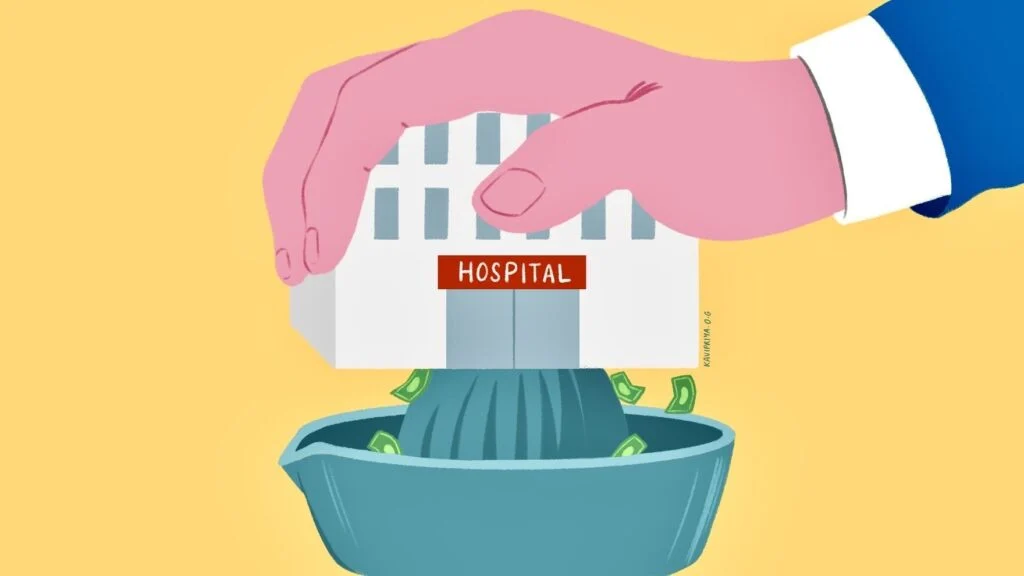
India’s healthcare sector is undergoing a profound structural transformation, driven by an aggressive influx of private equity (PE) capital. Once characterized by fragmented, family-owned nursing homes and independent regional chains, the country’s medical landscape has increasingly consolidated into corporate-backed conglomerates. PE firms and venture capital entities are pouring billions of dollars into Indian hospitals, viewing the sector as one of the most lucrative and resilient growth stories in emerging markets.
However, this financial boom has ignited fierce industry debates. While investors view healthcare as an unprecedented growth engine—fueled by rising disposable incomes, lifestyle diseases, and an expanding insurance net—insiders warn of a distortive economic bubble. Sky-high valuations, aggressive talent poaching, and a shift away from greenfield projects toward expensive acquisitions are reshaping the market dynamics.
The core friction points of this transition include:
- Surging Valuations: PE investments are pushing hospital valuations far beyond traditional public-market metrics.
- The Talent War: Well-capitalized, PE-backed hospital chains are throwing "blank cheques" at top-tier doctors, pricing independent and mid-sized operators out of the labor market.
- Strategic Consolidation: Rather than expanding capacity by building new hospitals from scratch, a significant majority of bed additions come from acquiring or leasing existing infrastructure.
Chronology: How the Healthcare-Capital Tango Evolved
Phase 1: The Greenfield Era and Family-Run Roots
Historically, India’s secondary and tertiary healthcare markets were dominated by physicians turned entrepreneurs, charitable trusts, and regional family-owned enterprises. Building a hospital required deep local relationships, patient trust, and decades of steady, organic growth. Capital expenditure was financed largely through domestic bank debt, internal accruals, and family wealth.
Phase 2: The Rise of Private Equity Inroads (Early 2020s)
As the Indian economy matured and healthcare demand surged post-pandemic, financial sponsors recognized the defensive nature of healthcare assets. PE funds began buying low into privately owned companies with the explicit strategy of scaling operations rapidly, improving governance, and taking them public to secure high exits.
Phase 3: The "Platformisation" Wave (2024–2026)
The current era is defined by aggressive portfolio consolidation, often referred to as "platformisation." Global giants such as KKR, Blackstone, and Advent International are no longer just passive financial investors; they are actively orchestrating mega-mergers, deploying massive capital reserves to buy out regional leaders, and driving rapid consolidation.
Recent milestones highlight the velocity of this trend:

- September 18, 2025: Integrated healthcare provider Aster DM Healthcare announced a staggering Rs 6,900-crore expansion plan slated over the subsequent two years.
- September 17, 2025: Global PE major Advent International acquired nearly a quarter stake in Yatharth Hospitals for Rs 3,150 crore. The transaction valued the National Capital Region (NCR)-based chain at approximately 33 times its Ebitda (Earnings Before Interest, Taxes, Depreciation, and Amortization).
Supporting Data & Financial Metrics
The economics driving the current healthcare land grab defy conventional financial rationale in several ways:
- The Valuation Gap: Advent International’s acquisition of a stake in Yatharth Hospitals at a 33X Ebitda multiple stands in stark contrast to the average public-market multiple of 27X for listed Indian hospital chains. Industry veterans have openly questioned the sustainability of such premiums.
- Acquisition vs. Greenfield Expansion: Out of the 14,000 new beds added to India’s listed hospital universe over a recent six-year window, an overwhelming 55% were either acquired or leased from existing operators rather than built from the ground up. This preference for brownfield assets accelerates market entry but inflates transaction costs.
- Insurance as an Enabler: While insurance players currently play a relatively measured role in the ecosystem, industry executives warn that the deep integration between insurance payouts, corporate hospital billing, and PE financial engineering will soon shift market power decisively toward institutional stakeholders.
Official Responses and Industry Perspectives
The rapid financialization of medicine has created a sharp ideological divide between institutional investors and legacy healthcare providers.
-
The Independent Operator’s Dilemma:
A co-founder of a successful 150-bed hospital in southern India—which was ultimately forced to sell despite strong financial and reputational standing—noted the impossibility of competing with PE-backed war chests."It’s a potent combination; insurance is the least insidious player now… but it won’t be for long," the co-founder stated. The primary breaking point was the inability to manage spiraling wage bills as corporate chains targeted their medical staff with virtually unlimited compensation offers.
-
The Corporate Executive’s Realpolitik:
Echoing these sentiments, the former chief executive of a mid-sized Bengaluru hospital who exited following a 2025 acquisition remarked on the inevitability of the trend:"You can’t say it’s one and not the other; all major hospitals are PE-backed and there’s more capital than ever to attract the person they want… And you can’t really blame the doctors when they get offers they can’t refuse."
Regarding sky-high valuations, the executive questioned the fundamental arithmetic: "This is an unrealistic valuation; how do you ever justify that?"

Implications: Where is Indian Healthcare Headed?
The transformation of Indian healthcare from a mission-driven, doctor-led service into an institutionalized asset class carries profound long-term implications for patients, practitioners, and the broader economy.
1. Escalating Healthcare Costs for Patients
As PE funds demand high internal rates of return (IRR) and aggressive Ebitda growth to justify multiples exceeding 30X, the financial pressure inevitably cascades down. To service massive acquisition debts and pay inflated salaries to poached star doctors, corporate hospitals face intense pressure to optimize average revenue per occupied bed (ARPOB). Consequently, urban healthcare is at risk of becoming increasingly exclusionary, pricing out middle- and lower-income demographics.
2. The Erosion of Independent Medical Practice
The era of the standalone, doctor-run community hospital is rapidly drawing to a close. With institutional players offering "blank cheques" for clinical talent, independent hospitals struggle to retain top-tier medical specialists. Without doctors, patient inflow dries up, leaving founders with little choice but to sell out to the very chains disrupting their businesses.
3. Regulatory and Systemic Risks
The heavy reliance on consolidation rather than capacity creation means that capital is largely changing hands rather than genuinely expanding healthcare access where it is needed most—such as in Tier-3 and rural districts. If macroeconomic conditions tighten or if exit routes via public listings (IPOs) hit a regulatory or market bottleneck, heavily leveraged PE-backed hospital platforms could face severe liquidity stress.
Conclusion
India’s hospital industry stands at a historical crossroads. Depending on one’s vantage point, it represents either the most exhilarating investment frontier in emerging markets or an unsustainable financial experiment. Unless regulatory frameworks step in to balance commercial imperatives with patient welfare, the "private equity tango" risks turning essential healthcare into a commodity engineered solely for maximizing investor exits.