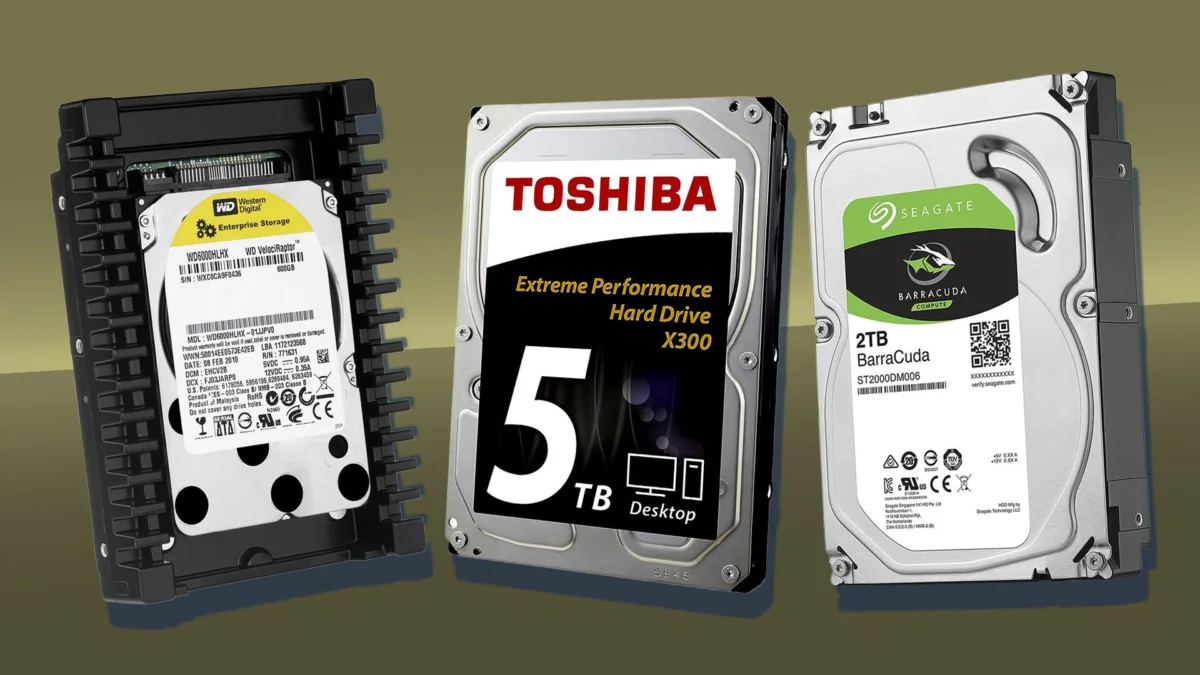
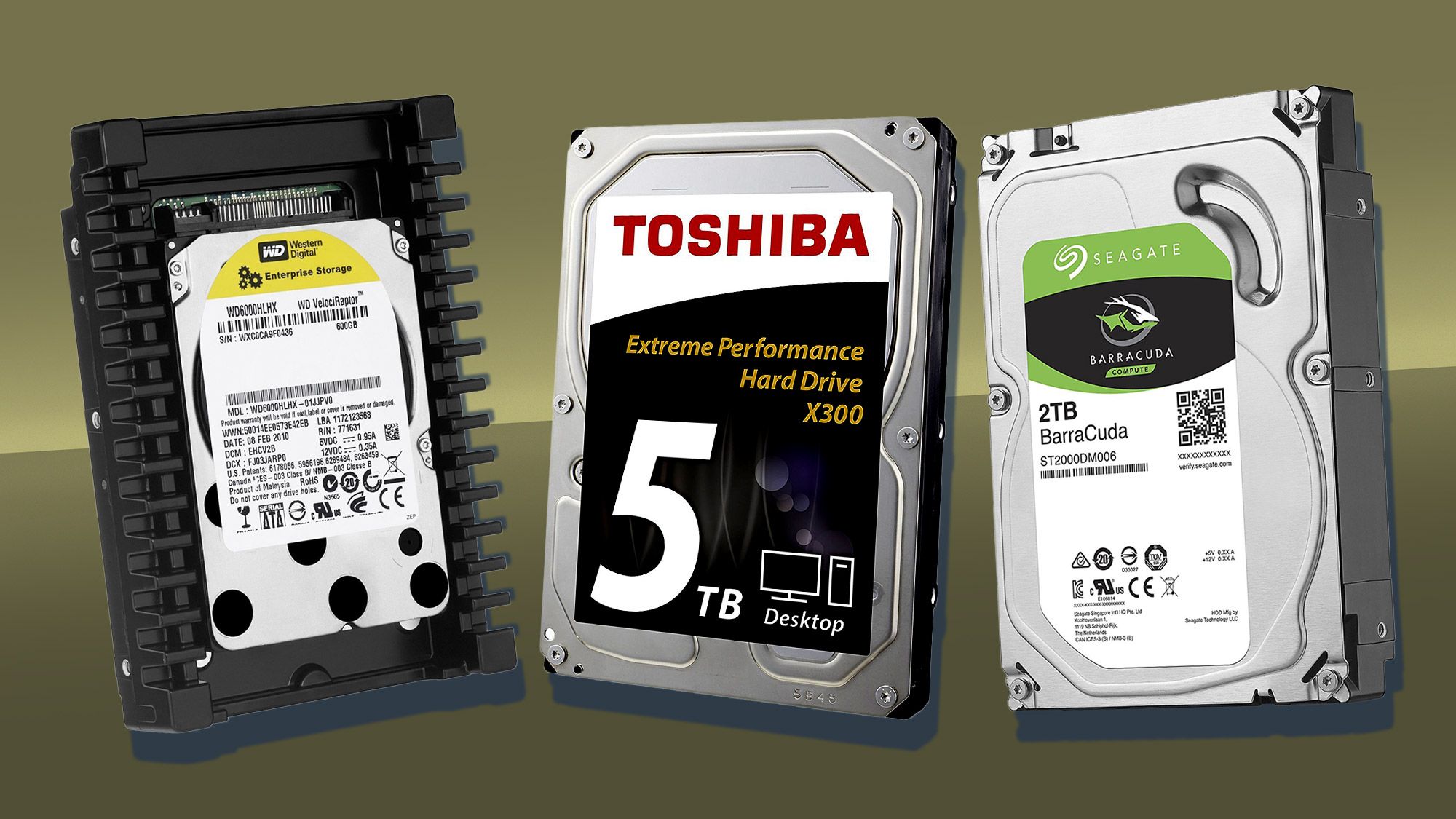
In a digital landscape long dominated by the rapid ascent of Solid State Drives (SSDs) and the promise of lightning-fast flash memory, a surprising protagonist has returned to center stage: the conventional Hard Disk Drive (HDD). While many predicted the obsolescence of spinning platters, the explosion of Artificial Intelligence (AI) and the insatiable data requirements of modern hyperscale data centers have breathed new life into this foundational technology. Toshiba, a titan in the storage industry, is leading the charge, committing a staggering 60 billion yen—approximately $380 million—to expand its HDD manufacturing footprint in the Philippines.
This move marks a significant pivot in the storage industry, underscoring a reality that hardware manufacturers are only just beginning to capitalize on: while speed is essential for computing, the sheer volume of data generated by AI models requires storage solutions that prioritize cost-efficiency and massive capacity over instantaneous access.
The Strategic Shift: Main Facts and Industry Context
The fundamental driver behind Toshiba’s investment is the "storage squeeze" currently being felt by global data center operators. As AI training datasets balloon into the petabyte and exabyte scales, the cost-per-gigabyte of flash storage remains prohibitive for long-term, high-volume archiving. HDDs, currently priced at roughly 1/20th the cost of their SSD counterparts, have become the indispensable backbone of the AI era.
Toshiba’s initiative is not merely a stopgap measure; it is a long-term strategic expansion. The company intends to nearly double its production capacity for high-capacity, AI-optimized drives by fiscal year 2027. This marks the first major capital expenditure for the company in the HDD space in nearly five years, signaling that Toshiba views the current demand surge as a structural shift rather than a temporary spike.
The expansion involves the integration of advanced, high-density manufacturing lines. These new facilities will be capable of producing drives with significantly higher aerial density, allowing for a 40% increase in storage capacity per drive compared to current industry standards. By focusing on capacity density, Toshiba aims to satisfy the demand for "more data in less space," effectively reducing the physical footprint required by massive server farms.
Chronology of an Expansion: From Planning to 2030 and Beyond
Toshiba’s roadmap is meticulously calibrated to meet the evolving needs of the AI sector. The timeline reflects a phased approach to technology maturation and production scaling:
- Fiscal 2025-2026: The immediate focus is on the construction and commissioning of new production lines in the Philippines. Toshiba is concurrently implementing deep automation into its cleanroom operations to optimize manufacturing yields and mitigate labor intensity.
- Fiscal 2027: The company projects that its total production capacity for high-capacity cloud and AI storage will have nearly doubled from current levels.
- By 2030: Toshiba is targeting the commercial rollout of 65TB-class HDDs. This represents a monumental leap in single-drive capacity, which would drastically alter the economics of data center architecture.
- Post-2030: The long-term R&D horizon focuses on the "100TB barrier." Achieving this would effectively allow a standard server rack to hold immense libraries of information that were previously unimaginable, further cementing the role of magnetic storage in the AI value chain.
The Economics of Storage: Supporting Data
To understand why HDDs are experiencing a resurgence, one must look at the math governing data center operations. Hyperscale providers (like those powering the models behind ChatGPT, Gemini, and Claude) are essentially in a race to ingest as much raw data as possible.
Price vs. Performance
The performance gap between SSDs and HDDs remains the primary differentiator in the market. SSDs excel in high-IOPS (Input/Output Operations Per Second) environments where data must be accessed in microseconds. However, for "cold" or "warm" data—the vast reservoirs of information used to train and refine AI models—that level of speed is unnecessary.
Current market data indicates that SSDs remain roughly 20 times more expensive than HDDs. In a data center containing 100 petabytes of data, the cost savings of utilizing high-capacity HDDs over SSDs runs into the tens of millions of dollars. For data center architects, the equation is simple: use expensive flash for the "brains" (processing) and cheap magnetic storage for the "library" (data storage).
Market Positioning
Toshiba currently commands a roughly 10% share of the global HDD market based on total storage capacity. Its ambitious goal is to capture 30% of the market. This objective is bolstered by the fact that the entire supply chain is scaling up. For instance, Nitto Denko, a critical supplier of magnetic-head suspension assemblies, has announced a 28 billion yen ($117 million) investment to boost its production by 40% by 2028. This move highlights that the "HDD Renaissance" is not an isolated phenomenon but an industry-wide mobilization.
Official Responses and Corporate Strategy
Toshiba’s leadership has framed this investment as a critical response to the "AI infrastructure gap." By automating inspection and cleanroom operations, the company expects to reduce its requirement for additional staffing by 40% while simultaneously increasing production yields. This focus on "smart manufacturing" is intended to make the company’s output more resilient to supply chain volatility.
Western Digital, another primary player in the space, has also signaled a massive commitment, recently announcing a $1 billion investment in Japan. Their focus spans a broader spectrum, including research into next-generation manufacturing technology, recruitment, and deep partnerships with academic institutions. This suggests that the industry is not just scaling existing technology, but is in a state of rapid, aggressive innovation to keep the HDD relevant in the face of future compute demands.
Similarly, Seagate has reported that its nearline HDD capacity is largely sold out through 2028, with forward-looking customers already placing orders for 2029 and beyond. This "backlog" serves as perhaps the most reliable indicator of the sustained, multi-year demand for high-capacity magnetic storage.
Implications: The Future of the Data Center
The implications of this shift are profound, both for the technology sector and the broader economy.
1. The Death of "HDD Obsolescence"
The narrative that HDDs would be completely replaced by flash memory has been decisively debunked. Instead, the market has settled into a tiered architecture. We are entering an era of "hybrid storage," where the cost-efficiency of magnetic media makes the training of large-scale AI models economically viable.
2. Environmental and Physical Footprint
By increasing the capacity of individual drives to 65TB and eventually 100TB, Toshiba and its competitors are enabling data centers to store more data without requiring new physical construction. This has significant environmental implications, as it reduces the electricity and cooling requirements per petabyte of stored data, helping data centers meet their sustainability targets despite the exponential growth in their storage needs.
3. Regional Industrial Growth
Toshiba’s decision to focus its expansion in the Philippines highlights the evolving geography of the hardware supply chain. By centralizing high-tech manufacturing in specialized regional hubs, companies are attempting to balance geopolitical risk with the need for high-skilled labor and optimized logistics.
4. The AI Bottleneck
Ultimately, the bottleneck for AI development is not just GPU compute power; it is the ability to house the massive datasets required to train those models. If an AI system cannot access its "memory" (the training data), the processing power becomes irrelevant. By investing hundreds of millions of dollars into this bottleneck, Toshiba is positioning itself as a vital gatekeeper in the AI revolution.
Conclusion
As we look toward 2030, the storage industry finds itself in a paradoxical state. While our computers have moved almost exclusively to the silent, instant speed of SSDs, the "engine room" of the internet—the massive data centers that power global AI—is relying more heavily than ever on the mechanical, spinning reliability of the hard drive.
Toshiba’s $380 million bet on its Philippine manufacturing facilities is a testament to the endurance of this technology. It is a calculated move that recognizes a fundamental truth: as long as humanity continues to generate data at an exponential rate, we will always need a way to store it that is both vast and affordable. The HDD, far from being a relic of the past, has secured its place as the bedrock of the future.