Date: October 15, 2026
In the landscape of modern digital content, few names carry the weight of Lilly Singh. Before the term "influencer" was a ubiquitous marketing staple, and before the creator economy was a multi-billion dollar industry, Singh was already building an empire from her bedroom in Scarborough, Ontario. As "IISuperwomanII," she didn’t just post videos; she pioneered the very blueprint for global digital celebrity.
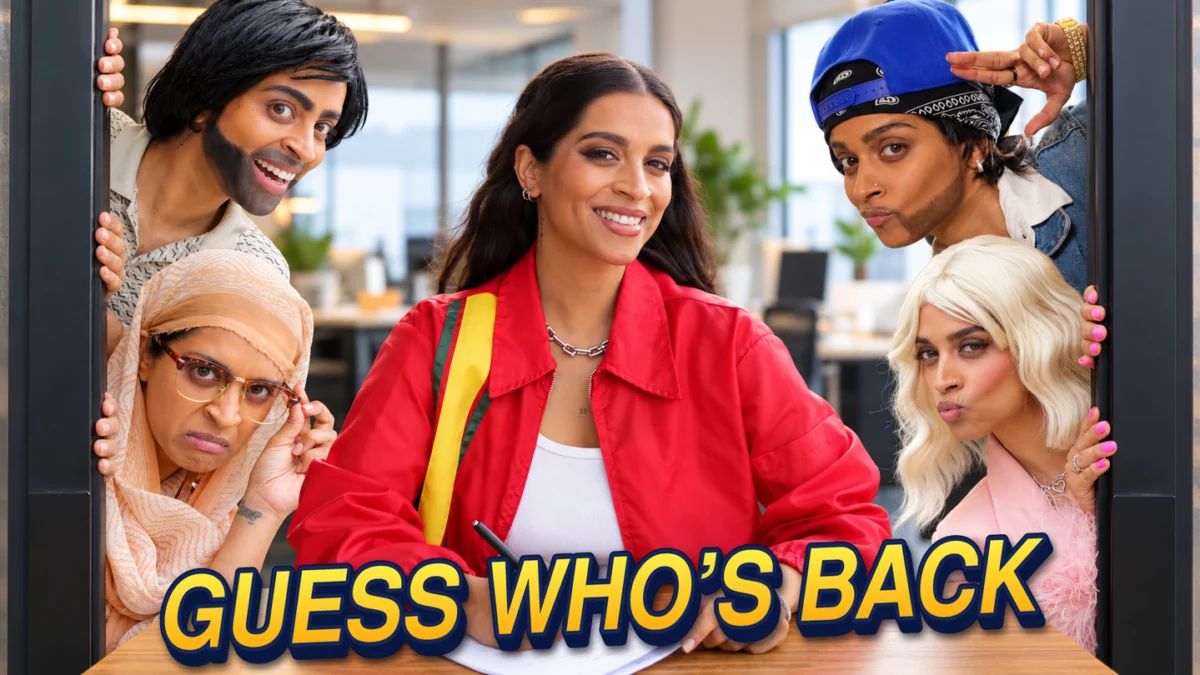
Now, following a whirlwind journey through the corridors of Hollywood—complete with a late-night television show, a New York Times bestseller list, and a series of high-profile executive pitch meetings—Singh is making a move that has surprised many industry analysts: she is returning to the platform that birthed her career. With the release of her new sketch, "My First Day Back at YouTube," Singh is not merely posting a video; she is reclaiming her creative autonomy on her own terms.
A Legacy of Digital Innovation
To understand the significance of Singh’s return, one must revisit the early 2010s. During that era, YouTube was a burgeoning frontier. Singh stood at the forefront of the first wave of creators who proved that an individual with a camera and a vision could command a larger, more engaged audience than traditional media gatekeepers. Her humor was hyper-relatable, her characters were vibrant and distinct, and her work ethic was relentless.
She wasn’t just a creator; she was an architect of the digital comedy genre. Her success wasn’t an accident; it was the result of a rigorous, consistent production schedule that spanned over a decade. By the time she pivoted toward Hollywood, she had established a global footprint that few in traditional media could rival.
The Hollywood Chapter: Lessons in Collaboration and Constraint
Singh’s transition to traditional media was marked by a desire to test her storytelling capabilities across new mediums. Reflecting on her time in the industry, including projects like Dollface and The Muppets, Singh speaks with a nuanced perspective.
"It’s always been about storytelling," Singh explains. "There are different platforms for different types of stories, and as a creator, I’m just curious to try all of them. What does it feel like to make TV? A feature film? A YouTube video?"
While she gained an appreciation for the collaborative power of professional sets—where specialized departments for props, lighting, and writing can elevate a vision—she also encountered the stark realities of the studio system. For Singh, the creative friction became impossible to ignore. She describes a recurring theme in executive meetings where she was constantly encouraged to make her work "more palatable," "marketable," or "less niche."
"Hollywood has real systemic issues, especially for women and people of color," Singh notes. "I received countless notes that weren’t about improving the project, but about making it ‘more palatable.’ That is fundamentally anti-creative. Our job is to tell our stories unapologetically."
The Inversion of the Power Dynamic
The media landscape of 2026 looks vastly different from when Singh first started. Today, the power dynamic has shifted. While traditional networks often struggle to capture the cultural zeitgeist, creator-led, independent projects are frequently the ones driving the conversation.
Singh points to films like Barbie or the rise of new-wave creators like Druski as evidence that audiences crave authenticity over sanitized, studio-approved content. "It’s almost as if Hollywood doesn’t run on logic or evidence, but purely on old habits," she says. "The data clearly shows audiences show up for diverse stories, yet in every general meeting, I’m still told my pitch is ‘too niche.’"
This realization has emboldened a new generation of creators to refuse the pressure to water down their voices. Watching this shift has been a catalyst for Singh’s own return to form. She notes that the "ten toes down" mentality—the refusal to compromise on one’s identity or cultural specificity—is exactly what she intends to bring back to her channel.

Why Now? The Pursuit of Creative Joy
The decision to return to YouTube is not a reaction to failure, but a pursuit of fulfillment. Singh candidly admits that the last year was a challenging one for her health. She describes a physical and emotional toll taken by working within a system that restricted her voice.
"Not expressing myself through videos and making content literally made me feel sick," she says. "Coming back isn’t about proving Hollywood wrong—it’s as simple as joy."
This return is defined by a newfound sense of privilege and perspective. In her early days, the grind was fueled by necessity—paying bills, moving to Los Angeles, and the pressure of consistent uploads. Today, having established financial and professional stability, Singh is approaching her craft from a place of "pure play." She is no longer chasing the algorithm; she is chasing the creative thrill that originally drew her to the camera.
Evolution of the Comedic Voice
Fans can expect the same core DNA that defined Singh’s early success—observational humor, situational comedy, and the return of beloved characters—but with a more mature, self-assured lens.
"Back then, I made sketches about school and teenage crushes," Singh reflects. "Now, you’re seeing an adult Lilly who is self-assured, knows who she is, and isn’t seeking external validation. I’m much more steadfast in my point of view."
Her goal is to foster a sense of connection. The ultimate metric for her, she says, remains the listener who says, "I thought I was the only one." By leaning into the nuances of her cultural background—without the need for the "clunky exposition" often required by traditional Hollywood distribution—Singh believes her comedy will become more potent and relatable than ever.
Global Distribution and the "Day Ones"
One of the primary frustrations Singh encountered in her film work was the limitation of traditional distribution. Often, her global fan base in India, the UK, or the Caribbean would be unable to access her projects due to complex licensing agreements.
YouTube remains the great equalizer in this regard. By returning to the platform, she regains the ability to speak directly to her global audience without gatekeepers. Her comeback sketch features collaborations with fellow creators like Alan Chikin Chow and Jeenie Weenie, serving as a bridge between her "OG" fan base and a new, evolving audience.
Redefining Success in the Modern Era
As she embarks on this new chapter, Singh is consciously decoupling her self-worth from metrics. The "mentally healthy" version of Lilly Singh, as she describes herself, is focused on the quality of the work rather than the speed of the output.
"Success is no longer killing myself with uploads every Monday and Thursday, or burning out chasing a viral video," she asserts. "Success now is asking: Can I push myself creatively? Can I elevate the writing, the acting, the production? Can I take ambitious ideas I thought could only live in Hollywood and actually build them right here on YouTube?"
Her message to her audience is clear: she is here to play, to experiment, and to create from a place of genuine happiness. For those who have followed her journey from the bedroom in Scarborough to the top of the entertainment world and back again, this return feels less like a step backward and more like a reclamation of her rightful throne—one built on her own terms, for her own community, and with the creative freedom that only the independent creator space can provide.
As Singh prepares to drop her next set of projects, she remains a powerful reminder that in the modern digital age, the most successful path is often the one that stays truest to the creator’s original vision.