








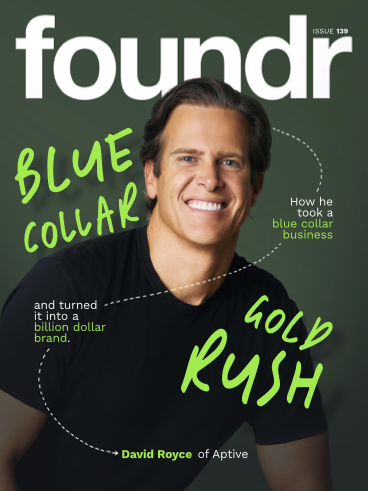
In the high-stakes world of modern entrepreneurship, the prevailing narrative often centers on Silicon Valley software unicorns, venture capital blitzscaling, and the pursuit of the next "disruptive" tech platform. Yet, David Royce, the founder and chairman of Aptive Environmental, has built a massive, multi-billion-dollar empire by focusing on an industry that most elite finance graduates wouldn’t touch with a ten-foot pole: residential pest control.
Royce’s journey is a masterclass in the power of "unsexy" business models. His story challenges the status quo of what constitutes a successful career, proving that wealth and impact are often found in the overlooked corners of the economy. By prioritizing cash flow over vanity metrics and mentorship over mere management, Royce has transformed himself from a self-described "kid who wasn’t smart" into one of the most effective and stealthy wealth builders in American business.
The Early Years: Redefining "Smart"
David Royce’s trajectory was not linear, nor was it paved with academic accolades. During his childhood, Royce struggled significantly in traditional educational settings. Lacking the ability to focus unless he felt a deep, intrinsic connection to the subject matter, he often performed poorly in school.
"I struggled in school because I couldn’t focus unless I cared deeply," Royce explains. Without the benefit of an ADHD diagnosis during his youth, he internalized these struggles as a lack of intelligence. It wasn’t until the sixth grade, under the guidance of a teacher named Mrs. Luft, that his self-perception began to shift. Mrs. Luft recognized potential in him that he had yet to see in himself, providing the necessary validation that fueled his academic efforts for years to come.

As an adult, Royce came to understand that his ADHD was a "double-edged sword." In mundane, static environments, it was a liability; however, in high-stakes, fast-paced arenas like sales and entrepreneurship, it functioned as a superpower. This realization became the cornerstone of his career: he learned to seek environments where his unique cognitive wiring could thrive rather than falter.
Chronology of a Sales Titan
Royce’s entry into the pest control industry was serendipitous. While in college, he heard a peer boast about earning $25,000 in a single summer through door-to-door sales. Driven by the prospect of financial independence, Royce traveled to Sacramento to try his hand at the trade.
The beginning was brutal. For his first five days, he failed to close a single sale. While his peers were successful, Royce was effectively doing "free cardio." Rather than quitting, he spent his weekend in a bookstore, devouring sales literature and committing to 90 minutes of daily study. By the end of that summer, he was the top-performing rookie out of 200 sales representatives.
The Pivot to Entrepreneurship
Upon finishing his finance degree, Royce was primed for a career in investment banking. However, his mentor—a man who had just sold his own pest control startup to Terminix for $10 million—challenged him. He asked why Royce would spend his life working 100-hour weeks for someone else when he had the skillset to build his own firm.
Despite his initial hesitation—believing that pest control lacked the prestige of a corporate finance career—Royce chose opportunity over image. He invested $300,000 of his own savings, money he had earned during his college summers, and launched his first company. He didn’t invent a new technology; he simply applied best practices, financial rigor, and relentless sales training to a fragmented, blue-collar industry.
Supporting Data: The Anatomy of Success
Royce’s business model is built on three pillars that allowed his companies to grow seven to ten times faster than the industry average:
- The Sales Machine: Royce codified his sales process into a rigorous, repeatable system. He focused on "option closes" (e.g., "Would 3:00 or 5:00 work better?"), the "RAC" method (Resolve, Add an Ace, Close), and the importance of body language. Under his training, representatives often saw a 70% increase in production compared to their previous employment.
- Technological Integration: Long before it was standard, Royce invested in software to gamify sales. He created an internal app that tracked performance and facilitated nationwide tournaments, which regularly boosted productivity by up to 30%.
- The Asset Deal Structure: Royce developed a unique exit strategy. He sold only the customer accounts and the technicians to strategic buyers, while retaining his core leadership team. This allowed him to move from one company to the next, leveraging the same high-performing team and scaling faster each time without diluting equity.
The Cash Flow Reality
In his first year, Royce nearly went bankrupt in Los Angeles. The issue wasn’t a lack of demand—he had acquired 7,500 customers, far exceeding his target of 5,000—but a timing mismatch. Because he paid his salespeople in advance of collecting revenue, his cash flow stalled. He navigated this by negotiating payment terms with his team, learning a vital lesson: "Revenues are vanity. Profits are sanity. But cash flow is reality."
Official Responses and Philosophy on Culture
Royce’s approach to culture is famously unconventional. At Aptive, he implemented a high-energy environment featuring an NCAA basketball court, golf simulators, and international retreats to Egypt and Thailand.

However, Royce is quick to clarify that perks are "sugar, not protein." The true driver of retention was the opportunity for employees to build wealth. He famously gave away 25% of his company to his employees, ensuring that when the business was sold, the team members who helped build it were financially rewarded. Many of his staff used these payouts to pay off mortgages and student loans, proving that ownership is a significantly more powerful retention tool than office amenities.
Lessons in Leadership and Delegation
One of the most difficult transitions for any founder is letting go. Royce learned this the hard way after replacing himself as CEO. He realized that the temptation to "save the day" is a trap. True leadership, he argues, is shifting from being the hero to being the architect.
He also suffered a significant setback when he hired a high-profile CFO from a billion-dollar tech firm. The executive’s lack of experience with the specific nuances of the pest control business, combined with a failed sale process that saw the company miss its forecasts, taught Royce that "resumes don’t run companies; people do." It was a painful but necessary lesson in the dangers of hiring based on pedigree rather than cultural and operational alignment.
Implications for the Modern Entrepreneur
David Royce’s story carries significant weight for those looking to build businesses today, particularly in an era of AI and automation. He points out that while AI can handle entry-level office tasks, it cannot perform the essential, physical services that define the blue-collar sector.
As millions of baby boomers reach retirement age, there is a massive opportunity for younger entrepreneurs to acquire and revitalize these "boring" businesses. These companies offer recurring revenue models and recession-proof demand.
"If you don’t enjoy the climb, the summit is going to disappoint you," Royce notes. For him, the true measure of success was never the valuation or the exit, but the number of leaders he helped create along the way. His legacy is not just a billion-dollar company; it is the cadre of professionals he mentored who are now running their own ventures, utilizing the same disciplined, opportunity-first philosophy.
In conclusion, David Royce serves as a vital reminder that the most lucrative opportunities are often hiding in plain sight. Success does not require a revolutionary invention; it requires the persistence to do the work others refuse, the humility to swallow one’s ego, and the foresight to build a team that shares in the rewards of the journey. Whether through door-to-door sales or managing a global enterprise, the principles of hard work, financial integrity, and intentional leadership remain the ultimate competitive advantage.