








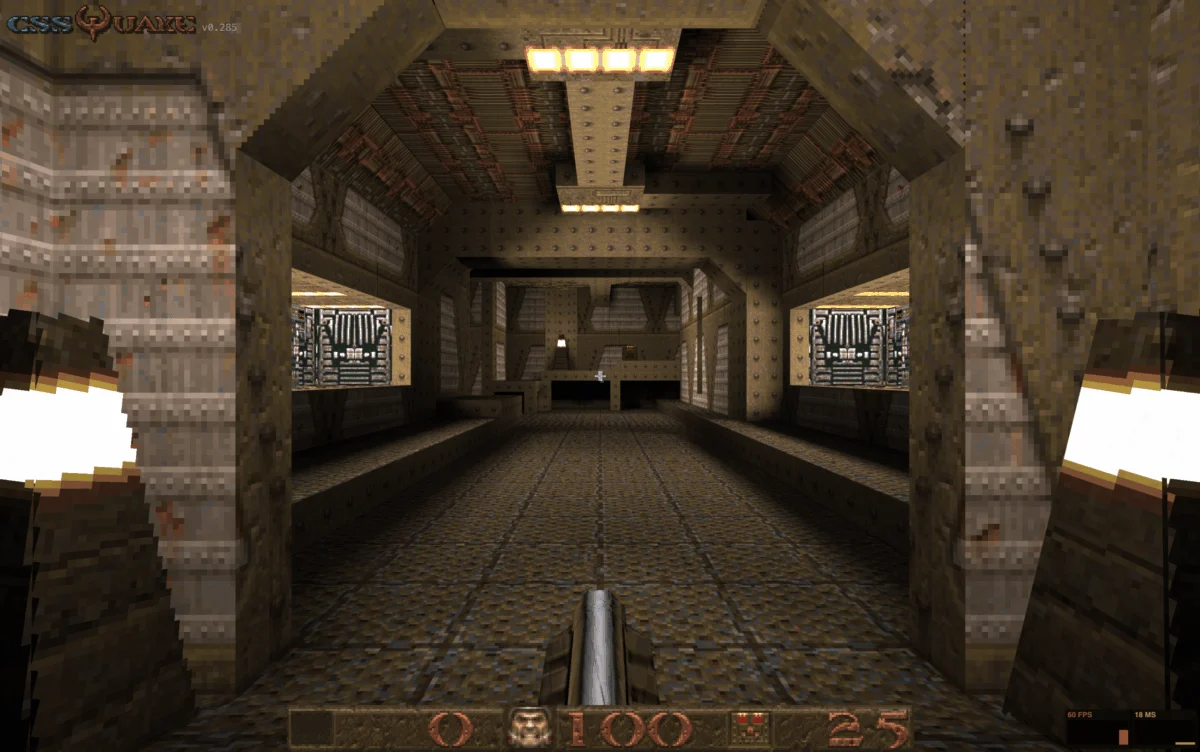
In the rapidly evolving landscape of web development, the last two weeks have been a testament to the fact that while "browser updates" may periodically slow to a crawl, the ingenuity of the developer community never rests. From the resurrection of 90s gaming nostalgia via modern CSS to the architectural shifts in how we handle theming and accessibility, the web platform continues to mature in unexpected ways.
Welcome to What’s !important #14, your comprehensive briefing on the most significant shifts, experiments, and discourse currently shaping the modern web.
1. Main Facts: The New Frontier of Web Capabilities
The current narrative in web development is shifting from "What can we build?" to "How elegantly can we solve these problems using native platform features?" We are witnessing a transition where complex interactions—previously requiring heavy JavaScript libraries—are being offloaded to HTML, CSS, and native APIs.
Hyperblam: Orchestrating Audio through HTML
Heydon Pickering’s Hyperblam serves as a fascinating proof-of-concept for the future of the Web Audio API. By utilizing Web Components to facilitate music creation, Hyperblam challenges the traditional assumption that complex multimedia requires deep JavaScript integration. The project’s ethos—"Write music, not JavaScript"—highlights a growing desire to simplify the web by leveraging the power of declarative HTML.
CSS Quake: The Power of PolyCSS
The release of CSS Quake by the team at Layoutit is more than just a nostalgic trip to 1996; it is a technical milestone. Built upon the foundation of PolyCSS, this port demonstrates that modern browser engines are now capable of rendering complex, high-performance gaming environments purely through stylesheet-driven logic. It follows the recent momentum of CSS DOOM, signaling that the line between "styling a document" and "rendering an application" is becoming increasingly blurred.
2. Chronology: A Fortnight of Web Evolution
While the browser release schedule has been relatively quiet, the community discourse and experimental releases have been frantic.
- June 15, 2026: The Web Engines Hackfest commences in A Coruña, Galicia. Developers and browser engineers gather to discuss the future of standards, accessibility, and engine interoperability.
- June 16, 2026: Marina Aísa provides a detailed documentation of the Hackfest, highlighting the intersection of technical standards discussions with outdoor collaboration and accessibility-focused advocacy.
- Late June 2026: Firefox 152 reaches "Baseline" status for the
field-sizingproperty, allowing developers to create fluidselectelements that adapt their width to their content. - Present Day: Polypane releases an exhaustive study on the
random()CSS function, demonstrating its potential for everything from organic animations to complex data visualization, despite current limited browser support.
3. Supporting Data: Advancing CSS Standards
The maturation of CSS is currently focused on two fronts: control and logic.

Gap Decorations: Beyond the Grid
Temani Afif’s recent deep dive into "Gap Decorations" marks a significant step forward for layout designers. For years, the gap property in Flexbox and Grid was a functional, albeit visually static, utility. With new styling capabilities, developers can now treat the negative space between elements as a first-class citizen, allowing for lines, patterns, and interactive decorations that sit within the gutters of a layout without requiring extra DOM elements.
The random() Function Experimentation
The random() function is perhaps the most anticipated CSS tool currently in development. Polypane’s recent experiments have shown how this function can eliminate the need for pseudo-random JavaScript calculations. By enabling developers to assign random values to properties like opacity, transform, or animation-delay directly within the stylesheet, we can create more "alive" and organic interfaces. While Safari currently leads the way in implementation, the community is watching closely for wider adoption.
Fluid select Elements
The introduction of field-sizing: content is a small but mighty improvement in user experience. By allowing <select> elements to resize based on their contents, we eliminate the awkward "clipped text" syndrome that has plagued web forms for decades. As noted by Manuel Matuzović, this property also intelligently handles the size attribute, proving that browser vendors are increasingly prioritizing developer ergonomics.
4. Official Responses and Industry Perspectives
The Modern Theming Paradigm
Una Kravets has set the standard for what modern theming should look like. In her recent exploration of the CSS ecosystem, she articulates a new "stack" of features:
@property: Allowing for typed CSS variables.light-dark(): Enabling native support for OS-level theme preferences.contrast-color(): Ensuring accessibility by automatically choosing the best text color against a background.@container style(): Enabling components to react to their own internal state.
These features, when combined, represent a shift toward "intelligent" components that are self-aware and natively accessible, reducing the reliance on external design tokens or complex theme-management scripts.
Rethinking Platform Parity
Bramus recently ignited an important debate regarding whether websites should function identically across all devices. His argument is compelling: in an era of diverse input modalities—from touchscreens to mouse-and-keyboard setups and screen readers—forcing a "one-size-fits-all" experience is fundamentally anti-user.
Bramus highlights three specific web features—Interest Invokers, Overscroll Actions, and the Document Picture-in-Picture API—as examples of features that should behave differently depending on the context. His call to action is clear: developers must stop striving for "visual identity" and start striving for "functional equity."

5. Implications: The Future of the Web Platform
As we look toward the remainder of 2026, the implications of these developments are clear.
The Rise of Declarative Logic
The trend toward "no-JS" (or "less-JS") solutions is not merely a stylistic choice; it is a performance and accessibility imperative. By moving audio generation, game rendering, and complex styling into the declarative layer, we are creating a more resilient web. The browser becomes the engine, and the developer provides the blueprint, rather than the manual assembly instructions.
Accessibility as a Technical Foundation
The conversations at the Web Engines Hackfest underscore a vital truth: the future of web accessibility is not just about screen reader compatibility; it is about browser-level features that make inclusive design easier to implement by default. When tools like contrast-color() and field-sizing become standard, the "cost" of building an accessible site drops, making it easier for developers to prioritize it without compromising on aesthetic or complexity.
A Note on Browser Cycles
While stable browser releases may seem stagnant at times, the underlying "developmental" browsers—and the vibrant community of researchers like those at the Hackfest—ensure that the platform is moving faster than ever. Chrome 150’s upcoming release, coupled with the ongoing experimentation from groups like Polypane and Layoutit, suggests that the next few months will bring a surge of new capabilities.
As we continue to navigate this terrain, the lesson is simple: keep building, keep experimenting, and keep challenging the status quo. The web is not a static document; it is a living, breathing engine of creativity. Stay tuned to our Quick Hits for the latest implementation news as these features move from experiment to stable production.
See you in two weeks.