










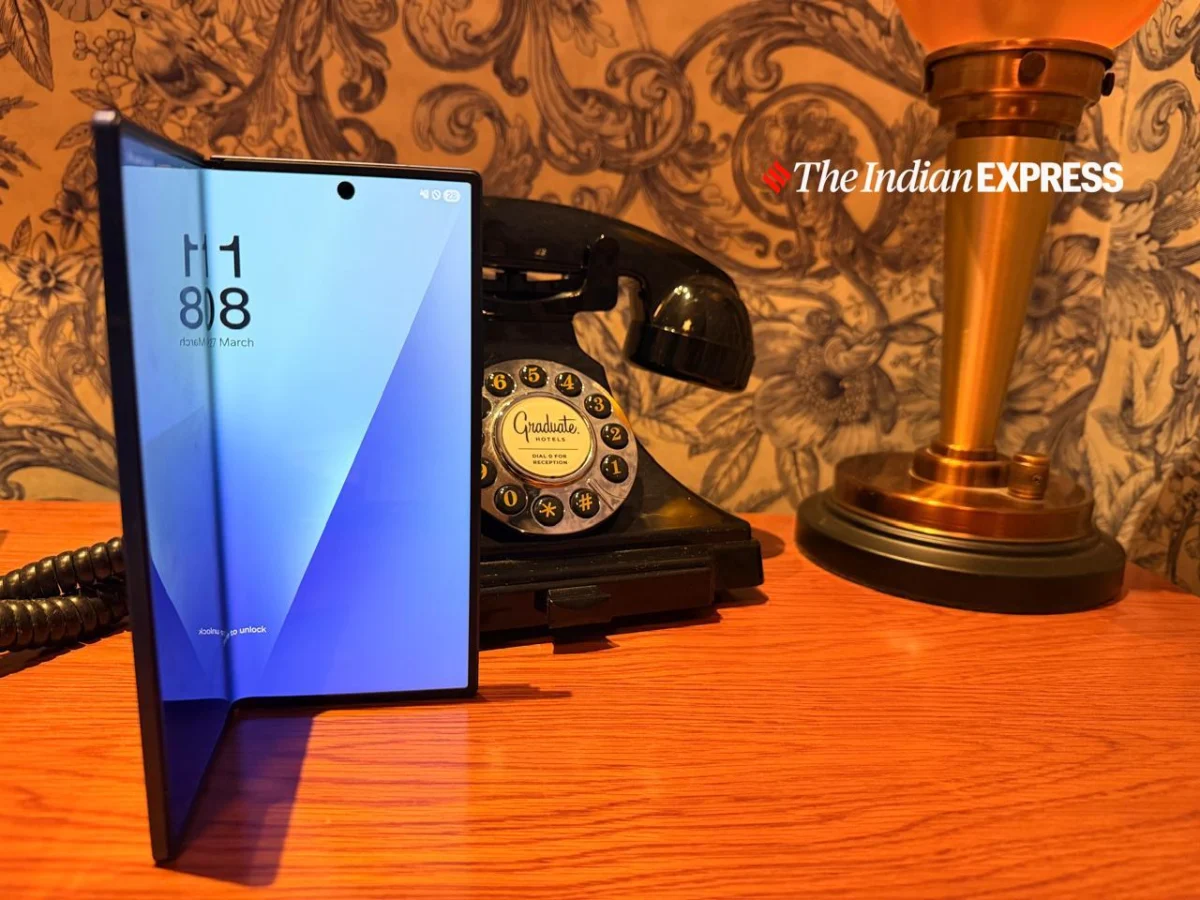
NEW DELHI — In the rapidly evolving landscape of mobile technology, foldable smartphones have transitioned from fragile, high-priced novelties to mature, enterprise-ready productivity tools. As the market enters the second half of 2026, the segment stands at a critical crossroads. While manufacturers continue to push the boundaries of display engineering, a fundamental truth has emerged regarding user retention and daily utility.
According to a long-term retrospective analysis by veteran technology journalist Nandagopal Rajan, published on July 21, 2026, the true success of a foldable device relies not on its expansive inner canvas, but on how seamlessly it functions when closed.
Reflecting on a year of daily usage with the Samsung Galaxy Z Fold 7, Rajan argues that the device’s primary strength is its ability to operate as a standard, uncompromising flagship smartphone without requiring the user to open it. This "closed-screen paradox" highlights a significant shift in how consumers interact with flexible-display technology, moving away from the initial novelty of tablet-sized screens toward a more pragmatic, dual-purpose design philosophy.
Main Facts: The Core Findings of the One-Year Retrospective
The Samsung Galaxy Z Fold 7, which debuted in mid-2025, represents the culmination of Samsung’s iterative design philosophy. After twelve months of real-world testing as a primary device, several key operational patterns and hardware milestones have emerged:
- The Cover Screen as the Primary Interface: Contrary to the original design intent of foldable devices—which assumed users would open the device for the majority of tasks—the cover screen on the Galaxy Z Fold 7 has become the dominant interface. Its refined aspect ratio and slimmer bezels allow it to function identically to a traditional "slab" flagship, reducing the cognitive and physical friction of unfolding the device for routine interactions.
- Ergonomic Refinement over Extreme Thinness: While competitor OEMs have focused aggressively on minimizing device thickness at the cost of battery capacity and structural rigidity, the Fold 7 strikes a balance. It offers a significantly slimmer and more compact profile than its predecessors while maintaining a reassuring weight ("heft") that enhances grip and durability.
- Highly Targeted Inner Screen Utility: The expansive interior display is no longer treated as a general-use screen. Instead, it is reserved for specific, high-value tasks. These include complex spreadsheet manipulation, media consumption during travel (such as on commercial flights), and sophisticated multitasking environments.
- An Emerging Workstation for Generative AI: The foldable form factor has found a new niche as a dedicated hardware platform for artificial intelligence (AI) workflows. The inner screen’s square-like aspect ratio is uniquely suited for running parallel AI applications—such as Google’s NotebookLM, Kimi, and Anthropic’s Claude—in split-screen configurations, transforming the phone into a pocketable AI development station.
Chronology: The Evolution of the Galaxy Z Fold Lineup (2019–2026)
To understand why the Galaxy Z Fold 7’s cover screen performance is considered its "superpower," it is necessary to trace the technological timeline of the series over the past seven years.
[2019] Galaxy Fold 1: Fragile plastic display, tiny 4.6-inch cover screen, experimental hinge.
   │
[2021] Galaxy Z Fold 3: Introduction of Ultra Thin Glass (UTG), IPX8 water resistance, S-Pen support.
   │
[2023] Galaxy Z Fold 5: "Flex Hinge" eliminates the folding gap; focus shifts to weight reduction.
   │
[2025] Galaxy Z Fold 7: Cover screen achieves standard smartphone ergonomics; emergence of on-device AI multitasking.
1. The Experimental Era (2019–2020)
- Galaxy Fold (2019): The pioneer device featured a fragile plastic screen, a highly visible crease, and an external 4.6-inch cover display with massive bezels. It was widely viewed as an expensive proof-of-concept. The external screen was too cramped for typing, forcing users to unfold the device for almost every task.
- Galaxy Z Fold 2 (2020): Samsung introduced the "Infinity-O" cover screen, expanding it to 6.2 inches. While a massive improvement, the aspect ratio remained extremely tall and narrow (25:9), making typing difficult and sustaining the necessity of opening the phone.
2. The Structural Maturation Era (2021–2023)
- Galaxy Z Fold 3 & Fold 4 (2021–2022): These iterations focused on durability, introducing armor aluminum frames, IPX8 water resistance, and Ultra Thin Glass (UTG). The Fold 4 slightly widened the cover screen to a 23.1:9 aspect ratio, but it still felt distinctly different from a standard smartphone.
- Galaxy Z Fold 5 (2023): Samsung introduced a new teardrop-style "Flex Hinge," allowing the phone to fold completely flat without a gap. This design choice significantly reduced pocket thickness and minimized dust entry, though the overall form factor remained narrow.
3. The Ergonomic and AI Integration Era (2024–2026)
- Galaxy Z Fold 6 (2024): The device adopted a boxier design with a wider cover display (22.1:9 aspect ratio), moving closer to the ergonomics of a traditional phone. This model also marked the debut of integrated "Galaxy AI" features.
- Galaxy Z Fold 7 (2025–2026): The current generation achieved a design milestone by further reducing the hinge profile and widening the outer screen to closely mimic a standard smartphone’s aspect ratio. This change effectively eliminated the "ergonomic penalty" of using the phone in its closed state, setting the stage for the modern user experience described in Rajan’s review.
Supporting Data: Ergonomics, Workflows, and the AI Paradigm
The transition of the foldable phone from a novelty to a practical daily driver is supported by shifts in ergonomics and software utilization patterns.
Hardware Ergonomics: The Closed State vs. Traditional Flagships
For years, the primary criticism of foldable devices was their bulk. When folded, early models resembled two smartphones stacked on top of each other. The Galaxy Z Fold 7 addresses this through precise engineering adjustments:
| Metric | Galaxy Z Fold 3 (2021) | Galaxy Z Fold 7 (2025/2026) | Standard Flagship (Typical) |
|---|---|---|---|
| Folded Thickness | ~16.0 mm (at hinge) | ~10.5 mm | ~8.0 mm to 8.9 mm |
| Weight | 271 grams | ~230 grams | ~220 grams |
| Cover Screen Ratio | 25:9 (Narrow) | ~21:9 (Standard-adjacent) | 19.5:9 to 20:9 |
| Primary Use Cases | 30% Closed / 70% Open | 75% Closed / 25% Open | 100% Closed |
The data reveals that as the physical dimensions of the folded device approached those of a standard flagship, the operational ratio inverted. Users no longer felt compelled to unfold the device to perform basic tasks like replying to emails, navigating, or browsing social media.
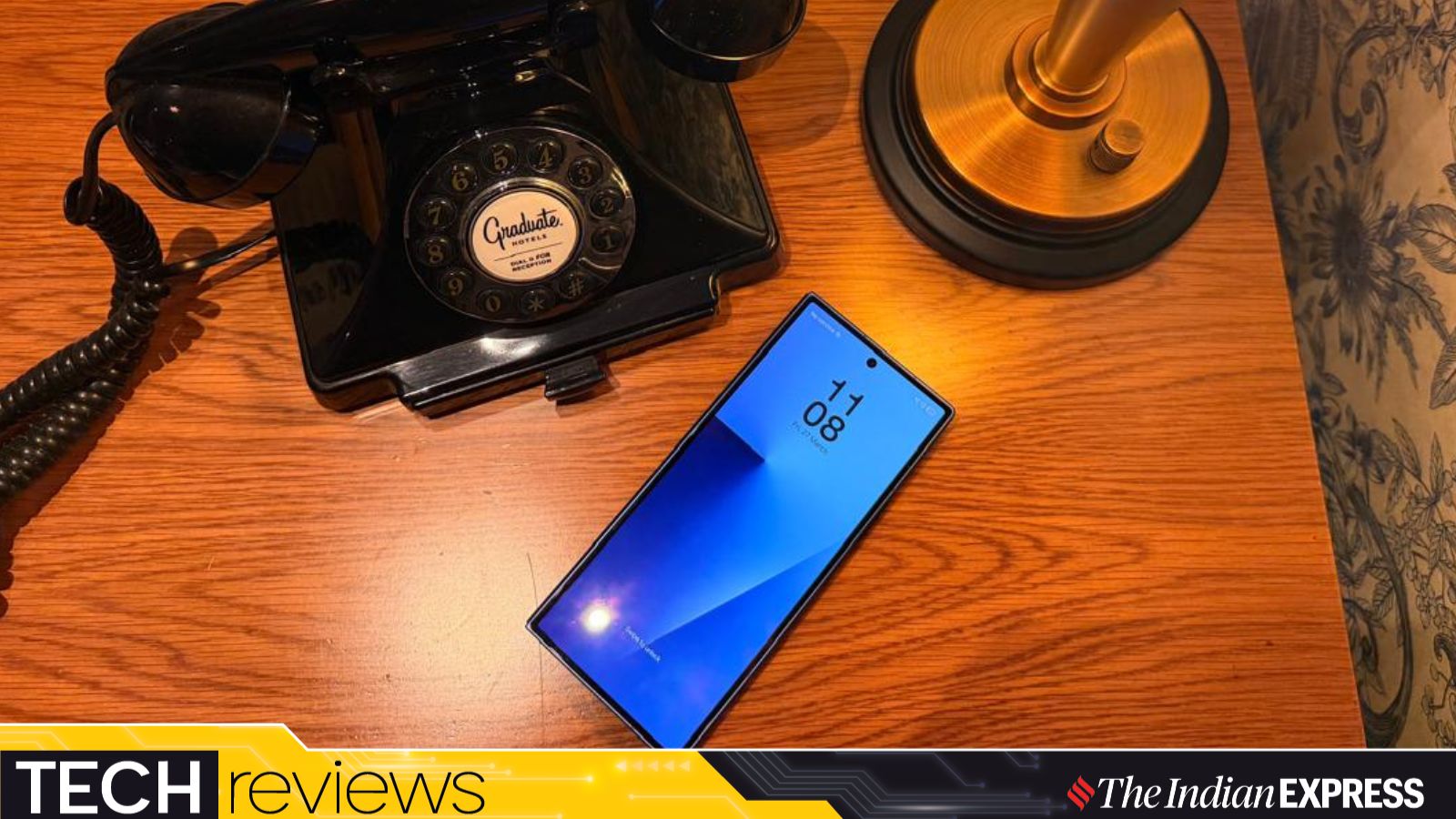
The Productivity Split: Tabular Data and Media
When the Galaxy Z Fold 7 is unfolded, its near-square aspect ratio offers distinct advantages for specific professional and leisure tasks:
- Tabular Data Analysis: Standard smartphones struggle to display wide spreadsheets, often cutting off columns or forcing awkward horizontal scrolling. The Fold 7’s inner screen provides a wider horizontal field of view, making it an excellent tool for reviewing financial models and project sheets on the go.
- Travel-Friendly Media Consumption: On flights or long commutes, the unfolded screen serves as an excellent personal media player. While widescreen (16:9) content still features letterboxing, the overall image size remains substantially larger than that of any traditional smartphone.
The AI Workstation Configuration
One of the most notable trends of 2026 is the deployment of foldables as dedicated AI machines. The large inner display allows professionals to run multiple resource-intensive AI applications simultaneously without constant app-switching:
+----------------------------------------+
|                                        |
|              Claude (LLM)              |
|        [Scheduled Task Running]        |
|                                        |
+-------------------+--------------------+
|                   |                    |
|    NotebookLM     |     Kimi Search    |
| [Document Synthesis] [Conversational AI] |
|                   |                    |
+-------------------+--------------------+
This multi-window layout enables users to run complex prompts on Claude in one window, synthesize reference documents via NotebookLM in another, and cross-reference information using Kimi Search in a third. This level of parallel processing is virtually impossible on a standard single-screen smartphone.
Official Responses and Market Dynamics
The evolution of Samsung’s foldable strategy is a direct response to intensifying competition in the premium smartphone market.
Competitive Pressure from Rival OEMs
Throughout 2025 and 2026, Chinese manufacturers such as Honor, Xiaomi, and Huawei, alongside Google with its Pixel Fold series, have pushed the physical limits of hardware. Devices like the Honor Magic V series demonstrated that foldables could match the thickness of traditional slab phones when closed.
Industry analysts note that these competitive pressures forced Samsung to abandon its conservative design approach. In response, Samsung prioritized reducing the Z Fold 7’s thickness and expanding the cover display’s width to defend its global market share.
Samsung’s Corporate Strategy
Samsung’s product marketing and engineering teams have shifted their narrative. While early marketing campaigns focused heavily on the "unfolded tablet experience," recent promotional strategies emphasize "seamless transition" and "uncompromised dual-utility."
In corporate briefings, Samsung executives have acknowledged that the cover screen is the gateway to the user experience. By perfecting the outer display, they have successfully lowered the barrier to entry for conservative consumers who were previously hesitant to adopt the foldable form factor.
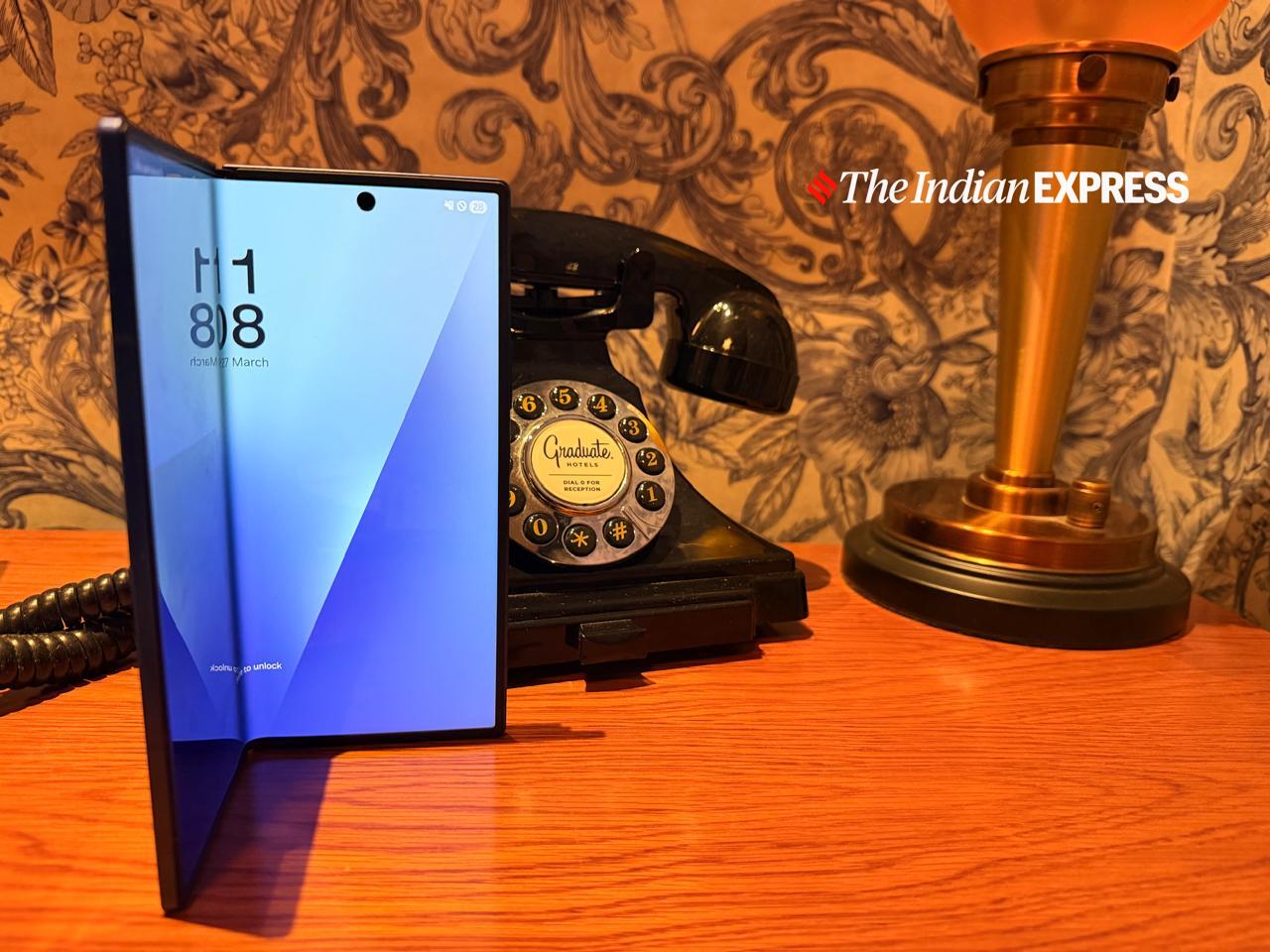
Implications for the Future of Mobile Computing
The long-term usage patterns of the Galaxy Z Fold 7 point to several key trends that will likely shape the mobile industry heading into 2027 and beyond.
1. The Design Philosophy of Future Form Factors
As the industry prepares for the commercialization of new designs—such as tri-fold devices (which fold twice to create a full 10-inch tablet) and rollable/slidable displays—the lessons of the Fold 7 remain highly relevant.
No matter how advanced or expansive a flexible display is when fully opened, the commercial viability of the device will depend on its closed state. If a tri-fold or rollable device is too bulky, heavy, or awkward to use as a standard phone, it will likely remain a niche product.
2. The Separation of Personal and Professional Devices
Rajan’s practice of utilizing the Fold 7 strictly as an "office and AI phone"—devoid of personal social media logins—reflects a growing trend among enterprise users. As remote work and mobile productivity tools become more advanced, high-end foldables are increasingly positioned as mobile workstations rather than general-purpose personal devices. This shift could lead to a clear division in the premium market: standard flagships for personal use, and advanced foldables for professional workflows.
3. Hardware Optimization for the AI Era
As generative AI tools become central to professional workflows, hardware manufacturers must design devices around these software behaviors. The success of the Fold 7 as an AI experimentation platform suggests that future devices will need to offer wider screens and advanced thermal management to support multiple background AI processes. The foldable screen is no longer just about viewing content; it is about managing multiple active workspaces at once.
Ultimately, a year with the Samsung Galaxy Z Fold 7 demonstrates that the foldable category has reached maturity. By focusing on the ergonomics of the closed state, Samsung has resolved the category’s biggest paradox: making a device whose greatest strength is how well it works when you choose not to unfold it.