










For nearly a decade, Google Local Services Ads (LSAs) have served as a cornerstone of the digital marketing strategy for local service providers. Since their inception in 2016, these "Google Guaranteed" ads have allowed plumbers, electricians, realtors, and thousands of other service-based businesses to bypass traditional pay-per-click models in favor of a lead-based system. By paying only for actual, qualified leads, businesses found a high-ROI avenue to capture local intent directly on the Search Engine Results Page (SERP) and Google Maps.
However, the landscape of local advertising is about to undergo its most significant transformation since the launch of LSAs. Google has officially announced that the standalone Local Services Ads dashboard is being sunset, with all LSA functionality migrating into the primary Google Ads interface. This is not merely a change of scenery; it represents a fundamental architectural shift, as these ads will now operate as Performance Max (PMax) campaigns with a specific "pay-per-lead" goal.

The Evolution of Local Advertising: Understanding the Shift
To appreciate the scale of this change, one must first look at the current infrastructure. Currently, LSAs exist in a siloed environment. Advertisers manage their budgets, bids, and lead tracking through a dedicated LSA portal, separate from their standard Google Ads account. While this provided simplicity for some, it created a fragmented workflow for agencies and business owners managing multiple ad types simultaneously.
Under the new paradigm, Google is folding this service into its powerhouse Performance Max (PMax) framework. Traditionally, PMax campaigns are designed to optimize across Google’s entire inventory—YouTube, Display, Search, Discover, Gmail, and Maps—using a broad, automated bidding strategy. However, the new "pay-per-lead" PMax campaign for LSAs is a specialized iteration. Despite being housed within the PMax architecture, these campaigns will remain strictly limited to Google Search and Maps placements. The core value proposition—paying per lead rather than per click—remains intact, ensuring that the fundamental economic benefit of the LSA model persists.
Chronology of the Transition
The migration is not happening overnight. Google has designed a phased rollout to minimize disruption for active advertisers.
- Early Implementation: The process began with initial announcements in mid-2026, signaling the start of the integration period.
- Gradual Rollout (2026–2027): Google is notifying account administrators via email 14 days prior to their specific migration date. Furthermore, banners within the existing LSA dashboard provide real-time alerts to users regarding their account status.
- The Final Sunset: The legacy LSA dashboard is slated for full retirement by the end of 2027. After this point, the standalone interface will no longer be accessible, and all management will be centralized within the main Google Ads platform.
Why the Consolidation? Official Perspectives
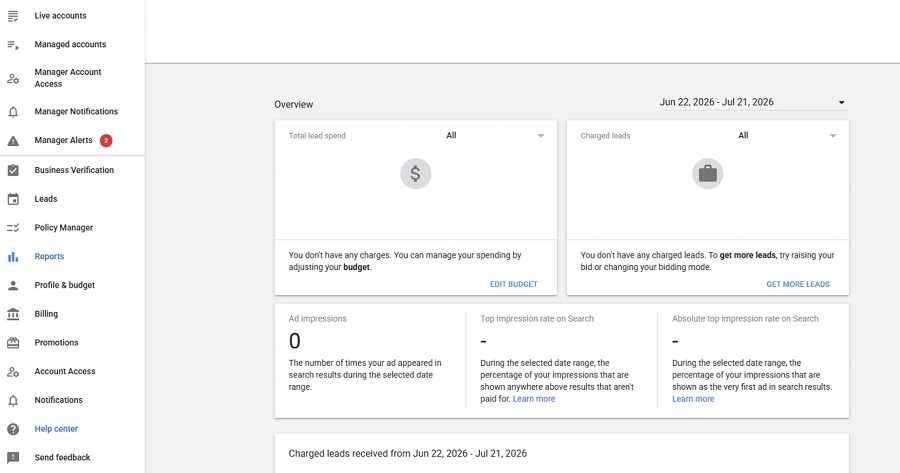
The decision to merge these platforms is primarily driven by a desire for operational efficiency. By consolidating LSA management into the broader Google Ads ecosystem, advertisers gain a holistic view of their marketing performance.
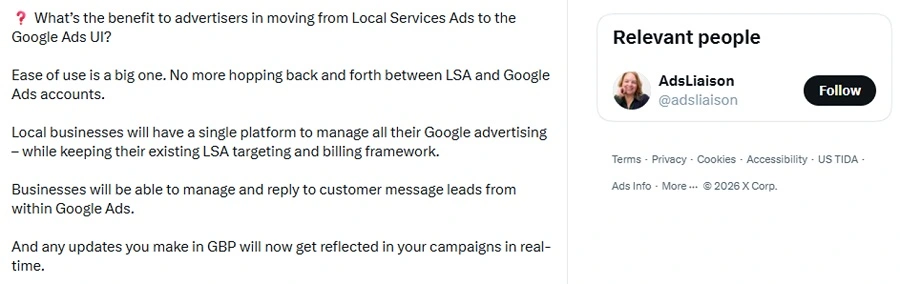
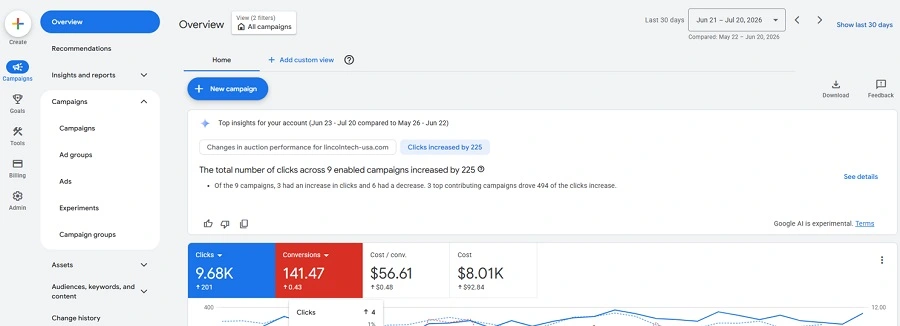
Google Ads Product Liaison, Ginny Marvin, emphasized the user-centric nature of this update on social media, noting that the goal is to eliminate the friction of "hopping back and forth" between disparate dashboards. For busy business owners, this means that tracking the success of a Google Search campaign and a Local Services Ad will eventually occur under the same "Campaigns" tab. This consolidation allows for better data correlation, as businesses can now compare lead costs and volume alongside other search engine marketing (SEM) efforts in one unified interface.
Implications for Advertisers: What Changes, What Stays
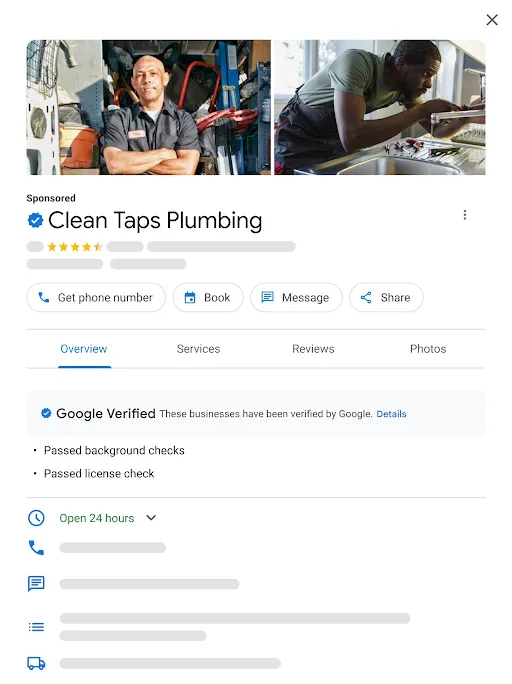
While the underlying engine of the ad is changing, the "look and feel" of the customer experience remains consistent. The Google-verified badge, which has become a symbol of trust for consumers, will continue to appear on ads for all businesses that meet the rigorous verification criteria.
What is Changing:
- Management Interface: All campaign controls move from the LSA dashboard to the Google Ads interface.
- Campaign Structure: LSAs are no longer a standalone entity; they are now configured as PMax campaigns with a pay-per-lead goal.
- Data Access: Historical data in the old dashboard will not automatically persist in the new system. Advertisers must manually download their performance reports before their specific account migration date to ensure they retain long-term records.
What Stays the Same:
- Billing Model: The "pay-per-lead" model persists. You are not charged for clicks or impressions, but rather for specific lead actions (e.g., a phone call or a booking request).
- Placement Strategy: Despite being "Performance Max" in name, these campaigns are restricted to Google Search and Maps. They will not bleed into YouTube or Display unless the advertiser chooses to run separate, traditional PMax campaigns.
- Verification Requirements: Your current Google Business Profile (GBP) verification remains valid. No re-verification is required, provided your business details remain unchanged.
Strategic Preparation for the Migration
For those currently running LSA campaigns, the transition is largely automated. Google will migrate your existing targeting, service categories, budget limits, and ad schedules. However, "automated" does not mean "hands-off." To ensure a seamless shift, advertisers should follow these proactive steps:
- Download Historical Data: This is the most critical step. Log into your current LSA dashboard and export all performance reports. Once the dashboard is sunset, this data will be inaccessible.
- Monitor Notifications: Keep a close eye on your email and the banner notifications within the LSA dashboard. Understanding your specific migration timeline is essential to avoid surprises.
- Audit Your Assets: Before the migration, ensure your Google Business Profile is fully optimized. Since the PMax campaign pulls data directly from your profile, an outdated profile will result in an outdated ad.
- Patience During Stabilization: After your account is migrated, expect a two-week "learning period." Much like standard PMax campaigns, the system needs time to ingest data and optimize bidding patterns. Avoid making drastic changes during these first 14 days.
The Future of New Enrollments
For businesses that have not yet launched an LSA campaign, the current process remains temporary. As of now, you should continue to use the legacy g.co/localservices portal to set up new accounts. Google has indicated that the ability to create pay-per-lead PMax campaigns directly within the Google Ads interface will be rolled out in a later update. Until then, the bridge between the old and new systems remains open for new entrants.
Conclusion: A More Integrated Local Future
While platform migrations can be intimidating, this transition represents a maturation of Google’s advertising technology. By bringing Local Services Ads into the Performance Max fold, Google is essentially acknowledging that local lead generation is a core component of the modern marketing mix—not an experimental side project.
For the local service provider, this is an opportunity to centralize performance data and refine advertising strategies using the same advanced machine learning tools that drive enterprise-level campaigns. The key to success in this transition lies in preparation: document your past, optimize your current business profile, and remain adaptable as the platform evolves. By treating this update as a chance to streamline operations rather than a disruption to your workflow, you can position your business to continue thriving in an increasingly competitive local search environment.
If you are unsure about your account’s readiness, consider utilizing a professional Google Ads audit to ensure your settings are correctly aligned with the new PMax infrastructure. With the right approach, the shift to PMax-powered LSAs will likely result in a more efficient, data-driven, and ultimately more profitable advertising experience.