










Main Facts
The expansion of artificial intelligence infrastructure has reached a new scale, characterized by the construction of AI factories measured in megawatts and gigawatts. With individual megawatt-scale facilities requiring capital expenditures of approximately $60 million, operators face intense pressure to ensure rigorous returns on investment (ROI).
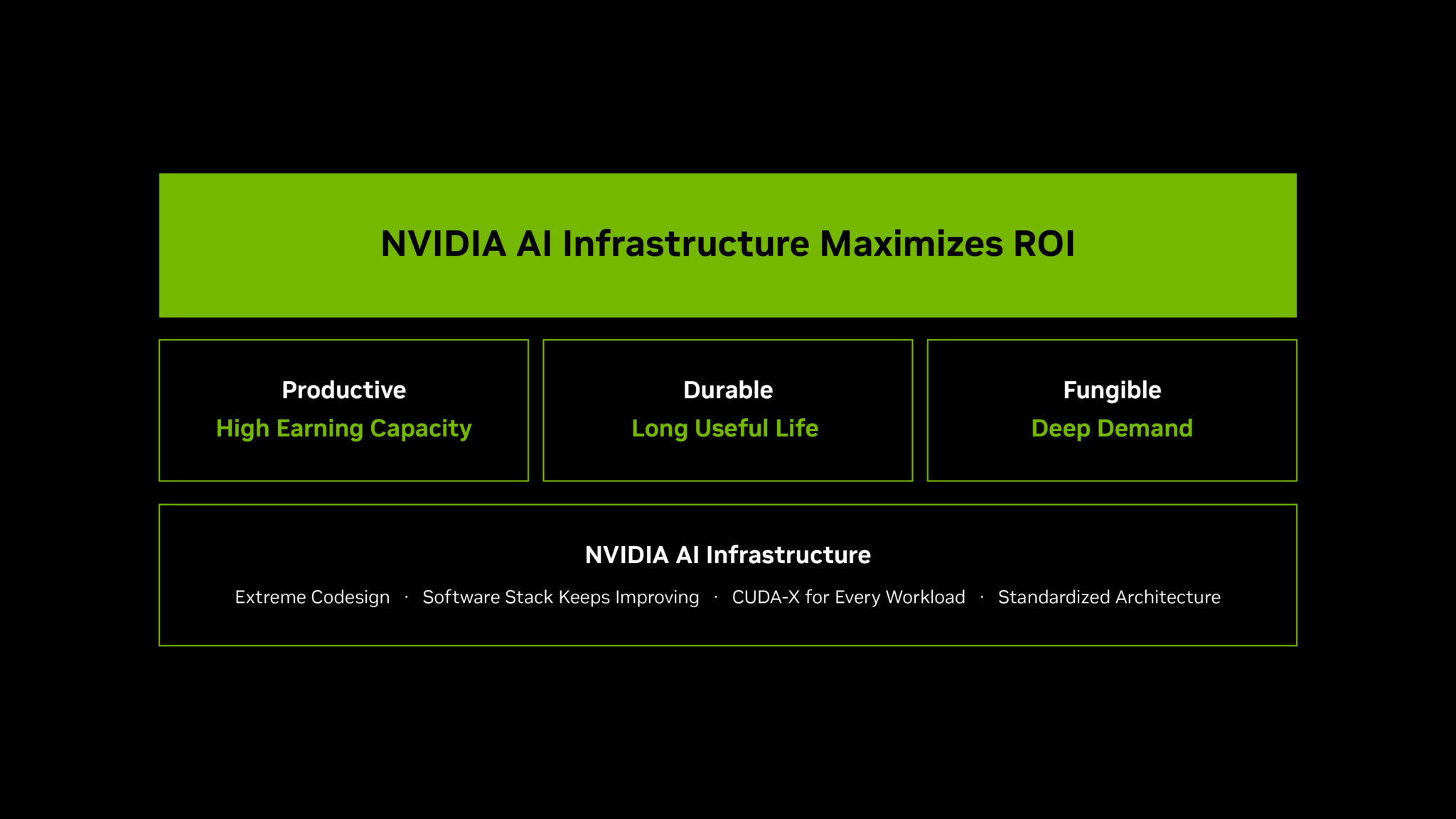
According to industry metrics, three core pillars dictate the financial viability and long-term success of modern AI infrastructure: productivity, durability, and fungibility. NVIDIA Corporation has structured its accelerated computing stack—anchored by systems like the Vera Rubin NVL72 and the established CUDA software ecosystem—to maximize all three pillars simultaneously. By focusing on high token throughput per megawatt, extended hardware lifecycles, and cross-workload adaptability, NVIDIA aims to protect operators against rapid technological obsolescence and shifting market demands.
Chronology of Infrastructure Evolution
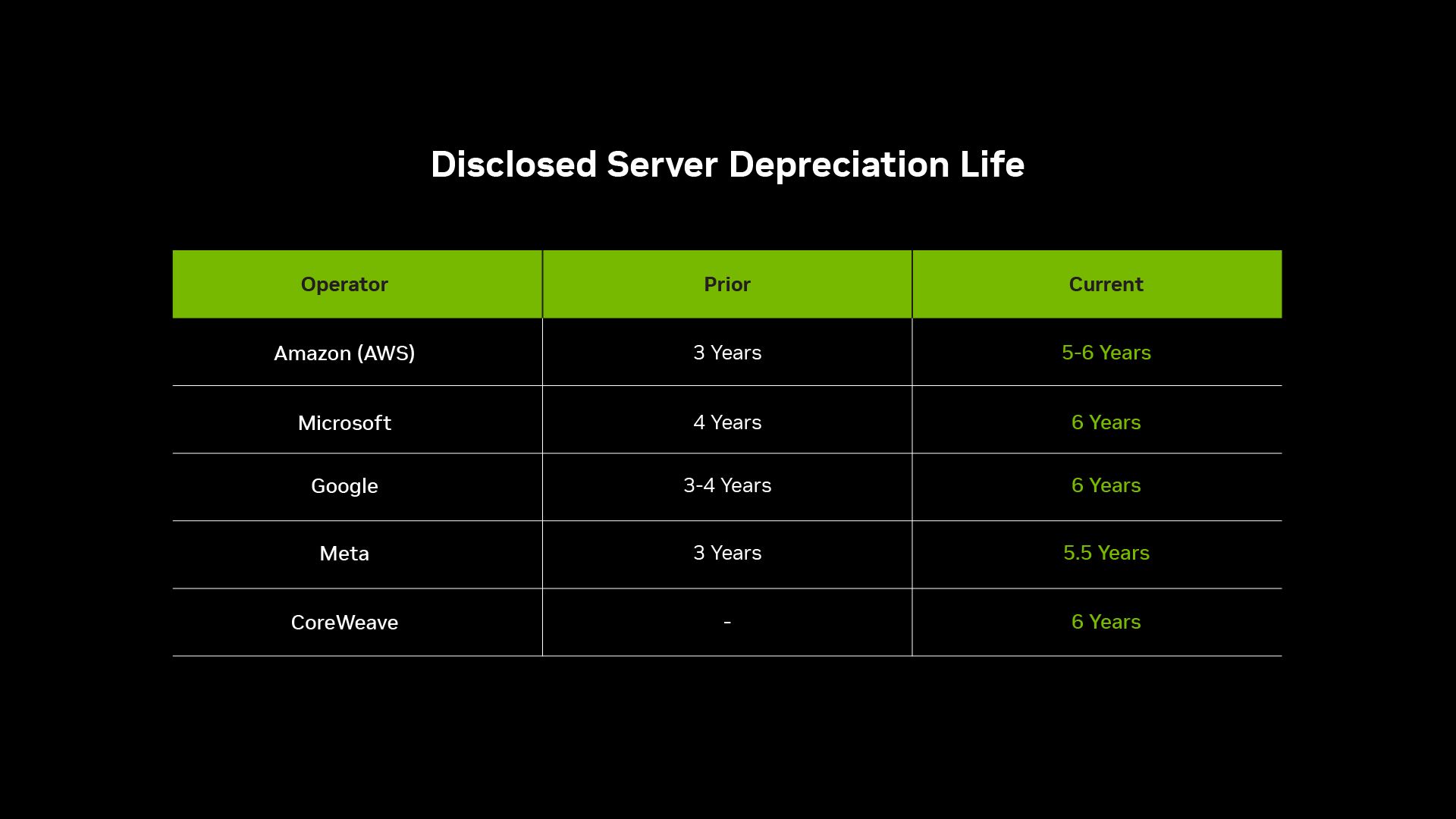
The financial lifecycle of data center hardware has undergone a radical transformation over the past decade, driven by accelerating performance leaps and shifting accounting strategies among hyperscale operators.
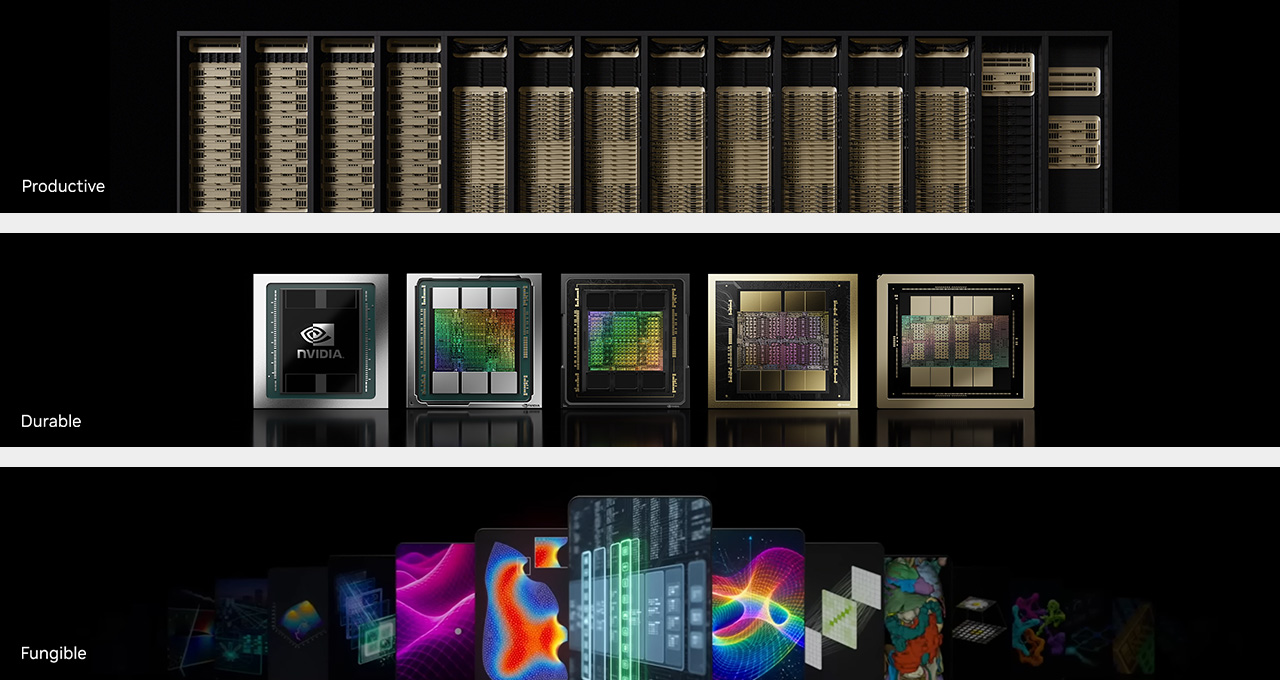
- 2020: NVIDIA introduces the A100 Tensor Core GPU, setting a new benchmark for deep learning workloads. Initial accounting schedules across major cloud providers assign these servers a conservative five-to-six-year depreciation window.
- 2023–2024: The generative AI boom triggers unprecedented demand for specialized computing clusters. Rather than retiring older hardware, cloud providers and specialized operators discover sustained utility for older generations, prompting initial extensions of server depreciation schedules.
- 2025: Market evaluations begin to reflect the extended physical longevity of accelerated computing infrastructure. Secondary markets and leasing firms document that legacy GPUs retain substantial residual value well past their original book-life projections.
- September 2026: Industry analyses, including Sprout’s report “The Productive Life of a Data Center GPU,” comprehensively map how major operators have progressively lengthened server depreciation timelines. Data demonstrates that physical lifespans frequently outstrip conservative accounting estimates; for instance, historical fleets of NVIDIA V100 systems maintained productive operations for upwards of 8.4 years against a six-year book life.
- Late 2026: The deployment of advanced systems like the NVIDIA Vera Rubin NVL72 and GB300 NVL72 shifts the paradigm further, delivering massive jumps in token throughput per megawatt while older architectures like the A100 continue generating commercial revenue in multi-year service contracts.
Supporting Data and Economic Metrics
The economics of modern AI factories are governed by strict physical and financial constraints, chief among them being power availability. Because power serves as the primary binding constraint for new facility construction, efficiency is directly tied to profitability.
Throughput and Cost Efficiency
Performance data compiled by SemiAnalysis AgentX highlights the compounding efficiencies of hardware-software codesign. The NVIDIA Vera Rubin NVL72 system delivers over 30x higher throughput per megawatt compared to preceding architectures like the GB300 NVL72, while achieving up to 45x lower costs per million tokens when running advanced models such as DeepSeek V4 Pro.
Despite these dramatic reductions in the cost per token, historical economic trends confirm that cheaper compute does not contract market demand; instead, it expands it. Lower token costs unlock previously uneconomical use cases, driving aggregate computational consumption higher across the board.
Hardware Longevity and Residual Value
Secondary market metrics challenge the assumption that high-performance AI chips face rapid obsolescence:
- Resale and Useful Life: Platforms like Barkr estimate the useful economic life of an eight-GPU H100 system at five to six years, extending to nine to 10 years for advanced configurations like the GB300 NVL72, based on current resale projections.
- Asset Residuals: Data from Silicon Data indicates that a six-year-old A100 GPU retains approximately 25% of its initial purchase price—long after standard five-year depreciation schedules reduced its book value to zero.
- Rental Market Stability: Research by Ornn Data reveals that the market commands an 80% rental rate for an A100 GPU secured via a five-year long-term contract compared to short-term monthly agreements, proving enduring commercial demand for legacy silicon.
Official Responses and Industry Perspectives
Industry leaders and market analysts emphasize that the longevity of modern data center assets is rooted in software continuity rather than raw hardware brute force.
NVIDIA executives and technology strategists emphasize that the CUDA programming platform and its extensive library of over 1,000 CUDA-X packages insulate operators from stranded capital investments. Because CUDA runs seamlessly across multiple hardware generations, code written years prior continues to benefit from continuous kernel and software optimization. This ensures that previously installed infrastructure experiences performance compounding long after leaving the assembly line.
Furthermore, commercial adopters across diverse sectors have publicly validated the operational flexibility of accelerated computing. Enterprises ranging from cloud pioneers like CoreWeave—which recently extended bookings for 2020-vintage A100 units through 2029—to industrial innovators rely on unified architectures. Cosm utilizes distributed NVIDIA infrastructure for real-time immersive sports broadcasting; Dassault Systèmes deploys virtual twin simulations for aerospace and automotive engineering; and Unilever leverages digital twins to cut product imagery production costs in half.
Implications for the Future of AI Infrastructure
The convergence of productivity, durability, and fungibility holds profound implications for the global technology sector, capital markets, and enterprise IT strategies.
1. Risk Mitigation for Capital Expenditure
With megawatt-scale AI factories requiring massive upfront investments, the proof that data center GPUs enjoy functional lifespans stretching well past traditional accounting windows fundamentally alters risk assessment. Investors can view AI factories not as short-lived speculative ventures, but as long-term, multi-generational infrastructure assets comparable to telecommunications networks or traditional power grids.
2. The Rise of General-Purpose Accelerated Computing
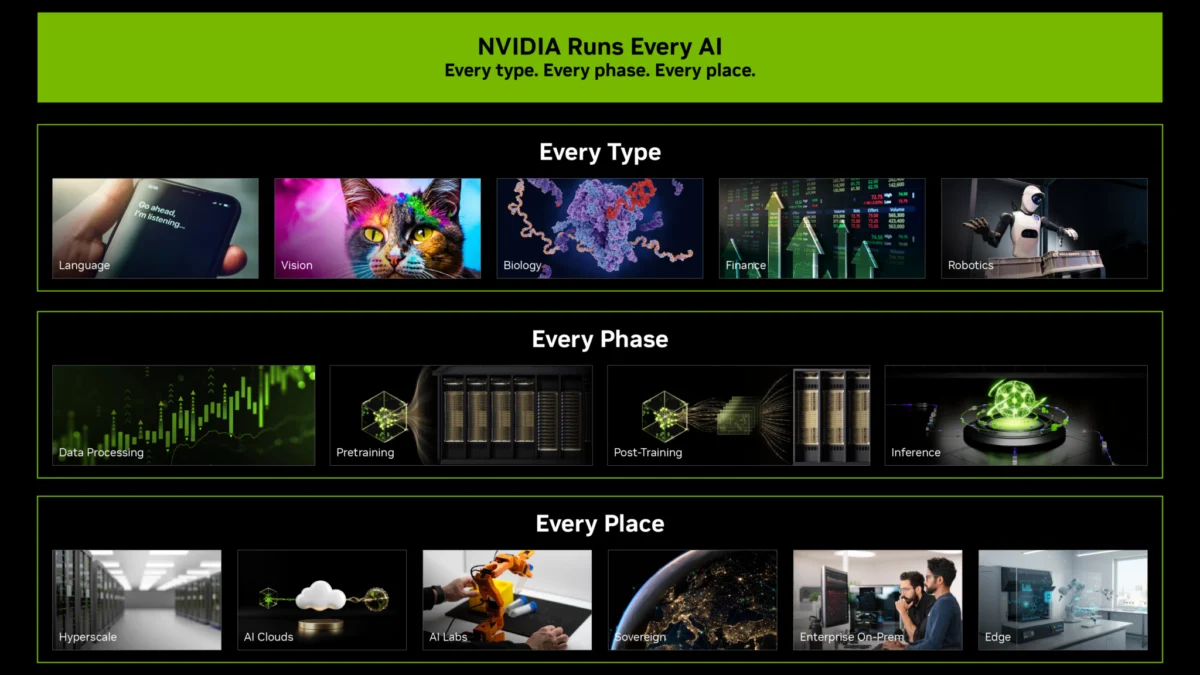
The concept of fungibility—the ability of a single system to pivot seamlessly between language models, scientific simulation, data processing, computer graphics, and robotics—counters the narrative that specialized ASICs represent the ultimate form of efficiency. By retaining programmability via Tensor Cores and the Transformer Engine while offering deep hardware specialization, general-purpose accelerated computing protects operators against sudden paradigm shifts in AI research. If a specific model architecture or workload falls out of favor, a fungible factory simply transitions its cycles to emerging domains like physical AI, agentic reasoning, or molecular biology.
3. Sustainability and the Power Envelope
As global power grids strain under the electrical demands of next-generation data centers, maximizing tokens per megawatt is no longer just an economic optimization—it is a societal necessity. Technologies that dramatically increase throughput within a fixed power envelope enable the continued scaling of artificial intelligence without requiring an exponential expansion of global energy generation.
To learn more about the future of accelerated computing and infrastructure design, industry professionals and developers can tune in to NVIDIA founder and CEO Jensen Huang’s upcoming GTC Berlin keynote presentation on Wednesday, October 21, at 11 a.m. CEST.



